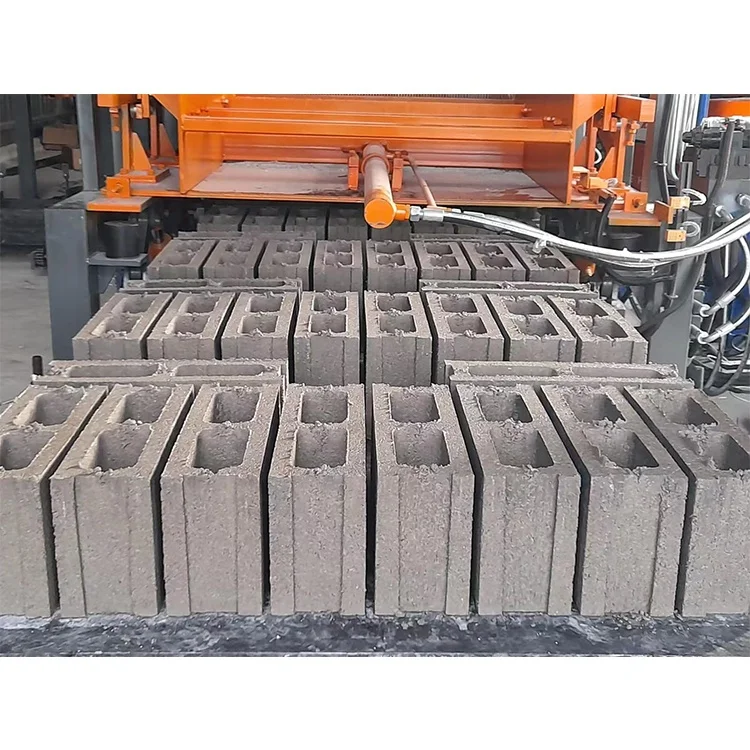
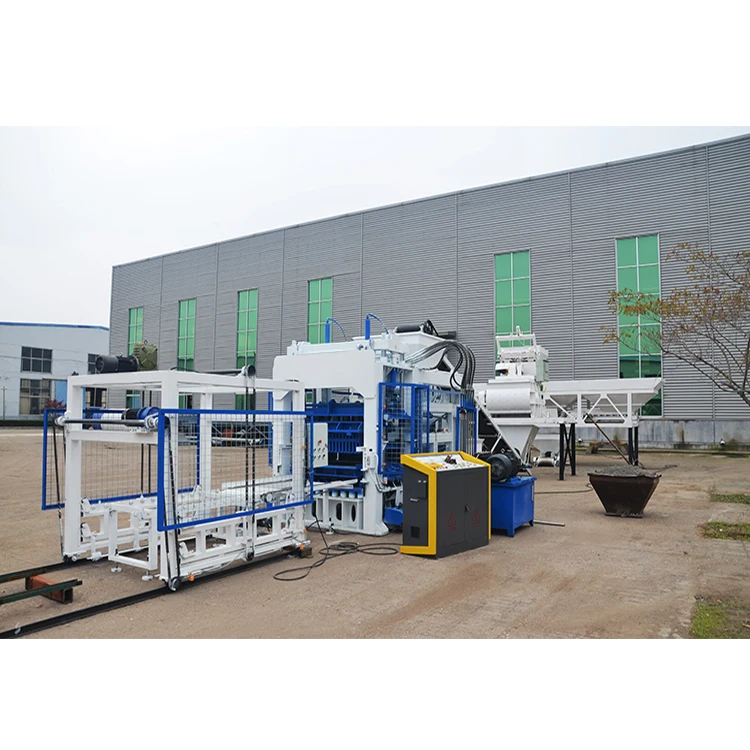
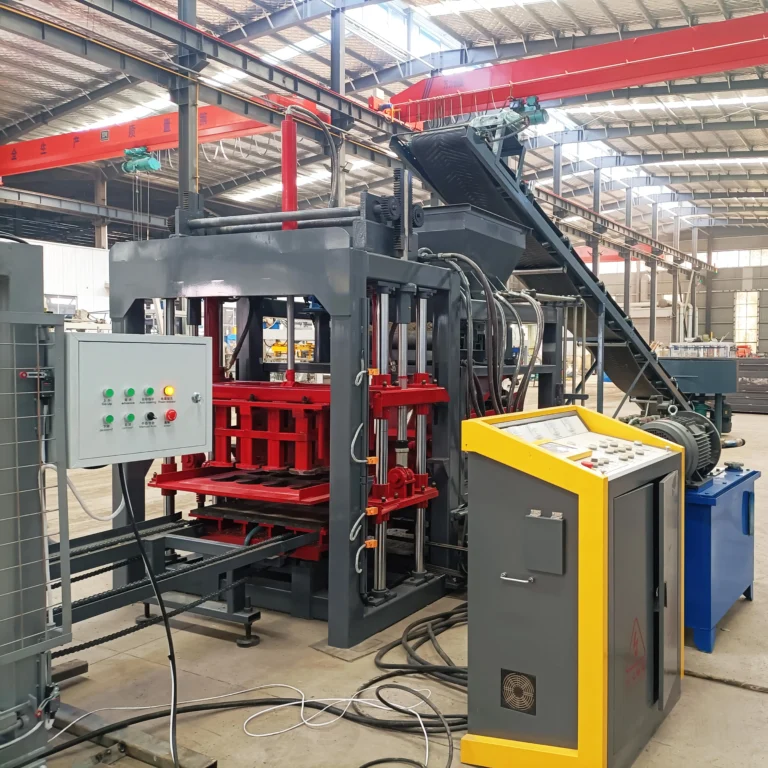
Matched System Approach — every mould, pallet and handling component specified together with the QTJ4-25 press, so the line performs as one unit rather than a collection of mismatched parts.
Technical Specifications
| Parameter |
Value |
| Model |
QTJ4-25 |
| Product Type |
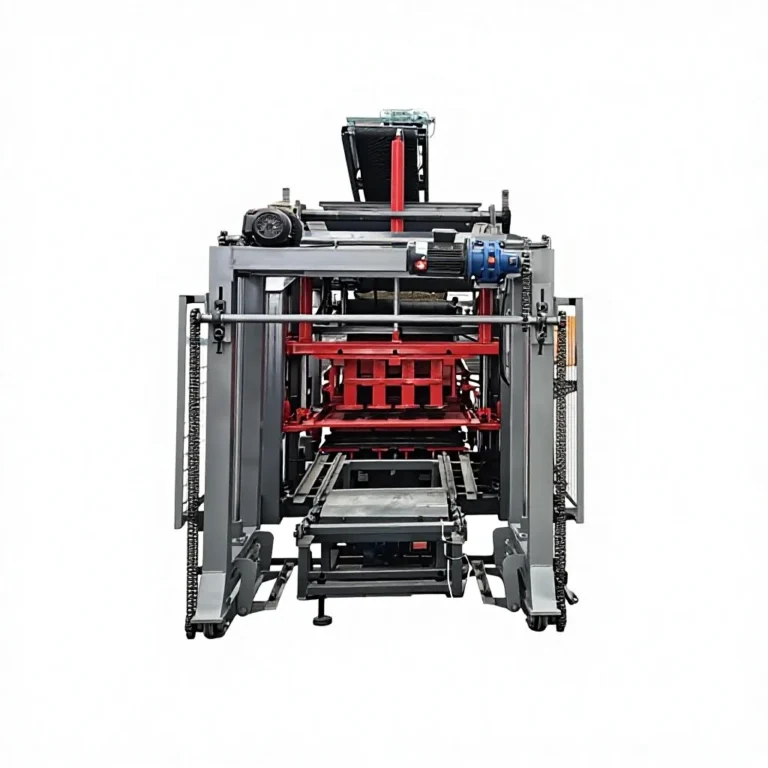
Semi-Automatic Hollow Block Making Machine |
| Overall Dimensions (L×W×H) |
3060×1730×2580 mm |
| Total Weight |
4 T |
| Vibration Force |
45 KN |
| Cycle Time |
25 s |
| Pallet Size |
850×550 mm |
| Block Height Range |
40–280 mm |
| Workshop Area |
50–150 m² |
| Material Storage Area |
300–500 m² |
| Belt Conveyor Length |
8 m |
| Mixer Model |
JQ500 |
| Motor Brand |
Siemens or ABB |
| Control System |
Electric control panel |
| Automation Level |
Semi-automatic |
| Voltage & Frequency |
380V, 3-phase, 50Hz (configurable to local supply) |
| Output Capacity |
480 pcs/h (basis: 400×200×200 mm hollow block, 4 pcs/mould) |
| Output Capacity |
600 pcs/h (basis: 400×150×200 mm hollow block, 5 pcs/mould) |
| Output Capacity |
840 pcs/h (basis: 400×100×200 mm hollow block, 7 pcs/mould) |
| Output Capacity |
2880 pcs/h (basis: 240×115×53 mm solid brick, 24 pcs/mould) |
| Mould Formats |
Hollow block, solid block, paver, interlocking block, curbstone, grassed brick, revetment brick, colored paver |
| Key Features |
Manual pallet handling, manual mould change, energy-efficient drive train |
Application Suitability
| Application |
Material or Output |
| First-time block plant startup |
Hollow blocks and solid bricks from crushed stone, sand, fly ash and cement |
| On-site production for building contractors |
Interlocking blocks and pavers made at project location without fixed plant infrastructure |
| Small to medium block manufacturers expanding product range |
Curbstone, grassed brick and colored paver formats added to existing hollow block output |
| Housing project supply |
High-volume solid brick runs for residential wall construction |
What "Cycles per Hour" Hides About Your Real Daily Output
A single throughput figure tells you nothing unless it names the block format and mould cavity count behind it.
I have watched buyers sign contracts based on one headline number, then discover their target hollow block cuts actual daily production to a fraction of what was promised. The QTJ4-25 semi-automatic block machine manufacturer quotation you receive from Shiyue lists capacity separately for each format — 400×200×200 mm hollow block at 480 pieces per hour is not the same run as 240×115×53 mm solid brick at 2880 pieces per hour. Both are real, but they demand different curing space, pallet turnover and labour planning. [NEED_CITE: capacity calculation standards for concrete block production equipment]

Where the QTJ4-25 Sits on the Machine Range
The QTJ4-25 occupies the semi-automatic tier — compact footprint, lower capital requirement, manual pallet handling and stacking. It targets entrepreneurs placing a first order and contractors who need blocks on site without investing in a fully automatic line. For buyers whose daily volume stays within what one shift crew can palletise and move by hand, this tier keeps overhead proportional to output.
The Upgrade Path Beyond Semi-Automatic
As demand grows, the same pallet size and mould interface let you step up to automatic stacking and cubing without scrapping the press. Starting on the QTJ4-25 means the pallet inventory and curing racks you buy today remain compatible when you add automated handling later. This path matters for buyers in markets where demand ramps gradually rather than arriving all at once. [NEED_CITE: block plant automation upgrade planning]
How Vibration Force, Pallet Size and Motor Choice Shape Your Floor
The 45 KN vibration force paired with the JQ500 pan mixer determines how well local aggregate compacts inside the mould — higher clay or silt content in sand demands sufficient vibration to avoid weak blocks. The 850×550 mm pallet must fit the curing area and forklift you already own; ordering a size that mismatches your rack spacing creates bottlenecks immediately after the press. Siemens or ABB motors give the drive train a reliable core at this investment level, reducing unplanned stops that disrupt the whole crew’s rhythm.
The Cost of Skipping the Pallet and Curing Area Check
When pallet dimensions are chosen without checking the buyer’s existing curing yard and forklift fork width, pallets arrive and cannot be stacked or transported. Output piles up beside the machine, workers handle blocks twice, and the cycle time advantage of the press is lost in manual congestion. This mismatch appears within the first week of production and is entirely preventable. [NEED_CITE: pallet and curing yard compatibility in block plant setup]
Why Buyers Place Repeat Orders Here
Block machinery is the sole focus of the production floor, so the QTJ4-25 press, its moulds, pallets and handling gear leave the factory as one specified system. Configuration starts from your actual mix design and local aggregate rather than a catalogue default, and mould drawings are confirmed against the formats your market actually buys. Factory testing runs your recipe before dispatch, and installation support includes operator training so the crew can manage mould changes and daily maintenance from day one.
Documentation & Verification
- Line layout with capacity calculated per block format and mould cavity count
- Mould drawing and format list confirming every block dimension before production
- Factory test record showing cycle time and block strength on your mix design
- Voltage, frequency and control panel language confirmed in writing pre-build
- Hydraulic and electrical schematic matching the as-built machine
- Operation and maintenance manual with wear parts list included at dispatch
Installation, Commissioning & Support
- Workshop floor must sustain 4 T static load across the 3060×1730 mm machine footprint
- Dedicated 3-phase circuit required at confirmed voltage and frequency before arrival
- Machine ships fully assembled; only belt conveyor and mixer require on-site connection
- First-run commissioning includes cycle time verification on buyer’s actual block format
- Operator training covers manual mould change procedure and daily vibration system checks
- Wear parts list and mould spares documented for first replacement ordering
Before You Request a Quotation
Send the exact block formats you intend to sell, including dimensions and daily volume targets for each. Provide your local aggregate description — sand source, stone grading, cement type — and your available workshop length and curing yard area. Confirm the voltage and frequency at your site, along with the language you need on the control panel display. These details let the proposal match machine, mould and pallet to your real conditions rather than a generic assumption.
Frequently Asked Questions
Q: How is output capacity calculated for the QTJ4-25, and which block format does each figure assume?
A: Each capacity number is tied to a specific block dimension and mould cavity count. For example, 480 pieces per hour applies to the 400×200×200 mm hollow block using a four-cavity mould, while 2880 pieces per hour applies to the 240×115×53 mm solid brick on a twenty-four-cavity mould. Your quotation lists every format separately so daily planning stays realistic.
Q: What voltage and frequency options are available, and is the display language confirmed before shipment?
A: The standard configuration is 380V three-phase 50Hz, but the electrical system can be built to match your local supply. The control panel language is confirmed in writing during the proposal stage so the operator reads instructions in a familiar language from the first production day.
Q: Where does the QTJ4-25 sit on the machine range, and can I upgrade later?
A: It sits in the semi-automatic tier with manual pallet handling, targeting first-time plant owners and on-site contractors. The pallet size and mould interface are shared with higher tiers, so adding automatic stacking or cubing later does not require replacing the press or discarding existing pallet inventory.
Q: Which mould formats come with the machine, and can I order custom moulds?
A: Standard formats cover hollow block, solid brick, paver, interlocking brick, curbstone and grassed brick. Custom moulds can be designed to your drawings when your market requires a format outside the standard range, with drawings confirmed before manufacturing begins.

 High quality block machine