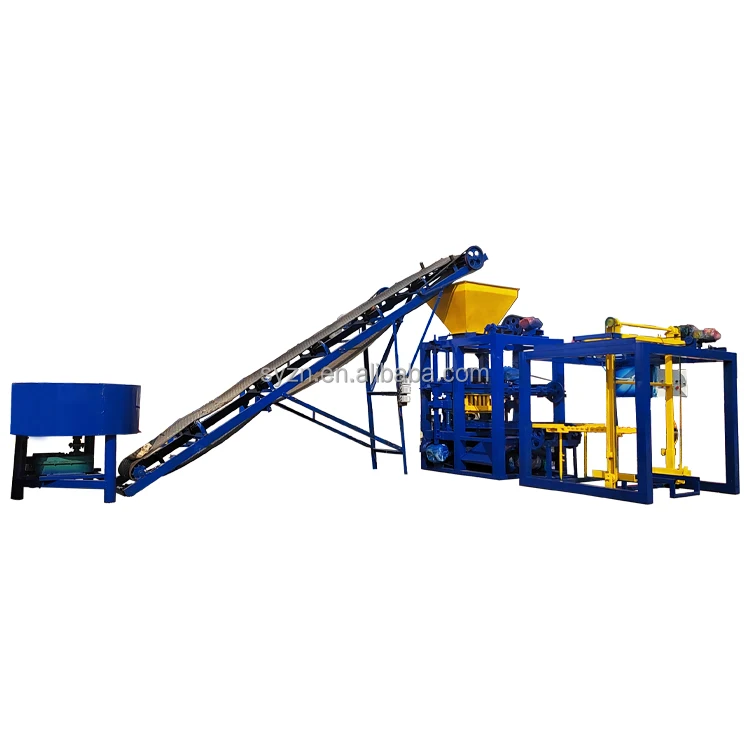
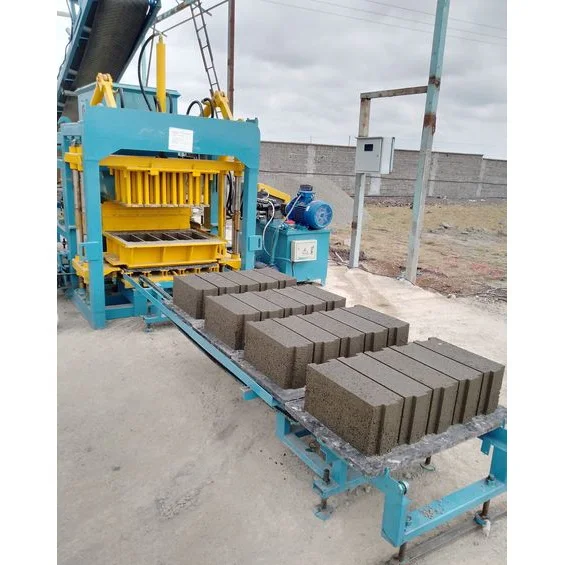
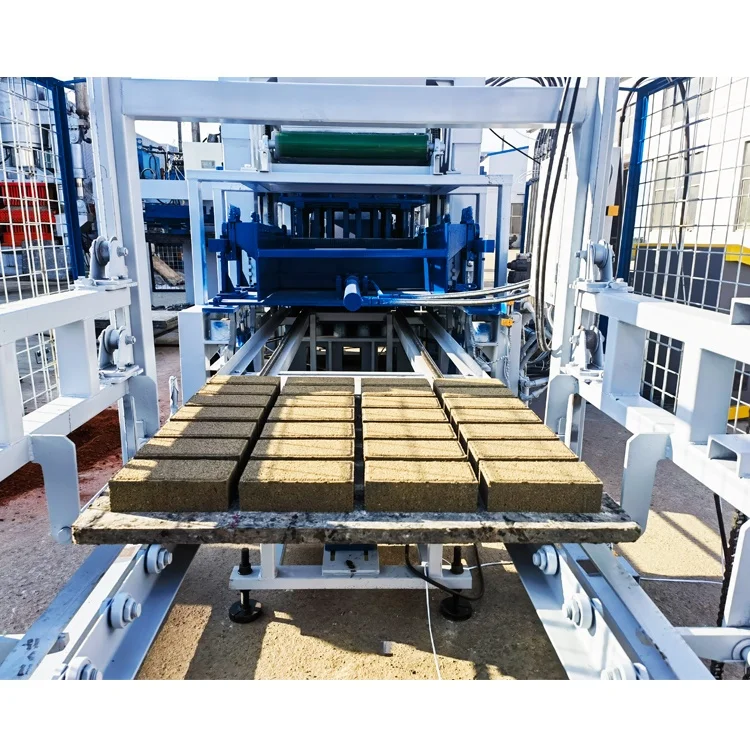
Block machinery as a single focus — the QT6-15 is specified as one matched system of press, mould, pallet, and handling, not assembled from separate suppliers.
Technical Specifications
| Parameter |
Value |
| Model |
QT6-15 |
| Product Type |
Hydraulic Block Making Machine |
| Overall Dimensions (L×W×H) |
8200×1700×2950 mm |
| Total Mass |
7 T |
| Overall Power |
37 kW |
| Vibration Frequency |
0-60 Hz |
| Vibration Form |
Platform Vibration |
| Vibration Force |
45 kN |
| Moulding Mode |
Load automatically, vibration moulding |
| Demolding Method |
Hydraulic |
| Pallet Size |
880×850 mm |
| Molding Cycle |
15-20 s |
| Control System |
PLC (Programmable Controller) with touch screen interface |
| Factory Area Required |
1200 m² |
| Block Compressive Strength |
>15 MPa |
| Automation Level |
Automatic (PLC controlled with intelligent electronic control) |
| Hydraulic System |
Independent integrated hydraulic station |
| Fault Diagnosis |
Built-in fault diagnosis system |
| Raw Material Adaptability |
Waste ash, slag, and various aggregates |
| Warranty |
1 year (excluding spare parts) |
| Standards |
CE |
| Key Features |
Automatic loading, touch-screen PLC control, built-in fault diagnosis, independent hydraulic station, platform vibration |
Application Suitability
| Application |
Material or Output |
| Hollow block production |
400×200×200 mm format, 8640-11520 pcs/8hr (6 pcs/mould, 15-20s cycle) |
| Hollow block production |
400×150×200 mm format, 11520-15360 pcs/8hr (8 pcs/mould, 15-20s cycle) |
| Solid brick production |
240×115×53 mm format, 46080-61440 pcs/8hr (32 pcs/mould, 15-20s cycle) |
| Rectangular paver production |
200×100×60 mm format, 17280-23040 pcs/8hr (21 pcs/mould, 20-25s cycle) |
| Zigzag paver production |
225×112.5×60 mm format, 17280-23040 pcs/8hr (15 pcs/mould, 20-25s cycle) |
Why the Voltage Question Should Come Before the Price on a QT6-15 Block Machine Manufacturer Order
A motor that burns on day one because of a voltage mismatch stops the entire site.
Early in my after-sales career in the Pearl River Delta, I watched a block machine arrive at a job site only for the motor to blow within hours. The local supply was a different standard than what the machine was built for. Dozens of workers stood idle for weeks waiting for a replacement. Since then, I make voltage, frequency, and PLC display language the first items on any specification sheet. A QT6-15 block machine manufacturer must confirm these before production begins, not after the container is sealed [NEED_CITE: voltage and frequency standards by export market].

Where the QT6-15 Sits in the Complete Shiyue Range
The Shiyue block machine lineup spans mobile egg-laying units for on-site work, semi-automatic machines for small plants, and high-capacity automatic lines. The QT6-15 occupies the mid-to-high automatic tier, offering PLC-controlled production with a touch screen interface and built-in fault diagnosis. For a buyer surveying options, this model bridges the gap between entry-level semi-automatic presses and the largest fully automatic stacking and cubing lines.
Automatic Versus Semi-Automatic: Choosing Your Starting Point
A semi-automatic machine requires manual pallet handling and hand stacking, keeping the initial investment lower but demanding more labour on the floor. The QT6-15 moves past that with automatic loading and hydraulic demolding, reducing the operator’s physical workload while maintaining consistent cycle times. Buyers who plan to scale later can start here and add upstream batching or downstream cubing as demand grows, since the PLC architecture supports additional modules [NEED_CITE: PLC module expansion in industrial block presses].
How Vibration Force and Hydraulic Pressure Shape Block Density
The platform vibration system delivers up to 45 kN of force across a 0-60 Hz adjustable range, compacting the mix from beneath the mould cavity. This vibration works together with the independent hydraulic station to press and release each block. When the vibration force and hydraulic pressure are matched to the buyer’s specific mix design and local aggregate, the resulting compressive strength exceeds 15 MPa consistently. A mismatch here means blocks that crumble at the edges or fail drop tests, regardless of how many tonnes of cement go into the batch.
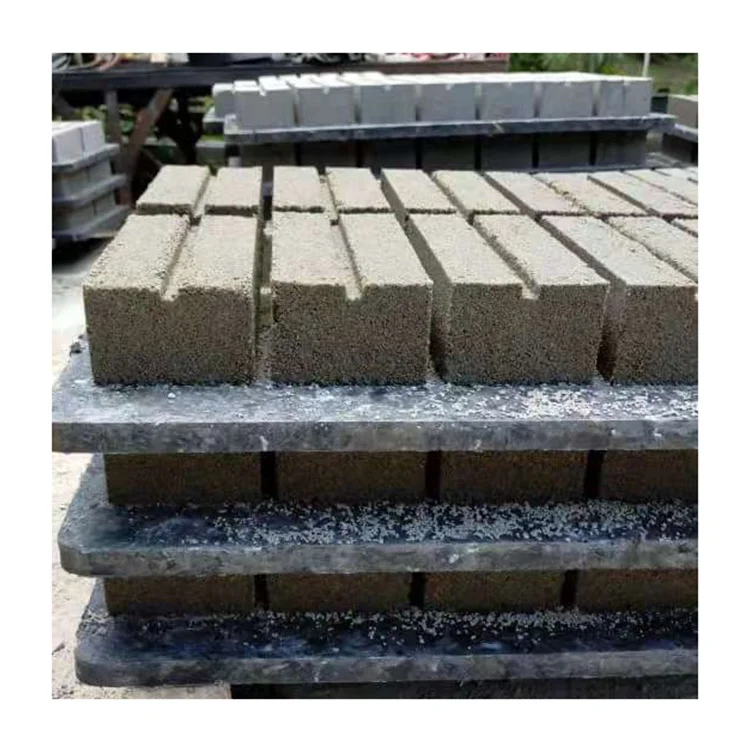
The 880×850 mm pallet size is another factor that connects directly to the curing yard. If the buyer already operates forklifts and curing racks sized for a different pallet dimension, every loaded board becomes a handling problem. Confirming pallet compatibility before the machine ships avoids costly yard reconfiguration after arrival.
The Hidden Cost of Overlooking Line-Level Details
A press that cycles at its rated speed means little when the rest of the line cannot keep up. Buyers who focus only on the machine itself often discover after delivery that raw material feeding, pallet return, and stacking were never included in the quotation. Output ends up piled by hand, negating the automation they paid for. Mould change is another area where expectations collide with reality — if the quick-change system is not specified, swapping from hollow blocks to pavers can consume most of a shift [NEED_CITE: typical mould change durations on mid-tier block machines].
Why Source This Model Through Shiyue
The QT6-15 is configured against the buyer’s actual mix design and target block format rather than a catalogue default. Every capacity figure in the quotation states the block size, mould cavity count, and cycle time it assumes. Mould design covers the formats the buyer’s market actually sells, including custom drawings when standard options do not fit. The machine, pallet, and handling equipment are specified as one matched system, eliminating the gaps that appear when components arrive from separate suppliers. Factory testing documents actual cycle times and block strength before dispatch, so the buyer receives a test record, not just a brochure claim.
Documentation & Verification
- Line layout with capacity calculation stating the block format assumed for each output tier
- Machine specification sheet confirming voltage, frequency, and PLC display language before shipment
- Mould drawing and format list covering hollow block, solid brick, and paver types for your market
- Factory test record documenting actual cycle time and block compressive strength before dispatch
- Pallet specification matched to your existing curing racks and forklift dimensions
- Hydraulic and electrical schematic for local maintenance teams
Installation, Commissioning & Support
- Foundation plan sized for the 8200×1700 mm footprint and 7 T operating mass of the QT6-15
- Dedicated power circuit rated for the 37 kW total load, voltage and frequency confirmed before wiring
- Machine arrives with hydraulic station pre-assembled; on-site connection to pallet feeder and mixer
- PLC touch screen configured in the operator’s language during commissioning, with fault diagnosis walk-through
- Mould change procedure trained on-site so format swaps fit within a single shift window
- Wear parts and mould list provided with recommended replacement intervals for your production volume
What We Need to Quote Your QT6-15 Line Accurately
To prepare a configuration that matches your site, share the block formats your market sells and the daily output you target for each. Confirm the local voltage, frequency, and the PLC display language your operators require. Let us know your available factory area and whether you have existing curing racks, forklifts, or upstream mixers the new line must connect to. With these details, the proposal will state capacity per format and include every station from raw material feed to output stacking.
Frequently Asked Questions
Q: How is the capacity of the QT6-15 verified, and what block format does each figure assume?
A: Every capacity figure is tied to a specific block size, mould cavity count, and cycle time. For example, 8640-11520 pieces per 8-hour shift assumes 400×200×200 mm hollow blocks with 6 cavities and a 15-20 second cycle. The factory test record documents the actual cycle time and output achieved before the machine ships, so you receive verified data rather than a theoretical maximum.
Q: Where does the QT6-15 sit in the range compared to semi-automatic and higher-capacity models?
A: It occupies the mid-to-high automatic tier, above semi-automatic machines that require manual pallet handling and below the largest lines with full stacking and cubing. Buyers who need PLC control and automatic loading without the footprint of a top-tier line find this model covers their output requirement while leaving room to add downstream automation later.
Q: What voltage, frequency, and PLC language options are available for different destination markets?
A: Voltage and frequency are configured to match your local supply standard, and the PLC touch screen display language is set before shipment. These details are confirmed during the quotation stage and documented on the machine specification sheet so there is no mismatch when the machine arrives on site.
Q: What is the required factory area and plant footprint for a complete QT6-15 line?
A: The machine itself requires a 1200 m² factory area when installed with supporting equipment such as the mixer, pallet feeder, and curing rack handling. The exact layout depends on your block format mix and automation level, which the line layout document details before production begins.

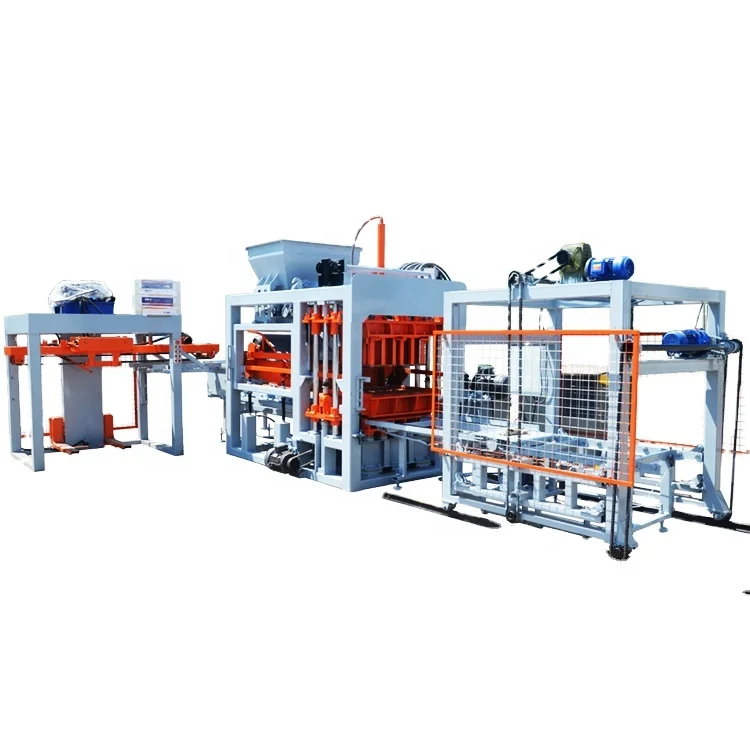
 High quality block machine