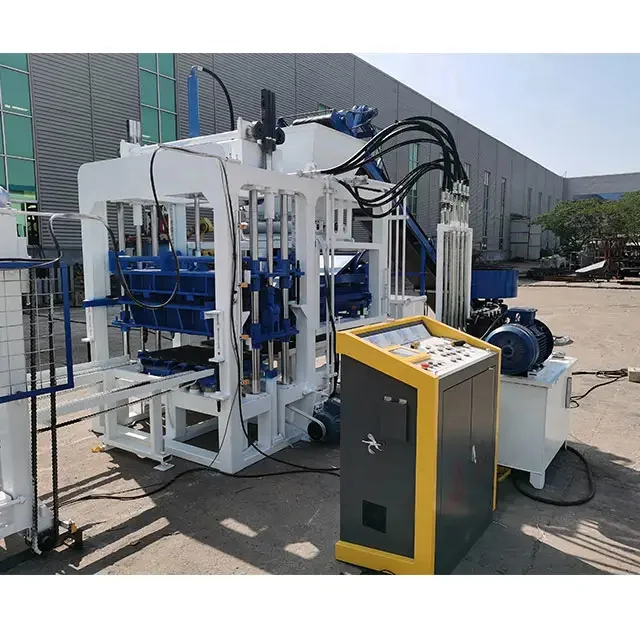
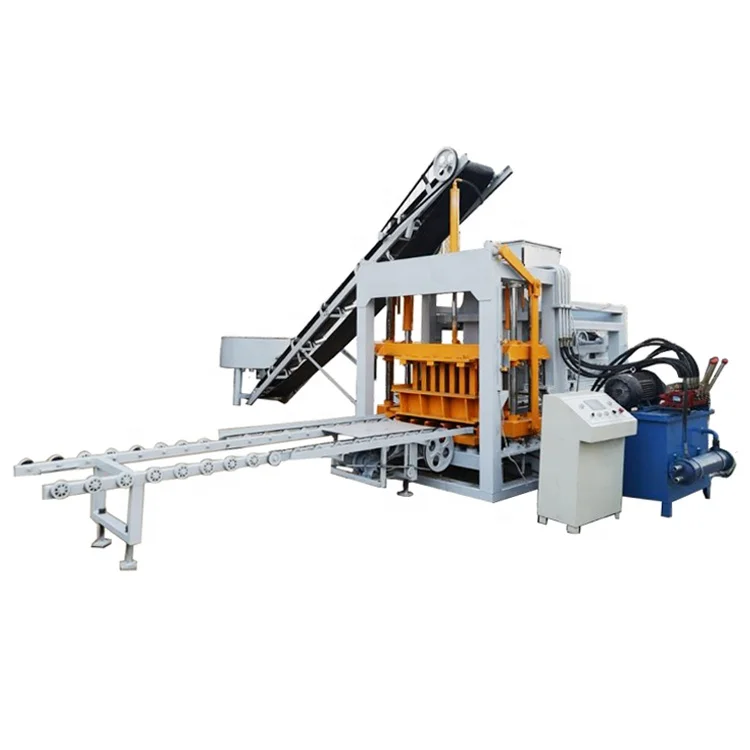
Matched system design — the QT8-15 is specified alongside its moulds, pallets, and handling equipment as one coordinated line rather than a collection of separate purchases.
Technical Specifications
| Parameter |
Value |
| Model |
QT8-15 |
| Product Type |
Automatic Concrete Block Making Machine |
| Automation Level |
Automatic |
| Hydraulic Pressure System |
Advanced hydraulic pressure technology (specific MPa rating to be confirmed) |
| Vibration System |
High-frequency vibration platform (specific kN rating to be confirmed) |
| Cycle Time |
15–20 seconds |
| Mould Heat Treatment |
Yes |
| Mould Change Method |
Manual mould swap (cycle time for changeover to be confirmed) |
| Output — Hollow Block 400×200×200 mm |
8 pcs/mould, 1,600–1,900 pcs/hr, 12,800–15,000 pcs/8 hr |
| Output — Solid Brick 240×115×53 mm |
45 pcs/mould, 8,000–10,000 pcs/hr, 64,000–80,000 pcs/8 hr |
| Output — Paver 200×160×60 mm |
15 pcs/mould, 3,000–3,600 pcs/hr, 24,000–28,800 pcs/8 hr |
| Output — Interlocking 225×112.5×60 mm |
24 pcs/mould, 4,000–5,000 pcs/hr, 32,000–40,000 pcs/8 hr |
| Block Formats |
Hollow block, solid brick, paver, kerbstone (via mould change) |
| Pallet Size |
To be confirmed based on curing area and forklift |
| Control System |
PLC-based (brand, model, and display language to be confirmed) |
| Voltage and Frequency |
Configurable per destination market (to be confirmed before production) |
| Warranty |
1 year |
| After-Sales Support |
24-hour online technical support |
Application Suitability
| Application |
Material or Output |
| High-volume hollow block plant |
Crushed stone, sand, cement, and water mix for 400×200×200 mm hollow blocks |
| Paver and kerbstone production |
Fine aggregate and cement blends for 200×160×60 mm pavers and kerbstones |
| Solid brick manufacturing |
Local sand or crushed rock with cement for 240×115×53 mm solid bricks |
| Interlocking brick for landscaping |
Graded aggregate mix for 225×112.5×60 mm interlocking format |
| Housing project on-site supply |
Multi-format output from a single press to match phased construction demand |
What "15,000 Blocks per Day" Actually Means on Site
Every capacity figure above is tied to a specific block format, mould cavity count, and cycle time range.
I spent years in testing and quality control before moving into line planning, and the most common dispute I see starts the same way: a buyer reads a headline capacity number, places an order, and then watches the actual daily output fall well short once local aggregate enters the hopper. On a project in the Middle East, a contractor ordered a QT8-15 based on the hollow block capacity alone. When we arrived for commissioning, their volcanic scoria aggregate required a completely different vibration profile, and the cycle time stretched beyond the quoted range. Output dropped noticeably until we recalibrated the hydraulic pressure and vibration timing to match the material. [NEED_CITE: aggregate density and gradation effect on concrete block cycle time]
When you compare the QT8-15 against other tiers in the Shiyue range, the conversation has to start with the block format you sell most, not the highest number on a spec sheet.

Positioning the QT8-15 in the Full Machine Range
The Shiyue lineup covers mobile egg-laying machines for small on-site jobs, semi-automatic presses for workshops with modest investment, and fully automatic lines for plants running continuous shifts. The QT8-15 sits in the upper tier of this range. It is built for buyers who have already outgrown semi-automatic output and need a press that can cycle through hollow blocks, solid bricks, pavers, and interlocking formats without requiring a second machine. If your daily volume target places you between a small workshop press and a high-capacity twin-table line, this model is where the range is designed to hold you.
Matching Output Tier to Your Plant Footprint
Choosing between the QT8-15 and a smaller automatic model is not only about how many blocks you want to make. The curing yard must be large enough to receive the pallets this machine produces across an eight-hour shift, and the forklift you already own must be able to handle the pallet dimensions. A buyer surveying options for a first automatic block making machine manufacturer relationship should map the press footprint, pallet return loop, and stacking area together before signing a purchase order. Underestimating the space for curing racks is one of the most frequent reasons a high-output press ends up running at half capacity. [NEED_CITE: curing area calculation for automatic block production lines]
How Hydraulic Pressure and Vibration Work Together
The QT8-15 pairs an advanced hydraulic pressure system with a high-frequency vibration platform, and the two forces must be balanced to achieve consistent block density across every format. Higher vibration frequency compacts the mix faster, but without sufficient hydraulic head pressure the block leaves the mould with weak edges. Conversely, heavy pressure on a dry mix with coarse aggregate can stall the vibration cycle and extend the time per mould. This is why cycle time is given as a range rather than a fixed number — the actual seconds per cycle depend on the gradation, moisture content, and cement ratio of the mix you feed. Pallet size also plays a role: a larger pallet allows more cavities per cycle but demands more compaction energy to keep density uniform from edge to centre.
The Cost of Skipping the Material Conversation
When a buyer skips the raw material review and orders from a catalogue, the consequences surface during commissioning. The vibration parameters tuned for standard crushed limestone may not compact volcanic scoria or recycled demolition aggregate at all. Blocks emerge with low compressive strength, and the plant either slows the line to salvage quality or ships product that fails site inspection. [NEED_CITE: compressive strength testing standards for concrete masonry units] Pallet size mismatches create a different bottleneck — if the curing yard and forklift were set up for a smaller press, pallets stack up at the end of the line and the operator is forced to stop the machine while the yard catches up.
Why Buyers Plan Their Line Around This Press
Shiyue builds the QT8-15 as part of a matched system: the mould, pallet, and handling equipment are specified together so that cycle times align from the mixer through to the stacking station. The machine configuration is set against the buyer’s actual mix design and local aggregate, not a default catalogue recipe. Moulds are designed and heat-treated in-house for the specific formats the buyer’s market demands, and the automation level is selectable — a plant can start with manual pallet handling and upgrade the stacking and cubing stages later without replacing the press. Installation support includes on-site commissioning and operator training so that the crew understands how to adjust vibration and pressure when the raw material source changes.
Documentation & Verification
- Line layout drawing with capacity calculation tied to each block format you intend to produce
- Machine specification sheet confirming voltage, frequency, PLC language, and pallet dimensions
- Mould drawing package with format list, cavity count, and heat-treatment confirmation
- Factory test record showing actual cycle time and block density achieved per format before dispatch
- Packing photographs and customs documentation support for your destination port
Installation, Commissioning & Support
- Foundation plan specifying load-bearing requirements for the QT8-15 vibration platform and hydraulic station
- Electrical single-line diagram with dedicated circuit rating matched to the confirmed motor kW and local voltage
- Assembly sequence for dismantled shipment, with rigging points marked on the main frame
- On-site commissioning covering vibration frequency and hydraulic pressure tuning for your local aggregate
- Operator training on mould change procedure, daily maintenance checkpoints, and PLC alarm response
- Wear parts list covering mould liners, vibration springs, and hydraulic seals with recommended stock levels
What to Include with Your Inquiry
To give you a configuration that matches your site rather than a generic quote, we need a few details up front. Send the primary block format you plan to sell along with your target daily output, and we will calculate the realistic cycle time for that format. Include your local aggregate type and any available sieve analysis so that vibration and pressure settings can be matched before the machine is built. Finally, confirm your site voltage and frequency, and the pallet dimensions your existing curing yard and forklift can accommodate.
Frequently Asked Questions
Q: How is the capacity of the QT8-15 verified, and which block format does each number assume?
A: Every output figure in the specification table states the exact block dimensions, cavity count per mould, and the cycle time range used for the calculation. The eight-hour capacity is derived from these three values. When we prepare your proposal, the capacity calculation document repeats this exercise using your chosen primary format and local aggregate, so the number you see reflects your actual production conditions rather than a laboratory ideal.
Q: How do I decide between the QT8-15 and a smaller automatic model in the Shiyue range?
A: The decision rests on your daily volume requirement, the curing yard space you have available, and your investment level. The QT8-15 targets medium-to-large plants that need multi-format capability from a single press. If your projected output fits comfortably within a smaller press tier and your yard is compact, stepping down saves capital without limiting your product range. We map your site footprint before recommending a tier.
Q: Can I start the QT8-15 at semi-automatic and add automation later?
A: Yes. The automation level is selectable at the time of order. You can begin with manual pallet handling and add automatic pallet feeding, stacking, or cubing modules later. The press frame and control architecture are designed to accept these additions without structural modification, so the upgrade path does not require replacing the core machine.
Q: What installation and training support comes with the machine?
A: A professional engineering team is available for on-site installation, commissioning, and operator training. Commissioning includes tuning vibration and hydraulic parameters to your local mix. Training covers daily operation, mould changeover, routine maintenance, and PLC troubleshooting. Ongoing technical support is available online around the clock after the team departs.

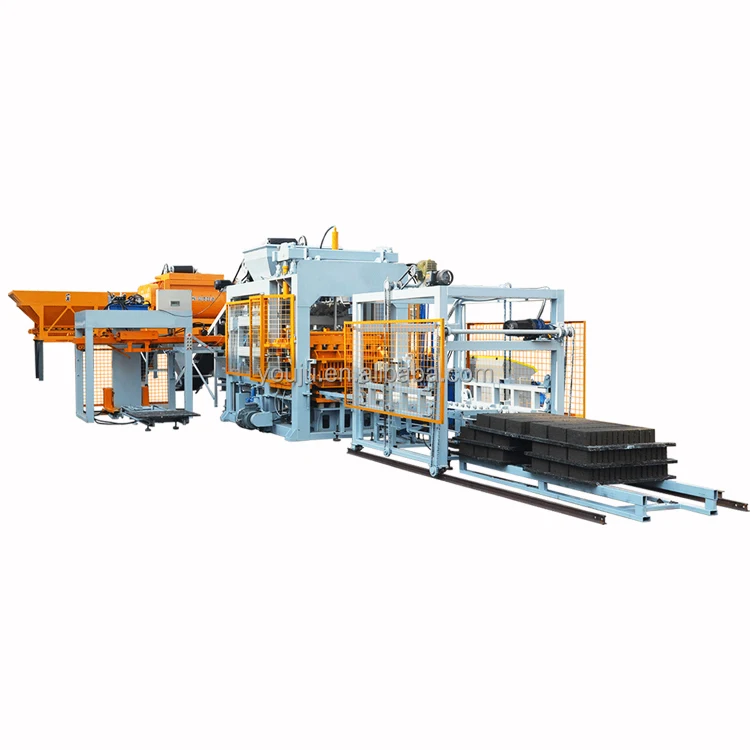
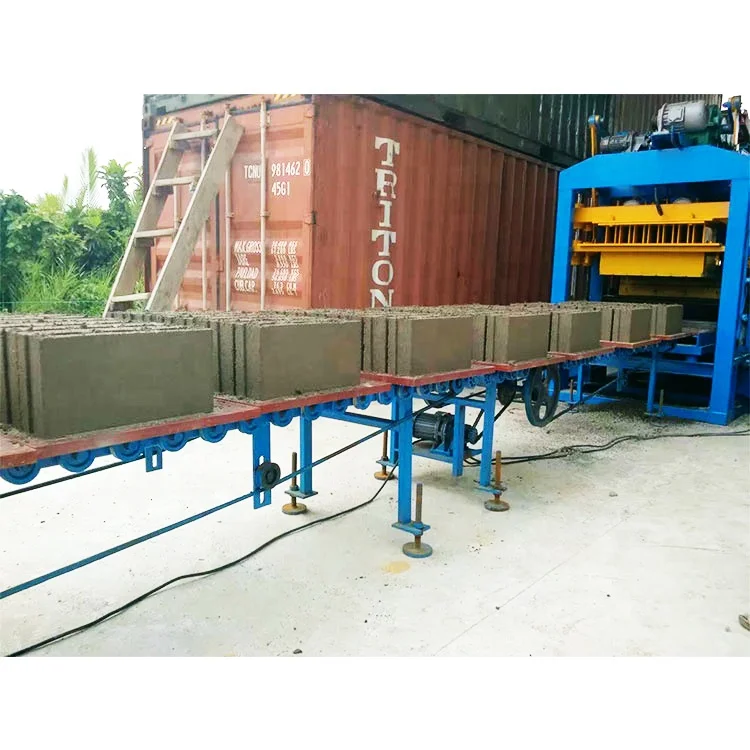 Automatic block machine