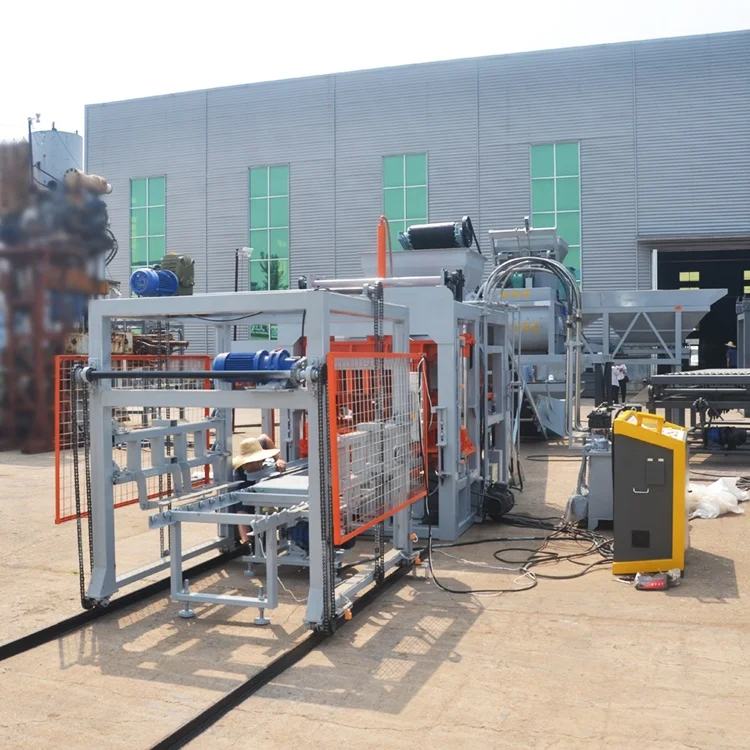
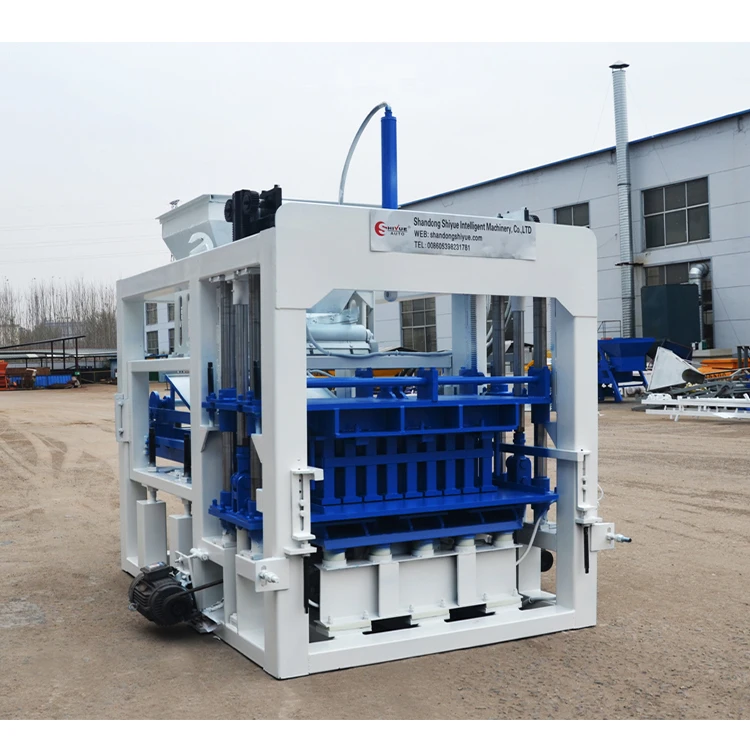
Complete Block Machine Range Matching — the QT4-18 is specified as part of a full tier structure where automation level, pallet size, and handling equipment align with the buyer’s actual site footprint and output target.
Technical Specifications
| Parameter |
Value |
| Model |
QT4-18 |
| Product Type |
Automatic Concrete Block Making Machine |
| Overall Dimensions (L×W×H) |
2500×1750×2200 mm |
| Rated Pressure |
16 MPa |
| Vibration Form |
Platform Vibration |
| Pallet Size |
950×550 mm |
| Molding Cycle |
18–25 s (basis not stated in source — confirm block format / material / thickness) |
| Overall Power |
27.5 kW |
| Control System |
PLC with frequency converter |
| Electrical Components |
Schneider |
| Mould Lifting Mechanism |
Double-sided synchronous gears |
| Automation Level |
Automatic pallet feeder driven by hydro-cylinder, automatic demould and convey |
| Material Feeder System |
Hopper, feeding box, feeding platform, conveyor system |
| Supporting Equipment Options |
JQ500 concrete pan mixer, 8 m / 6 m belt conveyor, stacker, block clamper, trolley, cement silo, batching plant |
| Mould Format |
One hollow block mould included; extra moulds customizable |
| Certification |
CE declaration where applicable |
Application Suitability
| Application |
Material or Output |
| Hollow block production |
Crushed stone, sand, cement, water mix with controlled aggregate grading |
| Solid block manufacturing |
Dense concrete mix for load-bearing masonry units |
| On-site block production for construction projects |
Local aggregate blended with Portland cement at project-specific ratios |
| Entry-level automatic block plant operations |
Semi-dry concrete mixes compacted under platform vibration and hydraulic pressure |
What "Cycles Per Hour" Fails to Tell You About Real Daily Output
Capacity numbers without a stated block format are marketing, not engineering.
I watched a block plant in the Gulf region run into serious trouble because the quotation promised a specific hourly figure that assumed a small solid paver format. Once the buyer switched to the 200 mm hollow block his market actually demanded, the cycle stretched and daily output dropped sharply. The automatic block machine manufacturer should state capacity per format so buyers can plan against the product they actually sell [NEED_CITE: block format impact on cycle time and daily throughput]. Without that clarity, a machine that looks productive on paper becomes a bottleneck on the floor. The QT4-18 molding cycle is listed at 18–25 seconds, but what that translates to in pieces per shift depends entirely on which block sits on the 950×550 mm pallet.

Positioning the QT4-18 Within the Automatic Block Machine Range
The QT4-18 occupies the entry-to-mid tier of the automatic block machine manufacturer lineup. It targets buyers who need reliable PLC-controlled automation — including automatic pallet feeding and demoulding — without committing to the footprint and capital of a high-capacity line. For a first-time block plant entrepreneur comparing semi-automatic workshop machines against fully automatic stacking and cubing systems, this model offers a clear midpoint: platform vibration and 16 MPa hydraulic pressure deliver consistent compaction, while the overall power draw of 27.5 kW keeps electrical infrastructure requirements manageable.
Choosing the Right Tier for Your Investment and Site Footprint
A buyer planning a complete block production setup must match the machine tier to curing area, forklift capacity, and available three-phase power. The QT4-18’s 950×550 mm pallet size works with standard curing racks already common in many regional markets. Stepping up to a higher-capacity model means larger pallets, heavier handling equipment, and a bigger curing yard. Stepping down to semi-automatic saves capital upfront but demands more manual pallet handling labor per shift. The automatic block machine manufacturer range lets buyers evaluate these trade-offs on paper before the purchase order is signed [NEED_CITE: plant footprint and automation tier selection criteria for concrete block production].
How Pressure, Vibration, and Pallet Size Interact on the Shop Floor
The 16 MPa rated hydraulic pressure and platform vibration work together to compact the concrete mix into the mould cavity. Higher pressure alone does not guarantee block strength — if vibration force and frequency are not matched to the buyer’s local aggregate gradation and cement content, the result is inconsistent density from one batch to the next. The double-sided synchronous gear mould lifting mechanism ensures the mould rises evenly, preventing edge damage on freshly formed blocks. On the control side, the PLC with frequency converter allows operators to adjust vibration duration and feeding cycles per block format, which is essential when switching between hollow blocks that need lighter compaction and solid blocks that require maximum pressure. The 27.5 kW overall power rating reflects the combined demand of the hydraulic pump, vibration motor, conveyor drives, and feeder system running together.
The Cost of Skipping Configuration Verification Before Shipment
When voltage, frequency, and PLC display language are not confirmed against the destination site before production begins, the machine arrives and sits idle while electricians source transformers and operators struggle with an unfamiliar interface. I have seen commissioning delays stretch into weeks because the control panel was built for 380V/50Hz while the buyer’s grid runs at a different standard [NEED_CITE: voltage and frequency standards by export market]. Pallet size mismatches create a different kind of waste — if the 950×550 mm pallets do not fit the curing racks already in the buyer’s yard, the entire handling workflow has to be rethought after installation. These are not warranty issues; they are configuration oversights that a thorough pre-production checklist prevents.
Why Buyers Source This Machine Tier Through Our Range
Block machinery remains our single focus, meaning the QT4-18 is not paired with unrelated equipment lines but specified alongside matching moulds, pallets, and handling conveyors as one coherent system. Machine configuration is set against the buyer’s actual mix design and local aggregate rather than a catalogue default, so vibration and pressure parameters align with what will actually run on the shop floor. Mould design covers the formats the buyer’s market demands, with custom drawings available when standard hollow block moulds do not match local building codes. The automation level is selectable — a buyer can begin with the QT4-18’s automatic pallet feeding and demoulding, then add stacking and cubing modules later as production volume grows. Installation and commissioning support includes operator training so the crew understands cycle adjustment and mould change procedures from day one.
Documentation & Verification
- Line layout drawing showing QT4-18 placement with pallet conveyor and mixer routing
- Capacity calculation sheet stating block format assumed for each output figure
- Mould drawing and format list with cycle time per block type
- Voltage, frequency, and PLC display language confirmation form before production
- Factory test record on buyer-specified mix before dispatch
- Packing photographs and customs documentation support
Installation, Commissioning & Support
- Foundation plan matched to QT4-18 overall dimensions of 2500×1750×2200 mm and vibration load
- Electrical connection guide specifying the confirmed voltage and frequency for your site
- Dismantled shipment layout with reassembly sequence for the frame, hopper, and conveyor
- First-run parameter tuning on your local aggregate mix and target block format
- Operator training covering PLC cycle adjustment and frequency converter settings
- Wear parts list identifying hydraulic seals and mould liner replacement intervals
What to Include in Your Inquiry
To configure the QT4-18 accurately within the full range, share your target block formats with dimensions, the daily output you need per format, and the local aggregate and cement you plan to use. Specify your site’s three-phase voltage, frequency, and preferred PLC display language so the control panel is built correctly before shipment. If you have existing curing racks or forklifts, send the pallet dimensions they accommodate so the 950×550 mm pallet is confirmed compatible or adjusted.
Frequently Asked Questions
Q: How is the QT4-18’s output capacity verified, and which block format is the cycle time based on?
A: The 18–25 second molding cycle must be validated against a specific block format, mix design, and target strength. We provide a capacity calculation document that states the assumed format for each output figure. Before shipment, a factory test runs your chosen mix and mould to record actual cycle times and block density, so the numbers you plan against reflect real conditions rather than generic catalogue claims.
Q: Where does the QT4-18 sit in the range compared to semi-automatic and higher-capacity automatic models?
A: The QT4-18 provides automatic pallet feeding, demoulding, and conveying with PLC control — positioning it above semi-automatic units that require manual pallet handling. Higher tiers in the range add automatic stacking, cubing, and larger pallet sizes for greater throughput. Buyers choose the QT4-18 when they need reliable automation within a moderate plant footprint and power budget of 27.5 kW.
Q: What voltage, frequency, and PLC language options are available for different destination markets?
A: The electrical system is configured to your site’s supply before production begins — not after arrival. We confirm voltage, frequency, and the PLC display language during the quotation stage. Schneider electrical components are used throughout, which supports serviceability in most export markets. This confirmation step prevents commissioning delays that arise when machines are built to a default specification.
Q: What plant footprint and foundation requirements does the QT4-18 need compared to larger tiers?
A: At 2500×1750 mm, the QT4-18 fits workshop bays that cannot accommodate high-capacity lines. The foundation must handle vibration loads from platform compaction and the weight of the hydraulic system. Larger tiers require longer conveyors, bigger pallet return systems, and expanded curing areas. We provide a line layout drawing showing the QT4-18 with supporting equipment so you can verify clearances before committing.
Q: Can the automation level be upgraded later from the QT4-18 to a higher tier within the same range?
A: The range is designed so buyers can start at the QT4-18’s automation level — automatic pallet feeding and demoulding — and add stacking and cubing stations as demand grows. The PLC architecture supports these additions without replacing the core control system. This path lets you begin production sooner with lower initial capital and scale the line when your market volume justifies the next tier.

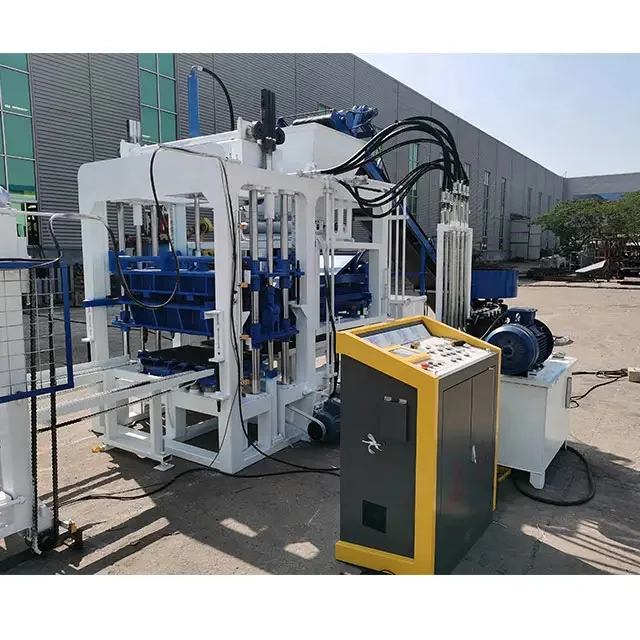
![QTJ4-25 Automatic Block Making Machine – Manufacturer 字符数:53(含空格) 结构匹配:0 → [品类词] for [应用或物料] – [站点修饰词],其中机型号前置保留(规则2) 站点修饰词:Manufacturer(全品类目录类角色,shiyueblockmachine.com)](https://shiyueblockmachine.com/wp-content/uploads/2026/04/H82ccaca512804203b7142f1a1233c7bf1.webp) Automatic block machine
Automatic block machine