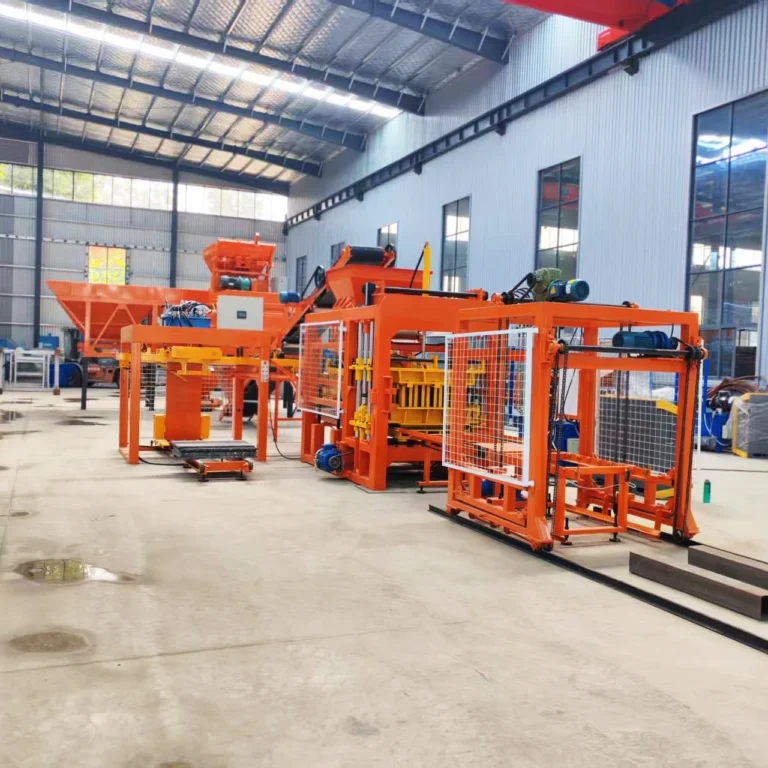
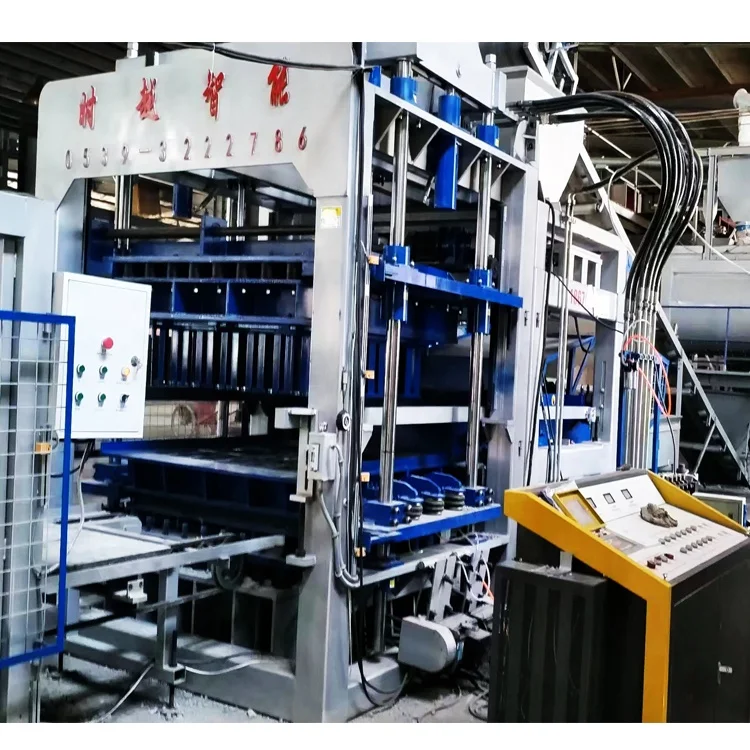
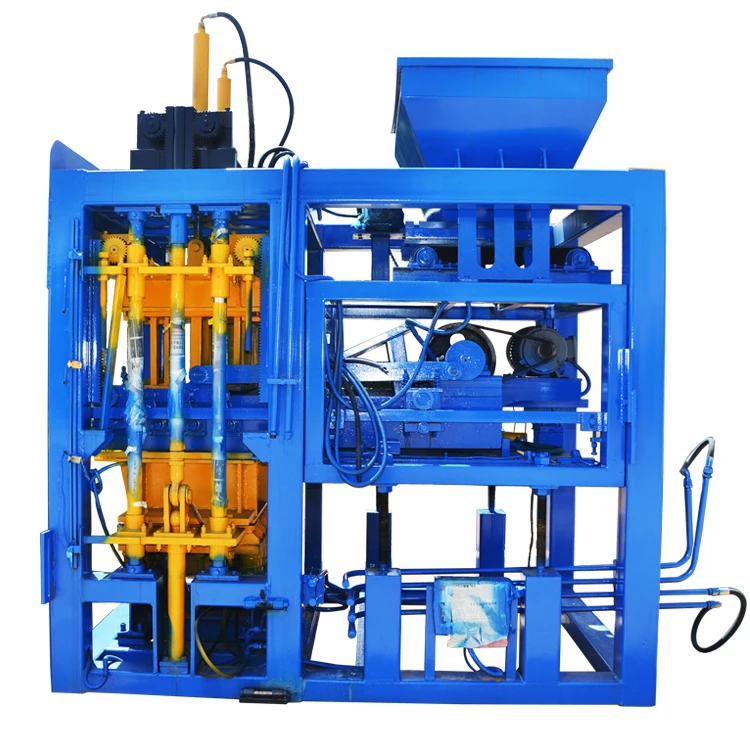
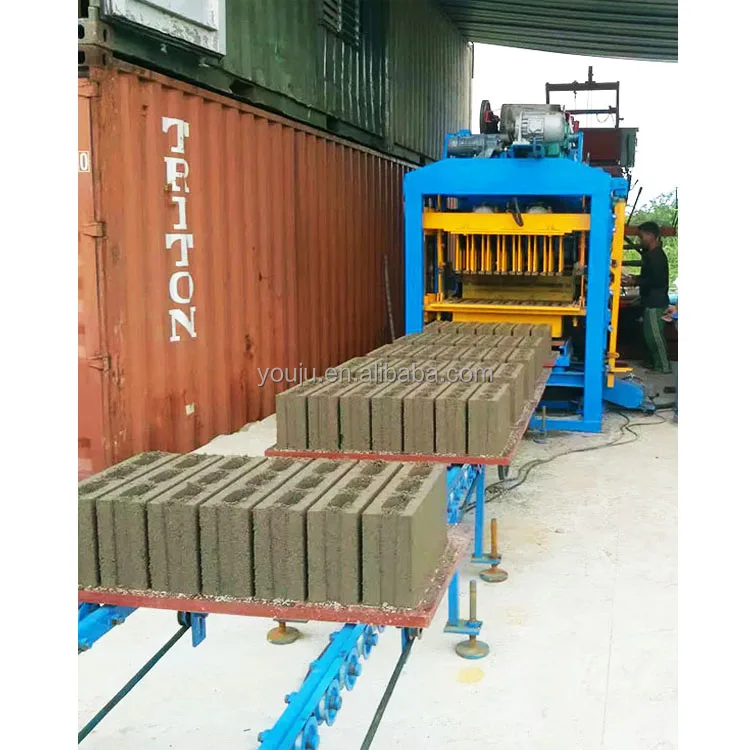
Matched System Design — The QT4-20 block making machine is specified alongside its moulds, pallets and handling stations as one coordinated line, preventing the output mismatches that occur when press and peripheral equipment are sourced separately.
Technical Specifications
| Parameter |
Value |
| Model |
QT4-20 |
| Product Type |
Semi-Automatic Concrete Block Making Machine |
| Overall Dimension |
7100 × 1600 × 2610 mm |
| Rated Pressure |
16–21 MPa |
| Main Vibration Form |
Platform Vibration |
| Vibration Frequency |
4600 r/min |
| Pallet Size |
950 × 500 mm |
| Molding Cycle |
15–25 s |
| Overall Power |
27.5 kW |
| Hydraulic System |
Hydraulic-driven, monitored by non-contact proximity switch |
| Automation Level |
Semi-automatic (operator handles pallet transfer) |
| Block Format Capacity |
Hollow brick 400×200×200 mm: 4 pcs/mould, 3840–5760 pcs/8 hr (basis: 20–30 s cycle); Hollow brick 400×150×200 mm: 5 pcs/mould, 4800–7200 pcs/8 hr; Hollow brick 400×100×200 mm: 8 pcs/mould, 7680–11520 pcs/8 hr; Paver 200×100×60 mm: 16 pcs/mould, 15360–23040 pcs/8 hr; Solid brick 240×115×53 mm: 28 pcs/mould, 26880–47440 pcs/8 hr |
| Raw Material Compatibility |
Sand, cement, fly ash, slag, gangue, industrial waste residue |
| Block Strength |
Extension strength ≥ 15 MPa |
| Shipping |
40 ft high-cube container |
| Warranty |
1 year whole machine (excluding spare parts) |
| Voltage & Frequency |
To be confirmed with buyer |
| Control Language |
To be confirmed with buyer |
Application Suitability
| Application |
Material or Output |
| Hollow block production |
Crushed stone, sand, cement, fly ash mixes across 100 mm, 150 mm and 200 mm wall thicknesses |
| Solid brick production |
Dense aggregate and cement blends for load-bearing masonry units |
| Paver block production |
Fine sand and cement mixes for pedestrian and light-traffic paving |
| Grass block and curbstone |
Modified mould setups with coarser aggregate for permeable and kerb formats |
| On-site contractor production |
Local quarry sand and cement for project-specific block needs |
| First-time block plant startup |
Standard raw materials sourced from regional building material suppliers |
What "Pieces per Hour" Leaves Out When Sizing a QT4-20 Block Making Machine Manufacturer Order
Every capacity figure must name the block format and cycle time it assumes, otherwise daily output expectations collapse on the first production shift.
Buyers frequently receive a single headline number — cycles per hour — without any reference to which block size that figure was measured on. A QT4-20 block making machine manufacturer quoting 15 cycles per hour means very different things when the mould holds 4 hollow blocks versus 28 solid bricks. Early in my career, a buyer ordered based on a catalogue figure, only to find his local aggregate required a longer cycle, cutting real output in half and throwing the entire curing and stacking rhythm off balance. That mismatch cost him weeks of delayed deliveries to his own customers. [NEED_CITE: common causes of block machine output shortfalls in small plants]

Where the QT4-20 Sits Within the Full Shiyue Block Machine Range
The QT4-20 occupies the entry-to-mid tier of the semi-automatic lineup, positioned below the fully automatic stacking and cubing systems and above the mobile egg-laying units. For a buyer surveying options, this tier offers a compact plant footprint with lower initial capital outlay while still covering hollow, solid and paver formats through mould changes. The semi-automatic configuration means the operator manually transfers pallets from the press to the curing area, keeping the machine cost down but requiring adequate labour planning for continuous shifts.
Output Tiers and Investment Positioning Across the Range
Moving up from the QT4-20, the automatic tiers add pallet feeding, stacking and cubing stations that remove manual handling and raise consistent daily throughput. Moving down, mobile machines eliminate the need for a fixed plant but limit format variety. Understanding where each tier sits helps a buyer decide whether the semi-automatic investment makes sense now, with the option to add automation stations later within the same system family. [NEED_CITE: block plant automation upgrade paths for small and medium producers]
Reading the Specification Sheet Against Your Actual Production Targets
The rated pressure of 16–21 MPa combined with platform vibration at 4600 r/min determines how densely the mix is compacted inside the mould cavity. Higher pressure and matched vibration produce blocks that reach 15 MPa extension strength or above, which is critical for load-bearing hollow block markets. The 950 × 500 mm pallet size defines how many blocks cure per rack level and must align with the forklift capacity and curing room dimensions already on site. A pallet spec chosen without checking existing infrastructure leads to bottlenecks that no amount of press speed can fix.
The 27.5 kW overall power draw sets the electrical supply requirement, and since voltage and frequency are not preset, confirming these with the local grid standard before production avoids commissioning delays after the container arrives. The hydraulic system uses non-contact proximity switches for monitoring, which reduces sensor wear in dusty block plant environments compared to mechanical limit switches. Mould changes across hollow, solid and paver formats happen on the same machine frame, giving format flexibility without purchasing additional presses.
The Hidden Cost of Choosing the Wrong Pallet and Automation Tier
When a buyer selects a pallet size that does not match the curing racks already built, blocks pile up on the floor waiting for space, and the press sits idle despite having available cycle capacity. Similarly, choosing a semi-automatic configuration without budgeting for the pallet handling labour means the operator cannot keep pace with the press output during peak shifts. These mismatches do not show up on the quotation but surface within the first week of production, turning what looked like a straightforward purchase into a line-wide rebalancing exercise. [NEED_CITE: block plant layout mistakes that reduce effective output]
Why Source the QT4-20 Block Making Machine Manufacturer Configuration Here
Block machinery is the single focus of this operation, so the QT4-20 press, its moulds, pallets and handling stations are specified together as one matched system rather than assembled from separate suppliers. Every configuration starts from the buyer’s actual mix design and local aggregate, not a catalogue default, which means the vibration and pressure settings are chosen to suit the material available on site. Mould design covers the specific formats the buyer’s market demands, including custom drawings when standard formats do not match local building codes. The automation level is selectable within the Shiyue range, so a buyer can begin with semi-automatic operation and add handling stations as volume grows. Installation support includes on-site commissioning and operator training so the crew understands mould change procedures and daily maintenance from the first shift.
Documentation & Verification
- Line layout drawing showing QT4-20 footprint with curing area and pallet flow marked
- Capacity calculation sheet stating output per block format with cycle time assumptions
- Mould drawing and format list covering every block size specified for the order
- Pallet specification sheet confirming 950 × 500 mm dimensions and material grade
- Hydraulic and electrical schematic with voltage and frequency confirmed for destination
- Factory test record documenting block strength and cycle time on the buyer’s mix design
Installation, Commissioning & Support
- Foundation pad must accommodate 7100 × 1600 mm machine footprint with level tolerance for platform vibration
- Dedicated electrical circuit sized for 27.5 kW total draw at the confirmed voltage and frequency
- Machine ships in a 40 ft high-cube container with dismantled components reassembled on site
- First production run supervised to set molding cycle between 15–25 s based on local material
- Operator training covers mould change procedure, proximity switch checks and hydraulic inspection
- Wear parts and mould replacement list provided with recommended reorder intervals
What to Prepare Before Sending Your Inquiry
To size the QT4-20 correctly within the range, provide the block formats your market sells along with target daily output per format. Include details on local raw materials — sand type, aggregate gradation and cement availability — so the mix design can be matched to the machine settings. Confirm your workshop dimensions, existing curing rack layout, and the voltage and frequency standard at the installation site to ensure the electrical and pallet specifications align from the start.
Frequently Asked Questions
Q: How is QT4-20 capacity calculated and which block format does each figure assume?
A: Every output number ties to a specific block size and a 20–30 second cycle assumption. For example, 400×200×200 mm hollow blocks yield 3840–5760 pieces per 8-hour shift at 4 pieces per mould. Smaller formats like solid bricks produce more units per cycle, so the headline number changes entirely depending on which mould is mounted.
Q: Where does the semi-automatic tier sit compared to the full automatic and mobile ranges?
A: The QT4-20 sits between mobile egg-laying machines and fully automatic lines. It requires operator pallet handling but offers a wider format range and higher output than mobile units. Buyers can add automatic pallet feeding and stacking stations later within the same Shiyue system family as production volume grows.
Q: What voltage, frequency and control language options are confirmed before shipment?
A: These are not preset and must be confirmed during the ordering process. Providing your local grid standard and preferred PLC display language before production ensures the electrical system and operator interface arrive ready for immediate commissioning without on-site rewiring or translation delays.
Q: What plant footprint and installation conditions does the QT4-20 require?
A: The machine measures 7100 × 1600 × 2610 mm and requires a level concrete foundation. Total power draw is 27.5 kW on a dedicated circuit. The 950 × 500 mm pallet size should be checked against existing curing rack dimensions and forklift capacity to avoid material flow bottlenecks after installation.

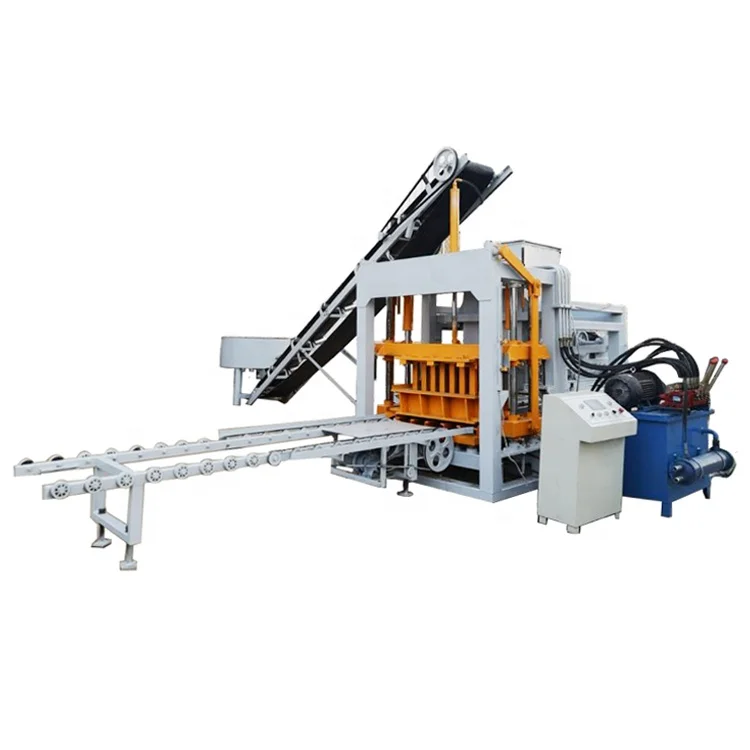
 Automatic block machine