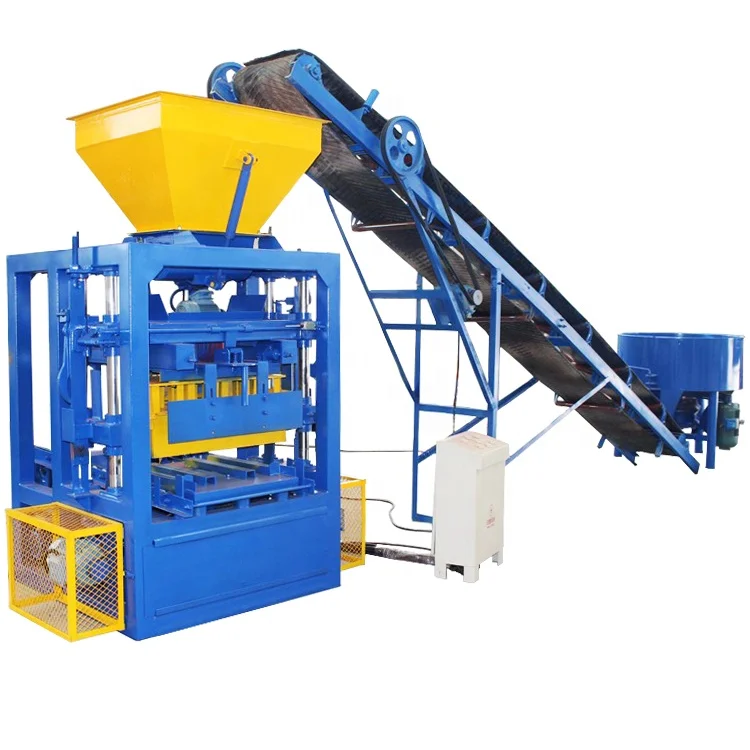
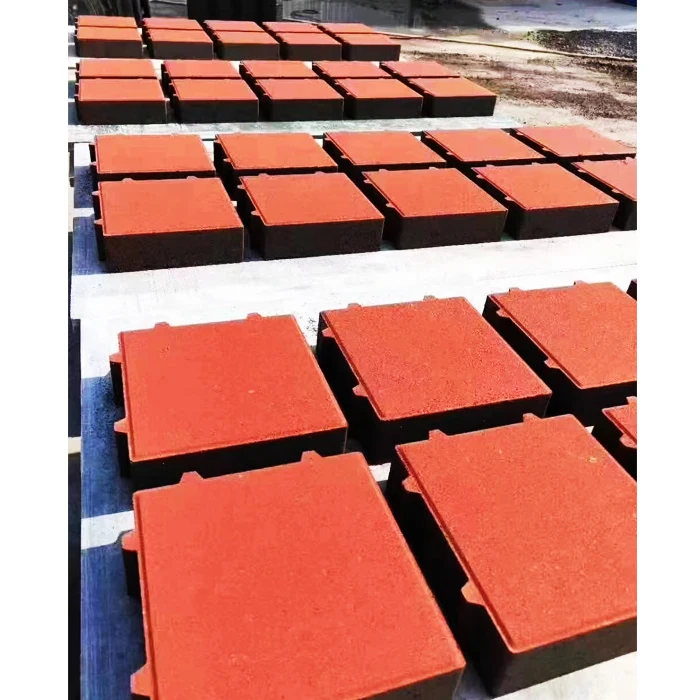
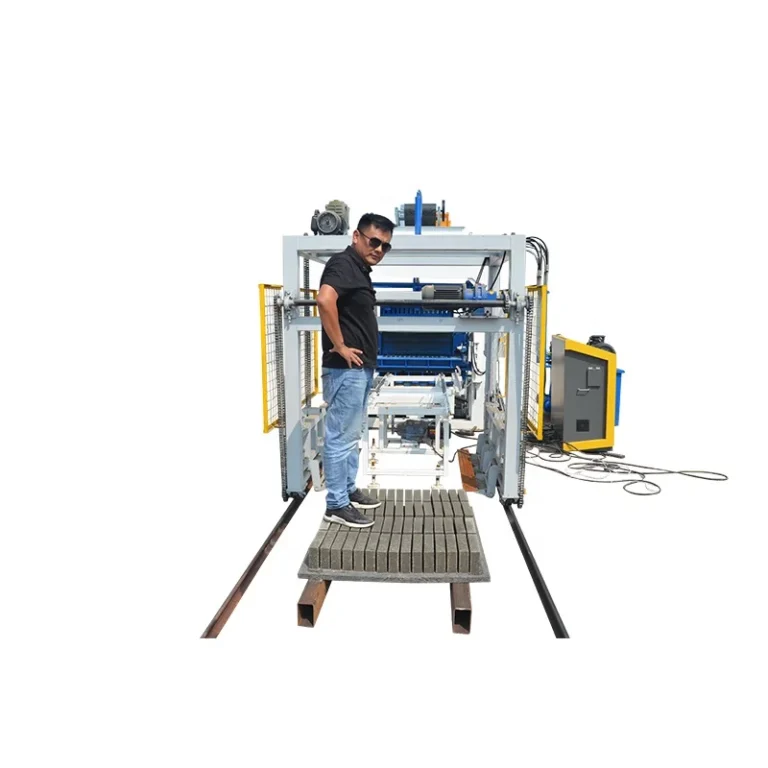
Matched System Sizing — the QT8-15 is specified against your target block format and local mix design, so machine, mould, pallet and handling form one working line rather than a collection of separate purchases.
Technical Specifications
| Parameter |
Value |
| Model |
QT8-15 |
| Product Type |
Automatic Concrete Block Making Machine |
| Overall Dimensions (L×W×H) |
8300 × 1860 × 3000 mm |
| Rated Pressure |
21 MPa |
| Main Vibration Form |
Platform Vibration |
| Vibration Frequency |
2800–4500 r/min |
| Vibration Force |
45 KN |
| Pallet Size |
950 × 900 mm |
| Molding Cycle |
15–20 s (basis not stated in source — confirm block format / material / thickness) |
| Overall Power |
55.5 kW |
| Total Mass |
8 T |
| Demolding Method |
Hydraulic |
| Factory Area |
300 m² |
| Applied Products |
Concrete blocks, hollow/solid blocks, pavers, interlocking blocks, curbstone, colored pavers |
| Raw Material |
Crushed stone, sand, cement, dust, fly ash, gravel, slag |
| Automation Level |
Automatic |
| Warranty |
1 year (without spare parts) |
| Loading |
1 × 40 HQ container (basic equipment) |
Application Suitability
| Application |
Material or Output |
| Hollow block production for commercial and residential walls |
Crushed stone, sand, cement, fly ash blends |
| Solid block manufacturing for load-bearing structures |
Gravel, sand, cement with high compaction |
| Interlocking paver runs for driveways and walkways |
Fine aggregate, cement, pigment for colored faces |
| Curbstone production for road and pavement edges |
Coarse aggregate, slag, cement at high pressure |
| Porous and permeable block formats for drainage |
Open-graded aggregate, cement with controlled vibration |
Why the Voltage Question Should Come Before the Price with Your QT8-15 Automatic Block Machine Manufacturer
Confirming local voltage, frequency, and control language before the deposit saves weeks of idle site time.
I once shipped a QT8-15 to a job site in Nigeria where the supply was 415V/50Hz. The motor had been configured for 380V based on an assumption, and the local transformer took three weeks to arrive. The entire crew stood around a silent machine waiting for power that matched the nameplate [NEED_CITE: voltage and frequency standards by export market]. A mismatch like that does not just delay commissioning — it burns through contractor penalties and erodes the buyer’s confidence before the first block is pressed. When you evaluate any QT8-15 automatic block machine manufacturer, the electrical confirmation should be a documented step, not a verbal afterthought.
Placing the QT8-15 Within the Shiyue Full Machine Range
The QT8-15 occupies the mid-to-high tier of the automatic lineup. Buyers moving up from a semi-automatic unit recognize it as the point where pallet handling, stacking and curing rack transfer begin to justify their automation cost. For a first-time plant owner, the QT8-15 automatic block machine manufacturer positions this model as the threshold where daily output supports a dedicated sales route without requiring the footprint of a high-capacity line.
When to Step Up or Step Down in the Range
If your target market sells primarily 400×200×200 mm hollow blocks and your daily volume requirement stays modest, a lower-tier semi-automatic machine may return a faster payback on a smaller site. The QT8-15 earns its place when the format list broadens — pavers, interlockers, and curbstones on the same 950×900 mm pallet — and the buyer needs the molding cycle to stay consistent across changeovers [NEED_CITE: block format demand variability in emerging construction markets]. Stepping up to a higher-capacity model makes sense only when the pallet size must increase or the cycle must compress further.
Reading the Numbers That Actually Matter
The 21 MPa rated pressure and 45 KN vibration force together determine the green density of every block that leaves the mould. Insufficient pressure with high vibration causes edge spalling; excessive pressure with low vibration leaves the core under-compacted. The 2800–4500 r/min frequency range allows the operator to tune compaction to the local aggregate — finer fly ash blends respond to higher frequency, while coarse crushed stone benefits from the lower end of the band. The 950×900 mm pallet dimension governs how many blocks fit per cycle and must align with the curing rack spacing and the forklift tine width already on site. A 300 m² factory area keeps the press, mixer, and pallet return loop inside a single bay without crowding the curing zone.

The Cost of Skipping the Pallet and Line Match
A buyer who confirms only the press specification often discovers later that the pallet material warps under local curing temperatures, or that the stacking method was never included in the quotation. Blocks then pile up at the press exit, waiting for manual transfer, and the cycle advantage the QT8-15 was meant to deliver disappears into hand labor [NEED_CITE: pallet handling bottlenecks in block production]. The mould change, left unpracticed, stretches past a single shift and cancels the format flexibility the buyer paid for. These are not machine faults — they are gaps in line-level specification that surface only after commissioning.
Why Procurement Through This Range Works
Block machinery is the single focus here, so the QT8-15 arrives as a matched system: press, mould, pallet, and handling specified together against the buyer’s actual mix and target format. Configuration is set against the buyer’s local aggregate and block strength requirement rather than pulled from a catalogue default. Moulds are designed for the formats the buyer’s market actually sells, with custom drawings accepted when standard formats do not cover the local demand. Automation level is selectable, meaning a buyer can start with the QT8-15 in its current configuration and add stacking or cubing modules as volume grows. Installation support includes operator training on the specific PLC language confirmed before shipment.
Documentation & Verification
- Line layout and capacity calculation stating the block format assumed for each output figure
- Machine specification sheet confirming vibration force, hydraulic pressure, and pallet size match your format
- Mould drawing and format list covering every block type in your sales plan
- Voltage, frequency, and control language confirmation record signed before production begins
- Factory test record and packing photographs verifying configuration before the container is sealed
Installation, Commissioning & Support
- Foundation pad sized to 8300 × 1860 mm machine footprint with vibration isolation as needed
- Dedicated power circuit rated for 55.5 kW total draw at the confirmed local voltage and frequency
- Machine dismantled for 40 HQ loading and reassembled on site with alignment checks
- First-run parameter tuning covering vibration frequency, pressure, and cycle timing per block format
- Operator training in the confirmed PLC display language on mould change and daily maintenance routines
- Wear parts list covering hydraulic seals and mould liners with reorder references
What to Include in Your Inquiry
To receive a configuration proposal that holds up through commissioning, share your target block formats with dimensions, the daily output you need per format, the local aggregate and cement type available, and your site voltage and frequency. Note the pallet size your curing area and forklift already accommodate, and specify the control language your operators read. If you have an existing mixer or batching station, mention its capacity so the feed rate can be matched to the QT8-15 cycle.
Frequently Asked Questions
Q: How does QT8-15 output vary by block format?
A: The 15–20 second molding cycle applies to a reference format; actual cycle time shifts with block thickness, material, and vibration tuning. Hollow blocks typically complete faster than tall curbstones. Request a capacity calculation that lists each format you plan to produce so the daily estimate reflects your real product mix.
Q: Where does the QT8-15 sit in the Shiyue full range?
A: It occupies the mid-to-high automatic tier, suited to buyers outgrowing semi-automatic output or entering automatic production for the first time. Buyers needing larger pallets or shorter cycles step to a higher model; those with a single block format and lower volume may start on a semi-automatic unit and upgrade later.
Q: What plant footprint does the QT8-15 require?
A: A 300 m² factory area covers the press, pallet circulation, and immediate stacking zone. Curing rack space is additional and depends on the block volume you intend to cure simultaneously. Compare this against adjacent models to confirm your site can accommodate the full line with room for raw material storage.
Q: What voltage and control language options are available?
A: Voltage and frequency are configured to the buyer’s local supply before production — 380V, 415V, or other standards as confirmed. The PLC display language is set to the operator’s working language. Both are documented in the electrical confirmation record to avoid delays at commissioning.
Q: Can the QT8-15 be upgraded as production scales?
A: The automation level is selectable, so a buyer can begin with manual pallet handling and add automatic stacking or cubing modules later. Mould inventory can expand to cover additional formats on the same 950×900 mm pallet dimension without replacing the press itself.

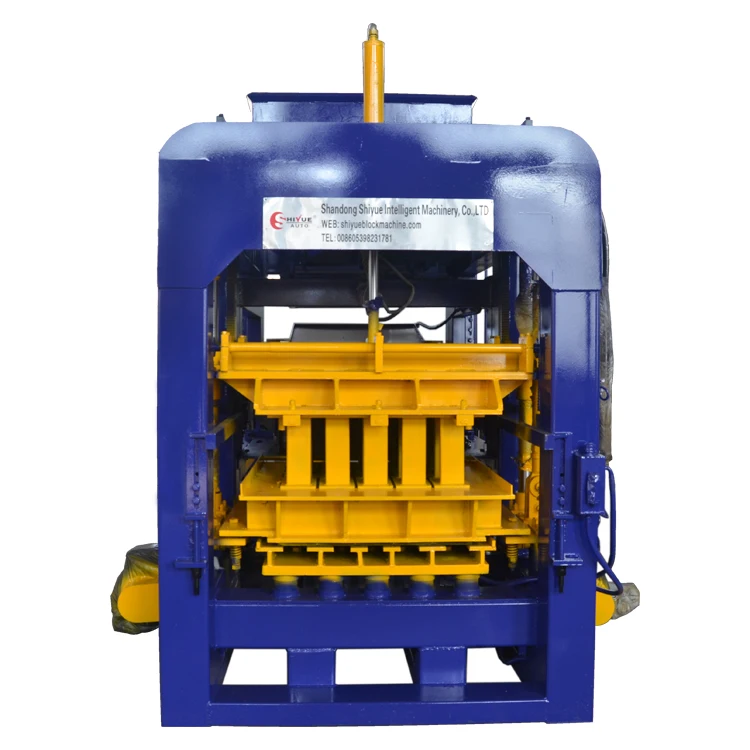
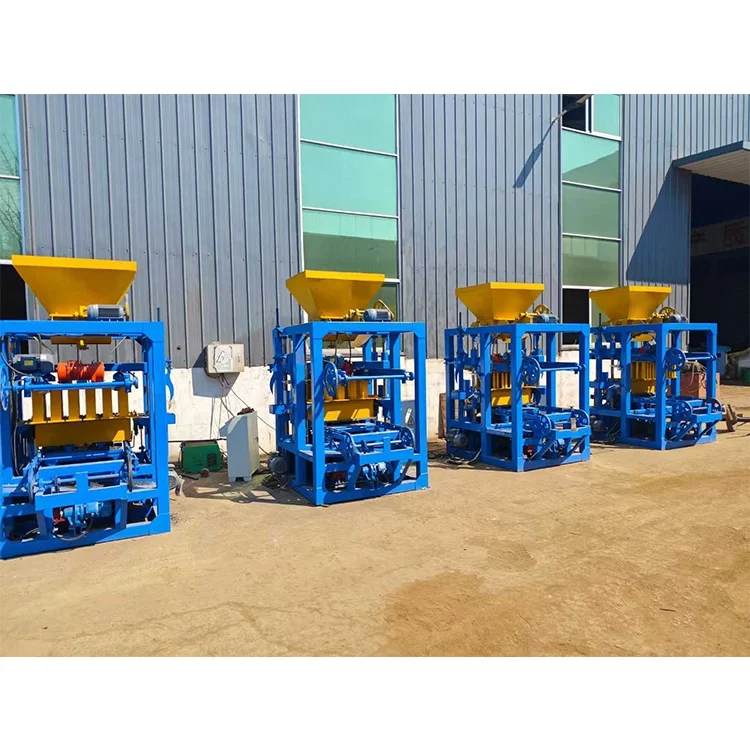 High quality block machine