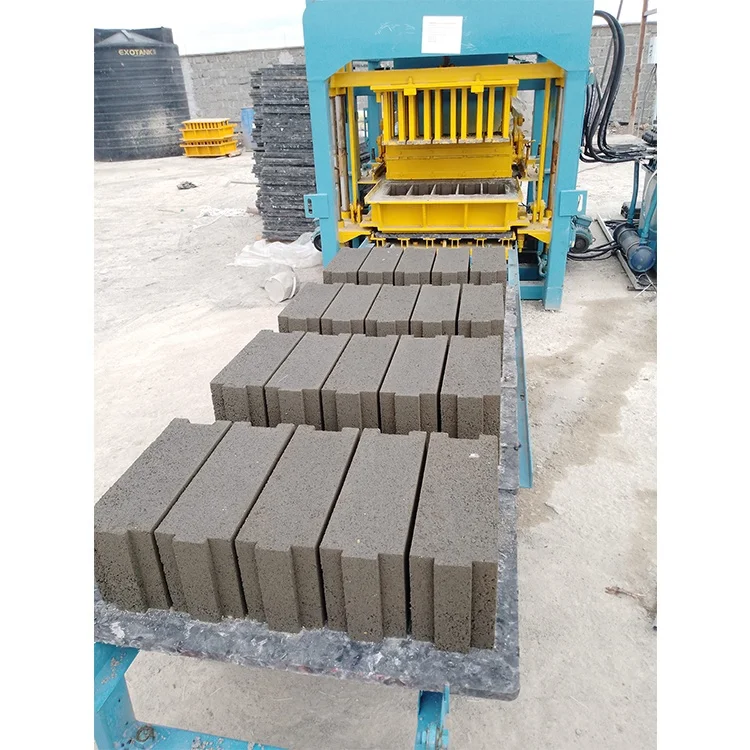
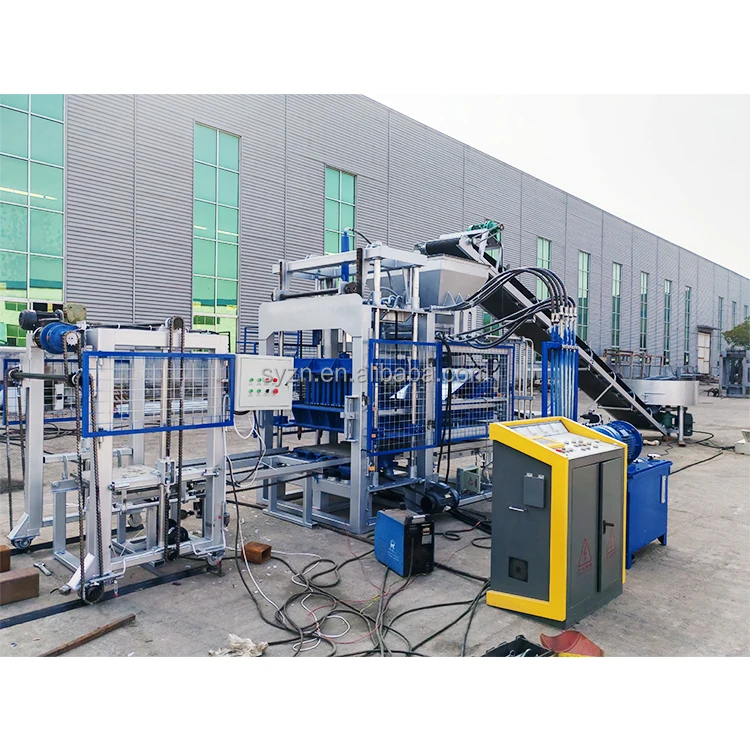
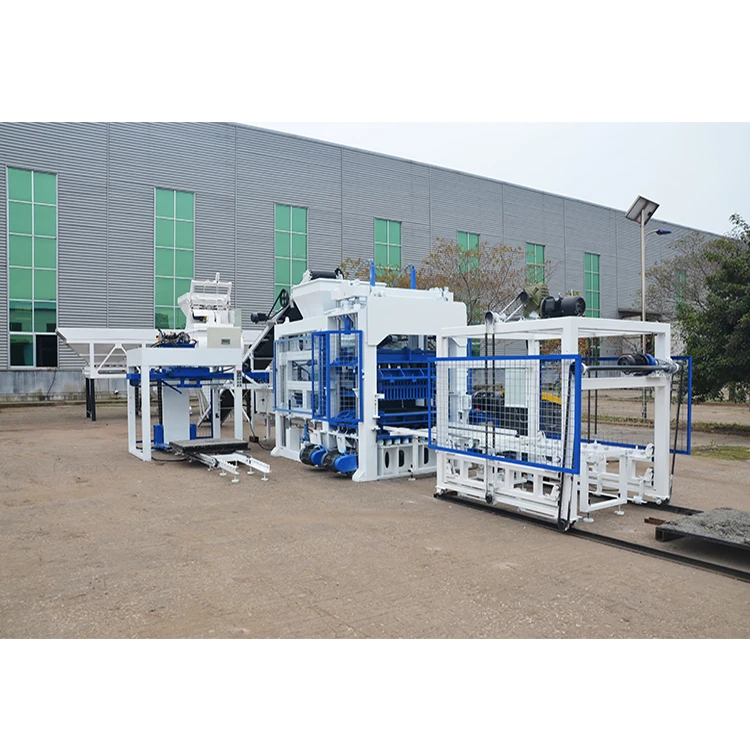
Configuration Set to Buyer Reality — the QTJ4-26 semi-automatic block machine is specified against the buyer’s actual aggregate and block format, not a catalogue default, so daily output figures match what the plant actually produces.
Technical Specifications
| Parameter |
Value |
| Model |
QTJ4-26 |
| Product Type |
Concrete Block Making Machine |
| Overall Dimensions (L×W×H) |
2060×1730×2580 mm |
| Molding Cycle |
26 s |
| Vibration Frequency |
4200 r/min |
| Exciting Force |
35.5 kN |
| Rated Power |
14.25 kW |
| Mixer Model |
JQ350 |
| Pallet Size |
850×450×20 mm |
| Net Weight |
1800 kg |
| Automation Level |
Semi-automatic (four guide pillars, automatic mould movement) |
| Applied Products |
Concrete hollow blocks (8 inch, 6 inch), solid bricks, interlocking bricks |
| Raw Materials |
Crushed stone, sand, cement, dust, fly ash |
| Output Capacity (390×190×190 mm hollow block) |
480 pcs/h, 3800 pcs/8 hr |
| Output Capacity (400×150×200 mm hollow block) |
600 pcs/h, 4800 pcs/8 hr |
| Output Capacity (240×115×53 mm solid brick) |
2100 pcs/h, 17000 pcs/8 hr |
| Voltage & Frequency |
(basis to be confirmed with buyer’s site) |
| Control System |
(basis to be confirmed) |
| Hydraulic Pressure |
(basis to be confirmed) |
Application Suitability
| Application |
Material or Output |
| Small to medium block plant startup |
Hollow blocks and solid bricks from crushed stone, sand, and cement |
| On-site block manufacturing for construction contractors |
Interlocking bricks and hollow blocks using locally available aggregate and fly ash |
| Building material distributors adding block production |
Mixed-format output across 8-inch, 6-inch hollow blocks and standard solid bricks |
| First-time block plant entrepreneurs |
Semi-automatic production with manual pallet handling at moderate daily volumes |
Why "480 Blocks per Hour" Is Only Half the Story
Every capacity figure for this concrete block making machine manufacturer lineup is tied to a specific block format — and the number changes dramatically when the format changes.
I have watched buyers sign off on a machine quoted at several hundred blocks per hour, only to discover that figure assumed a small solid brick they never intended to sell. When they switch to the 8-inch hollow block their market actually demands, the same machine produces noticeably fewer units per shift. The QTJ4-26 is rated at 480 pcs/h based on a 390×190×190 mm hollow block, 600 pcs/h based on a 400×150×200 mm hollow block, and 2100 pcs/h based on a 240×115×53 mm solid brick. Three very different numbers from one machine [NEED_CITE: block format impact on cycle time and daily output]. Knowing which format drives your revenue before you compare machines prevents the most common disappointment in block plant purchasing.

Where the QTJ4-26 Sits in the Full Machine Range
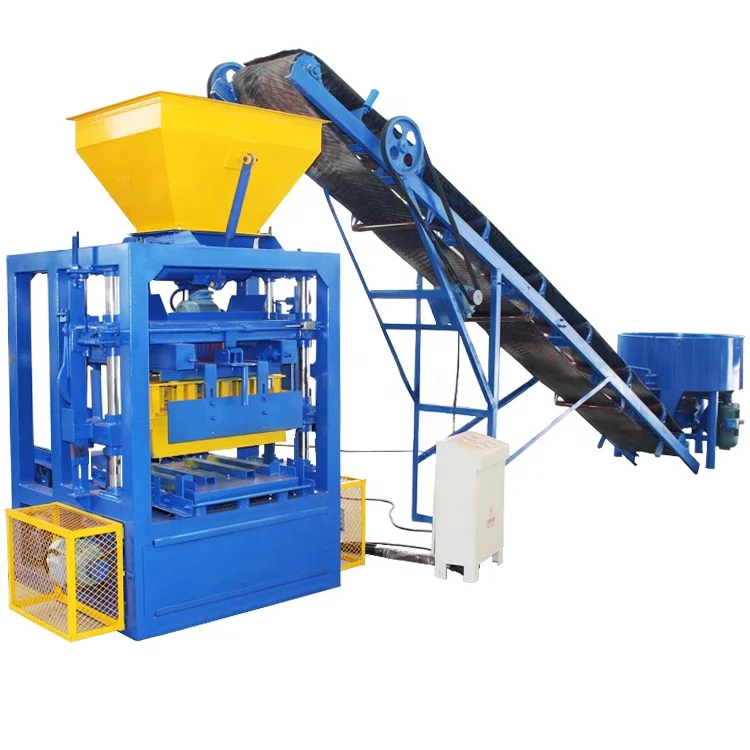
The Shiyue range spans mobile egg-laying machines for on-site work with no fixed plant, through semi-automatic models like the QTJ4-26, up to fully automatic lines with pallet feeding, stacking, and cubing. This model occupies the entry semi-automatic tier, where the press itself handles mould movement automatically via four guide pillars while pallet handling remains manual. For a concrete block making machine manufacturer serving first-time plant owners, this tier provides a clear starting point that keeps initial investment contained.
How the Semi-Automatic Tier Shapes Your Plant Layout
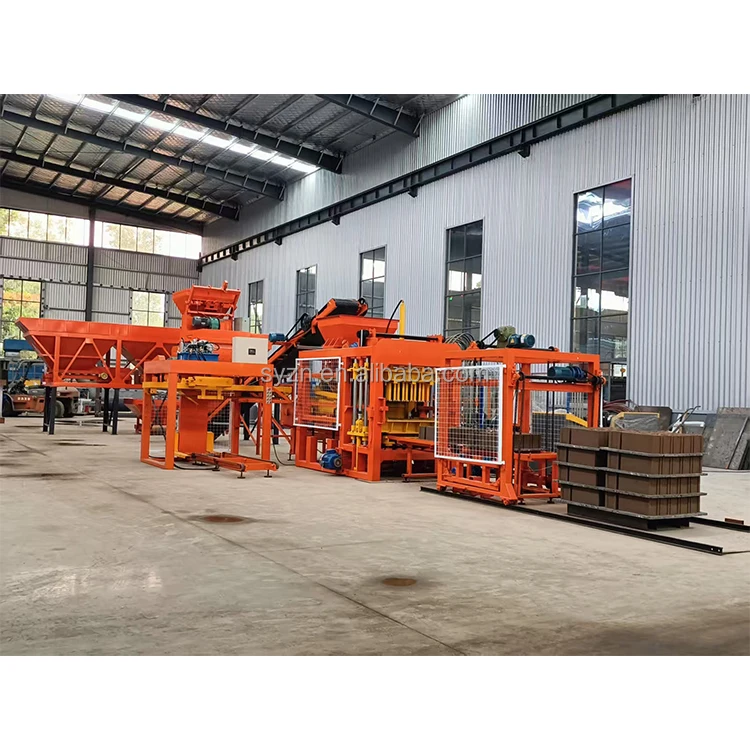
At this tier, the operator feeds pallets by hand and removes finished blocks manually after the 26-second molding cycle completes. The JQ350 mixer feeds material into the hopper, and the vibration system compacts the mix under the stated exciting force. What this means for plant layout is that curing area and pallet circulation must be planned around human pace, not machine cycle [NEED_CITE: manual pallet handling impact on plant workflow design]. Buyers who understand this upfront can size their curing racks and forklift routes to keep the press running without pauses.
Reading the Specs That Actually Determine Block Quality
The vibration frequency of 4200 r/min and exciting force of 35.5 kN work together to compact the concrete mix inside the mould cavity. Higher vibration frequency alone does not guarantee denser blocks — the force must be matched to the mix design and aggregate gradation the buyer can actually source locally. The 850×450×20 mm pallet size determines how many blocks cure per square meter of yard space and whether the buyer’s existing forklift can handle loaded pallets without modification. The four guide pillar system keeps the mould aligned during each cycle, which directly affects dimensional consistency across a production run. When hydraulic pressure, vibration, and mix design are all calibrated to the same target, block strength meets the local standard without trial-and-error waste during commissioning.
What Happens When Pallet Size and Curing Area Do Not Match
A pallet dimension chosen without checking the curing yard means the buyer either wastes floor space or cannot stack pallets safely for the required curing period. I have seen plants where the forklift tines were too short for the pallet depth, forcing a separate equipment purchase before the first block could leave the press. The QTJ4-26 specifies 850×450×20 mm pallets, and that measurement should be checked against the curing rack spacing and transport equipment already on site [NEED_CITE: pallet and curing area mismatch consequences]. Getting this wrong after the machine arrives costs more than confirming it before production starts.
Why Buyers Source This Tier from a Single-Focus Manufacturer
Block machinery is the only product line here, which means the QTJ4-26 press, its moulds, pallets, and mixer are specified as one matched set rather than assembled from separate suppliers. Mould design covers the formats the buyer’s market actually sells — hollow blocks, solid bricks, and interlocking bricks — with custom drawings available when standard formats do not fit local building codes. Voltage, frequency, and control panel language are confirmed before production begins, avoiding the situation I encountered years ago when a machine arrived in West Africa with a Chinese-language PLC screen and no one on site could read it. The automation level is selectable, so a buyer starting with the QTJ4-26 semi-automatic configuration has a defined upgrade path to higher tiers as demand grows.
Documentation & Verification
- Machine specification sheet confirming vibration force, power rating, and pallet dimensions for the QTJ4-26
- Capacity calculation document stating the exact block format assumed for each output figure
- Mould drawing and format list showing included and optional block types
- Voltage, frequency, and control language confirmation record signed before production
- Factory test record on the buyer’s target block format before dispatch
Installation, Commissioning & Support
- Foundation pad sized to the 2060×1730 mm footprint with level tolerance for four guide pillar alignment
- Dedicated power circuit rated for the 14.25 kW total load including the JQ350 mixer
- Machine shipped partially assembled with mould and vibration motor pre-mounted
- First-run commissioning includes cycle timing verification on the buyer’s specific block format
- Operator training covers mould change procedure, pallet loading sequence, and daily maintenance checks
- Wear parts list with hydraulic seals and vibration motor bearings identified for first reorder
What to Prepare Before Requesting a Quote
To match the QTJ4-26 to your actual production needs, provide the block formats your market sells along with target daily output per format. Include your local aggregate type and any available fly ash or alternative materials so the mix design can be factored into the configuration. Confirm your site voltage, frequency, and preferred control panel language, along with the curing area dimensions and forklift specifications you already have on hand.
Frequently Asked Questions
Q: How is QTJ4-26 capacity calculated per block format?
A: Each output figure is tied to a specific block dimension. The machine produces 3800 pieces per 8-hour shift based on 390×190×190 mm hollow blocks, 4800 pieces per shift based on 400×150×200 mm hollow blocks, and 17000 pieces per shift based on 240×115×53 mm solid bricks. The molding cycle is 26 seconds, and actual daily throughput depends on pallet handling speed and mixer feed rate.
Q: Where does the QTJ4-26 fit compared to automatic and mobile tiers?
A: It sits in the entry semi-automatic tier, above mobile egg-laying machines and below fully automatic lines. The press handles mould movement automatically through four guide pillars, but pallet feeding and block removal are manual. Buyers who outgrow this tier can move to higher automation levels within the same product range.
Q: What voltage and frequency options are available?
A: Voltage and frequency are confirmed with each buyer before production to match local grid standards. This avoids commissioning delays when the machine arrives on site. The control panel language is also set during this confirmation step so operators can read all displays from day one.
Q: How much curing space does a QTJ4-26 plant require?
A: Curing space depends on the 850×450×20 mm pallet size and the number of pallets circulating between the press and the yard. Buyers should measure their available curing area and confirm forklift compatibility with these pallet dimensions before finalizing the plant layout.
Q: Can a buyer start semi-automatic and upgrade later?
A: Yes. The automation level across the Shiyue range is selectable, and the QTJ4-26 serves as a defined entry point. As production volume grows, buyers can transition to higher tiers that add automatic pallet feeding, stacking, and cubing without replacing the entire production concept.

 High quality block machine