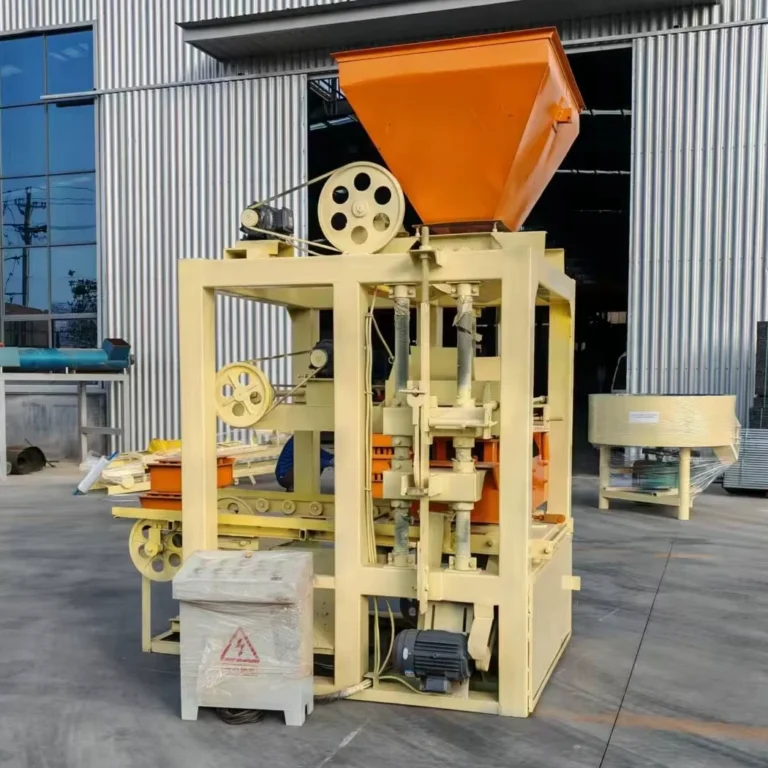
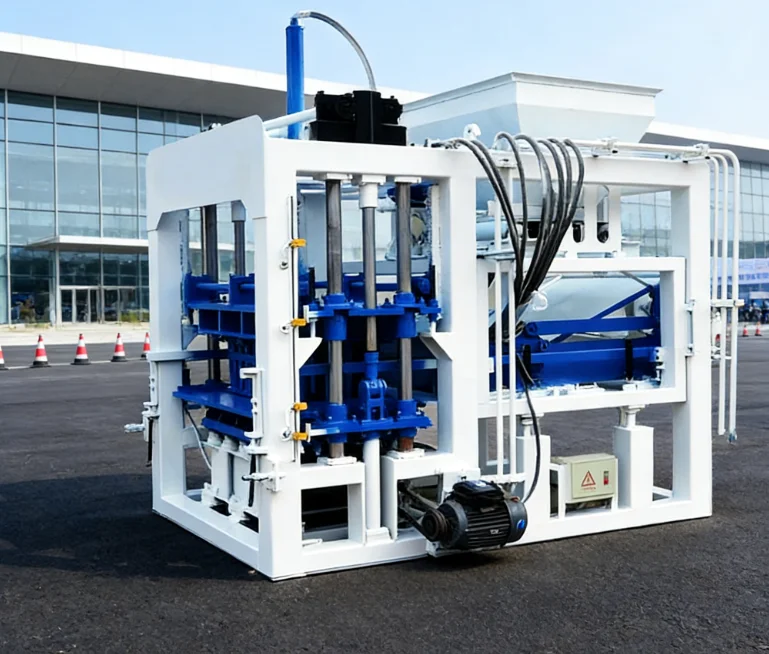
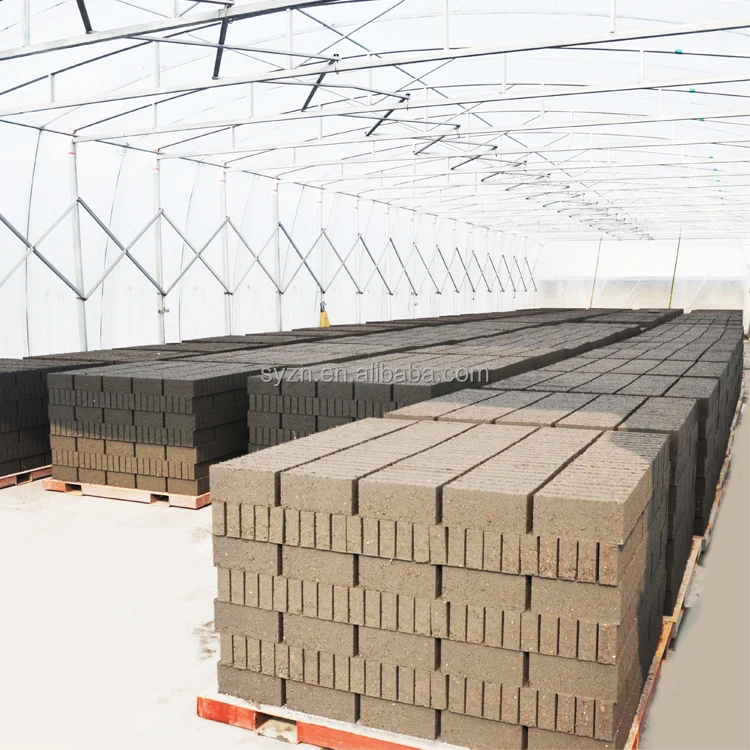
Configuration Matched to Local Materials — The QT6-15 automatic block making machine is configured around the buyer’s confirmed raw material sample and target block format before any capacity figure enters the contract, ensuring quoted output reflects what the machine will actually produce on site.
Technical Specifications
| Parameter |
Value |
| Model |
QT6-15 |
| Product Type |
Automatic Hydraulic Concrete Block Making Machine |
| Overall Dimensions |
7100×1500×3000 mm |
| Weight of Machine |
8700 kg |
| Rated Hydraulic Pressure |
21 MPa |
| Vibration Form |
Platform vibration |
| Vibration Frequency |
4500–5100 r/min |
| Molding Cycle |
15–25 s (basis not stated in source — confirm block format / material / thickness) |
| Pallet Size |
880×850 mm |
| Overall Power |
31.25 kW (rated or peak not specified in source) |
| Drive Type |
Hydraulic |
| Control System |
PLC intelligence control with human-machine dialogue |
| Automation Level |
Fully automatic |
| Stated Block Strength |
Hollow blocks 8–10 MPa; Solid bricks 10–20 MPa (source value — verify against manufacturer catalog) |
| Raw Material Ratio |
Cement 8–10%, Sand 30–40%, Stone 50–60% (approx. 1:4:5) (source value — verify) |
| Raw Material Consumption |
150–190 T per day (source value — verify) |
| Water Consumption |
3–5% of raw material weight (source value — verify) |
| Voltage & Frequency |
Configurable — confirm before order |
| PLC Display Language |
Configurable — confirm before order |
| Standards |
CE (to be confirmed per order) |
Application Suitability
| Application |
Material or Output |
| Hollow block production for masonry walls |
Crushed stone, sand, cement with standard 8–10% cement ratio |
| Solid brick manufacturing |
Fine aggregate blends targeting 10–20 MPa compressive strength |
| Paving block and kerbstone production |
Dense aggregate mixes on the 880×850 mm pallet footprint |
| On-site production for housing projects |
Local aggregate sourced near project location |
| Format expansion for existing concrete plants |
Additional mould configurations fitted to the standard pallet |
What "15–25 Seconds Per Cycle" Actually Means for Your Output
Cycle time alone does not tell you how many blocks you will produce in a shift — the block format and mould cavity count define the real daily throughput.
When a supplier quotes a QT6-15 automatic block making machine manufacturer based on cycles per hour without naming the block format, the number looks impressive on paper. A 15-second cycle producing a single large hollow block delivers far fewer units per day than the same cycle producing a multi-cavity paving block mould. I have watched buyers sign contracts on cycle time figures, then arrive at commissioning to discover their actual shift output covers only half their market commitment [NEED_CITE: block output calculation methods by format and cavity count]. The pallet size here — 880×850 mm — is the physical constraint that determines which moulds fit and how many cavities each mould carries. Before any capacity number goes into a contract, the specific block format, wall thickness, and target compressive strength must be confirmed so the cycle time can be measured against the actual product.

Positioning the QT6-15 Within the Full Stationary Range
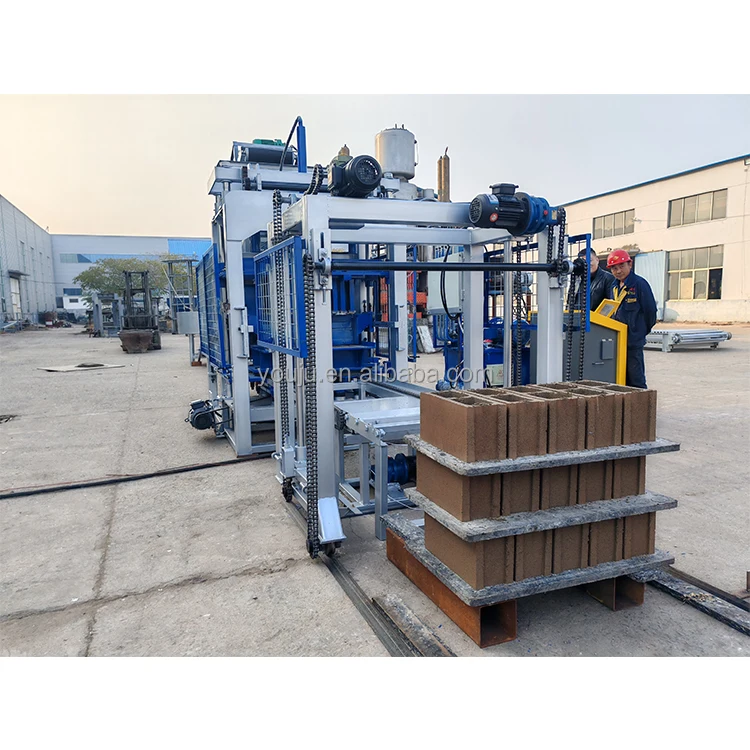
The QT6-15 occupies the mid-to-high tier of stationary automatic block machines, sitting above small semi-automatic models that rely on manual pallet handling and below the highest-capacity lines designed for continuous three-shift operation. Buyers evaluating a first automatic plant typically land on this tier when daily volume requirements exceed what a semi-automatic press can sustain but do not yet justify the footprint and utility demands of a top-tier line. The 31.25 kW total power draw and 8700 kg machine weight indicate an installation that fits within a standard industrial workshop without requiring a dedicated substation.
Matching Automation Level to Your Workforce Reality
A fully automatic QT6-15 automatic block making machine manufacturer configuration handles pallet feeding, block pressing, and output sequencing through PLC control with human-machine dialogue. This removes the operator from direct contact with the pressing cycle and reduces the crew required on the block line. However, full automation also means that pallet return systems, curing rack handling, and stacking stations must be specified alongside the press — otherwise the automatic cycle simply produces blocks faster than they can be moved to curing. The automation decision should be driven by available labour, local wage rates, and the curing area layout already in place at the buyer’s facility [NEED_CITE: automation level impact on block plant staffing requirements].
Understanding the Hydraulic and Vibration Partnership
The 21 MPa rated hydraulic pressure and platform vibration at 4500–5100 r/min work together to compact the concrete mix into the mould cavity. Hydraulic pressure provides the static compaction force that squeezes the mix, while high-frequency vibration liquefies the material momentarily so it flows into mould corners and achieves uniform density. If either force is out of proportion to the other — too much pressure without enough vibration, or high vibration without sufficient clamping — blocks emerge with density gradients, weak corners, or surface cracking. The 880×850 mm pallet must also be rigid enough to transmit vibration without absorbing it; pallet material and thickness directly affect block quality and must be matched to the vibration frequency range. Mould change on this class of machine requires mechanical lifting and alignment, and the time involved determines whether format switching is practical within a single shift or requires dedicated changeover windows.
The Cost of Skipping the Raw Material Conversation
When a buyer does not provide a local aggregate sample before ordering, the machine arrives configured for a generic mix design that may not match locally available sand, stone, or cement grades. The vibration frequency and hydraulic pressure settings that produce strong blocks with a clean river sand may leave blocks under-compacted when the local sand carries high clay content. In one project I was involved with, the customer’s aggregate had a silt percentage far above what the default configuration expected, and the blocks failed compressive strength tests until the vibration and pressure parameters were re-tuned on site — weeks of production lost. Confirming the raw material ratio and testing the actual aggregate before finalising machine settings avoids this commissioning delay [NEED_CITE: effect of aggregate silt content on concrete block compressive strength].
Why Buyers Source This Machine Here
Block machinery is the single product focus, so the QT6-15 press, moulds, pallets, and handling equipment are specified as one matched system rather than assembled from separate suppliers. Configuration is set against the buyer’s confirmed mix design and target block format, not pulled from a catalogue default. Mould design covers the formats the buyer’s market actually sells, with custom mould engineering available from buyer-supplied drawings. Automation level can be selected and upgraded, allowing a buyer to start with core automation and add stacking or cubing stations later as volume grows. Installation support includes on-site commissioning and operator training so the machine runs at its confirmed capacity from the first production shift.
Documentation & Verification
- Line layout drawing with capacity calculation stated per confirmed block format
- Machine specification sheet confirming voltage, frequency, and PLC display language
- Mould drawing and format list showing cavity counts for the 880×850 mm pallet
- Factory test record with the machine running the buyer’s target block before dispatch
- Hydraulic and electrical schematic for on-site maintenance reference
- Operation and maintenance manual with wear parts and mould replacement list
Installation, Commissioning & Support
- Foundation pad sized for the 7100×1500 mm footprint with anchor bolt template supplied
- Dedicated power circuit matched to the confirmed voltage and 31.25 kW total draw
- Machine shipped in dismantled state with reassembly sequence documented in the manual
- Commissioning includes mould fitting, vibration tuning, and PLC parameter setting for the confirmed mix
- Operator training covers PLC dialogue navigation, mould change procedure, and daily maintenance checks
- Wear parts list provided at shipment with reorder specifications for hydraulic seals and mould liners
What to Include in Your Inquiry
Provide the specific block formats you need to produce, including dimensions, wall thickness, and target compressive strength. State your daily output requirement in units per shift so capacity can be calculated against each format on the 880×850 mm pallet. Include your local voltage and frequency, preferred PLC display language, and a sample or analysis of your local aggregate so the machine configuration reflects your actual production conditions.
Frequently Asked Questions
Q: How is the QT6-15’s output capacity calculated, and which block format is assumed?
A: Output capacity is calculated by multiplying the confirmed molding cycle time by the number of cavities in the specific mould fitted to the 880×850 mm pallet, then adjusting for shift length and operational efficiency. No single capacity figure applies across all formats — a multi-cavity paving block mould produces more units per cycle than a large hollow block mould. Capacity in the contract is always stated per confirmed format.
Q: Where does the QT6-15 sit in the full machine range compared to other tiers?
A: The QT6-15 is positioned in the mid-to-high tier of stationary automatic block machines, above semi-automatic models that require manual pallet handling and below the highest-capacity lines built for continuous multi-shift production. It suits buyers whose daily volume exceeds semi-automatic output but who do not yet need the footprint and utility infrastructure of a top-tier automatic plant.
Q: What plant footprint and utility requirements does the QT6-15 need for installation?
A: The machine itself measures 7100×1500×3000 mm and weighs 8700 kg, requiring a level reinforced concrete foundation with anchor bolts. Total power draw is 31.25 kW at the confirmed voltage and frequency, needing a dedicated circuit. Additional floor space must be allocated for pallet return, curing rack access, and raw material storage adjacent to the press.
Q: Which voltage and frequency configurations are available, and how is the PLC language set?
A: Voltage and frequency are configured to match the buyer’s site supply — this must be confirmed before production begins so motors and control components are sourced correctly. The PLC display language is set during assembly based on the buyer’s preference, ensuring the operator can navigate menus and diagnostics from the first day of commissioning.
Q: What mould formats are available for the 880×850 mm pallet, and can custom moulds be supplied?
A: Standard moulds cover hollow blocks, solid bricks, paving blocks, kerbstones, interlocking bricks, and porous bricks, all designed for the 880×850 mm pallet footprint. Custom moulds can be engineered from buyer-supplied drawings when a specific block format or dimension falls outside the standard range, with cavity count optimised for the confirmed product.

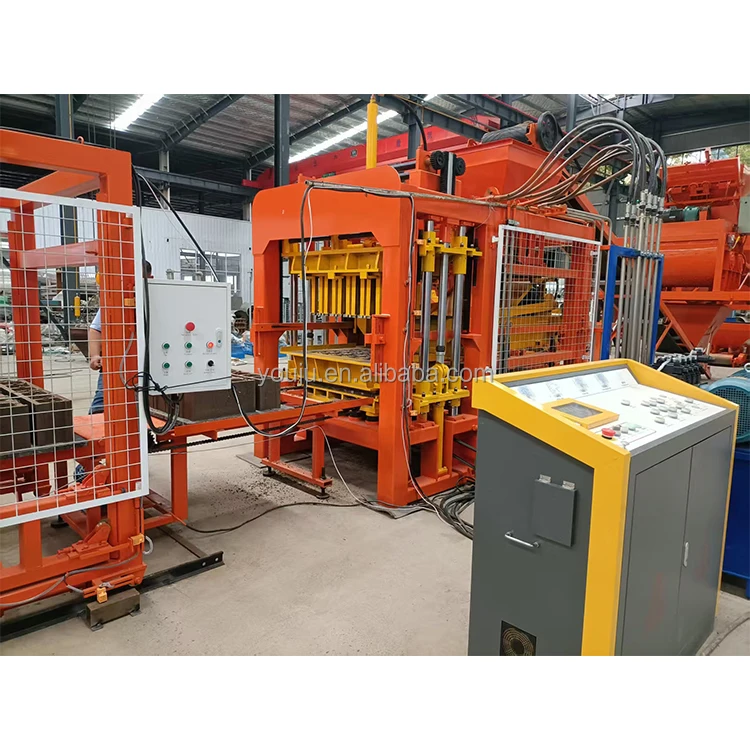
 Stationary block machine