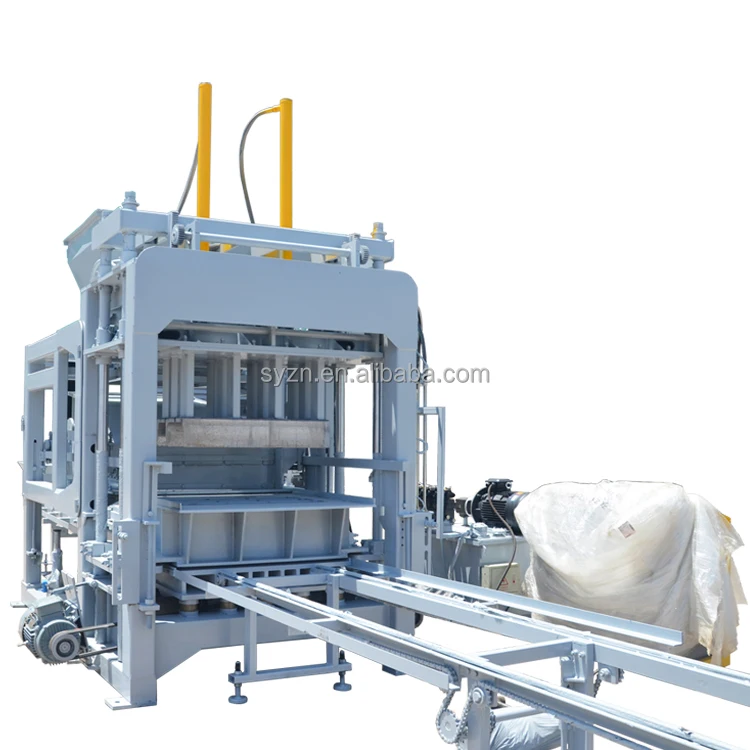
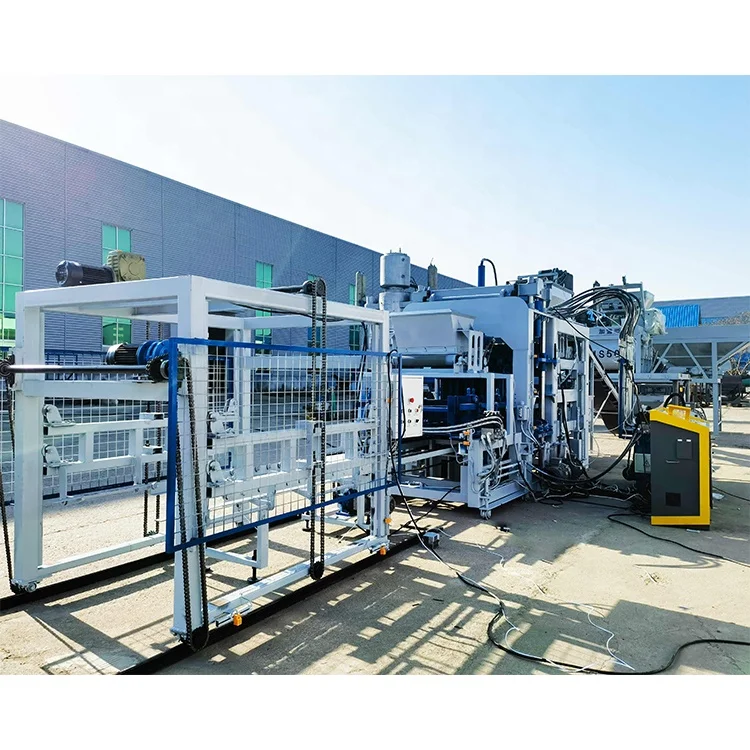
Matched System Sizing — the QT18-25 is specified against your actual block format, local aggregate, and target daily output rather than quoted from a catalogue default.
Technical Specifications
| Parameter |
Value |
| Model |
QT18-25 |
| Product Type |
Fully Automatic Pallet-free Block Making Machine |
| Brick Height Range |
50–300 mm |
| Stacking Height |
0–1200 mm |
| Main Vibration Form |
Platform Vibration |
| Vibration Frequency |
2800–4500 r/min |
| Molding Cycle |
15–25 s (basis not stated in source — depends on block format, material, and thickness) |
| Vibration Power |
60 kW |
| Hydraulic System Power |
59 kW |
| Driving Method |
Hydraulic |
| Demolding Method |
Vibration and Hydraulic |
| General Water Consumption |
8 T/Day |
| Control System |
PLC with person-machine conversation interface |
| Automation Level |
Fully automatic, pallet-free, blocks stacked directly after moulding |
| Applied Products |
Concrete blocks, hollow/solid blocks, pavers, interlocking blocks, curbstone, colored pavers |
| Raw Materials |
Crushed stone, sand, cement, dust, fly ash, gravel, slag |
| Warranty |
1st year spare parts (except quick-wear parts) and repair for equipment broken |
Application Suitability
| Application |
Material or Output |
| High-volume hollow block production |
Crushed stone, sand, cement, fly ash blends |
| Solid block manufacturing for housing projects |
Gravel, slag, cement mixes |
| Interlocking paver production |
Fine sand, cement, colored pigment |
| Kerbstone and curb manufacturing |
Coarse aggregate, cement, high-density mix |
| On-site block production for infrastructure contractors |
Locally sourced aggregate and cement |
Why "Cycles per Hour" Tells You Almost Nothing
A fully automatic block making machine manufacturer can quote a cycle time of 15–25 seconds and leave the buyer to do the math. The missing variable is always the block format. A 15-second cycle producing a 400×200×200 mm hollow block yields a very different daily output than the same cycle producing 100×200×60 mm interlocking pavers. Always ask for capacity stated per block format, not per machine stroke.
I have seen buyers commit to a high-capacity line based on a single throughput number, only to discover on commissioning day that the local aggregate was too clay-heavy and the vibration settings had to be completely re-tuned. Daily output dropped to roughly half the brochure figure. That gap between expectation and reality is where projects lose money [NEED_CITE: common causes of output shortfall in stationary block plants].

Where the QT18-25 Sits in the Stationary Range
The QT18-25 occupies the high-capacity tier of our stationary block machine range. It is designed for buyers who have already decided that pallet-free, fully automatic operation is the right direction and now need to confirm whether this output class matches their daily target. Below this tier sit semi-automatic models that require manual pallet handling and a lower initial investment. Above it, larger-format presses handle higher volumes but demand substantially more floor space and curing area.
Choosing the right tier means matching the machine to your actual sales volume, not to the maximum figure a brochure allows. A fully automatic block making machine manufacturer should walk you through this comparison before taking an order.
Pallet-free Operation and What It Removes from Your Floor
Conventional block lines require pallets to carry wet blocks from the press to the curing area. That means purchasing thousands of pallets, maintaining a pallet return system, and assigning labor to pallet handling around the clock. The QT18-25 eliminates that entire loop. Blocks are demolded by combined vibration and hydraulic action, then stacked directly up to 1200 mm before being moved to curing by forklift.
This design collapses three material-handling stations into one. For a buyer setting up a new plant, it means a smaller curing footprint and fewer moving parts to maintain. For an existing plant upgrading from semi-automatic operation, it means the labor previously assigned to pallet feeding and return can be redeployed [NEED_CITE: labor allocation in pallet-based versus pallet-free block plants].
Reading the Vibration and Hydraulic Numbers
The platform vibration system operates across a 2800–4500 r/min frequency range, driven by 60 kW of vibration power. In a pallet-free machine, vibration must do double duty: compact the mix inside the mould and release the block cleanly without a pallet underneath. The hydraulic system, rated at 59 kW, provides the demolding force and the pressing pressure that shapes the block before vibration finishes the job. Together, these two systems determine block density, surface finish, and early-stage strength.
A molding cycle of 15–25 seconds is achievable, but the actual figure depends on block height within the 50–300 mm range, mix moisture, and aggregate gradation. Taller blocks with coarse aggregate require longer vibration exposure and higher hydraulic pressure to achieve the same density as a thin paver made from fine sand. This is why we calculate capacity per format at the inquiry stage rather than publishing a single number.
The PLC control with a person-machine conversation interface stores these parameters per mould, so switching from hollow blocks to pavers means recalling a saved recipe rather than re-tuning from scratch.
The Hidden Cost of Skipping Format-by-Format Capacity Checks
Buyers who skip the format-level capacity conversation end up with a machine that meets the contract on paper but underperforms on the production floor. The most common mismatch is ordering a high-capacity press for a block format that requires a longer cycle than expected, so the press sits idle while the mixer catches up. Another is specifying a pallet size that does not match the curing racks or forklift already on site, forcing an unplanned equipment purchase after arrival [NEED_CITE: pallet and curing infrastructure mismatches in block plant installations]. These issues are not machine defects. They are specification gaps that a detailed line layout document would have caught before production started.
Why Buyers Source This Tier from Our Range
Block machinery is our single focus, which means the QT18-25 press, its moulds, and the stacking system are specified as one matched unit rather than assembled from separate suppliers. Configuration is set against the buyer’s actual mix design, local aggregate, and target block format — not a catalogue default.
Mould design covers the formats the buyer’s market actually sells, including custom drawings when standard formats do not match local demand. Automation is selectable within the range, so a buyer can start with the QT18-25’s full automatic cycle and later add upstream batching or downstream cubing stations as volume grows.
Installation support includes on-site commissioning and operator training, typically completed within approximately one week, so the crew running the machine on day one is the same crew that watched the engineers tune it.
Documentation & Verification
- Line layout and capacity calculation stating the block format assumed for every output figure
- Machine specification sheet covering vibration power, hydraulic pressure, and PLC configuration
- Mould drawing and format list matched to your target block dimensions
- Voltage, frequency, and PLC display language confirmation verified before production
- Factory test record with your specified mould installed, available as video or in-person witness
Installation, Commissioning & Support
- Foundation design must account for 60 kW vibration and 59 kW hydraulic loads on a stable slab
- Dedicated electrical circuit sized for combined vibration and hydraulic power draw at your site voltage
- Machine arrives in dismantled shipping configuration; reassembly supervised by our engineers on site
- PLC recipes tuned to your local aggregate and block format during approximately one-week commissioning
- Operator training covers mould change procedures, PLC recipe recall, and daily maintenance checkpoints
- Wear parts and mould list provided so first replacements can be ordered before stock runs out
What We Need to Size Your Line Correctly
To match the QT18-25 to your project, we need your target block formats with dimensions, your daily output requirement stated per format, the local raw materials available including aggregate type and cement grade, and your site’s voltage and frequency. Share your workshop dimensions and any existing curing or handling equipment so we can confirm the pallet-free stacking height integrates with your current floor plan. A fully automatic block making machine manufacturer who asks these questions before quoting is one who plans to deliver a line that performs as promised.
Frequently Asked Questions
Q: How is the QT18-25 daily output calculated for each block format?
A: We calculate output by taking the confirmed molding cycle for a specific block format — accounting for height within the 50–300 mm range, mix design, and aggregate type — and multiplying by effective operating hours. Every capacity figure we provide states which block format and cycle time it assumes, so there is no ambiguity between hollow block throughput and paver throughput.
Q: When should a buyer choose the QT18-25 over a semi-automatic model?
A: The QT18-25 fits buyers who need consistent daily volume across multiple formats and want to eliminate manual pallet handling. If your target output is modest and labor costs are low, a semi-automatic tier may be more economical. We compare tiers during the inquiry stage so you can see where each model sits in terms of output, automation, and investment.
Q: Can I start with partial automation and upgrade later?
A: The QT18-25 platform supports fully automatic operation from day one, but the broader stationary range allows buyers to begin at a lower automation level and add stations such as automatic batching or cubing as production grows. We discuss the upgrade path during initial configuration so the foundation is ready when you are.
Q: How do I confirm voltage, frequency, and PLC language before shipment?
A: We issue a voltage and control confirmation sheet during the order process. Your site electrical specifications and preferred PLC display language are recorded and verified against the machine build. This step is completed before production begins so the machine arrives ready for connection without delays.
Q: What mould formats are available and how long does a change take?
A: The QT18-25 supports hollow blocks, solid blocks, interlocking pavers, kerbstones, and colored pavers within its 50–300 mm brick height range. Moulds can be designed to custom drawings. Change time depends on the mould change system fitted to your configuration, and we state the expected changeover duration in the specification sheet before you order.

![QT18-25 Pallet-free Block Machine | Manufacturer Full Range 记录ID数字之和: 8+0+3+7+0 = 18 18 mod 6 = 0 → 结构0: [品类词] for [应用或物料] – [站点修饰词] 第一层站点角色:全品类目录类 → Manufacturer / Factory Supply / Full Range 第三层修饰词选取:18 mod 3 = 0 → Manufacturer Pallet-free Block Making Machine for Concrete Blocks – Manufacturer 字符数(含空格):69](https://shiyueblockmachine.com/wp-content/uploads/2026/04/Hbf4267631888473ab66c2307a4c79f52J.webp)
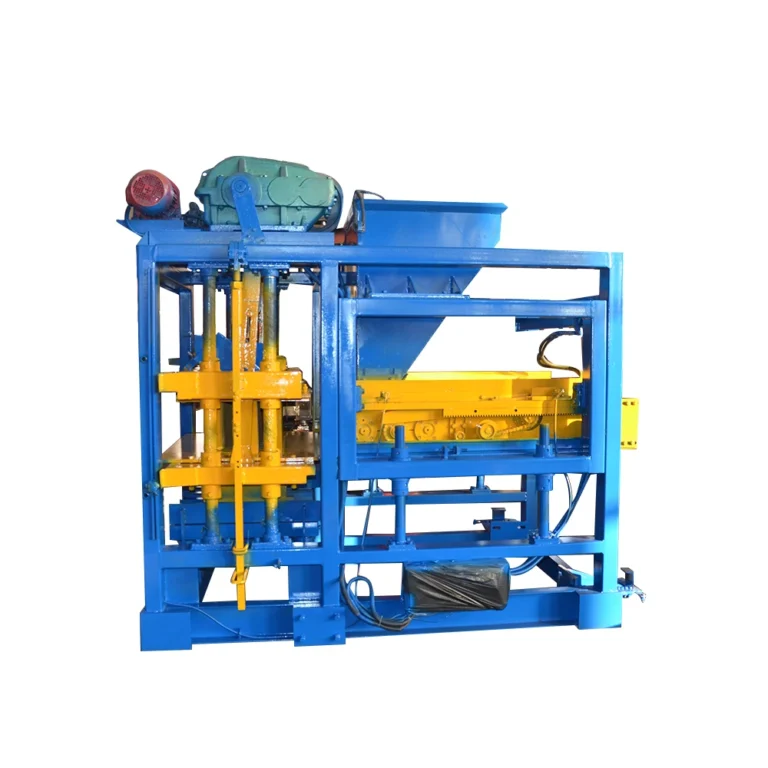 Stationary block machine