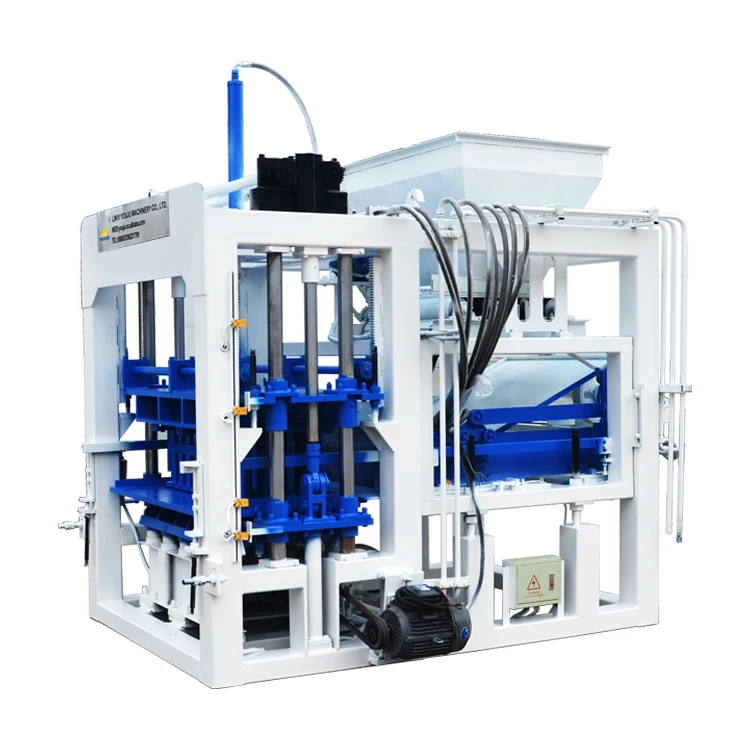
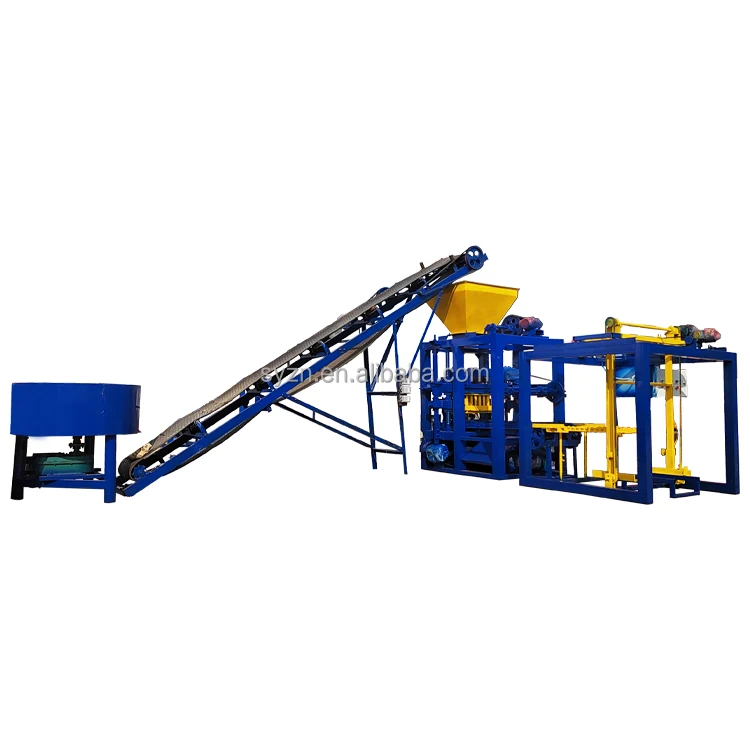
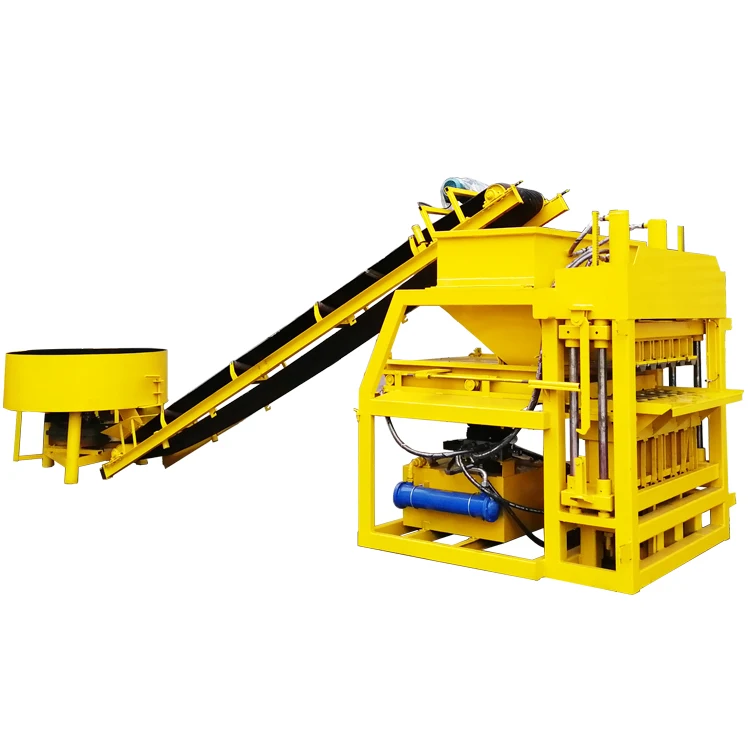
Matched System Design — The QT4-15 automatic block machine manufacturer configures press, mould, pallet and handling as one verified set rather than assembling from separate suppliers, so cycle times match across every station.
Technical Specifications
| Parameter |
Value |
| Model |
QT4-15 |
| Product Type |
Automatic Hydraulic Block Making Machine |
| Control System |
PLC controlled |
| Molding Cycle |
15-30s depending on block format |
| Pallet Size |
900x500mm |
| Vibration Type |
Platform vibration |
| Vibration Frequency |
50-70Hz |
| Product Height Range |
50-220mm |
| Overall Power |
24.5kW |
| Demolding Method |
Hydraulic |
| Block Compressive Strength |
≥15 MPa |
| Raw Material Compatibility |
Fly ash, slag, gangue, sand, crushed stone, cement, water |
| Automation Level |
Automatic (PLC + hydraulic, automatic pallet feeding, material feeding, vibrating, demoulding) |
| Output (Hollow Block 400x200x200mm) |
900-1200 pcs/hour, 7200-9600 pcs/8hr (basis: 4 pcs/mould, 15-20s cycle) |
| Output (Hollow Block 400x150x200mm) |
1080-1440 pcs/hour, 8640-11520 pcs/8hr (basis: 5 pcs/mould, 15-20s cycle) |
| Output (Hollow Block 400x100x200mm) |
1440-1920 pcs/hour, 11520-15360 pcs/8hr (basis: 8 pcs/mould, 15-20s cycle) |
| Output (Paver 200x100x60mm) |
2880-3840 pcs/hour, 23040-30720 pcs/8hr (basis: 16 pcs/mould, 15-20s cycle) |
| Output (Solid Brick 240x115x53mm) |
5930-6720 pcs/hour, 47400-53700 pcs/8hr (basis: 28 pcs/mould, 15-20s cycle) |
| Voltage & Frequency |
Configurable — confirm with manufacturer before ordering |
| PLC Language Options |
Configurable — confirm with manufacturer before ordering |
Application Suitability
| Application |
Material or Output |
| Medium and small block production plants |
Hollow blocks from fly ash, sand and cement blends |
| Hollow block manufacturing for construction |
400x200x200mm and 400x150x200mm formats on 900x500mm pallets |
| Paver and solid brick production |
Format change on single press, 200x100x60mm pavers and 240x115x53mm solid bricks |
| Industrial residue utilization |
Fly ash, slag and gangue mixed with local aggregate and cement |
What "900 to 1200 Pieces per Hour" Leaves Out About the QT4-15
Output figures mean nothing without the block format, mould cavity count and cycle time attached to every number.
I once worked with a plant owner in Shandong who ordered a mid-tier automatic block machine based on a single headline capacity number. When his local aggregate turned out to be volcanic ash blend instead of standard river sand, the vibration frequency that worked in the factory test produced crumbling blocks on his floor. The real output dropped because the cycle had to be extended to compensate. With the QT4-15 automatic block machine manufacturer, every capacity figure in the specification sheet is tied to a specific block dimension, mould cavity count and molding cycle — 900 to 1200 pieces per hour applies only to 400x200x200mm hollow blocks at 4 cavities per mould with a 15-20 second cycle. Switch to pavers or solid bricks and the numbers change completely. That transparency matters because buyers planning daily production schedules need the honest figure for the exact format they sell, not a best-case scenario [NEED_CITE: block machine capacity quotation standards for export markets].

Positioning the QT4-15 Within the Full Machine Range
The QT4-15 sits in the mid-tier of the stationary automatic block machine lineup, bridging the gap between small workshop machines with manual pallet handling and high-capacity fully automatic lines with integrated stacking and cubing. For a buyer surveying options, this model represents the point where PLC-controlled automation becomes standard — automatic pallet feeding, material feeding, vibration and hydraulic demoulding all run through a single control sequence. Smaller semi-automatic machines in the range require operators to move pallets by hand, while larger models above this tier add automatic stacking and curing rack handling. The QT4-15 automatic block machine manufacturer positions this model for buyers who need consistent cycle repeatability without committing to a fully unmanned line from day one.
Understanding Output Tiers and Plant Footprint
Choosing between adjacent tiers in the range is not simply a matter of picking a higher number. A buyer producing hollow blocks for a local construction market may find that the QT4-15 output of 7200 to 9600 pieces per 8-hour shift on 400x200x200mm blocks is sufficient, while a plant supplying multiple contractors might need the next tier up. The plant footprint difference between tiers is significant: the QT4-15 requires space for raw material storage, a mixer, the press itself and a curing area sized for 900x500mm pallets, but does not demand the extended conveyor runs and stacking stations of a fully automatic line. Buyers replacing an aging machine should compare the QT4-15 against both the tier below and the tier above to see whether the investment difference justifies the additional output or whether the mid-tier covers their foreseeable demand [NEED_CITE: block production plant layout and capacity planning guidelines].
How Vibration, Pressure and Pallet Size Shape Every Block
The platform vibration system operates at 50-70Hz, working together with hydraulic pressure to compact the mix into the mould cavity. This frequency range is effective for both fine-fly-ash blends and coarser crushed-stone mixes, though the exact amplitude setting depends on the buyer’s specific aggregate. The hydraulic demoulding method ensures blocks release cleanly at heights ranging from 50mm pavers to 220mm hollow blocks, maintaining the ≥15 MPa compressive strength target. The 900x500mm pallet size is a deliberate choice — it is large enough to hold 28 solid bricks per cycle yet small enough for standard forklift handling in a curing yard. Buyers whose existing curing racks are dimensioned for a different pallet size should flag this early, because changing pallet dimensions after the press is built means changing every pallet in circulation and potentially resizing the curing area. The 24.5kW overall power rating reflects the combined draw of the hydraulic pump, vibration motors and PLC system, and the local electrical supply must support this load on a dedicated circuit [NEED_CITE: electrical supply requirements for hydraulic block making machinery].
The Hidden Cost of Overlooking Configuration Details
A buyer who confirms price before confirming voltage may find that the machine arrives with a 380V/50Hz motor while the local grid runs on 440V/60Hz, delaying commissioning by weeks while replacement motors are sourced. Similarly, if the PLC display language is not specified before production, operators may face a control screen in a language they cannot read, turning a simple fault code into a prolonged shutdown. Mould change time is another detail that can erode the format flexibility a buyer paid for — if the mould mounting system was not designed for quick release, switching from hollow blocks to pavers can consume most of a shift, negating the multi-format capability on paper. These are not hypothetical problems; they appear regularly when configuration confirmation is skipped to accelerate the order [NEED_CITE: common commissioning delays in imported block making equipment].
Why Buyers Source the QT4-15 from a Single-Focus Manufacturer
The QT4-15 automatic block machine manufacturer treats block machinery as a single focus, meaning the press, mould, pallet and handling equipment are specified as one matched system rather than assembled from separate suppliers. Configuration is set against the buyer’s actual mix design and local aggregate, not a catalogue default — if your sand has a different fineness modulus, the vibration parameters are adjusted before the machine ships. Mould design covers the formats your market actually sells, including custom drawings when standard cavity layouts do not match local demand. The automation level is selectable, so a buyer can start with the QT4-15 in its standard automatic configuration and later add stacking and cubing stations as demand grows. Installation support includes operator training on the specific PLC interface and mould change procedure for your block formats [NEED_CITE: block machine manufacturer configuration and after-sales practices].
Documentation & Verification
- Line layout and capacity calculation stating the exact block format assumed for each QT4-15 output figure
- Machine specification sheet confirming hydraulic pressure, vibration frequency and overall power matched to your mix design
- Mould drawing and format list showing every cavity layout available for the QT4-15 press
- Voltage, frequency and PLC display language confirmation document signed before production begins
- Factory test record run on your specified block format before the QT4-15 leaves the workshop
Installation, Commissioning & Support
- Foundation plan sized for the QT4-15 vibration load and 24.5kW power draw on a dedicated circuit
- Voltage and frequency verified against local supply before the motor and PLC are wired at your site
- Pallet specification matched to your existing curing racks and forklift dimensions before first run
- First-shift commissioning with the operator running your target block format through a full cycle
- Mould change training covering your specific format list so operators can switch without extended downtime
- Wear parts list identifying hydraulic seals and vibration components due for periodic replacement
Preparing Your QT4-15 Inquiry
To receive an accurate configuration proposal, share the block formats your market demands, the daily output you need for each format, and the raw materials available locally including aggregate type and cement grade. Provide your site voltage, frequency and the preferred PLC display language so the QT4-15 automatic block machine manufacturer can confirm electrical compatibility before quoting. If you have an existing curing yard or pallet inventory, include the pallet dimensions and curing rack spacing so the line layout accounts for what is already in place.
Frequently Asked Questions
Q: Where does the QT4-15 sit compared to semi-automatic and higher-tier automatic models?
A: The QT4-15 occupies the mid-tier automatic range, adding PLC-controlled pallet feeding and hydraulic demoulding that semi-automatic machines lack, while stopping short of the fully automatic stacking and cubing systems found on higher tiers. It suits buyers who need consistent cycle repeatability and multi-format capability without the footprint and investment of a fully unmanned line.
Q: What plant footprint does the QT4-15 require at its standard automation level?
A: At the standard automatic configuration, the QT4-15 requires space for raw material storage, a mixer, the press station and a curing area dimensioned for 900x500mm pallets. It does not need the extended conveyor runs or automatic stacking stations of a higher-tier line, making it manageable for medium-sized plants with limited floor area.
Q: How is the quoted output verified against my specific block format?
A: Every output figure for the QT4-15 is tied to a specific block dimension, mould cavity count and cycle time. When you provide your target format, the manufacturer supplies a capacity calculation document showing the realistic pieces per hour and per shift for that exact configuration, including the molding cycle assumed.
Q: Can I upgrade the QT4-15 later if I need more automation?
A: Yes, the QT4-15 supports an upgrade path from its standard automatic configuration. Buyers can add automatic stacking, curing rack handling and cubing stations as production volume grows, without replacing the core press. The PLC control system accommodates these additions through expanded I/O modules.
Q: What voltage and control language options are available for my market?
A: Voltage, frequency and PLC display language are configurable and must be confirmed before the QT4-15 enters production. Provide your local grid specifications and preferred operator language during the inquiry stage so the manufacturer builds the electrical system and programs the control interface accordingly.

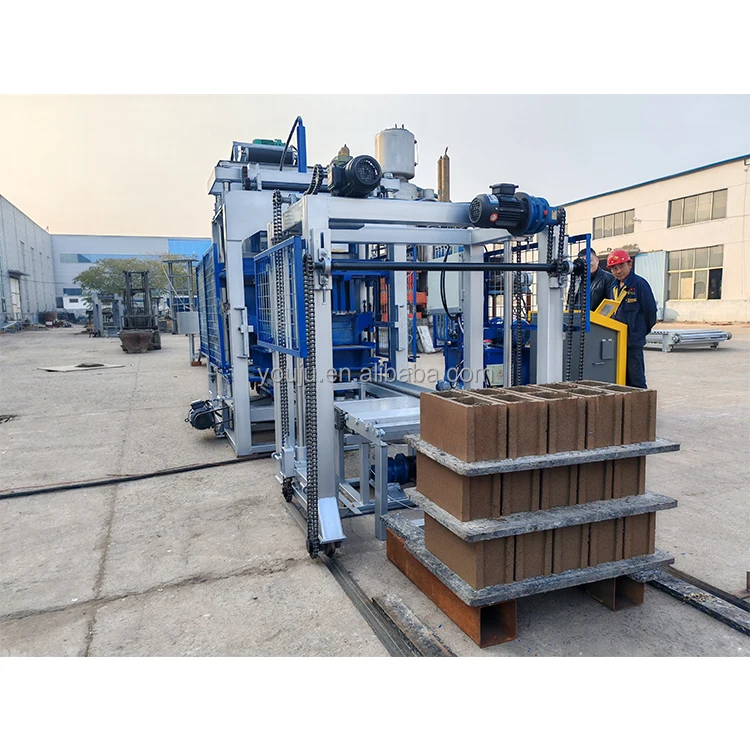
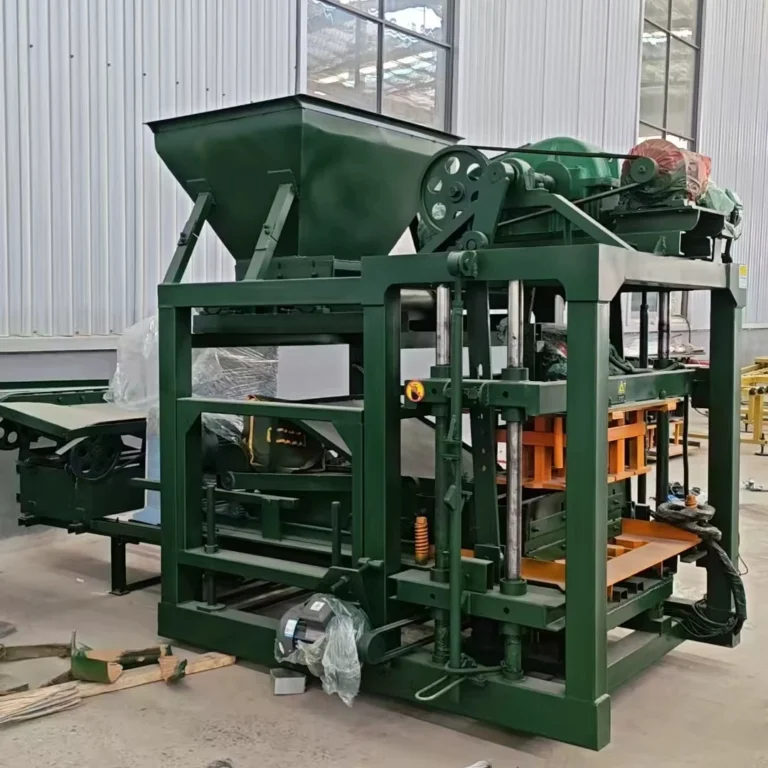 Stationary block machine