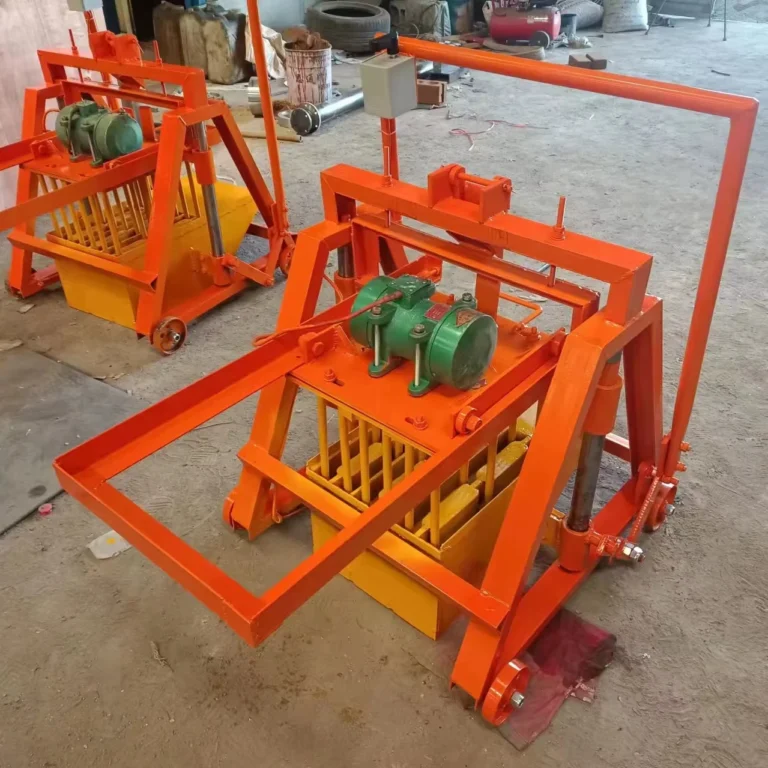
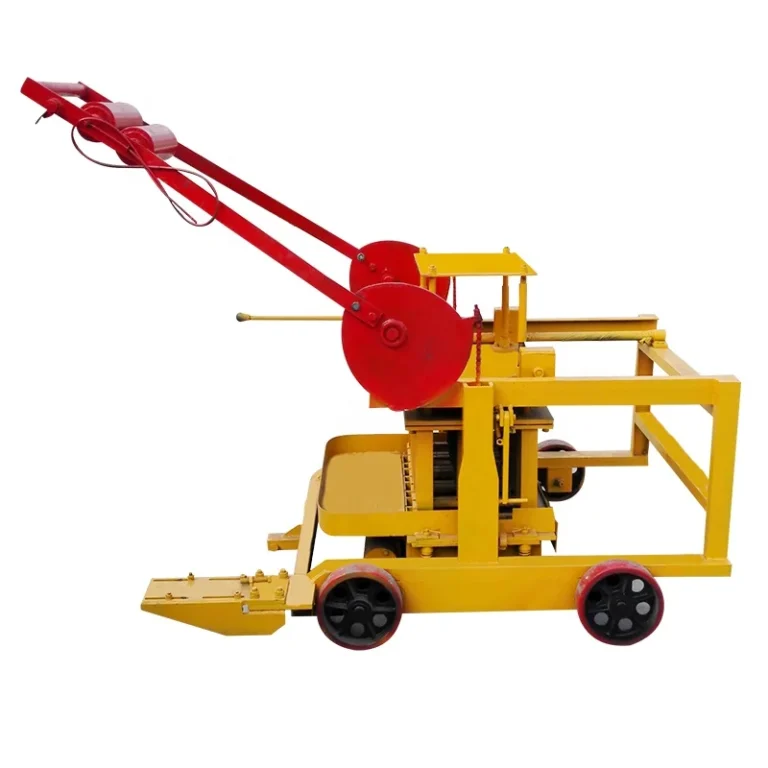
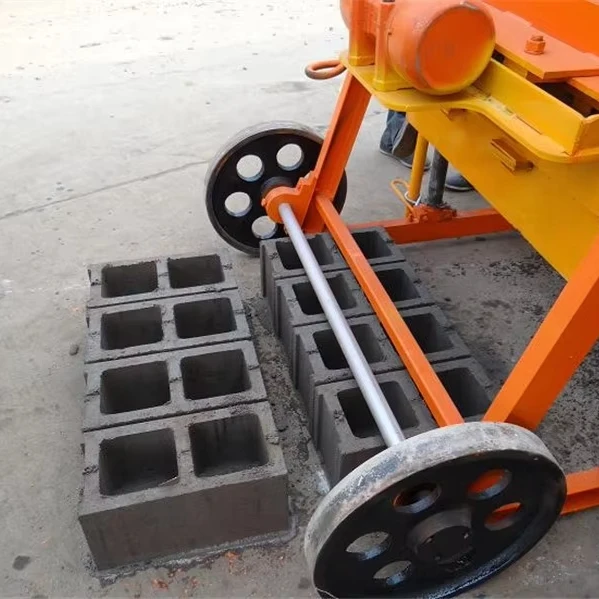
Pallet-Free Design — the QMY6-25 lays blocks directly on the ground, removing the curing rack and pallet logistics that inflate a mobile plant’s real cost.
Technical Specifications
| Parameter |
Value |
| Model |
QMY6-25 |
| Product Type |
Mobile Hollow Block Making Machine |
| Main Vibration Form |
Three-dimensional excitation |
| Vibration Frequency |
3200 Hz |
| Overall Power |
9.6 kW |
| Moving Method |
Automatically move with hydraulic steering |
| Moulding Cycle |
25–30 s |
| Pallet Requirement |
No pallet required (egg-laying type) |
| Operator Requirement |
One person operation |
| Output Capacity (400×200×200mm Hollow Block) |
1080 pcs/hour, 8600 pcs/shift (8 hours), 6 pcs/mould |
| Output Capacity (400×150×200mm Hollow Block) |
1260 pcs/hour, 10000 pcs/shift (8 hours), 7 pcs/mould |
| Output Capacity (400×120×200mm Solid Block) |
1620 pcs/hour, 12960 pcs/shift (8 hours), 9 pcs/mould |
| Output Capacity (400×100×200mm Solid Block) |
1800 pcs/hour, 14400 pcs/shift (8 hours), 12 pcs/mould |
| Block Format Compatibility |
Hollow blocks and large solid blocks (custom mould) |
| Overall Dimensions |
2000 × 2100 × 1650 mm |
| Automation Level |
Semi-automatic with hydraulic steering |
| Voltage & Frequency |
Configurable to buyer’s site (basis to be confirmed) |
| Control System / PLC |
Confirm with manufacturer |
| Hydraulic Pressure |
Confirm with manufacturer |
| Vibration Force |
Confirm with manufacturer |
| Net Weight |
Confirm with manufacturer |
| Warranty |
1 year for the whole machine (excluding spare parts) |
Application Suitability
| Application |
Material or Output |
| On-site housing project production |
Hollow blocks from crushed stone, sand, and cement |
| Remote infrastructure block supply |
Solid load-bearing blocks from local aggregate and cement |
| Startup block plant with no fixed factory |
Hollow and solid blocks laid directly on compacted ground |
| Contractor self-supply on construction sites |
Masonry blocks produced adjacent to the build area |
| Rural market block distribution |
Standard wall blocks produced without pallet inventory |
What "8600 Blocks per Shift" Actually Requires on the Ground
The daily output figure only holds when your mix design, aggregate grading, and ground conditions match what was tested at the factory.
A mobile block machine manufacturer will quote shift capacity based on a clean river sand mix and a level concrete floor. In practice, I have watched a QMY6-25 drop to barely half its rated output because the local volcanic ash held too much moisture, the ground was uneven, and the operator had never adjusted the vibration time. The machine was fine — the specification context was missing. That is why every capacity number above names the exact block format it assumes [NEED_CITE: mobile block machine output calculation standards by block format].

Where the QMY6-25 Fits in a Mobile Range
The QMY6-25 occupies the mid tier of the Shiyue mobile block machine lineup, sitting above the smallest egg-laying models but below the fully automatic stationary plants. It is built for buyers who need meaningful daily output without committing to a fixed facility, pallet inventory, or a curing rack system. The hydraulic steering and single-operator design mean one person can drive the machine forward after each cycle, laying a continuous row of blocks on prepared ground.
The Ground You Lay On Decides Everything
Egg-laying machines like the QMY6-25 have no pallets to absorb imperfections. Every block is placed directly onto whatever surface you have prepared. If the ground is soft, uneven, or poorly compacted, the blocks will settle unevenly before the cement sets, and dimensional tolerances will drift across the row. I have seen project sites in Southeast Asia where the curing area was nothing more than cleared earth after rain, and the first two hundred blocks of the day had to be scrapped [NEED_CITE: ground preparation requirements for mobile egg-laying block production]. The machine assumes a firm, level surface — and that is your responsibility to provide before the first cycle starts.
Reading the Specs That Matter for Mobile Production
The three-dimensional vibration at 3200 Hz is the core compaction mechanism on the QMY6-25. Unlike flat-bed machines where a hydraulic press provides the primary densification force, an egg-laying mobile block machine manufacturer relies on vibration to consolidate the mix inside the mould before the block is released onto the ground. The 25–30 second moulding cycle must give the vibration enough time to settle fine particles around the coarse aggregate — rush this and you get blocks with weak cores that crumble during handling. The 9.6 kW overall power covers the vibration motor, hydraulic steering, and mould movement, meaning the electrical supply on your site must handle that draw continuously without voltage sag that would weaken each cycle. Block format changes the maths entirely: a 400×200×200mm hollow block yields 6 per mould, while a 400×100×200mm solid block yields 12, which is why the shift output nearly doubles between formats even though the cycle time stays the same.
What Happens When Pallet Logistics Get Ignored
Buyers who choose a stationary machine without budgeting for pallets, curing racks, and the forklifts to move them often discover that the hidden costs of the line exceed the press itself. The QMY6-25 removes that category of expense entirely — but it replaces it with a different demand: a large, flat, prepared ground area that stays available for curing. If your site cannot dedicate that space, blocks will be stacked before they cure, and breakage rates will climb through the first week of production [NEED_CITE: curing area planning for pallet-free block machines].
Why Procurement Starts With the Mix, Not the Machine
Shiyue specifies the QMY6-25 against the buyer’s actual aggregate and target block format rather than a default catalogue setting, so the vibration time and mix proportion are matched before the machine ships. Mould design covers the formats the buyer’s market actually sells, with custom drawings available for non-standard sizes. The automation level is selectable — a buyer can begin with the semi-automatic hydraulic steering configuration and plan an upgrade path as volume grows. Installation and commissioning support includes operator training on mould change procedure and vibration adjustment for local material conditions. Documentation covers every item needed for customs clearance and on-site setup, not just the machine itself.
Documentation & Verification
- Line layout showing curing area dimensions matched to daily output of the selected block format
- Machine specification sheet confirming vibration frequency and power draw at your site voltage
- Mould drawing and format list for every block size included in your order
- Voltage, frequency, and control language confirmation signed before production begins
- Factory test record run on your specified block format with cycle time logged
- Wear parts and mould list identifying items to stock before first replacement is due
Installation, Commissioning & Support
- Ground must be level and compacted across the full curing area to support the 2000 × 2100 mm machine footprint
- Electrical supply must deliver 9.6 kW continuously at the confirmed voltage and frequency
- Machine arrives assembled and requires hydraulic steering calibration on site before first production run
- Operator training covers mould change procedure, vibration time adjustment, and hydraulic steering control
- First replacement wear parts and mould spares identified and recommended for local stocking
Before You Request a Quote
Send the specific block formats your market demands, including dimensions and whether hollow or solid. Provide a sample or description of the local aggregate you intend to use — sand type, maximum particle size, and typical moisture content. Confirm your site voltage and frequency so the motor and control system are wound correctly before the QMY6-25 leaves the factory.
Frequently Asked Questions
Q: How is the stated capacity calculated, and which block format does each figure assume?
A: Every capacity figure on this page names the exact block format, mould cavity count, and shift length it assumes. The 8600 pieces per shift, for example, is based on 400×200×200mm hollow blocks at 6 per mould over 8 hours. Change the block format and the daily output changes with it — there is no single number that covers all formats.
Q: What voltage and frequency configurations are available for the target market?
A: The QMY6-25 motor and control system are configured to match your site supply before production begins. Voltage and frequency must be confirmed during the inquiry stage so the machine arrives ready to connect. Running a motor wound for one standard on a different supply causes overheating and premature failure.
Q: How does the QMY6-25 compare to the semi-automatic and full automatic tiers in the Shiyue range?
A: The QMY6-25 is a mobile egg-laying machine that produces directly on the ground without pallets. Stationary semi-automatic and full automatic tiers use pallet systems with higher automation levels, greater output, and a fixed plant footprint. The right choice depends on whether your operation needs mobility or maximum throughput from a permanent location.
Q: What local aggregate and mix design considerations affect block strength on this mobile machine?
A: Aggregate grading, moisture content, and cement ratio all influence how the 3200 Hz vibration compacts the mix. Materials with high clay content or inconsistent moisture require adjusted cycle times. Sending a sample of your local aggregate before ordering allows the machine to be configured for your actual conditions rather than a generic default.
Q: What installation support, operator training, and mould change guidance are included?
A: Shiyue provides on-site installation and commissioning support, operator training covering hydraulic steering, vibration adjustment, and mould change procedure. A mould change guidance document specific to your ordered formats is included so your team can switch block sizes without extended downtime.

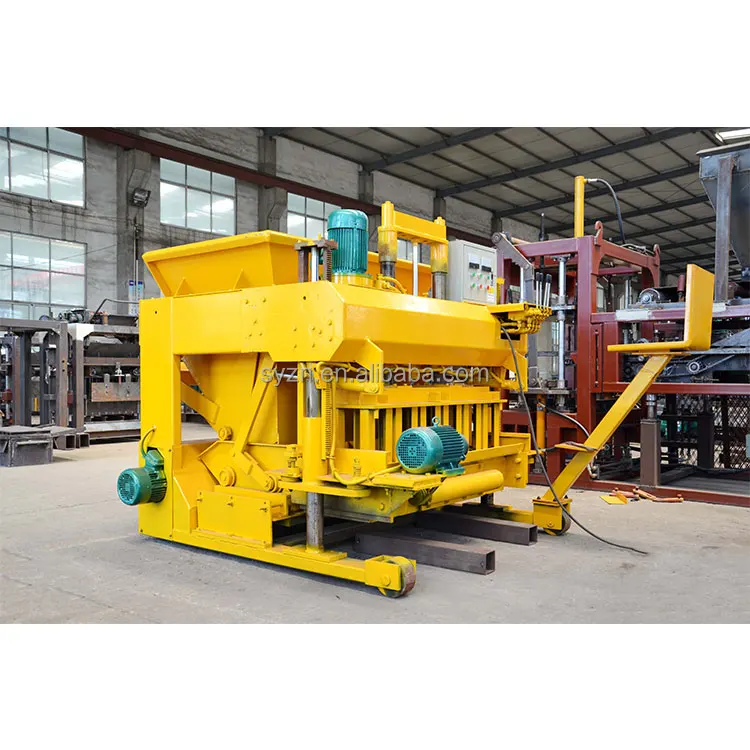
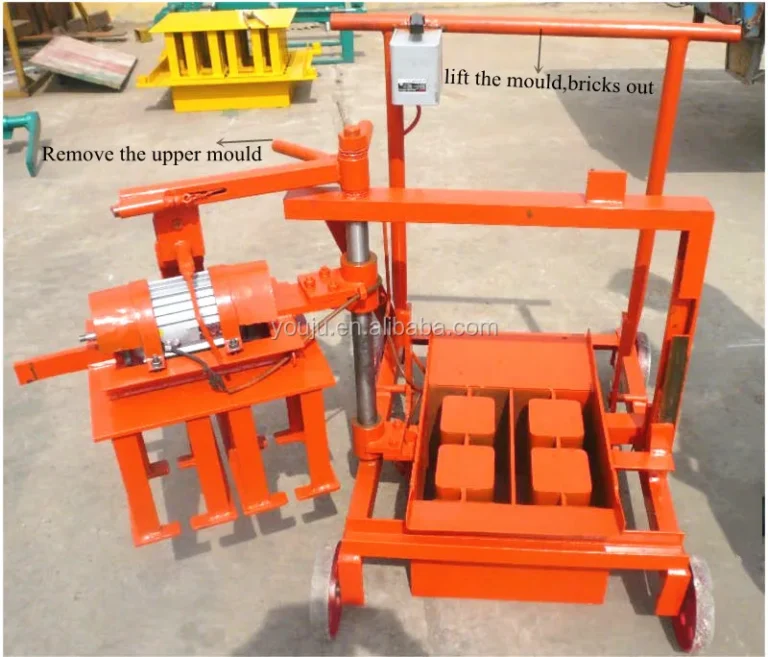 Mobile block machine