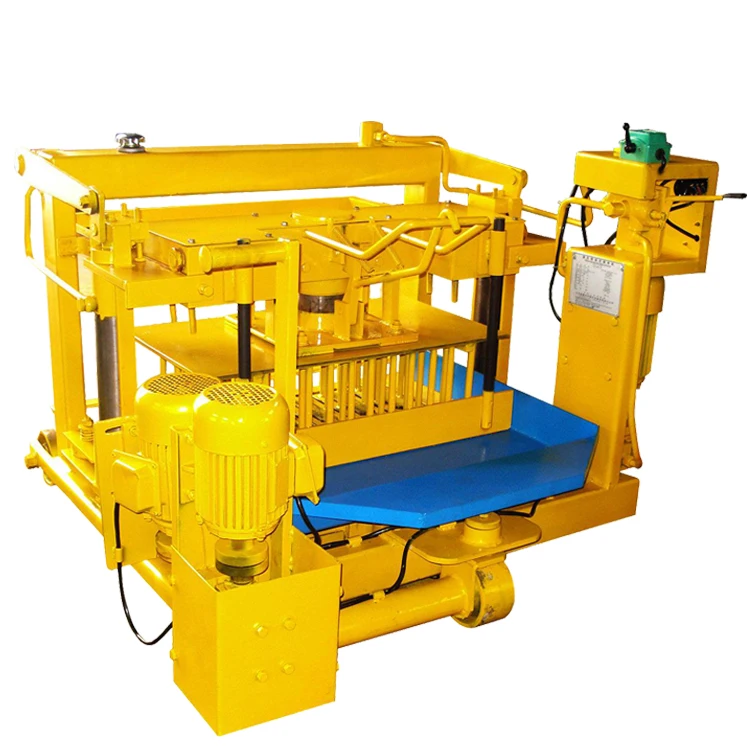
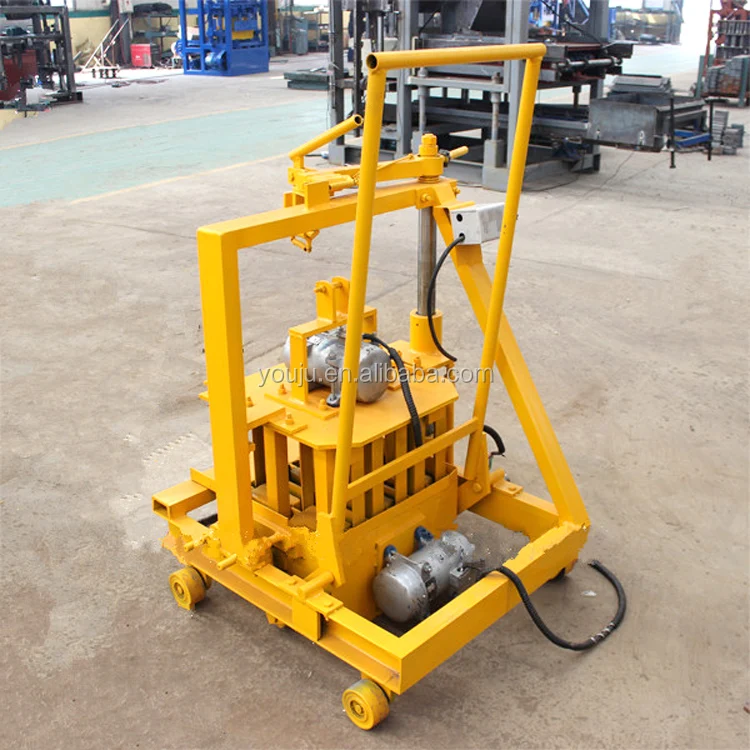
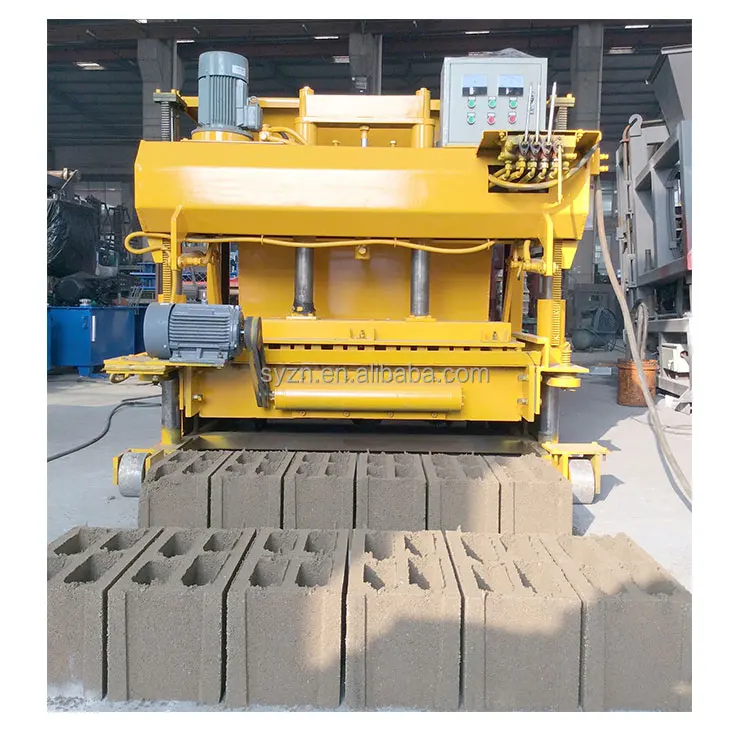
Configuration matched to your block format and local mix — we map the QMR4-45’s cycle time, power source, and mould list against the aggregate you can actually source before the machine leaves our Linyi workshop.
Technical Specifications
| Parameter |
Value |
| Model |
QMR4-45 |
| Product Type |
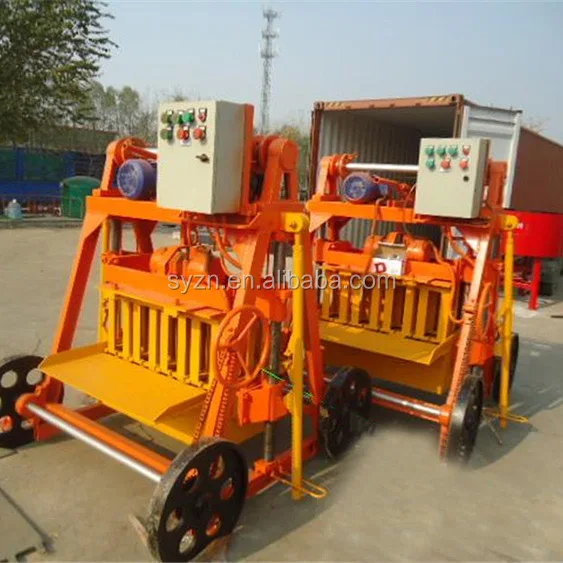
Mobile Egg-laying Block Making Machine |
| Power Source |
Diesel / Petrol Engine / Electric (configurable) |
| Molding Cycle |
30–45 s |
| Capacity |
2560 pcs/day (basis not stated in source — confirm block format, material, and thickness) |
| Overall Dimensions (L×W×H) |
1100 × 950 × 2100 mm |
| Total Mass |
810 kg |
| Pallet Requirement |
None — egg-laying type lays blocks directly on the ground |
| Mobility |
Wheel-mounted, movable on-site |
| Included Basic Equipment |
JZC350 Diesel Concrete Mixer or JQ350 Diesel Concrete Mixer with Electric Generating Unit; Trolley |
| Mould Formats |
Paver brick, hollow block, concrete block, solid brick, fly ash brick |
| Warranty |
1 Year |
Application Suitability
| Application |
Material or Output |
| Housing project on-site production |
Hollow and solid concrete blocks from locally crushed stone and cement |
| First-plant entrepreneur startup |
Fly ash bricks and paver bricks using available industrial by-products |
| Remote site without grid power |
Concrete blocks produced via diesel-powered mixer and engine drive |
| Development contractor moving between sites |
Solid and interlocking bricks laid directly on cleared ground |
What "2560 Pieces per Day" Actually Means for Your Block Format
Capacity numbers printed on a brochure mean nothing until you know which block size they assume. A mobile block making machine manufacturer quoting daily output without naming the format is leaving you to guess whether that figure applies to a 400 mm hollow block or a small solid paver.
I once watched a buyer in West Africa take delivery of a mobile unit rated at a certain daily output, only to discover the number assumed a thin solid brick while his market demanded 200 mm hollow blocks — cutting real throughput roughly in half. The machine was fine; the expectation was not [NEED_CITE: capacity calculation standards for concrete block machinery]. Before you compare any two quotations, ask each supplier to state the exact block dimensions and cycle time behind the headline number. That single question separates manufacturers who engineer from those who copy.

Where the QMR4-45 Sits on Our Complete Range
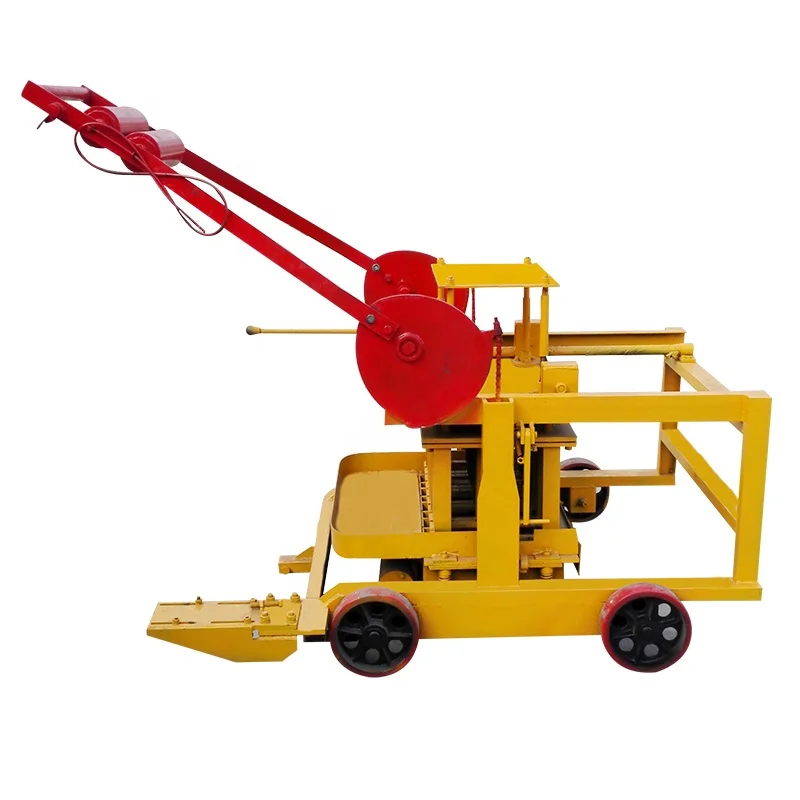
The QMR4-45 occupies the entry-mobile tier of our block machinery lineup. It is designed for buyers who need production directly at a construction site or who are testing market demand before committing to a stationary plant. Because it lays blocks on the ground and moves forward on wheels, there is no pallet investment and no curing rack infrastructure — just cleared, level floor space. If your daily volume eventually outgrows this tier, the next step is a semi-automatic stationary line with pallet handling and stacking, which we configure on the same mould format family so your existing tooling transfers over.
Dual Power for Sites Without Stable Grid
Choosing between diesel and electric drive is not a preference question — it is a site condition question. Diesel power removes dependence on grid reliability and lets the machine follow a project from one location to the next. Electric drive suits buyers who already have a transformer on site and want lower running cost per block. We confirm your available voltage and frequency before building the unit so the motor and control panel arrive matched to your supply [NEED_CITE: voltage and frequency standards by export market]. Specifying the wrong variant means either the machine sits idle or you spend on a generator you did not budget for.
Reading the Specs That Matter for Egg-laying Production
The 30–45 second molding cycle governs how many blocks you lay in a shift, and that cycle varies with block height and mix consistency. Taller hollow blocks need slightly longer vibration to consolidate the deeper column of concrete, while a drier mix shortens cure time on the ground but demands more hydraulic pressure to hold shape during demoulding. At 810 kg total mass, the machine is light enough to tow between locations yet heavy enough for the vibration plate to compact without bouncing. The included JZC350 or JQ350 mixer is sized to feed the press continuously — a smaller mixer would leave the operator waiting between batches, while a larger one wastes fuel and space on a mobile setup. Paver brick, hollow block, solid brick, and fly ash brick moulds all share the same footprint on the vibration table, so format change is a matter of lifting one mould out and dropping the next in.
The Cost of Skipping the Format Conversation
When a buyer orders a mobile egg-laying machine based only on a daily output figure and a price, the first problem usually appears within a week of production. Blocks crack at the corners because the vibration frequency was set for a different aggregate hardness. Moulds arrive for a format the local market does not buy, and custom tooling takes weeks to ship. The mixer capacity does not keep pace with the press, so workers stand idle between batches while cement begins to set in the drum. Every one of these issues traces back to a quotation that never asked about local stone, target block dimensions, or site power [NEED_CITE: common commissioning issues for mobile block machines in emerging markets].
Why Buyers Source This Machine Through Our Range
Block machinery is our single focus, which means the QMR4-45 arrives as a matched system — press, mixer, and trolley specified together rather than assembled from unrelated suppliers. We configure the power source, mould format list, and cycle time against your actual mix design and the aggregate available in your region. Moulds are designed for the formats your market sells, and custom drawings are reviewed before production starts. The automation level is selectable, so you can begin with manual egg-laying operation and move to a semi-automatic line later without abandoning your initial investment. Installation support and operator training are included so the first shift produces saleable blocks, not scrap.
Documentation & Verification
- Line layout and capacity calculation stating the block format behind the output figure
- Machine specification sheet with confirmed power source variant
- Mould drawing and format list showing available block types
- Factory test record run on your target block dimensions before dispatch
- Operation and maintenance manual with wear parts and mould list
- Packing photographs and customs documentation support
Installation, Commissioning & Support
- Level concrete floor area of at least 1100 × 950 mm required for stable egg-laying operation
- Electric variant requires confirmed voltage and dedicated circuit matching the motor rating
- Machine ships assembled; wheels and tow bar attached on arrival for immediate site mobility
- First-day commissioning covers vibration frequency and molding cycle tuned to your local aggregate
- Operator training includes mould change procedure and mixer loading sequence
- Wear parts list and mould interchange guide provided at handover
What to Include in Your Inquiry
Tell us the block format your market buys most — hollow, solid, paver, or fly ash — along with the exact dimensions in millimetres. Share the aggregate type available locally so we can tune vibration and cycle time before the machine ships. If you are considering the electric variant, confirm your site voltage and frequency so the motor and control panel arrive ready to run.
Frequently Asked Questions
Q: How do I verify the daily capacity figure against the block format I actually sell?
A: Ask us for a capacity calculation that names the exact block dimensions and cycle time assumed. We provide this per format so you can compare the QMR4-45 output on a 400 mm hollow block versus a standard solid brick and decide which mould set matches your market demand.
Q: Should I choose diesel or electric drive for my site conditions?
A: If your project site lacks reliable grid power or you move between locations, diesel is the practical choice. Electric drive lowers running cost per block where a stable supply exists. We confirm voltage and frequency before building to avoid commissioning delays.
Q: Where does the QMR4-45 fit on the range, and when should I step up?
A: It sits at the entry-mobile tier for on-site production without pallet investment. When daily volume consistently exceeds what a single-shift egg-laying operation delivers, a semi-automatic stationary line with pallet handling becomes the logical next step.
Q: Can I get custom moulds designed for a block shape my market requires?
A: Yes. Send us a drawing or a sample block and we design the mould to fit the QMR4-45 vibration table. Mould format, cycle time, and demoulding clearance are verified before production so the new format integrates with your existing operation.
Q: What site preparation does an egg-laying mobile machine need?
A: A level, cleared concrete floor area large enough for the machine footprint and block curing space. No pallets, racks, or fixed foundations are required. The machine moves forward on wheels as blocks are laid in rows.

 Mobile block machine