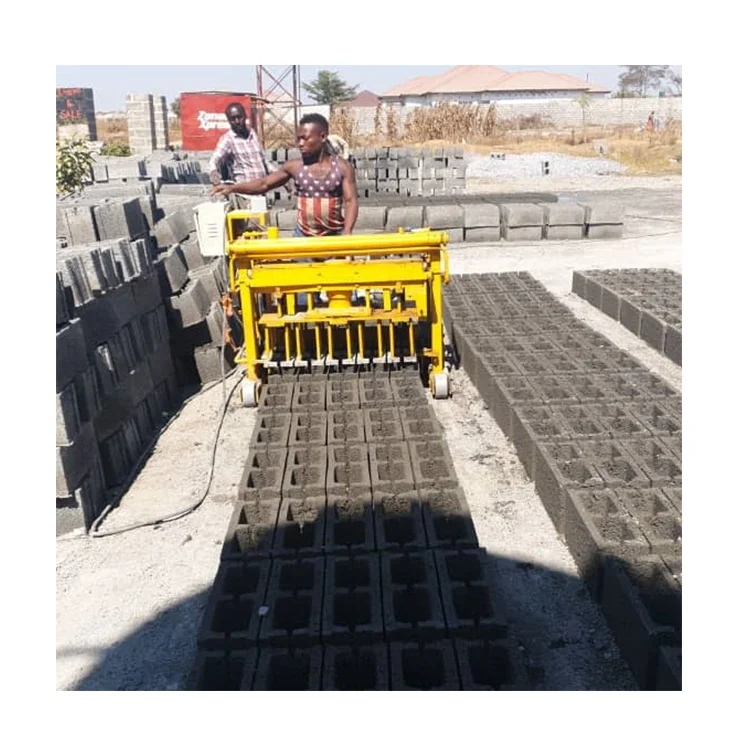
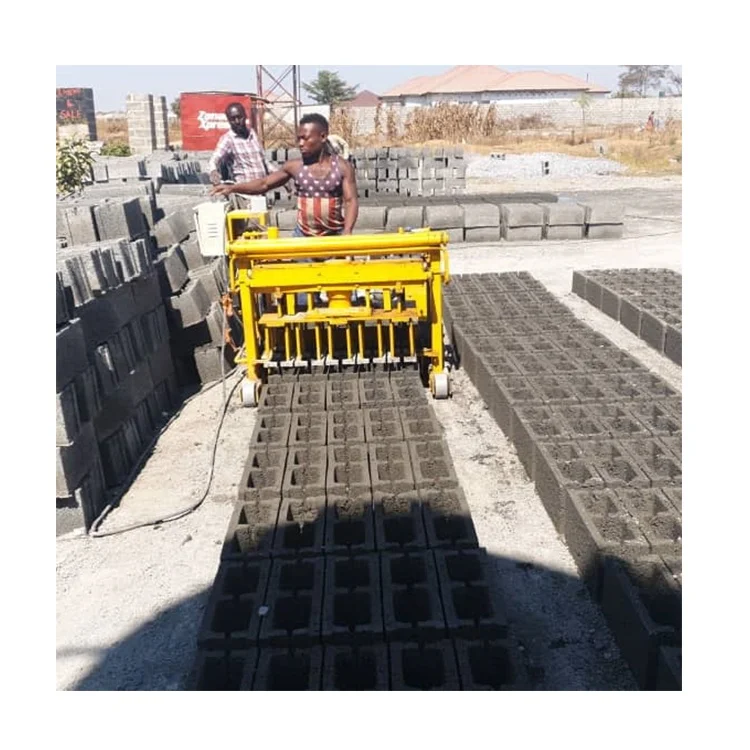
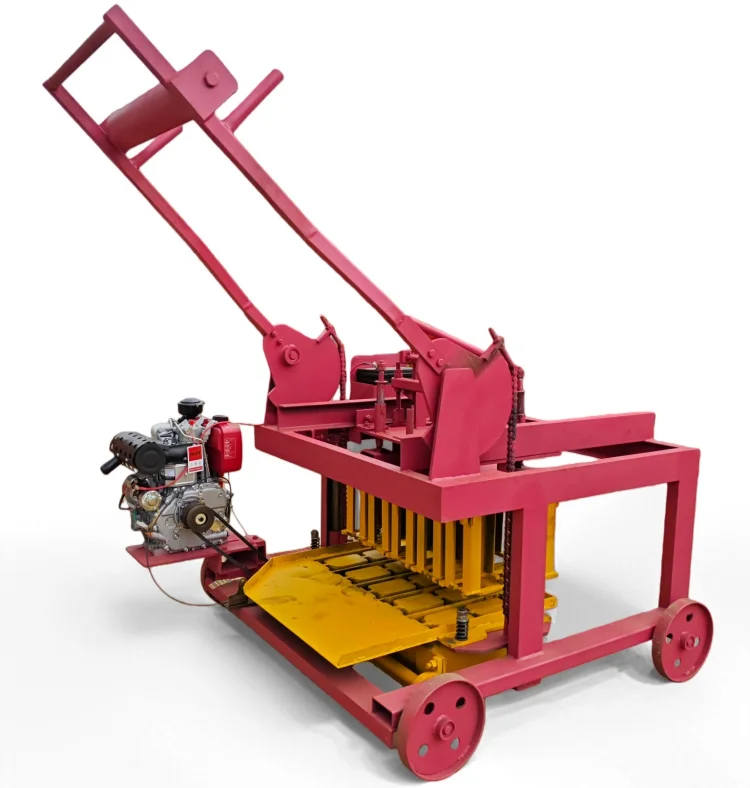
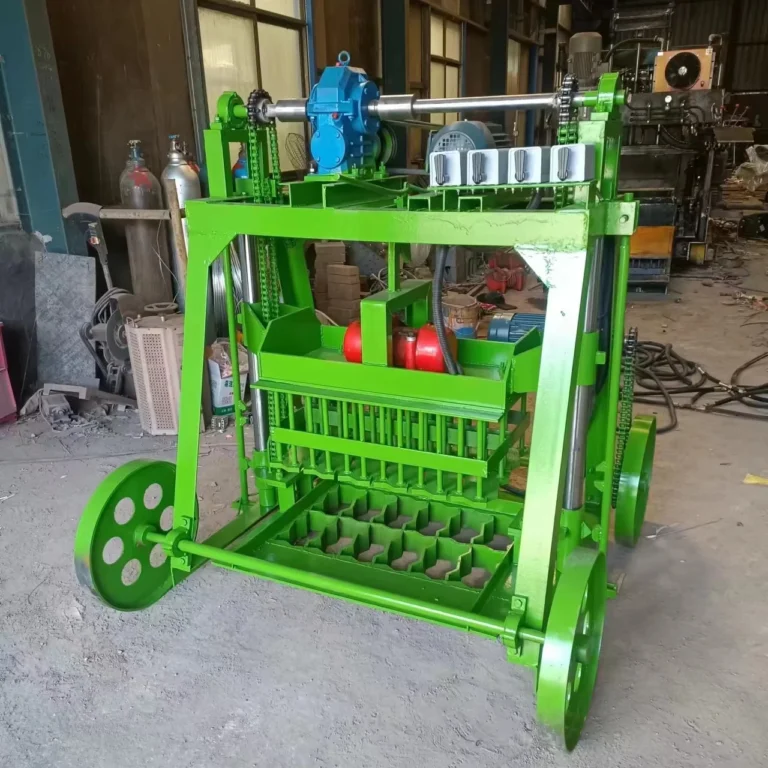
Single-Focus Block Machinery — Machine, mould, and handling specified as one matched system rather than assembled from separate suppliers.
Technical Specifications
| Parameter |
Value |
| Model |
QMY6-25 |
| Product Type |
Mobile Hydraulic Block Making Machine |
| Main Vibration Form |
Three-dimensional excitation |
| Vibration Frequency |
3200 Hz |
| Moulding Cycle |
25–30 s |
| Overall Power |
9.6 kW |
| Moving Method |
Automatically move and hydraulic steering |
| Overall Dimensions (L×W×H) |
2000 × 2100 × 1650 mm |
| Output Capacity (400×200×200 mm hollow, 6 pcs/mould) |
1080 pcs/h |
| Output Capacity (400×150×200 mm hollow, 7 pcs/mould) |
1260 pcs/h |
| Output Capacity (400×120×200 mm solid, 9 pcs/mould) |
1620 pcs/h |
| Output Capacity (400×100×200 mm solid, 12 pcs/mould) |
1800 pcs/h |
| Pallet Requirement |
No pallet required (egg-laying type) |
| Block Format Compatibility |
Hollow blocks and large solid blocks |
| Operation |
One-person operable |
| Voltage & Frequency |
To be confirmed before order |
| Control System |
To be confirmed (PLC or manual) |
| Warranty |
1 year (excluding spare parts) |
Application Suitability
| Application |
Material or Output |
| On-site hollow block production for housing projects |
Crushed stone, sand, cement blends laid directly on curing ground |
| Small-scale solid block runs for building contractors |
Local aggregate and cement at site-specific mix ratios |
| First block plant for entrepreneurs entering the market |
Hollow and large solid blocks in standard construction sizes |
| Remote or temporary project sites without fixed infrastructure |
Pallet-free egg-laying production on prepared flat ground |
What "1080 Pieces per Hour" Actually Means on a Job Site
Capacity only matters when tied to the exact block format you intend to sell.
I have watched contractors in West Africa and South Asia celebrate a mobile block machine for sale brochure figure, only to discover on commissioning day that the quoted output assumed a hollow block their market rarely buys. The QMY6-25 produces 1080 pieces per hour based on 400×200×200 mm hollow blocks at six per mould. Switch to a 400×120×200 mm solid block and that figure rises to 1620 pieces per hour at nine per mould — a completely different planning reality. When the format assumption stays hidden in a footnote, daily output planning collapses before the first shift ends [NEED_CITE: capacity assumptions in block machinery quotations].

Where the QMY6-25 Sits Across the Shiyue Range
The Shiyue range spans from this mobile egg-laying tier through semi-automatic stationary lines to fully automatic plants with pallet circulation and cubing. The QMY6-25 occupies the entry-mobile position — no pallets, no fixed foundation, one operator. It suits buyers who need to start producing blocks before committing to the capital and floor space a stationary line demands.
Understanding the Upgrade Path Before You Outgrow It
As daily volume grows beyond what a single mobile unit can deliver, buyers typically move to a semi-automatic stationary press with pallet feeding and manual stacking, then to a fully automatic line with batching, automatic stacking, and curing rack handling. The QMY6-25 lets you validate local demand, refine your mix design against real aggregate, and train operators before scaling. That staged approach keeps early capital exposure manageable while preserving the option to step up [NEED_CITE: block plant scaling from mobile to stationary tiers].
Reading the Vibration and Cycle Numbers
Three-dimensional excitation at 3200 Hz, paired with a 25–30 second moulding cycle, determines how densely the concrete consolidates inside each cavity. Higher vibration frequency shortens the time needed to settle the mix, but only when the hydraulic pressure matches the stiffness of your specific aggregate blend. The 9.6 kW overall power envelope means this mobile block machine for sale can run on modest site generators, yet the vibration force and hydraulic pressure ratings must still be confirmed against your local sand and stone characteristics before the moulding cycle will produce consistent block strength.
The Hidden Cost of Skipping Format Confirmation
Ordering a mobile egg-laying machine without confirming which moulds ship with it leads to a familiar problem: the machine arrives, produces one format well, but the local market mostly demands interlocking pavers or kerbstones that an egg-laying design simply cannot form. Paving and interlocking formats require a stationary press with a pallet system and higher tonnage. Discovering this mismatch after shipment means either accepting limited product coverage or purchasing a second machine entirely [NEED_CITE: block format limitations of egg-laying mobile machines].
Why Buyers Source This Tier Through Shiyue
Block machinery is our single focus, which means the QMY6-25 is specified alongside its moulds, hydraulic settings, and handling requirements as one matched package rather than a press sourced separately from its tooling. Configuration starts from your actual mix design and target block format, not a catalogue default. Mould design covers the hollow and solid formats your market moves, with custom drawings available when standard sizes do not match local building codes. The automation level remains selectable — start mobile today and transition to semi-automatic stationary when volume justifies the step. Installation support includes operator training so your crew understands cycle timing and mix adjustments from the first production day.
Documentation & Verification
- Line layout stating block format assumed for each capacity figure
- Machine specification sheet with confirmed vibration and hydraulic ratings
- Mould drawing and format list matching your local block sizes
- Voltage, frequency, and control language confirmation before production
- Factory test record on your target block format prior to dispatch
- Operation and maintenance manual with wear parts list included
Installation, Commissioning & Support
- Requires prepared flat curing ground; no fixed foundation needed for the 2000×2100 mm footprint
- Confirm site voltage and frequency match the 9.6 kW motor requirement before energizing
- Machine ships assembled; hydraulic steering tested during on-site commissioning
- First-run moulding cycle validated against your local aggregate and cement ratio
- Operator training covers one-person control, mould change procedure, and daily inspection points
- Wear parts list and mould maintenance schedule provided at handover
What to Prepare Before Requesting a Quotation
Share the specific hollow or solid block dimensions your market demands, along with your target daily output and the aggregate sources available near your project site. Confirm the local voltage, frequency, and any control language preferences so the electrical package ships correctly the first time. If you already operate curing areas or material handling equipment, note those dimensions so the mobile unit’s travel path and output placement align with your existing layout.
Frequently Asked Questions
Q: How is the QMY6-25’s capacity calculated, and which block format does each figure assume?
A: Every output figure ties to a specific mould configuration. The 1080 pcs/h rate assumes 400×200×200 mm hollow blocks at six per mould, while 1620 pcs/h assumes 400×120×200 mm solid blocks at nine per mould. Always match the capacity line to the format your market actually purchases rather than relying on a single headline number.
Q: Where does this mobile machine sit in the Shiyue range compared to semi-automatic and fully automatic tiers?
A: The QMY6-25 is the entry-mobile tier — pallet-free, one-person operated, no fixed foundation. Semi-automatic stationary lines add pallet feeding and higher output for broader formats. Fully automatic lines include batching, stacking, and cubing for high-volume plants. This mobile tier suits buyers validating demand before scaling investment.
Q: What block formats can the QMY6-25 produce, and when should a buyer step up to a stationary machine?
A: This machine produces hollow blocks and large solid blocks. If your market requires paving blocks, interlocking bricks, or kerbstones, those formats need a stationary press with a pallet system and higher pressing force. Confirm your product mix before ordering to avoid format limitations after delivery.
Q: What site conditions does the QMY6-25 require, and how does its footprint compare to stationary options?
A: The 2000×2100×1650 mm footprint and 9.6 kW power draw suit sites with limited space and modest electrical supply. A flat, prepared curing area replaces the need for a fixed plant foundation. Stationary lines require considerably more floor space, dedicated power circuits, and pallet storage zones that mobile production eliminates entirely.
Q: Is there an upgrade path from this mobile machine to a stationary line as volume grows?
A: Yes. Many buyers start with the QMY6-25 to establish local market presence and refine their mix design, then transition to a semi-automatic stationary press when daily volume exceeds mobile capacity. The mould knowledge and operator skills developed on the mobile unit carry forward into the larger installation.

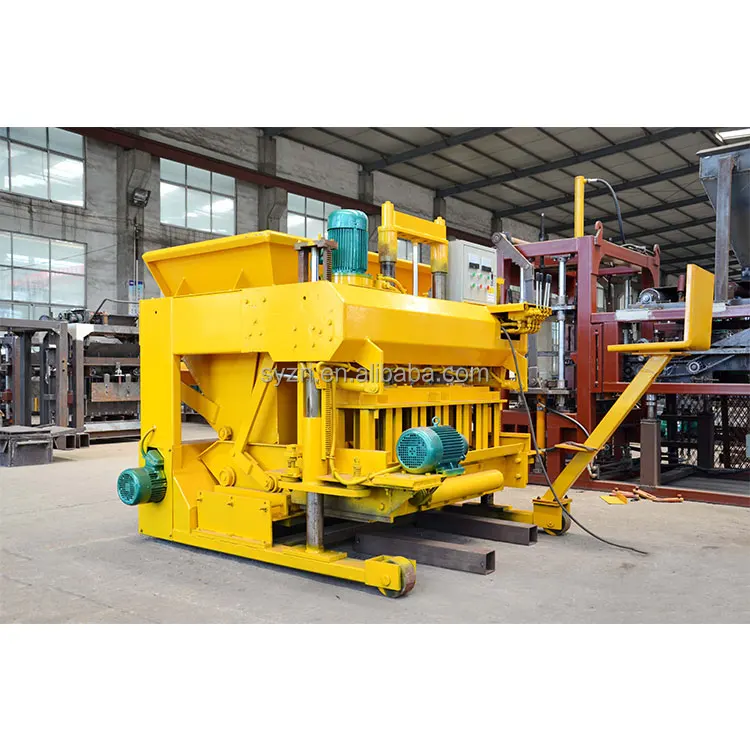
 Mobile block machine