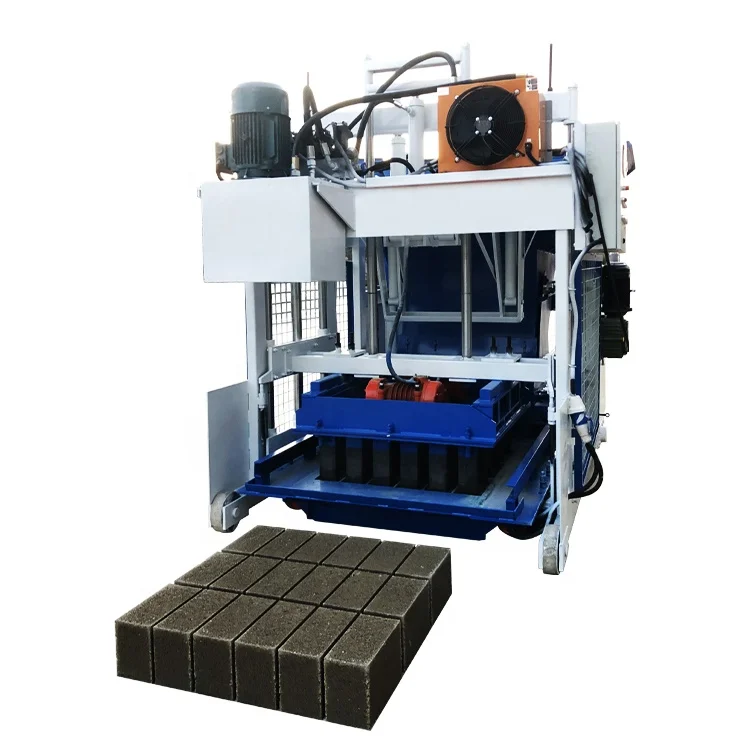
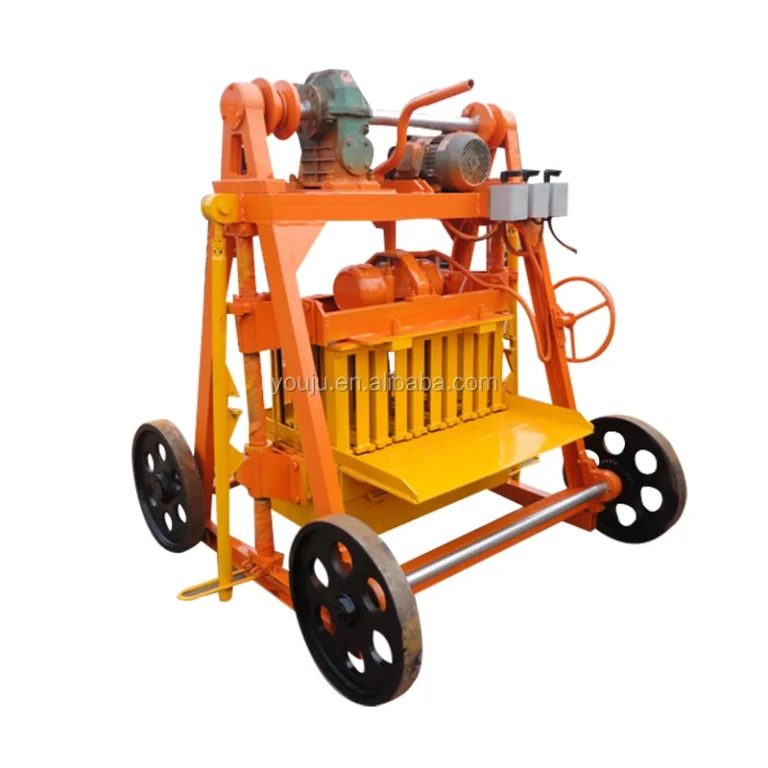
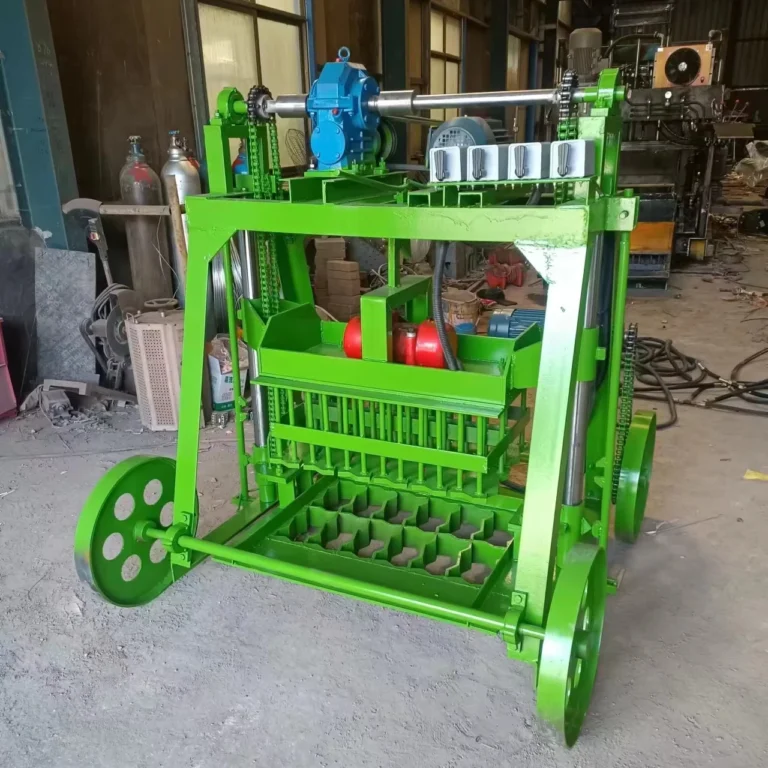
Matched System Sourcing — The QMY4-30 mobile block making machine is specified as a complete unit where chassis, mould, and power draw are balanced for on-site production rather than assembled from mismatched components.
Technical Specifications
| Parameter |
Value |
| Model |
QMY4-30 |
| Product Type |
Mobile Egg-Laying Block Making Machine |
| Rated Power |
5 kW |
| Overall Dimensions (L×W×H) |
1200 × 1200 × 1100 mm |
| Net Weight |
950 kg |
| Cycle Time |
30 seconds |
| Output Capacity |
480 pcs/hour (based on 400×200×200mm hollow block, 4 pcs/mould) |
| Output Capacity |
600 pcs/hour (based on 400×150×200mm hollow block, 5 pcs/mould) |
| Output Capacity |
840 pcs/hour (based on 400×100×200mm hollow block, 7 pcs/mould) |
| 8-Hour Shift Output |
3840 pcs (400×200×200mm) / 4800 pcs (400×150×200mm) / 6720 pcs (400×100×200mm) |
| Raw Materials |
Cement, sand, crushed stones, slag |
| Mould Format |
Hollow block and solid brick (changeable moulds) |
| Pallet Requirement |
Not required (egg-laying type) |
| Automation Level |
Manual / Semi-automatic operation |
| Warranty |
Five year guarantee (basis to be confirmed) |
Application Suitability
| Application |
Material or Output |
| On-site housing project production |
Hollow blocks from locally sourced sand and cement |
| Remote construction camp supply |
Solid bricks using crushed stone and slag aggregate |
| Entrepreneur first plant start-up |
Multiple block formats on a single mobile chassis |
| Temporary infrastructure projects |
Egg-laying production directly on prepared ground |
What "Cycles per Hour" Doesn’t Tell You About Mobile Block Production
Capacity only means something when the block format is named alongside it.
A mobile block making machine manufacturer quoting cycles without stating the assumed block size leaves buyers planning around numbers that never materialise on the ground. I have stood on project sites where the daily target was missed because the quoted figure assumed a 100mm block while the buyer’s market demanded 200mm hollow blocks — a format that cuts output nearly in half per cycle. The QMY4-30 runs a 30-second cycle, but what that delivers depends entirely on which mould is bolted to the machine. [NEED_CITE: block format impact on daily output planning]

Where the QMY4-30 Sits in a Complete Block Machine Range
The QMY4-30 occupies the entry-level mobile tier, designed for buyers who need production capability without committing to a fixed plant footprint. For a contractor working a housing development or an entrepreneur testing a local market, this machine removes the need for pallets, curing racks, and conveyor systems that a stationary line demands. As output requirements grow, the path moves through semi-automatic stationary lines with pallet handling and onward to fully automatic plants with stacking and cubing. Understanding where this mobile block making machine manufacturer positions each tier helps buyers avoid over-investing in capacity they cannot yet fill or under-investing in a machine they will outgrow within a season.
How Mobility Changes the Production Equation
An egg-laying machine deposits blocks directly onto a prepared floor and moves forward to repeat the cycle, eliminating pallet cost and pallet handling labour entirely. This approach suits sites where floor space is abundant but capital is constrained. The trade-off is that block curing happens in place, meaning the production area must be sectioned and rotated — fresh blocks need space to set before the next pass. For contractors moving between job sites, the 950 kg weight and compact 1200 × 1200 × 1100 mm dimensions allow transport on a standard flatbed without specialised rigging. [NEED_CITE: egg-laying block machine operational requirements]
Reading the Specs That Actually Matter
The 5 kW rated power requirement is low enough to run from a portable generator on sites without grid connection, which is often the deciding factor for remote project locations. The 30-second cycle time is consistent across all three standard hollow block formats, so output differences come purely from the number of cavities in each mould — four for 200mm blocks, five for 150mm, and seven for 100mm. Changeable moulds mean a single QMY4-30 can produce both hollow blocks and solid bricks, though the mould change itself takes time that should be factored into shift planning rather than treated as instantaneous. The raw material range covers cement, sand, crushed stones, and slag, but vibration behaviour changes significantly with aggregate density and moisture content, which is why testing with the buyer’s actual material sample remains essential before finalising machine settings.
The Cost of Skipping Material Verification
When vibration parameters are set for standard river sand and the buyer’s local supply turns out to be volcanic ash or crusher dust, the blocks emerge with inconsistent density and surface finish. I spent a week in Zambia re-tuning a mobile unit because the sample material and the site material behaved completely differently under vibration. That delay cost the contractor a week of production and the confidence of their first client. Getting a material sample tested before the machine ships avoids this entirely. [NEED_CITE: aggregate variation effects on block vibration forming]
Why Buyers Source This Tier From a Focused Manufacturer
Block machinery as a single focus means the QMY4-30 is not a generic machine repackaged — the chassis, vibration motor, and mould are specified as a matched system. Configuration is set against the buyer’s actual mix design and target block format, not pulled from a catalogue default. Mould design covers the formats the buyer’s market actually sells, with custom drawings available for non-standard sizes. The automation level is selectable, so a buyer starting with manual operation on this mobile unit can move to a semi-automatic stationary line later without changing suppliers. Installation support includes operator training on the specific block formats the buyer intends to produce.
Documentation & Verification
- Capacity calculation document stating block format assumed for each QMY4-30 output figure
- Machine specification sheet with voltage and frequency confirmed to buyer site
- Mould drawing and format list showing included and optional block sizes
- Factory test record and packing photographs provided before dispatch
Installation, Commissioning & Support
- Level concrete floor required; QMY4-30 operates without fixed foundations or pallet system
- 5 kW power draw allows generator supply; confirm voltage and frequency before shipment
- Machine ships as a single unit at 950 kg; standard flatbed transport without crane rigging
- Vibration parameters tuned to buyer’s material sample during commissioning
- Operator training covers mould change procedure and cycle timing for each block format
- Mould and hydraulic wear parts list supplied for first replacement planning
What to Include in Your Inquiry
To size the right configuration within the mobile tier, share the block formats your market demands and the daily volume you need to hit. Your local aggregate type and a representative material sample help set vibration parameters before the machine leaves the factory. Confirm your site voltage, frequency, and whether you will operate from grid power or a generator.
Frequently Asked Questions
Q: How is the QMY4-30 capacity verified and what block format does each output figure assume?
A: Every output figure published for the QMY4-30 states the exact block size and mould cavity count behind it. The 480 pcs/hour figure assumes 400×200×200mm hollow blocks at 4 per mould, while 840 pcs/hour assumes 400×100×200mm blocks at 7 per mould, all at a 30-second cycle. A capacity calculation document accompanies the quotation so you can plan shifts against your specific format.
Q: Where does the mobile tier sit in the full block machine range?
A: The QMY4-30 is the entry point for buyers who need production without a fixed plant. Semi-automatic lines add pallet handling and higher output for dedicated plants, while fully automatic lines include stacking and cubing for large-scale operations. The mobile tier trades maximum output for zero infrastructure cost and the ability to relocate between sites.
Q: What electrical confirmations are needed before the QMY4-30 ships?
A: Voltage, frequency, and plug type must match your site supply before production begins, whether you are connecting to grid power or running a generator. Confirming these details at the quotation stage prevents commissioning delays on arrival and ensures the motor and control components are wired correctly at the factory.
Q: What mould formats are available and how long does a change take?
A: The QMY4-30 supports hollow block and solid brick moulds on the same chassis. Standard hollow block sizes include 200mm, 150mm, and 100mm widths. Custom mould drawings are available for non-standard formats. Mould change time varies by format and should be factored into shift planning rather than assumed instantaneous.
Q: Is there an upgrade path from the QMY4-30 to a higher-output line?
A: Yes. Buyers who outgrow mobile production can move to a semi-automatic stationary line with pallet feeding and higher cycle output, then to a fully automatic plant with stacking and cubing. Sourcing from a manufacturer focused exclusively on block machinery means the upgrade path stays within one supplier relationship and one parts ecosystem.

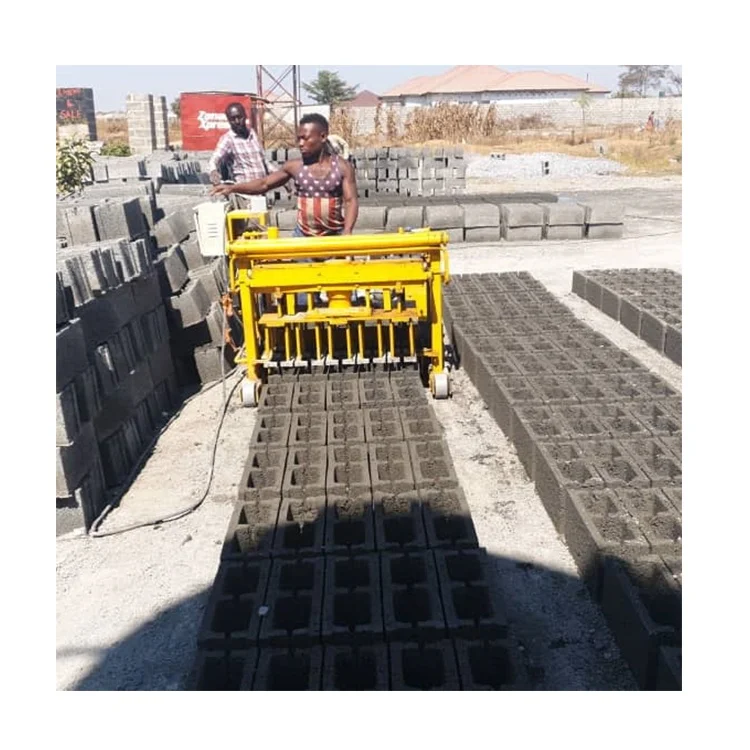
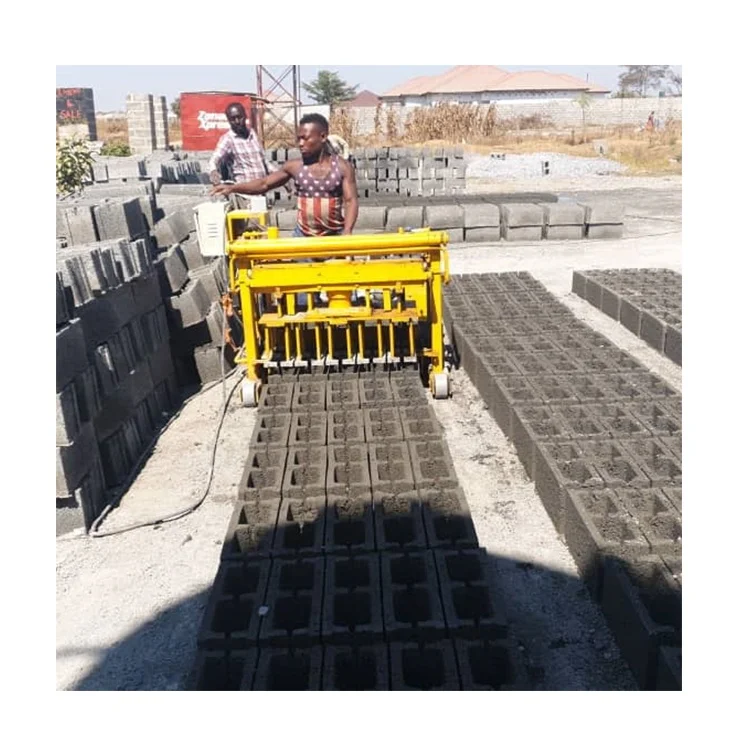 Mobile block machine