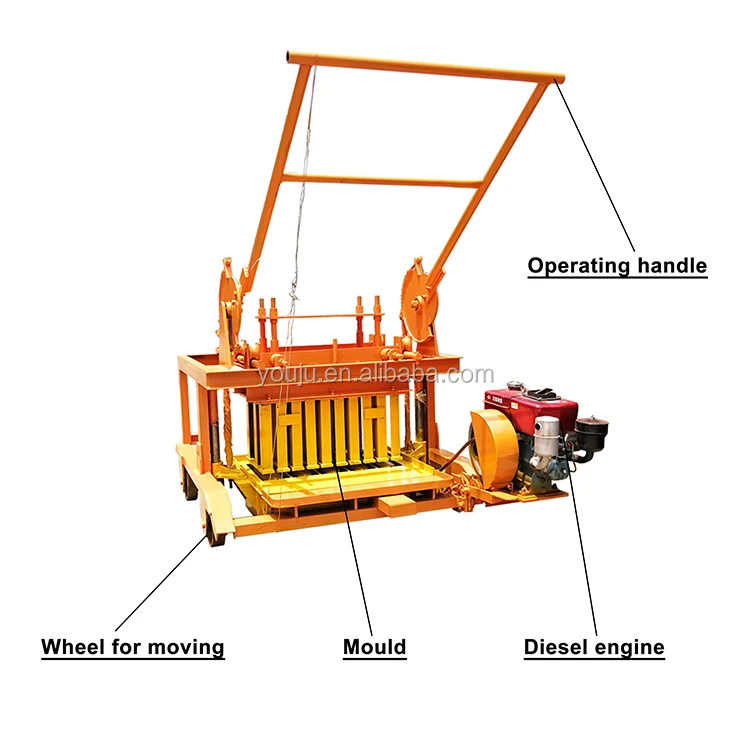
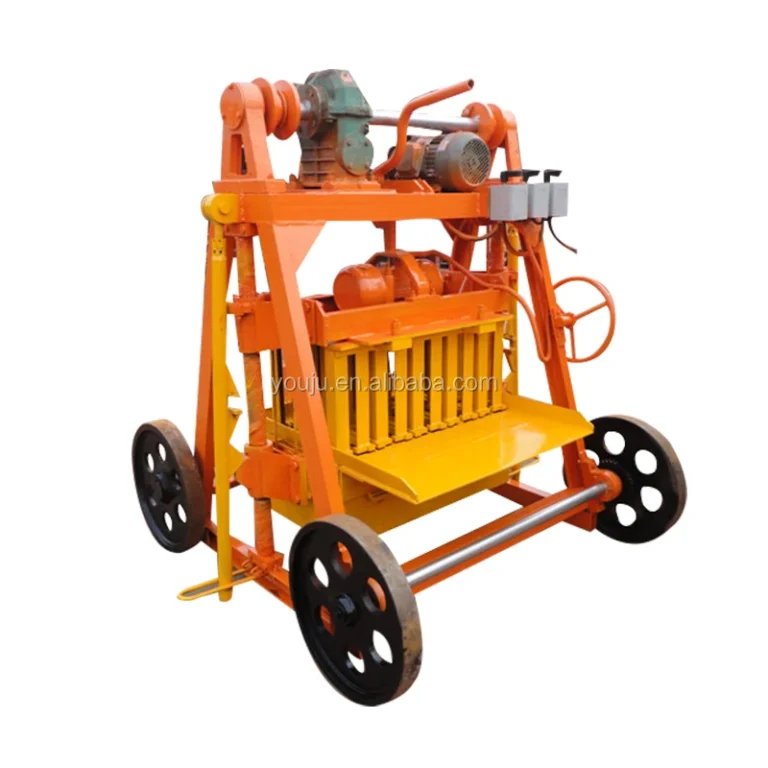
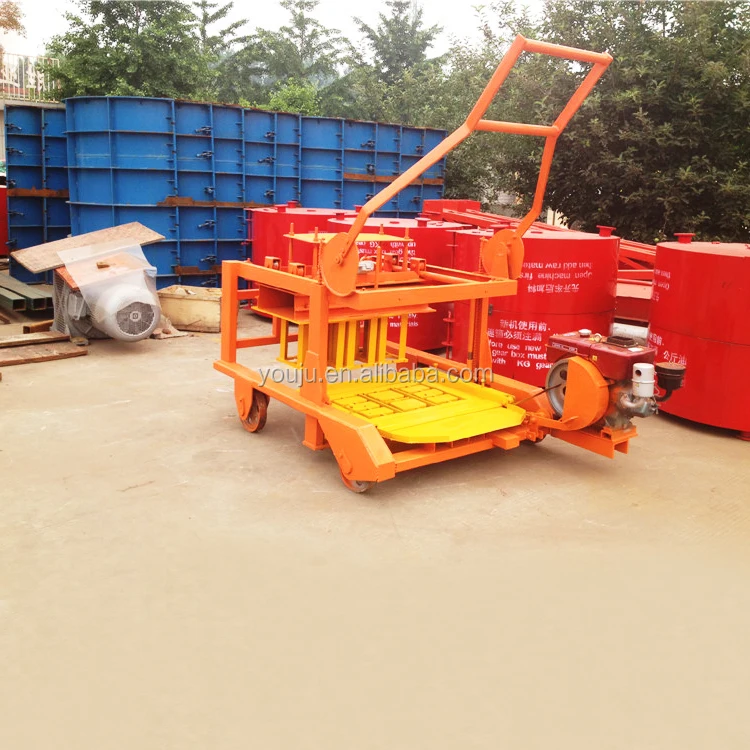
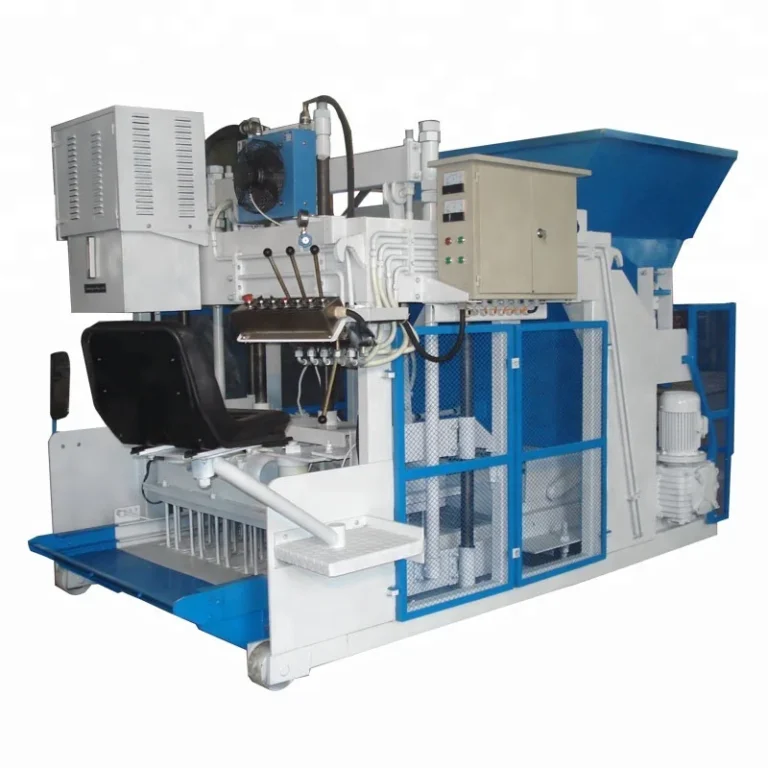
Pallet-Free Laying System — The QMY6-25 eliminates the need for production pallets entirely, dropping freshly molded blocks directly onto a flat ground surface, which removes a major capital and handling burden for first-time plant operators.
Technical Specifications
| Parameter |
Value |
| Model |
QMY6-25 |
| Product Type |
Mobile Egg Laying Block Making Machine |
| Molding Capacity |
6 pcs/mold (block format basis to be confirmed) |
| Molding Cycle |
20 s – 25 s (basis not stated in source — confirm block format / material / thickness) |
| Hydraulic Pressure |
16 MPa |
| Vibration Form |
Mold Vibration |
| Turning Method |
Hydraulic |
| Total Power |
9.6 kW |
| Total Mass |
2.5 Tons |
| Pallet Requirement |
None (egg laying type) |
| Basic Configuration |
QMY6-25 host machine, JS500 Concrete Mixer, Dump truck |
| Optional Configuration |
PLD800 Batching Machine, Cement Silo, Screw conveyor, Loading machine |
| Mixer Option |
JS500 double shaft mixer (alternative: pan mixer JQ500 or JQ750) |
| Voltage |
Customizable according to buyer requirement (source value — verify against manufacturer catalog) |
| Mould Customization |
Available for various hollow blocks and big solid blocks |
| Operation |
Single person operable |
| Standards |
CE capable (documentation available) |
Application Suitability
| Application |
Material or Output |
| On-site construction block production |
Concrete from locally sourced crushed stone, sand, and cement |
| Housing and development project supply |
Hollow blocks and large solid blocks for structural walls |
| Small-scale block plant startup |
Standard hollow block formats without fixed plant infrastructure |
| Remote project sites without curing racks |
Egg-laying production on compacted ground or concrete slab |
What "6 Pieces per Mold" Actually Means on a Job Site
Daily output depends entirely on the block format you choose to run, not on the headline molding capacity figure.
I once saw a buyer in West Africa order an egg layer based on a sample capacity number, then watch real daily production fall well below his projection because the quote never specified which block size that figure assumed. The 6 pcs/mold rating on the QMY6-25 mobile block machine manufacturer sheet looks attractive, but a 400 × 200 × 200 mm hollow block and a large solid block consume the same mold space while yielding completely different volumes per shift. Always ask the supplier to state capacity per format, not just per cycle. [NEED_CITE: capacity calculation assumptions in block machine quotations]

Where the QMY6-25 Fits in the Range
The SHIYUE lineup covers everything from small mobile units through fully automatic stationary lines. The QMY6-25 occupies the entry-mobile tier — it sits above hand-operated machines and below semi-automatic stationary setups that use pallets and conveyor systems. For a buyer who needs blocks on a remote site without investing in a fixed plant, this mobile block machine manufacturer tier gives you production capability with minimal site preparation.
Egg Laying Versus Stationary Pallet Lines
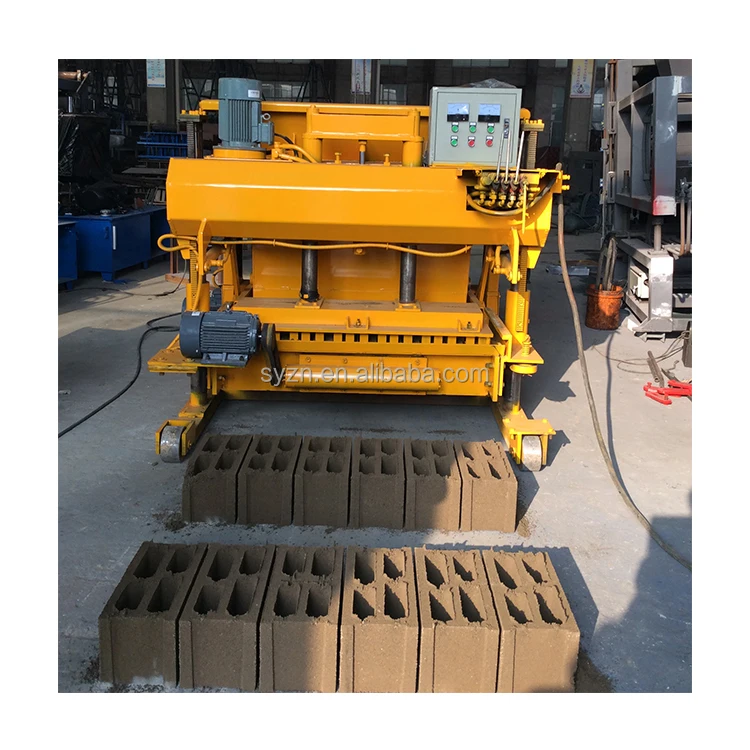
An egg layer drops blocks directly onto the ground and moves forward, leaving cured blocks behind. A stationary line presses blocks onto pallets that then travel through a curing chamber. The QMY6-25 requires no pallet investment and no curing rack system, which keeps upfront costs lower. The trade-off is that ground surface quality and ambient curing conditions directly affect block consistency — a factor that stationary pallet lines largely eliminate. [NEED_CITE: comparison of egg laying versus stationary block production methods]
Reading the Specs That Matter on Site
The 16 MPa hydraulic pressure combined with mold vibration determines how densely the concrete mix is compacted inside the cavity. Higher pressure and matched vibration produce stronger blocks from the same mix, but only if the local aggregate and water content are appropriate. The 9.6 kW total power draws from a single supply point, which matters on remote sites running from a generator — undersizing the genset causes voltage drops that shorten motor life. The hydraulic turning method lets one operator reposition the machine without manual leverage, reducing fatigue over a long shift. Mould change capability covers hollow blocks and large solid blocks, though changeover time and the available format list should be confirmed before ordering.
The Hidden Cost of Skipping the Format Conversation
Ordering an egg layer without confirming which block sizes your local market actually buys leads to a machine that can only produce formats nobody wants. I have seen contractors arrive on site with a mobile unit that molds a single hollow block dimension, only to discover that local builders demand a different wall thickness. Retrofitting additional moulds after delivery costs more and takes longer than specifying them at the quotation stage. Equally, ignoring the voltage and frequency question until the machine arrives can delay commissioning by weeks while a transformer or panel rewrite is arranged. [NEED_CITE: electrical commissioning delays in exported machinery installations]
Why Source This Machine Here
Block machinery is our single focus — the QMY6-25 host, JS500 mixer, and optional batching system are specified as one matched production unit rather than assembled from unrelated suppliers. Every configuration is set against your actual mix design and local aggregate, not pulled from a generic catalogue. Mould design covers the hollow and solid block formats your market sells, with custom drawings available when standard options do not match. Automation level is selectable, so you can begin with egg laying production and transition to a semi-automatic stationary line later without starting from scratch. Installation support includes operator training on your specific block format and site conditions.
Documentation & Verification
- Line layout and capacity calculation stating the block format assumed for the 6 pcs/mold figure
- Machine specification sheet confirming hydraulic pressure and vibration force matched to your mix
- Mould drawing and format list showing exact block dimensions the QMY6-25 can produce
- Voltage and control language confirmation sheet signed before production begins
- Factory test record on your specified block format before dispatch
- Packing photographs and customs documentation support for smooth clearance
Installation, Commissioning & Support
- Flat compacted ground or concrete slab required — no fixed foundation needed for the 2.5-ton host unit
- 9.6 kW total draw requires a dedicated circuit or adequately sized generator on remote sites
- Voltage and frequency confirmed pre-production to match local grid standards
- Single-operator training covers mold change, hydraulic turning, and daily maintenance routines
- JS500 mixer commissioning includes water ratio calibration against your local aggregate moisture
- Wear parts list provided with first-order shipment for planned reordering
Before You Request a Quote
To size the QMY6-25 correctly for your project, share the block formats your market demands, the daily output you need per format, and the raw materials available locally — including aggregate type and any clay or silt content. Confirm your site voltage and frequency, the language you need on the control panel, and whether you already have a mixer or batching equipment on site. If your project has a hard deadline, tell us the required arrival date so lead time and shipping can be planned upfront.
Frequently Asked Questions
Q: What block format does the 20–25 second cycle time assume, and how does output change with different sizes?
A: The cycle time is format-dependent — a thin paver and a thick hollow block require different vibration and pressing durations. The 6 pcs/mold figure must be matched to a specific block dimension to calculate real daily output. We provide a per-format capacity sheet with every quotation so you know exactly what to expect on your product.
Q: Where does the QMY6-25 sit compared to semi-automatic and automatic stationary machines?
A: It occupies the entry-mobile tier — above manual machines, below stationary lines that use pallets, conveyors, and stacking systems. Mobile egg layers suit remote or temporary sites; stationary lines suit permanent plants with higher volume targets. You can transition from mobile to semi-automatic later as a separate investment.
Q: What site preparation does a mobile egg laying machine need versus a fixed block line?
A: A mobile egg layer like the QMY6-25 needs a flat, compacted surface to travel on — no curing racks, no pallet storage, no fixed foundation. A stationary line requires a production building, pallet circulation, and curing area. The mobile setup drastically reduces site infrastructure but depends on ground quality and weather for curing consistency.
Q: Can I upgrade from this mobile machine to a semi-automatic stationary setup later?
A: Yes, moving to a stationary line is a separate investment rather than a retrofit. However, the moulds and operational knowledge you build with the QMY6-25 carry over — you will already know which block formats sell locally and what mix design works with your aggregate.
Q: What voltage options are available, and is the control language confirmed before shipment?
A: Voltage and frequency are customizable to your local grid. The control panel language is confirmed in writing before production begins, so there are no commissioning surprises when the machine arrives. This step is part of our standard sales process for every export order.

 Mobile block machine