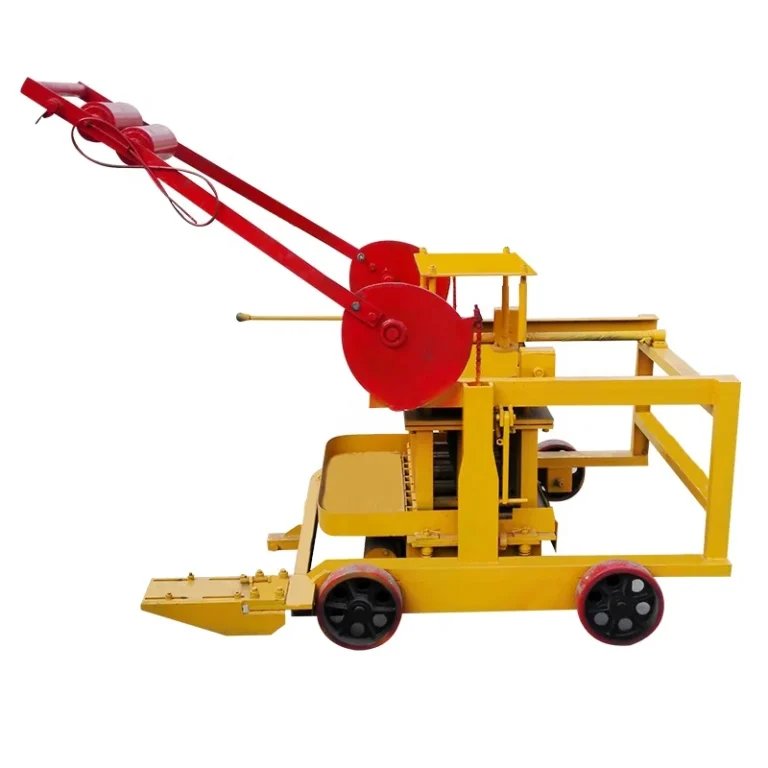
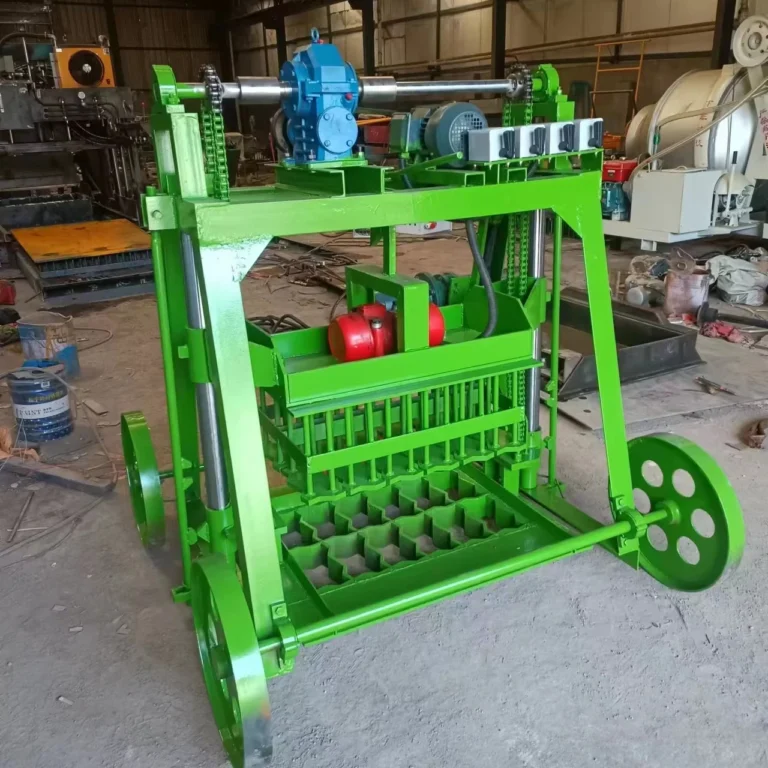
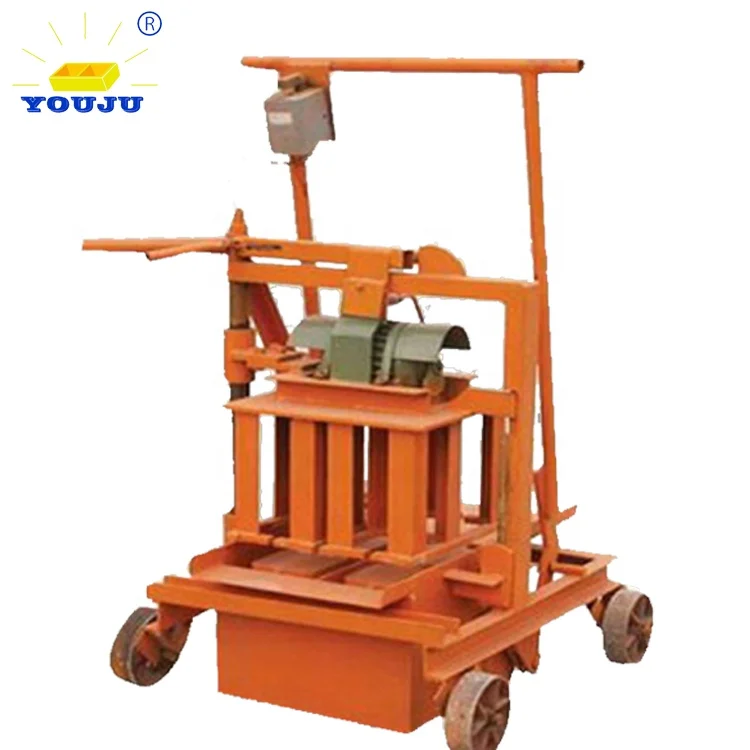
Diesel-driven block machinery as a single focus — the QMR4-45 is specified with engine, mould and pallet-free curing matched to your site conditions rather than assembled from separate catalogues.
Technical Specifications
| Parameter |
Value |
| Model |
QMR4-45 |
| Product Type |
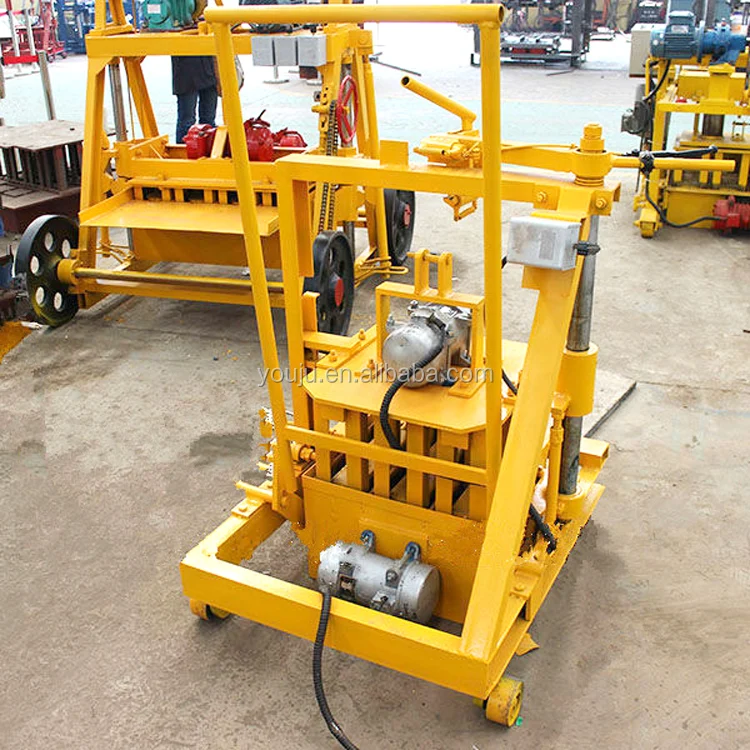
Mobile Egg Laying Block Making Machine |
| Overall Dimensions (L×W×H) |
2420 × 1320 × 1650 mm |
| Net Weight |
810 kg |
| Rated Power |
6 kW |
| Diesel Engine Option |
6 kW / 6–8 HP |
| Voltage & Frequency |
220V or 380V; alternative site voltage available on confirmation |
| Control System |
Manual / Semi-automatic operation |
| Moulding Cycle |
40–45 s |
| Pallet Size |
No pallet required |
| Output Capacity |
3000 pcs/day based on 400×200×200 mm hollow block, 8-hour shift |
| Output Capacity |
3500 pcs/day based on 400×150×200 mm hollow block, 8-hour shift |
| Output Capacity |
4500 pcs/day based on 400×120×200 mm hollow block, 8-hour shift |
| Mould Change System |
Manual mould change |
| Assembly State |
Fully assembled |
| Warranty |
1 year |
| CE Declaration |
Available where applicable (basis to be confirmed) |
Application Suitability
| Application |
Material or Output |
| On-site hollow block production for project contractors |
Crushed stone, sand, cement and water mix laid directly on concrete ground |
| Start-up block plant with no fixed infrastructure |
Hollow blocks, solid blocks and paving blocks via mould change |
| Remote housing development with unreliable grid power |
Diesel engine drive allows continuous production independent of electricity supply |
| Small-scale concrete product manufacturing |
Multiple block formats from a single egg laying machine |
What "3000 Blocks a Day" Actually Means on Site
Output figures only matter when the block format and shift length behind them are stated up front.
Capacity numbers quoted without context cause the most disputes I see in this region. A supplier writes "3000 pieces per day" on the proforma invoice, the machine arrives, and the contractor discovers that figure assumed a smaller block size or a longer shift than the crew actually works. With the QMR4-45 mobile block machine, the daily output is broken down per hollow block dimension — 3000 pcs/day for 400×200×200 mm, 3500 for 400×150×200 mm, and 4500 for 400×120×200 mm — each based on an 8-hour shift and a 40–45 second moulding cycle. [NEED_CITE: capacity calculation methods for concrete block production equipment]

Where the QMR4-45 Fits in the Full Machine Range
The complete block machine range spans automatic, semi-automatic and mobile tiers. The QMR4-45 sits at the mobile end — no pallets, no fixed plant, no curing racks. Buyers who need high daily volume with automatic stacking should look at the semi-automatic and automatic tiers instead. This mobile block machine manufacturer positions the QMR4-45 for contractors and entrepreneurs whose priority is on-site flexibility over maximum throughput.
Diesel Drive and the Grid Electricity Question
Many project sites in this part of the world have unreliable three-phase power, or none at all. The QMR4-45 addresses this with a 6–8 HP diesel engine option that runs the vibration and hydraulic systems independently of the grid. When grid power is available, the same machine can be specified with 220V or 380V motors, or an alternative voltage matched to the local supply. [NEED_CITE: voltage and frequency standards by export market] Confirming the exact voltage, frequency and plug type before the order is placed avoids the three-week delay I have personally watched happen on a job site when a motor arrives wired for the wrong supply.
Reading the Numbers That Matter
The 40–45 second moulding cycle governs how many blocks leave the machine each hour, and that cycle time holds across formats while the number of cavities per mould changes — which is why daily output scales from 3000 to 4500 pieces as block thickness decreases from 200 mm to 120 mm. The 810 kg net weight keeps the machine heavy enough for stable vibration during compaction yet light enough to relocate around a site with a small loader. Rated power of 6 kW means a standard portable generator can cover the electric version, removing the need for a dedicated transformer. The pallet-free egg laying design eliminates pallet purchase and curing rack infrastructure entirely; blocks are laid directly on a level concrete floor and cured in place.
The Cost of Skipping Voltage Confirmation
I once watched a contractor wait three weeks for a variable-frequency drive retrofit because the machine arrived with a 380V motor and the site ran 415V three-phase. The blocks were not being made, the crew was on standby, and the project schedule slipped. Voltage mismatch is entirely avoidable when the site supply is confirmed and written into the contract before production starts. [NEED_CITE: voltage and frequency standards by export market] The same principle applies to frequency — 50 Hz and 60 Hz motors are not interchangeable, and running the wrong one leads to overheating and premature failure.
Why Buyers Spec This Machine Here
Block machinery as a single focus means the QMR4-45 is supplied with its moulds, diesel engine and electrical system matched as one unit, not assembled from separate vendors. Machine configuration is set against the buyer’s actual mix design and local aggregate, not a generic catalogue default. Mould options cover the hollow block formats listed above plus solid block and paving block dies, including custom drawings when the local market demands a non-standard format. Automation level is selectable across the range, so a buyer starting with this egg laying machine can move to a semi-automatic line later without switching suppliers. [NEED_CITE: CE machinery directive requirements for industrial equipment] Installation and commissioning support includes operator training so the crew understands mould change, mix consistency and daily maintenance before the supervisor leaves site.
Documentation & Verification
- Line layout with capacity calculation stating block format assumed for each output figure
- Machine specification sheet confirming diesel engine rating and voltage options
- Mould drawing and format list covering hollow, solid and paving block dies
- Factory test record on buyer’s target block format before dispatch
- CE declaration where applicable to destination market
- Voltage, frequency and control language confirmation sheet
Installation, Commissioning & Support
- Level concrete floor required as curing surface; minimum 150 mm slab recommended to handle 810 kg machine weight and vibration loads
- 6 kW electrical supply on dedicated circuit with confirmed voltage and frequency matching motor nameplate
- Machine ships fully assembled; only mould installation and engine fluid top-up needed on arrival
- First production run supervised to set moulding cycle and verify block density against buyer’s mix design
- Operator training covers manual mould change, daily lubrication points and diesel engine maintenance schedule
- Wear parts list and mould inventory provided at delivery for first replacement planning
What We Need to Quote Accurately
To size the QMR4-45 correctly and avoid the on-site surprises I mentioned earlier, share your target block formats with exact dimensions, the daily volume you need per format, and whether your site has grid electricity or will run entirely on diesel. Include the local voltage, phase and frequency — even a photo of the nearest distribution board helps. If you already have a concrete mixer and water supply on site, let us know the batch capacity so the feeding rhythm matches the 40–45 second cycle.
Frequently Asked Questions
Q: How is daily output calculated for each block format, and what shift length is assumed?
A: Each output figure is based on the QMR4-45 running an 8-hour shift at a 40–45 second moulding cycle. The number of cavities in the mould determines pieces per cycle — a 400×200×200 mm hollow block mould yields 3000 pcs/day, while the 400×120×200 mm mould produces 4500 pcs/day over the same shift.
Q: Can I run this machine entirely on diesel if my site has no grid electricity?
A: Yes. The QMR4-45 is available with a 6–8 HP diesel engine that powers the vibration and compaction systems independently. This is the standard choice for remote project sites or areas with frequent power outages, and it removes the need for a generator or grid connection.
Q: Which block formats can the QMR4-45 produce, and how long does a mould change take?
A: The machine produces hollow blocks, solid blocks and paving blocks by swapping moulds. Standard dies cover the dimensions listed in the specification table. Mould change is manual — a single operator can complete the swap, though the exact time depends on crew familiarity gained during training.
Q: Where does this egg laying machine sit in the range compared to semi-automatic and automatic tiers?
A: The QMR4-45 is at the entry point of the range — pallet-free, no fixed plant, lowest investment level. Semi-automatic tiers add pallet handling and a fixed production line; automatic tiers add stacking and cubing. Buyers needing higher volume with reduced labour typically move up to those tiers.
Q: What ground preparation and curing area do I need for pallet-free egg laying production?
A: A smooth, level concrete floor is required. The machine lays blocks directly on this surface, so the curing area must be large enough to hold one full shift of output undisturbed. Adequate space around the machine allows it to move forward after each cycle.

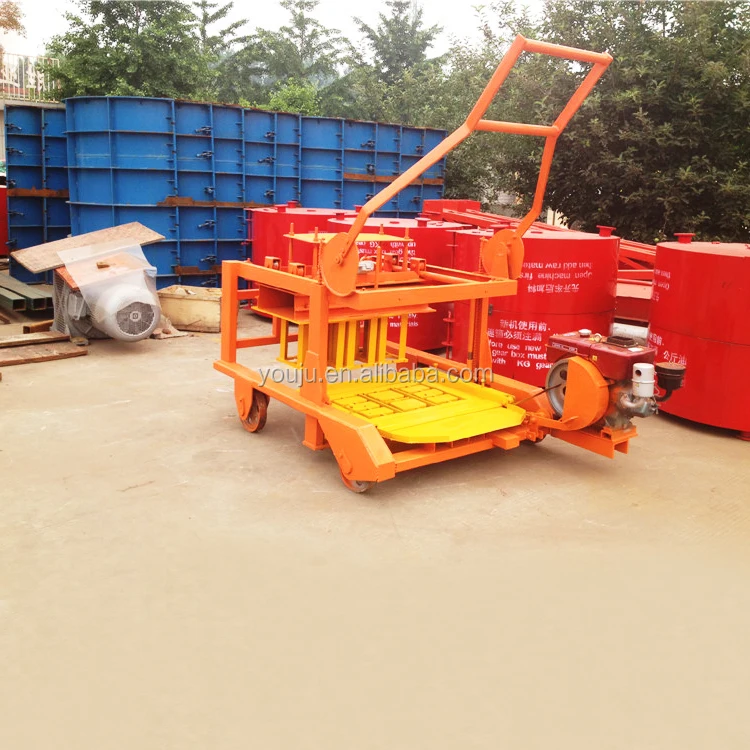
 Mobile block machine