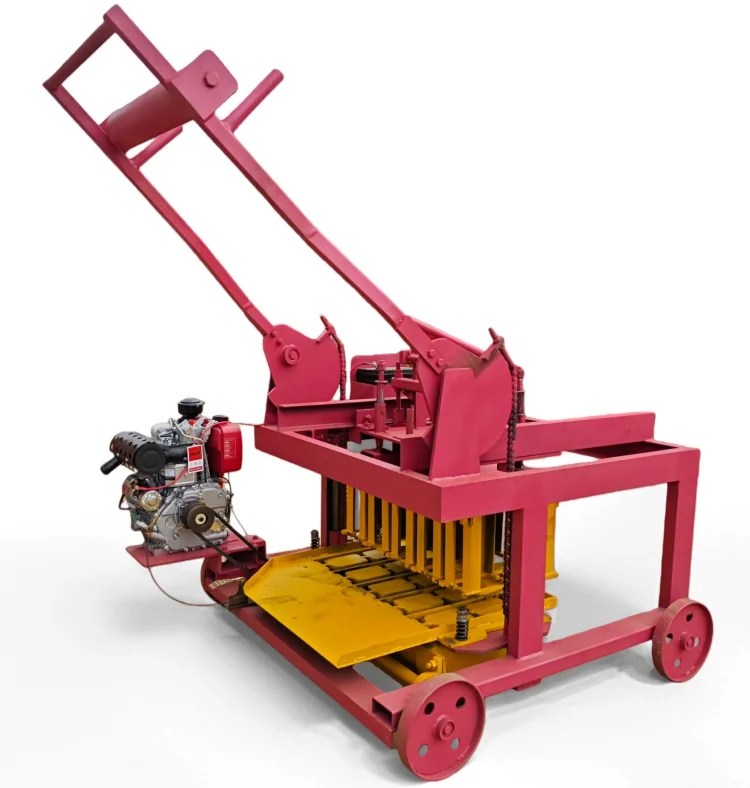
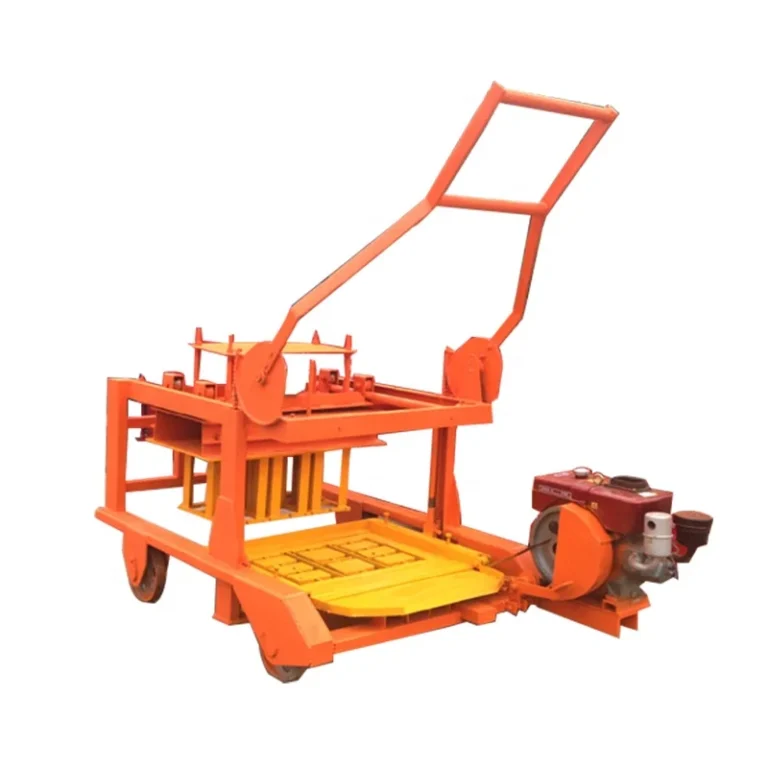
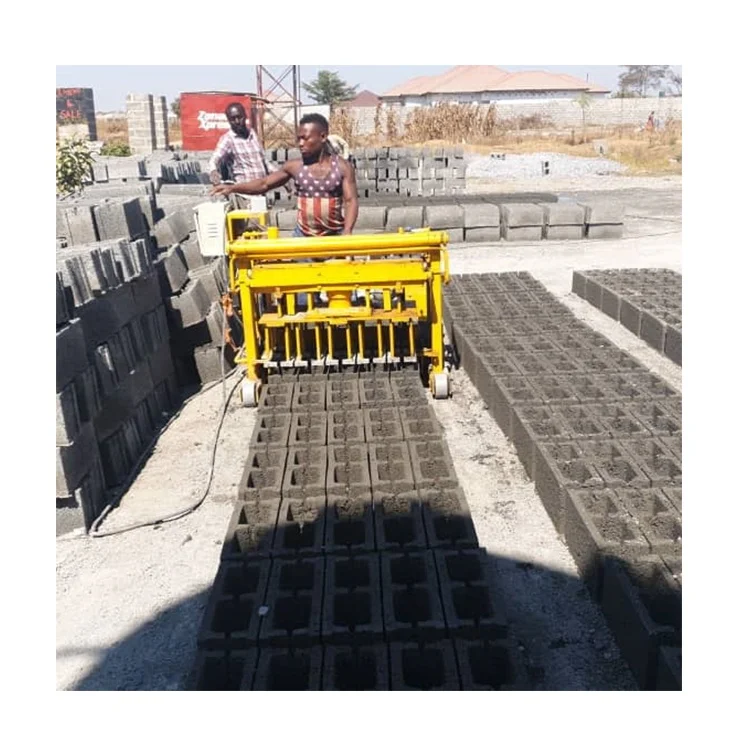
Single-focus block machinery — machine, mould, pallet and handling are specified as one matched system for the QMY12-15, not assembled from separate suppliers.
Technical Specifications
| Parameter |
Value |
| Model |
QMY12-15 |
| Product Type |
Automatic Hollow Block Making Machine |
| Automation Level |
Automatic |
| Block Formats |
9 / 8 / 6 / 4 inch hollow blocks |
| Forming Method |
Hydraulic Pressure |
| Assembly State |
Engine Gear driven |
| Product Line Type |
Cement Brick Production Line |
| Shipping Method |
Nude loading or seaworthy wood carton package, LCL or FCL sea shipping |
Application Suitability
| Application |
Material or Output |
| Hollow block production for building contractors |
Cement, sand, crushed stone, fly ash blends |
| Block and paver production plants scaling output |
Multi-format hollow blocks across 9 to 4 inch |
| Housing project contractors producing on-site |
Cement brick and hollow block in local aggregate |
| Building material distributors adding formats |
Standard and custom hollow block dimensions |
What "Cycles per Hour" Does Not Tell You About Daily Output
A quoted cycle rate only matters when tied to a specific block format.
Many buyers receive a headline capacity number and assume it applies equally to every block size the machine can produce. In reality, a 9 inch hollow block requires a longer press cycle and more raw material per piece than a 4 inch block. The QMY12-15 automatic hollow block making machine manufacturer must state output per format so your daily planning is grounded in the product you actually sell. [NEED_CITE: block format cycle time variance in hydraulic press production]
When I first started commissioning machines in the field, I learned this the hard way. A client in West Africa received his line and ran 6 inch blocks all day — his actual count was well below what the brochure implied, because the quoted figure assumed a smaller format. The machine was not underperforming; the expectation had simply never been calibrated.

Positioning Within the Full Machine Range
The QMY12-15 sits in the higher output tier of the automatic block machine lineup. It is designed for buyers who have already validated market demand for hollow blocks and are ready to move past semi-automatic or mobile egg-laying configurations. This model covers 9, 8, 6 and 4 inch hollow block formats on a single platform, giving a plant the flexibility to serve multiple buyer segments without changing machines.
For a first-time plant owner comparing options across the range, the key question is whether your daily volume target justifies the automatic configuration. Semi-automatic machines require manual pallet handling and stacking; the QMY12-15 removes that labour from the cycle.
How Automation Level Shapes Your Plant Layout
The automatic designation on this cement brick production line means pallet feeding, block forming and output handling follow a sequenced workflow controlled by the engine gear drive system. The degree of automation you select determines how many operators stand between the mixer discharge and the curing yard. [NEED_CITE: labour allocation in automatic versus semi-automatic block plants]
A buyer starting with a semi-automatic line can later add automatic stacking or cubing stations. The QMY12-15 is configured so that these additions do not require a full press replacement — only the supporting equipment upstream and downstream.
Reading the Specs That Actually Affect Block Quality
Hydraulic pressure and vibration force work together during forming. Pressure compacts the mix into the mould cavity; vibration settles fine particles and eliminates voids. If the pressure is too low for the mix design, blocks leave the press fragile and prone to chipping during pallet transfer. The QMY12-15 uses hydraulic pressure forming, and the correct pressure setting depends on your local aggregate grading and cement ratio.
Engine gear driven assembly provides consistent mechanical timing between the feed shoe, vibration table and press head. This matters because any lag between material fill and compression produces density variation across the block face.
Block format range — 9, 8, 6 and 4 inch — determines which moulds you commission. Each format has a different compaction ratio and cycle duration. The mould drawing and format list confirm compatibility before the machine enters production.
The Hidden Cost of Skipping Voltage Confirmation
Voltage, frequency and PLC display language are often confirmed after the machine is already in production. The result on arrival: a control panel that reads in a language the operator cannot follow, or a motor wound for a grid the site does not supply. Rewinding motors or replacing control components adds weeks to commissioning and costs that could have been avoided with a single pre-production check. [NEED_CITE: voltage and frequency standards by export market]
I once watched a buyer in Southeast Asia wait nine days for a step-down transformer because the factory built the line for 380V when the site ran 220V three-phase. The machine was fine. The planning was not.
Why Source the QMY12-15 From a Single-Focus Manufacturer
Block machinery is the sole product category, which means the QMY12-15 press, its moulds, pallets and handling equipment are specified as one system. You do not end up with a pallet size that conflicts with your curing racks or a mould that cannot clear the stacking station.
Configuration is set against your actual mix design and local aggregate, not a catalogue default. Before the machine ships, a factory test runs the exact block format you intend to produce, using material samples you provide. This is the same discipline I insisted on after watching an African client lose ten days of output because the vibration parameters were tuned for standard river sand, not his local red clay mixed with stone dust.
Mould design covers the formats your market actually buys, with custom drawings available for non-standard dimensions. The automation level is selectable, so a buyer can commission the QMY12-15 in a semi-automatic layout and add automatic stacking later.
Documentation & Verification
- Line layout and capacity calculation stating the block format assumed for the QMY12-15
- Mould drawing and format list confirming 9/8/6/4 inch hollow block compatibility
- Voltage, frequency and PLC display language confirmation sheet before production
- Factory test record on your target block format and mix before dispatch
- Operation and maintenance manual covering engine gear drive servicing intervals
Installation, Commissioning & Support
- Foundation must support the QMY12-15 hydraulic press weight and vibration load without resonance transfer
- Dedicated power circuit sized for the engine gear drive motor and hydraulic pump combined draw
- Machine shipped via LCL or FCL sea freight in nude loading or seaworthy wood carton package
- On-site commissioning includes setting hydraulic pressure to match your local aggregate mix design
- Operator training covers mould change procedure across all four hollow block formats
- Wear parts and mould list provided so first replacements are ordered before stock runs out
Before You Request a Quotation
To size the QMY12-15 correctly, share the block formats your market moves fastest, your target daily output per format, and the raw materials you can source locally including aggregate type and grading. Confirm your site voltage, frequency and the control panel language your operators read. If you have existing pallets or curing racks, send their dimensions so the line layout accounts for them.
Frequently Asked Questions
Q: How is daily output calculated for each hollow block format on the QMY12-15?
A: Daily output depends on which block size is running. A 9 inch hollow block requires a longer cycle and more fill time than a 4 inch block. The capacity calculation provided with your quotation states the assumed format, cycle time and shift length so your production plan is built on the product you actually manufacture.
Q: Where does this model sit in the full block machine range?
A: The QMY12-15 occupies the higher output tier among automatic hollow block machines. Semi-automatic models suit smaller plants with lower investment; mobile egg-laying machines work where no fixed plant exists. This model targets buyers who need consistent multi-format hollow block output at volume.
Q: What automation level does the QMY12-15 include, and can it be upgraded?
A: The machine is configured as automatic with engine gear driven assembly and hydraulic pressure forming. Buyers can start with manual pallet handling at the curing end and add automatic stacking or cubing stations later without replacing the press itself.
Q: Which mould formats are included by default?
A: The QMY12-15 covers 9, 8, 6 and 4 inch hollow blocks. Custom moulds for non-standard dimensions are available to buyer drawings. The mould drawing and format list are confirmed before production so there are no surprises at commissioning.
Q: What is the lead time and how is the machine packed for shipment?
A: Typical lead times span multiple weeks depending on mould configuration and factory test scheduling. The QMY12-15 ships via LCL or FCL sea freight in nude loading or seaworthy wood carton package, with dismantling arranged to fit standard container dimensions.

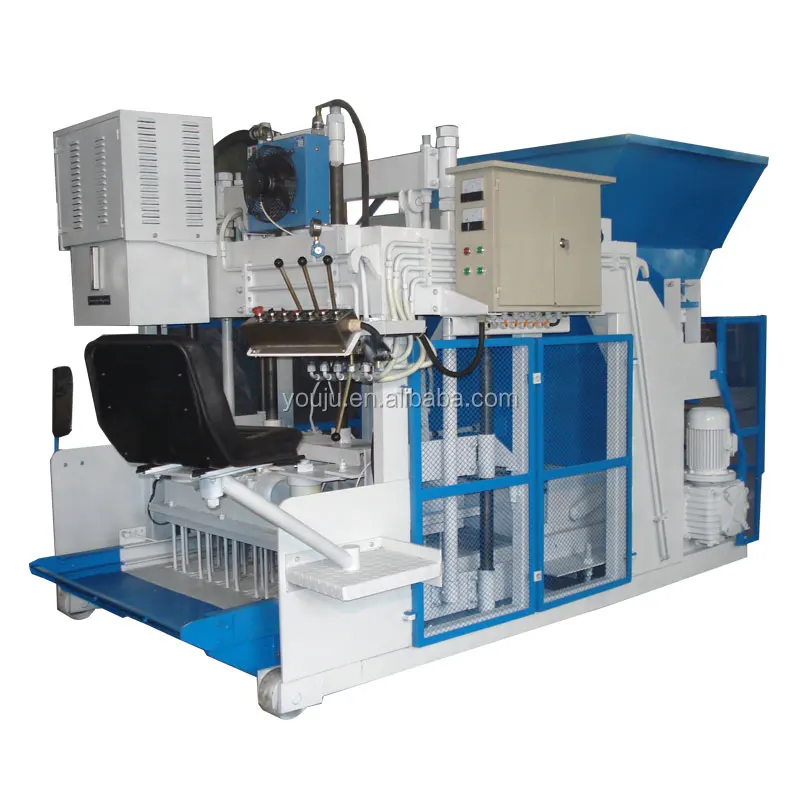
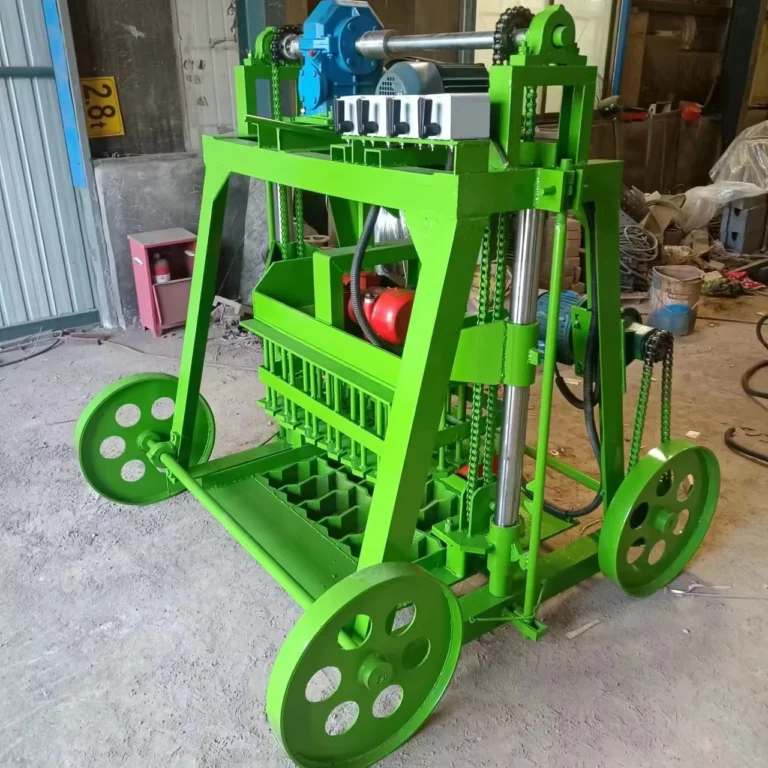 Mobile block machine