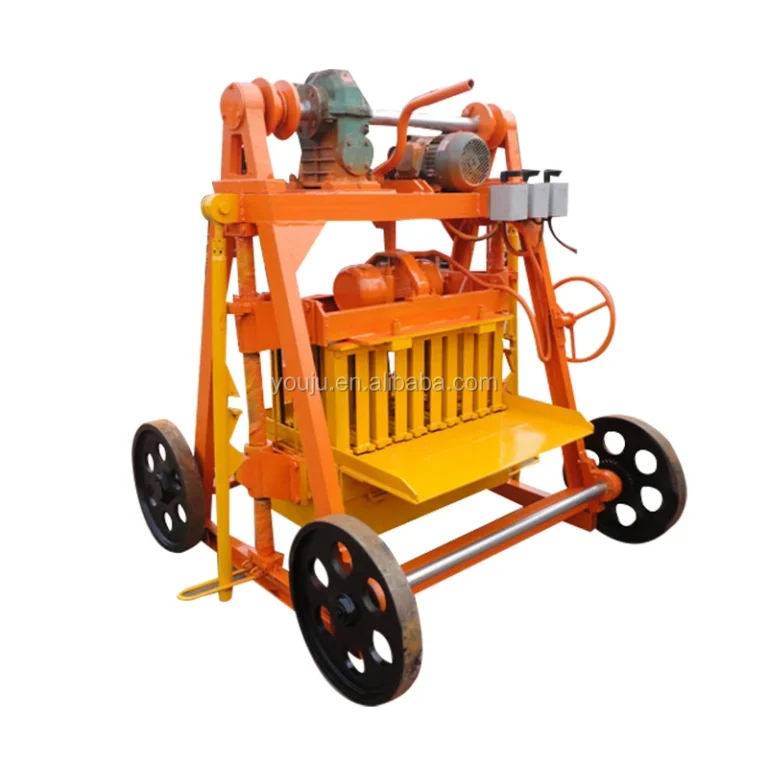
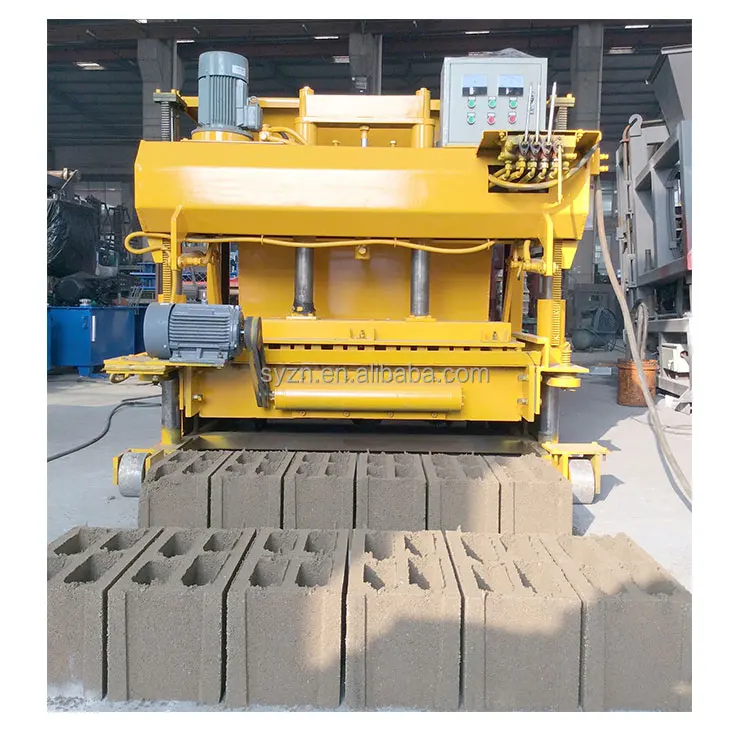
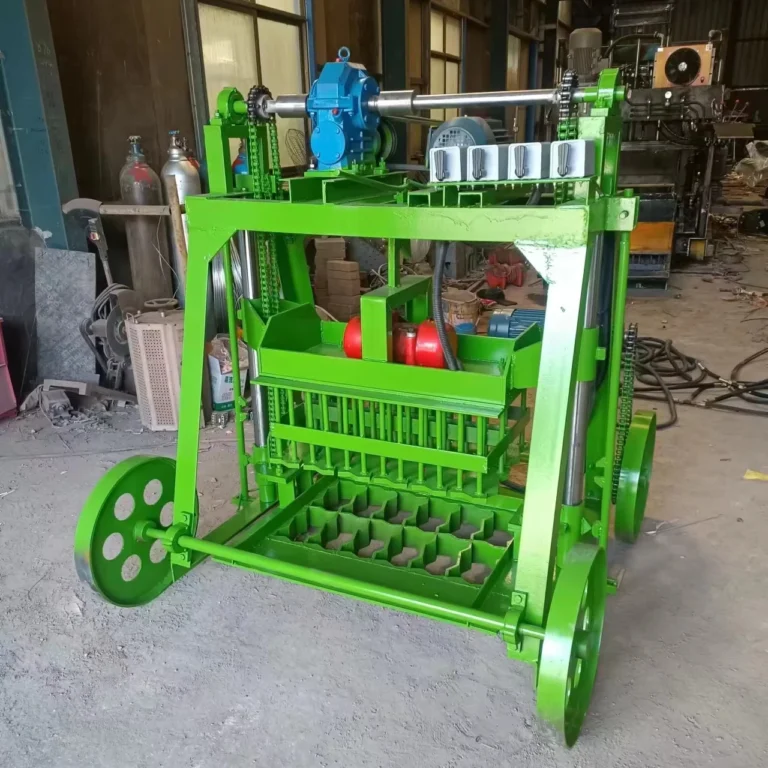
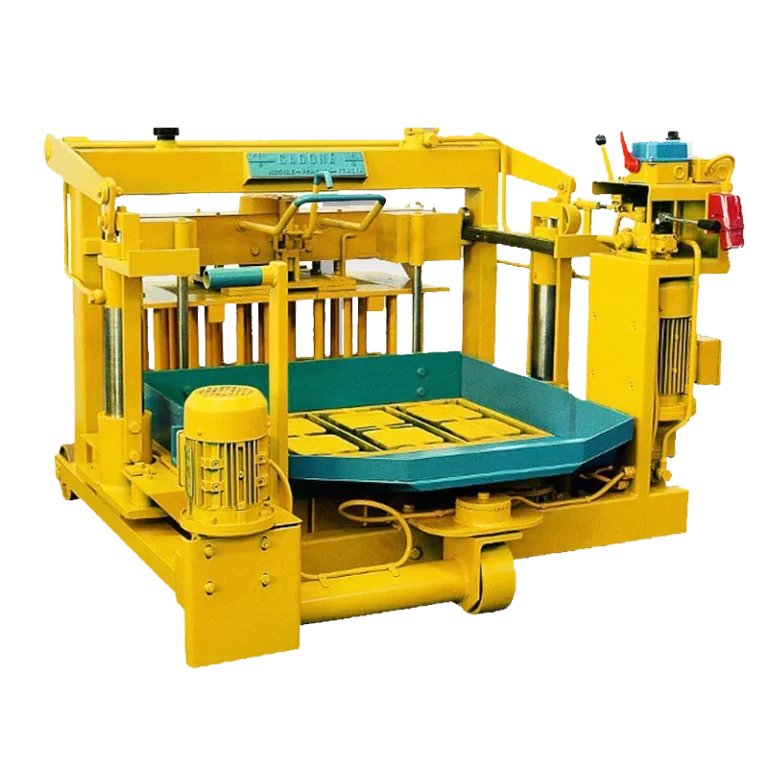
Full Range Entry Point — The QMY4-30 mobile block machine anchors the smallest tier of our production range, specified against the buyer’s actual block format rather than a generic cycle count.
Technical Specifications
| Parameter |
Value |
| Model |
QMY4-30 |
| Product Type |
Mobile Hydraulic Concrete Block Making Machine |
| Machine Type |
Mobile (egg-laying) |
| Rated Power |
5 kW |
| Molding Cycle |
30 seconds |
| Overall Dimensions (L×W×H) |
1200 × 1200 × 1100 mm |
| Net Weight |
950 kg |
| Raw Materials |
Cement, sand, crushed stones, slag |
| Output Capacity |
480 pcs/h based on 400×200×200 mm hollow block, 4 pcs/mould |
| Output Capacity |
600 pcs/h based on 400×150×200 mm hollow block, 5 pcs/mould |
| Output Capacity |
840 pcs/h based on 400×100×200 mm hollow block, 7 pcs/mould |
| Daily Output (8 h) |
3840 pcs based on 400×200×200 mm hollow block |
| Daily Output (8 h) |
4800 pcs based on 400×150×200 mm hollow block |
| Daily Output (8 h) |
6720 pcs based on 400×100×200 mm hollow block |
| Mould Format |
Changeable for hollow block and solid brick |
| Automation Level |
Semi-automatic / manual operation |
| Pallet Size |
Not applicable (egg-laying on ground) |
| Voltage & Frequency |
Configurable to destination market (basis to be confirmed) |
| Control System |
Basis to be confirmed |
| Hydraulic Pressure |
Basis to be confirmed |
| Vibration Force |
Basis to be confirmed |
| Standards |
CE (verification required per product batch) |
Application Suitability
| Application |
Material or Output |
| On-site hollow block production |
Crushed stone, sand, and cement laid directly on prepared ground |
| Contractor self-supply for housing projects |
400×200×200 mm and 400×150×200 mm hollow blocks at site |
| First block plant for entrepreneurs |
Solid brick and hollow block formats with low initial capital |
| Remote development sites |
Slag, local aggregate, and cement without fixed plant infrastructure |
| Small-scale building material supply |
Mixed format output for local distributors and masons |
What "840 Pieces per Hour" Leaves Out When You Buy a Mobile Block Machine
Every output number on this page is tied to a specific block size, mould cavity count, and a 30-second cycle.
I have watched buyers compare two mobile concrete block making machine for sale quotations by the headline hourly figure alone, only to discover at commissioning that the higher number assumed the smallest block in the catalogue. On the QMY4-30, 840 pieces per hour holds only when you are running 400×100×200 mm hollow blocks with a seven-cavity mould. Switch to the 400×200×200 mm format that most building sites actually order and the same machine delivers 480 pieces per hour. [NEED_CITE: capacity calculation standards for concrete block equipment]. That gap between the brochure number and the format the market buys is where most first-time plant owners lose money in the opening weeks.

Where the QMY4-30 Sits Across the Shiyue Range
This model is the entry point of our mobile tier — a single-operator egg-laying unit that drops blocks directly on the ground, removing the need for pallets, a curing rack system, or a covered factory floor. Buyers who need output but cannot justify the land and capital for a fixed plant start here. The next step up is a semi-automatic stationary line with pallet circulation, and above that sits the fully automatic range with stacking and cubing.
When an Egg-Laying Design Is the Right First Machine
The mobile block machine manufacturer configures this unit for sites where concrete product demand follows the building rather than a fixed address. Housing developments, road-side kerb projects, and rural school builds all fit the pattern. The 950 kg weight and 1200 × 1200 mm footprint let a flat-bed truck move the QMY4-30 between locations without a crane permit, which matters when a contractor is finishing one village and starting the next [NEED_CITE: transport regulations for mobile industrial equipment under one tonne].
Reading the Moulding Cycle Against Your Actual Mix
The 30-second cycle assumes a free-flowing aggregate blend that releases from the mould cleanly. In Linyi we run trials on standard river sand and the numbers hold. Send me a bag of your local volcanic ash, crusher dust, or laterite and that same cycle may need adjustment because the fines content changes how the vibration compacts the mix. The 5 kW rated power covers both the vibration motor and the hydraulic pump within a single three-phase feed, so site electricians do not need a second dedicated circuit for a small mobile block machine manufacturer installation.
The Cost of Skipping the Raw Material Sample
Last year an entrepreneur in West Africa took delivery of a QMY4-30 and ran it on a local pozzolan blend we had never seen. Blocks crumbled at de-moulding, the 30-second cycle stretched, and daily output dropped well below the 3840-piece figure quoted for 400×200×200 mm hollow blocks. Two weeks of production were lost while we exchanged videos, reformulated the mix ratio, and re-set the vibration timing remotely. [NEED_CITE: effect of local aggregate mineralogy on concrete block strength]. A sealed sample bag shipped to us before the order would have caught that mismatch in the factory trial.
Why Buyers Source This Tier from Shiyue
Block machinery is our single focus, so the QMY4-30 leaves the factory as one matched system — machine, mould, and ground-laying workflow specified together rather than assembled from separate vendors. We configure against your actual mix design and target block format, not a catalogue default, so the capacity calculation in your quotation states which size it assumes. Mould drawings are supplied for every format your market sells, and custom cavity layouts can be added from your own sketches. The automation level is selectable, meaning a buyer can start on manual pallet-free operation and step to a stationary line later without replacing the entire upstream investment. Installation support and operator training are included so the first week on site does not turn into a remote troubleshooting loop.
Documentation & Verification
- Line layout showing egg-laying workflow and curing area footprint per block format
- Capacity calculation stating the exact block size and mould cavity count assumed
- Mould drawing pack covering every hollow and solid format in your order
- Voltage and frequency confirmation sheet signed off before production starts
- Factory test record run on your specified raw material blend
- Packing photographs and customs paperwork to support smooth port clearance
Installation, Commissioning & Support
- Level compacted ground strip at least 30 m long for continuous egg-laying runs
- Single three-phase 5 kW feed with dedicated breaker, no secondary circuit needed
- Machine arrives assembled on a flat-bed; no crane required for off-loading at 950 kg
- First-day moulding trial on your local aggregate to confirm cycle and block strength
- Operator training covers mould change, mix adjustment, and daily greasing points
- Wear parts list identifies every consumable with reorder part numbers
Before You Send the Inquiry
Tell me the block formats your local market actually buys, the daily volume you need to hit, and the raw materials you can source within trucking distance of the site. Confirm the voltage and frequency at the destination and the language your operators read on a control panel. With those four inputs I can map where the QMY4-30 lands in the full Shiyue range and whether a stationary semi-automatic line would serve you better from day one.
Frequently Asked Questions
Q: How is the capacity figure for the QMY4-30 actually calculated?
A: Every hourly and daily number is tied to a specific block size and mould cavity count run at a 30-second cycle. For 400×200×200 mm hollow blocks with four cavities the figure is 480 pieces per hour; for 400×100×200 mm with seven cavities it is 840 pieces per hour. Your quotation states which format the calculation assumes.
Q: Where does the QMY4-30 fit if I later need more output?
A: It is the entry tier of our mobile block machine manufacturer range. Buyers who outgrow egg-laying output typically move to a semi-automatic stationary line with pallet circulation, and later to a fully automatic plant with stacking. The mould format knowledge you build on the QMY4-30 carries forward to those larger lines.
Q: What voltage and control language options are available?
A: Voltage and frequency are configured to the destination market before production starts, and the control panel language is confirmed in writing with the order. This prevents the common delay where a mobile concrete block making machine for sale arrives on site but cannot be commissioned until a transformer or translation is arranged.
Q: What site preparation does egg-laying operation require?
A: A level, compacted ground strip long enough for a day’s run, with a clear area behind for the machine to travel. No pallets, curing racks, or factory floor are needed. The 1200 × 1200 × 1100 mm footprint and 950 kg weight allow relocation by flat-bed truck as the project moves.
Q: Can I add moulds for block sizes my local market needs?
A: Yes. The mould system is changeable for hollow block and solid brick, and custom cavity layouts are manufactured from buyer drawings. Mould drawings for every format in your order are included in the documentation pack so you can verify dimensions before the machine ships.

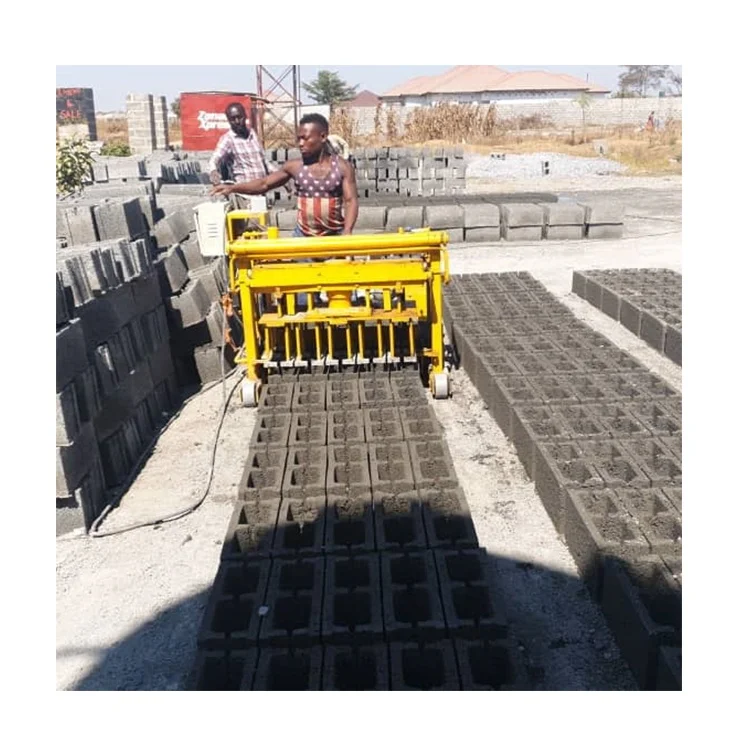
 Mobile block machine