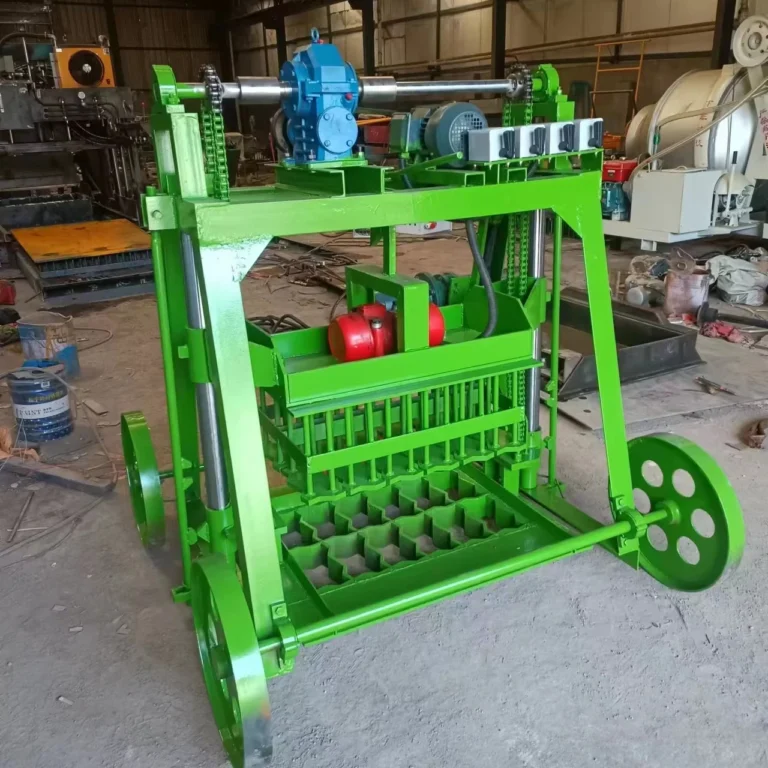
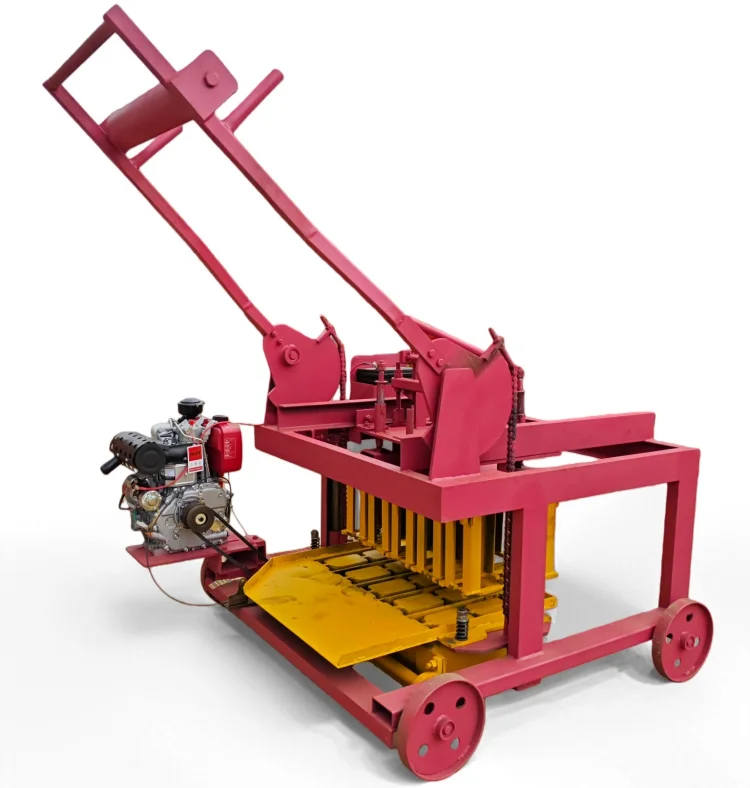
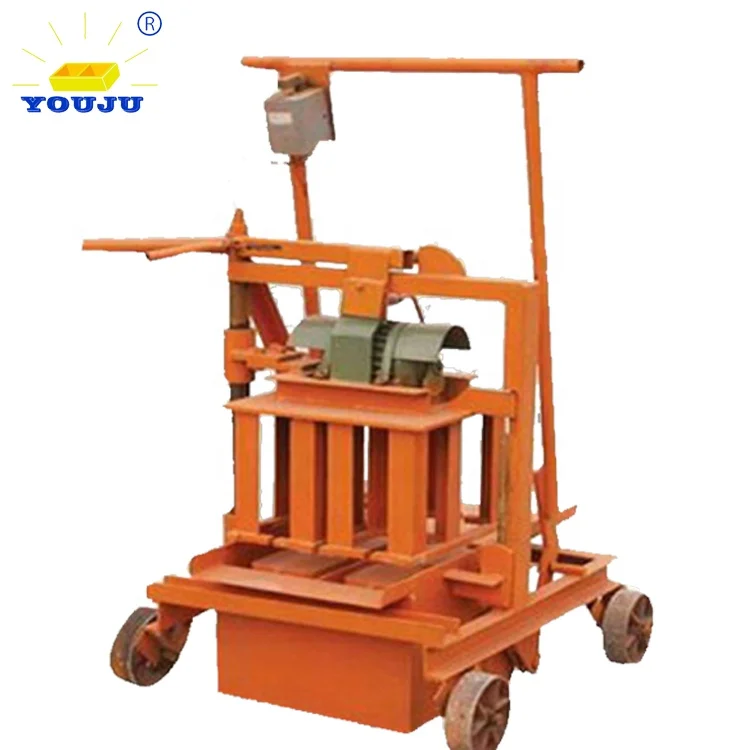
Matched System Design — the QMR4-45 block machine, mixer and trolley are specified as a complete mobile production cell rather than sold as isolated components.
Technical Specifications
| Parameter |
Value |
| Model |
QMR4-45 |
| Product Type |
Mobile Concrete Block Making Machine |
| Power Source |
Diesel / Petrol Engine / Electric (configurable) |
| Overall Dimensions (L×W×H) |
1100 × 950 × 2100 mm |
| Net Weight |
810 kg |
| Molding Cycle |
30–45 s |
| Output Capacity |
2,560 pcs/day (basis not stated in source — confirm block format and material) |
| Assembly State |
Mobile, no pallet required |
| Block Format Compatibility |
Hollow block, solid block, paver brick, fly ash brick |
| Basic Equipment Options |
JZC350 Diesel Concrete Mixer or JQ350 Electric Mixer with Generating Unit; Trolley |
| Warranty |
1 Year |
Application Suitability
| Application |
Material or Output |
| On-site masonry block production for housing projects |
Crushed stone, river sand and cement mix |
| Remote-site contractor block manufacturing |
Fly ash blended with local aggregate and cement |
| Small-scale paver production without a fixed plant |
Fine aggregate and cement for interlocking pavers |
| Development-phase solid brick supply |
Sand, gravel and cement in varied ratios |
What "2,560 Pieces per Day" Actually Means on Your Site
Quoted output figures only become real once you pin them to a specific block format and wall thickness.
When I was commissioning machines in West Africa, I watched contractors unload a mobile block machine and start production expecting the brochure number. The cycle ran fine, but their hollow blocks were a different wall thickness than the one used for the capacity test, so daily output dropped and the blocks cracked during curing. The mobile block machine manufacturer had stated a number without stating the format it assumed [NEED_CITE: capacity calculation standards for concrete block forming equipment]. Before you compare any two quotations, ask each supplier to show the block size, mix ratio and curing time behind their daily figure.

Where the QMR4-45 Fits in the Full Machine Range
The QMR4-45 occupies the entry tier of the mobile block machine range. It serves buyers who need block production capability on a project site but are not ready to invest in a fixed plant with pallet systems, curing racks and stacking conveyors. As a mobile block machine manufacturer covering the complete range, we position this model for contractors and first-time buyers who value relocation flexibility over high-volume throughput.
Pallet-Free Operation and What It Removes from Your Budget
Egg-laying mobile machines like the QMR4-45 form blocks directly on the ground or a prepared concrete floor, then move forward for the next cycle. This eliminates pallet procurement, pallet storage and pallet return logistics — line items that often surprise buyers who only looked at the press price [NEED_CITE: pallet cost share in block production line investment]. The trade-off is that you need a flat, level curing area roughly proportional to one day’s output, and you must protect freshly laid blocks from rain and foot traffic until initial set.
Reading the Specs That Matter for Mobile Production
The 1,100 × 950 mm footprint and 810 kg mass mean the QMR4-45 can be loaded onto a flatbed or dragged by a site vehicle between work zones. Molding cycle ranges from 30 to 45 seconds depending on block format — hollow blocks with deeper cavities require longer vibration and compaction time than solid pavers. Power source selection depends on site conditions: diesel and petrol variants serve locations with unreliable grid supply, while the electric option suits sites where a generator or mains connection is already in place. The compatible block formats — hollow, solid, paver and fly ash brick — share one machine frame, so a contractor can switch production by changing the mould rather than buying a second unit.
When the Wrong Power Source Delays Commissioning
I have arrived at sites where the machine was already unloaded but could not run because the buyer ordered an electric variant for a location with no three-phase supply and no generator on hand. The crew spent two weeks sourcing a rental genset while blocks were needed for the next construction phase [NEED_CITE: on-site power availability challenges in developing construction markets]. Matching power source to actual site infrastructure is a decision that belongs in the inquiry stage, not after the container arrives.
Why Source This Machine Through Our Range
Block machinery is our single focus, so the QMR4-45 is never sold as a standalone press — mixer, trolley and mould selection are configured together. Capacity calculations state the block format assumed, removing the guesswork from daily output planning. Mould design covers the formats your local market actually buys, and custom moulds can be built to your drawings. Power source is confirmed during the proposal stage alongside voltage and frequency for electric variants. Installation guidance covers site floor preparation and curing area layout specific to mobile production.
Documentation & Verification
- Line layout showing curing area dimensions matched to daily output and block format
- Machine specification sheet confirming power source, cycle time and mould compatibility list
- Mould drawing and format list detailing achievable block sizes and cavity configurations
- Factory test record on the block format specified in your purchase order
- Operation and maintenance manual with mould change procedure and lubrication schedule
- Packing photographs and customs documentation support for destination port
Installation, Commissioning & Support
- Level concrete floor or compacted ground required across curing area matching daily output
- Electric variant requires confirmed voltage, frequency and dedicated circuit rating before dispatch
- Machine arrives assembled; mixer and trolley connect on-site with supplied hardware
- First-run block test conducted with buyer’s local aggregate to validate mix and cycle settings
- Operator training covers mould change, daily maintenance points and troubleshooting procedures
- Wear parts list identifies hydraulic seals and vibration components with recommended replacement intervals
Before You Request a Quote
Send us the block format your market sells most, your target daily volume and a sample or description of your local aggregate. Let us know whether your site has reliable grid power or needs a diesel configuration. With those details we can calculate a realistic capacity figure and match the right mixer and mould set to the QMR4-45.
Frequently Asked Questions
Q: What block format does the 2,560 pcs/day capacity assume, and what is realistic for my target block?
A: That figure requires confirmation of block size, wall thickness and mix design. A 400×200×200 mm hollow block takes longer per cycle than a small paver, so daily output changes with format. We calculate capacity per format during the proposal stage so the number you see matches the product you actually sell.
Q: Diesel, petrol or electric — how do I choose the right power source?
A: Diesel suits sites with no grid access and where fuel delivery is routine. Petrol works for smaller intermittent operations. Electric requires a stable three-phase supply or a generator rated for the combined load of press and mixer. We confirm voltage and frequency before production so the machine matches your site on arrival.
Q: Which block formats can the QMR4-45 produce, and how long does a mould change take?
A: The machine frame accepts moulds for hollow block, solid block, paver brick and fly ash brick. Mould change involves unbolting the current mould box, lowering the new one and adjusting the feed shoe. A trained operator completes the swap in a fraction of a shift, preserving the format flexibility you paid for.
Q: What supporting equipment do I need alongside this machine?
A: A concrete mixer — either the JZC350 diesel or JQ350 electric variant — feeds the press, and the included trolley moves mixed material. You also need a flat curing area sized to hold one day’s output and basic weather protection for freshly formed blocks during initial set.

![QMR4-45 Mobile Concrete Block Machine for Hollow Block – Manufacturer8 + 3 + 0 + 9 + 0 = 20 → 20 % 6 = 2 → 句式: [品类词] [机型号或规格] | [站点修饰词] 目标站 shiyueblockmachine.com → 全品类目录类角色 → 池: Manufacturer / Factory Supply / Full Range 20 % 3 = 2 → Full Range Mobile Concrete Block Machine QMR4-45 | Full Range](https://shiyueblockmachine.com/wp-content/uploads/2026/04/H49cf628879e04843a82320591d4387a5Z.webp)
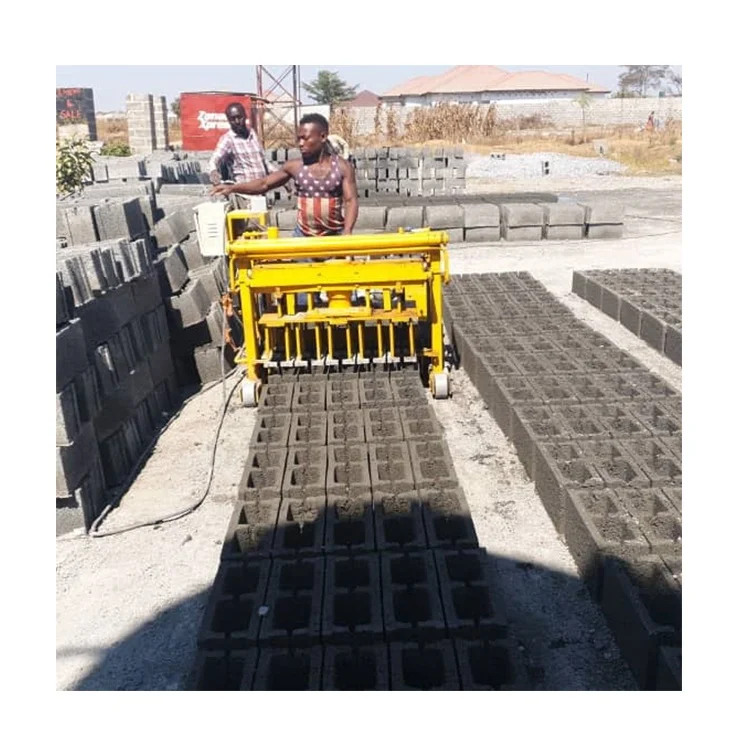 Mobile block machine