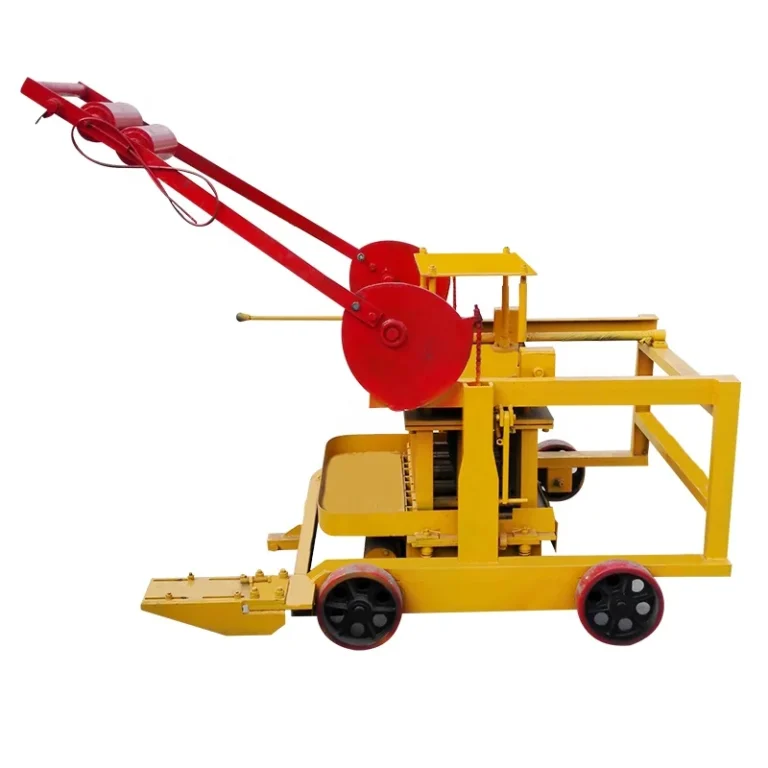
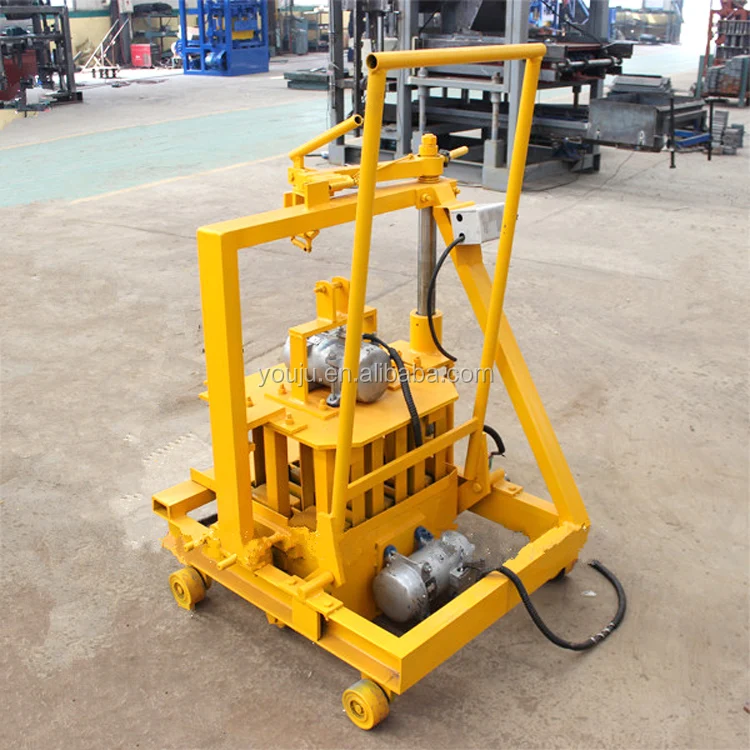
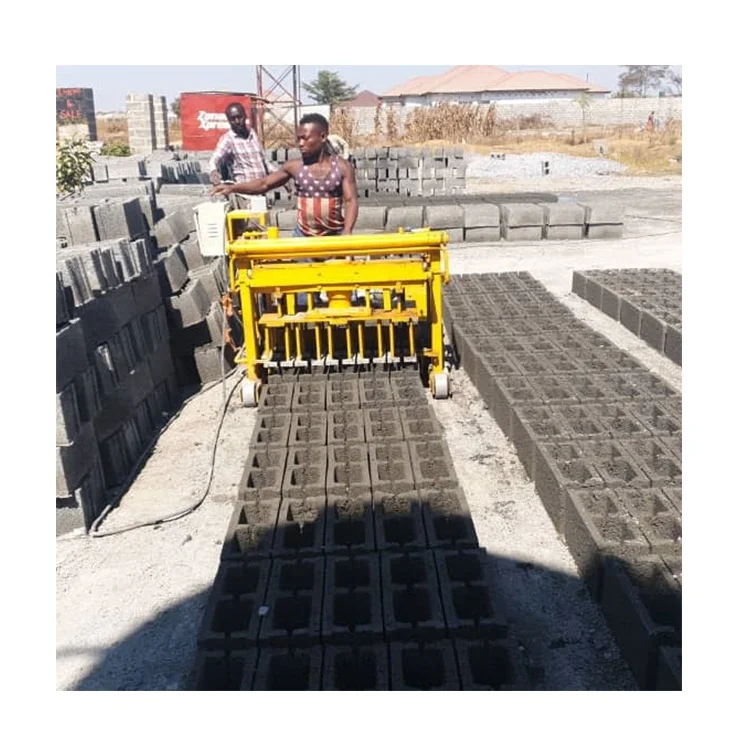
Single-Focus Block Line — every QMJ4-45 egg laying block making machine ships as a matched set of press, mould and power source rather than assembled from unrelated catalog items.
Technical Specifications
| Parameter |
Value |
| Model |
QMJ4-45 |
| Product Type |
Egg Laying Block Making Machine |
| Molding Capacity |
4 pcs/mould (basis: 400×200×200mm hollow block) |
| Block Format Capacity |
400×200×200mm hollow block — 4 pcs/mould, 40-45 s cycle, 3000 pcs/day (8 hours) |
| Block Format Capacity |
400×150×200mm hollow block — 5 pcs/mould, 40-45 s cycle, 3500 pcs/day (8 hours) |
| Block Format Capacity |
400×120×200mm hollow block — 6 pcs/mould, 40-45 s cycle, 4500 pcs/day (8 hours) |
| Molding Cycle |
40-45 seconds |
| Vibration Frequency |
2400 r/min |
| Vibration System |
Twice-vibration of molding core |
| Hydraulic Method |
Mold vibration |
| Demold Method |
Manual |
| Turning Method |
Manual |
| Pallet Requirement |
Not required (egg laying type) |
| Total Power |
6 kW |
| Power Resource |
Diesel / Petrol engine (selectable) |
| Automation Level |
Manual operation |
| Warranty |
One year guarantee for the whole machine |
| Standards |
CE referenced (certificate validity to be confirmed with supplier) |
Application Suitability
| Application |
Material or Output |
| On-site housing project production |
Hollow blocks from local river sand, crushed stone and cement |
| Remote infrastructure camp |
Paving bricks and multicellular bricks without grid electricity |
| First block plant with low investment |
Standard hollow blocks and solid bricks in a small yard |
| Existing cement product workshop |
Adding hollow block formats to an established product range |
What "Up to 4500 Pieces per Day" Actually Means
A daily output figure only matters when the block format, shift length and local aggregate are stated alongside it.
When I traveled to Peru for a commissioning call on a mobile block machine of this class, the contractor had planned the entire wall schedule around the sample capacity. The local river sand carried a high clay content that the sample tests had never accounted for, and the real daily count fell well short of expectation. The project slipped by two weeks [NEED_CITE: aggregate clay content effect on block forming cycle time]. Before any order is placed, the exact block format and local material source should be confirmed so the capacity calculation reflects your ground conditions rather than a catalogue default.

Where a Mobile Egg Laying Machine Fits in the Range
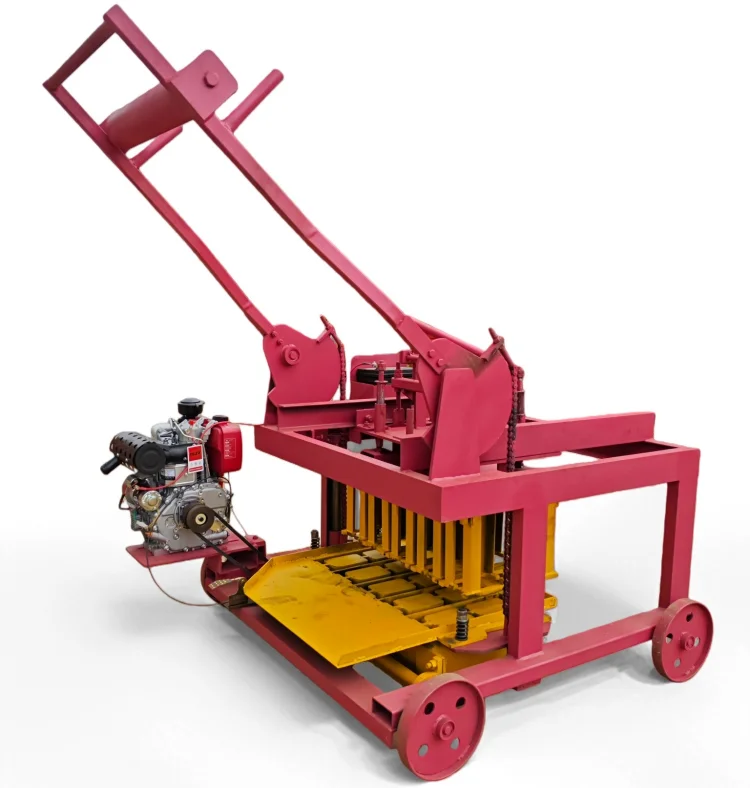
The QMJ4-45 egg laying block making machine occupies the entry tier of the Shiyue block machine range. It produces blocks directly on the ground without pallets, which removes both the pallet investment and the curing rack infrastructure a stationary plant requires. Buyers surveying their first block production setup typically compare this tier against semi-automatic stationary lines to understand what automation they are trading for mobility and lower initial outlay.
Output Tiers and Plant Footprint at a Glance
At the smallest tier, a single QMJ4-45 mobile block machine for sale operates within a flat concrete yard roughly the size of a standard parking bay, needing only a mixer and a water supply nearby. Moving up the range, semi-automatic lines introduce pallet conveyors and stacking stations that demand a covered curing area. The choice between tiers comes down to whether the buyer needs to follow a project from site to site or produce in one fixed location [NEED_CITE: site footprint requirements for mobile versus stationary block plants].
Reading the Specifications That Affect Daily Output
The twice-vibration of the molding core applies two distinct vibration phases within each 45-second cycle, which compacts the concrete mix more evenly than a single-phase system and produces a denser block wall. Vibration frequency at 2400 r/min is tuned for the fine-aggregate hollow block mixes typical in on-site production. The 6 kW total power rating is delivered through a selectable diesel or petrol engine, meaning the QMJ4-45 egg laying block making machine runs independently of grid availability — a decisive factor on remote housing developments where electricity arrives only after the walls are already built. Mould change is manual, so buyers planning multiple block formats should allocate a full shift segment for each swap rather than expecting mid-run changeovers.
The Cost of Skipping the Aggregate Conversation
Ordering a mobile block machine for sale based solely on the headline cycle time leaves the buyer exposed when local sand or gravel behaves differently from the test mix. Inconsistent vibration compaction caused by an untested material leads to blocks that crack during handling, and the resulting waste is not visible until the first week of production [NEED_CITE: block breakage rates linked to unverified local aggregate]. Because the QMJ4-45 relies on ground curing without pallets, the yard surface must also be level and firm enough to bear wet blocks without settling unevenly — a detail that is easy to overlook when the purchase conversation stops at machine price.
Why Source This Mobile Block Machine Here
Shiyue maintains block machinery as a single product focus, so the QMJ4-45 is specified together with its mould, power source and handling accessories as one matched system rather than a press bolted to third-party components. Capacity calculations state the exact block format assumed, avoiding the common gap between quoted output and real daily production. Custom mould design is available to buyer drawings, which means a contractor who needs a non-standard kerbstone for a municipal tender can have the tooling produced before the machine ships. Installation support and operator training are included so the first week on site does not become an unpaid commissioning exercise.
Documentation & Verification
- Machine specification sheet confirming diesel or petrol engine selection and 6 kW total power
- Capacity calculation listing daily output per block format with 8-hour shift assumption
- Mould drawing and format list for every hollow block size the buyer plans to produce
- Operation and maintenance manual covering manual demold and turning procedures
- Factory test record run on buyer’s target block format before dispatch
Installation, Commissioning & Support
- Level concrete yard required; no fixed foundation needed for the 6 kW QMJ4-45 egg laying machine
- Diesel or petrol engine verified to match local fuel availability before shipment
- Manual demold and turning procedures trained on site during first production run
- One-year warranty covers the full machine including vibration core and mould assembly
- Wear parts and mould list provided at delivery for local sourcing or direct reorder
Before You Request a Quote
Tell us which hollow block dimensions your market actually buys, the daily volume you need to sustain, and whether your site has grid power or requires engine operation. Share a sample of the local sand or aggregate so the mix can be tested against the twice-vibration cycle. If you are adding the QMJ4-45 mobile block machine for sale to an existing yard, let us know the curing area dimensions and any equipment already in place so the line layout fits your current workflow.
Frequently Asked Questions
Q: How is the daily output of the QMJ4-45 calculated for different block sizes?
A: Output is stated per block format with an 8-hour shift assumption. For a 400×200×200mm hollow block the machine produces 4 pieces per mould at a 40-45 second cycle, yielding 3000 pieces per day. Thinner formats such as 400×120×200mm fit 6 pieces per mould, reaching 4500 pieces per day under the same cycle and shift conditions.
Q: What ground surface is needed for egg laying operation without pallets?
A: The yard must be a flat, firm concrete surface free of standing water and debris. Blocks are deposited directly onto the ground and left to cure in place, so any unevenness transfers into the block base. A smooth steel-troweled finish gives the cleanest result and avoids bottom-edge damage during handling.
Q: Should I choose the diesel or petrol engine option?
A: Diesel suits sites with continuous daily production and reliable diesel supply chains, offering better fuel economy under sustained load. Petrol is lighter and easier to start in cold climates or at high altitude. The decision should match the fuel already stored on your project site to avoid stocking two fuel types.
Q: Can I order additional moulds for other block formats later?
A: Yes. Moulds are supplied to the buyer’s drawing or from standard format options. Each additional mould must match the QMJ4-45 mounting dimensions and vibration frequency of 2400 r/min. Lead time for custom moulds is typically several weeks, so ordering alongside the machine avoids a second shipment.
Q: What does the one-year warranty cover and how are wear parts handled?
A: The warranty covers the complete machine including the vibration core, engine and structural frame for one year from dispatch. A wear parts list is provided at delivery identifying items such as vibration springs and mould liners. Replacement parts can be ordered directly or sourced locally using the supplied part numbers.

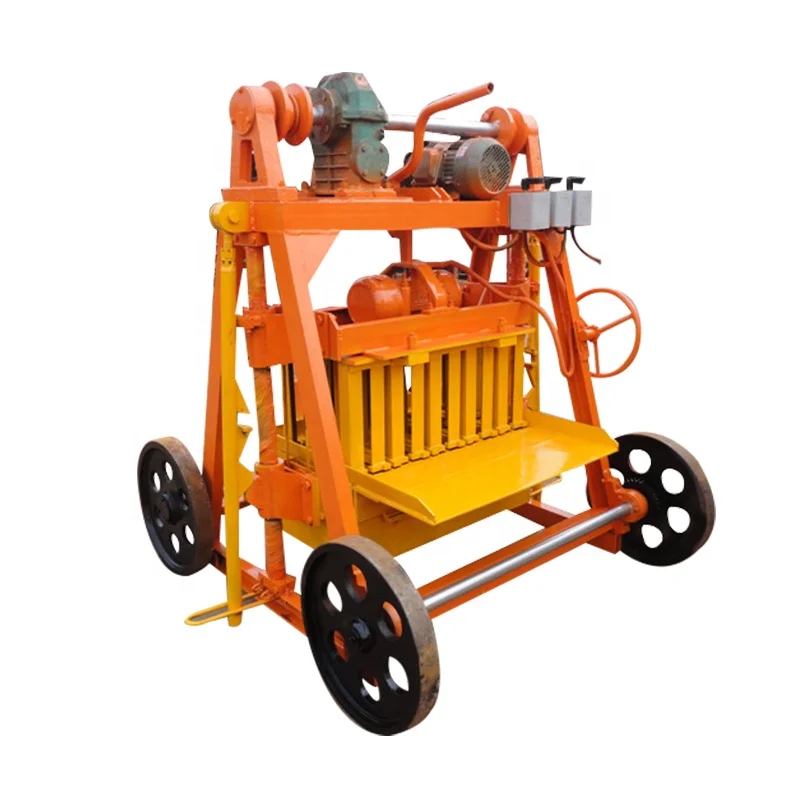
 Mobile block machine