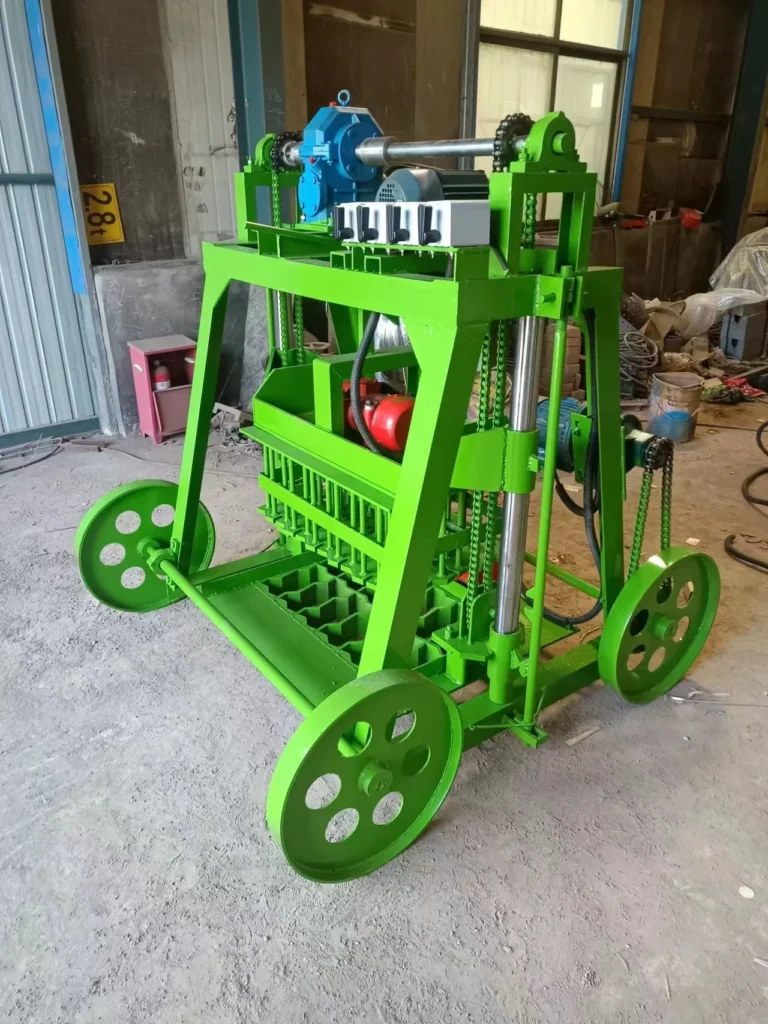
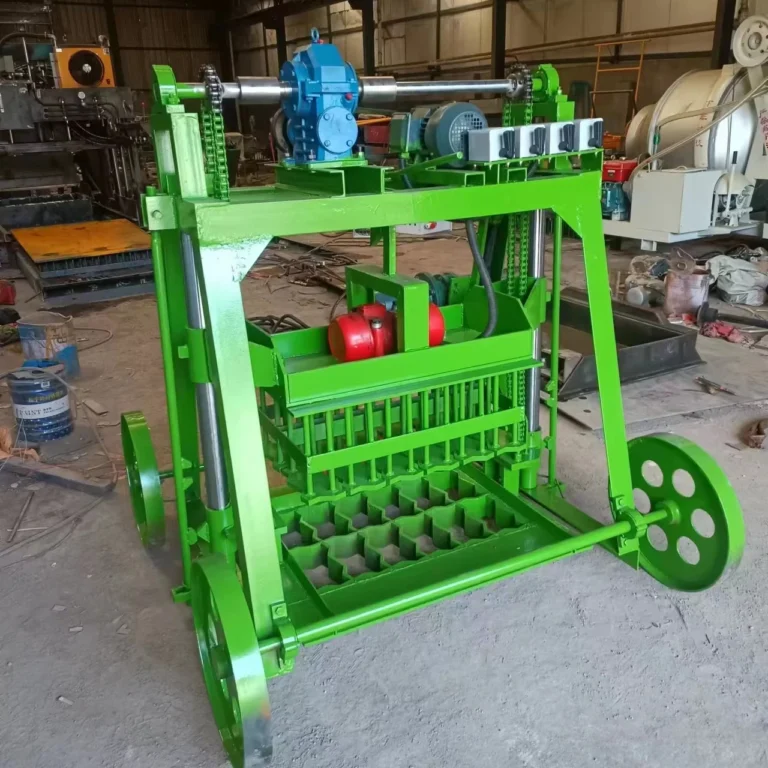
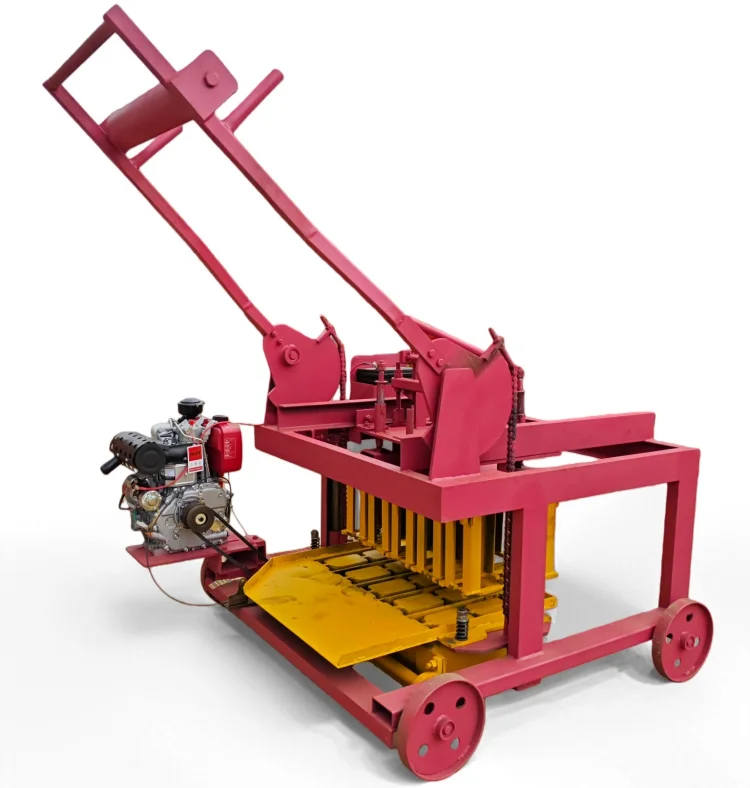
Matched System Supply — Every QMJ2-45 mobile block making machine ships with pallets, moulds and handling gear specified as one integrated set rather than separate purchases.
Technical Specifications
| Parameter |
Value |
| Model |
QMJ2-45 |
| Product Type |
Mobile Concrete Block Making Machine |
| Machine Type |
Mobile (egg-laying) block making machine |
| Operation Mode |
Manual / Semi-automatic (basis to be confirmed) |
| Moulding Cycle |
25-30s |
| Output Capacity (Hollow Brick 400×200×200mm) |
160 pcs/h, 1280 pcs/8hr |
| Output Capacity (Hollow Brick 400×150×200mm) |
240 pcs/h (basis to be confirmed), 4800 pcs/8hr (basis to be confirmed) |
| Output Capacity (Hollow Brick 400×100×200mm) |
320 pcs/h (basis to be confirmed), 2560 pcs/8hr (basis to be confirmed) |
| Pallet Requirement |
No pallets required |
| Power Source |
Engine (diesel) / Electric (configuration options to be confirmed) |
| Labour Requirement |
1 to 3 workers |
| Mould Change |
Interchangeable moulds for different hollow brick formats |
| Automation Level |
Manual mobile (egg-laying type) |
| Stacking Method |
On-ground egg-laying (no pallet, no curing rack) |
| Mobility |
Free-moving, no fixed plant required |
| Certification |
ISO9001:2000, CE |
Application Suitability
| Application |
Material or Output |
| On-site block production for construction contractors |
Hollow blocks produced directly at housing or infrastructure project sites |
| Small-scale hollow brick production |
Low-volume output for entrepreneurs and first-time block plant operators |
| Remote or project-site block manufacturing |
Mobile production where fixed plant logistics are impractical |
| Low-investment entry into block production |
Minimal infrastructure with no curing yard or pallet system required |
The Cycle-Time Illusion in Mobile Block Production
When a mobile block making machine for sale is quoted only in cycles per hour, the number hides the most important variable: which block format that speed actually applies to. Capacity means nothing without the format it was measured against.
I have seen contractors order a machine expecting thousands of blocks per shift, only to discover the quoted figure assumed the smallest solid brick while their project required large hollow blocks. The real daily output on their actual format often falls to a fraction of the brochure claim. With the QMJ2-45, the moulding cycle of 25-30 seconds stays consistent, but the pieces produced per cycle drop from eight to three as you move from 100mm to 200mm hollow blocks. This is why our quotations always state output per format, so buyers can plan their site schedules honestly [NEED_CITE: block format impact on daily output calculations].

Where the QMJ2-45 Sits on the Range
The QMJ2-45 occupies the entry tier of our mobile block machine lineup. It is designed for buyers who need production capability on a building site without the capital outlay for a fixed plant, pallet inventory, or curing rack infrastructure. Compared to semi-automatic lines further up the range, this mobile block making machine for sale trades throughput volume for zero-infrastructure flexibility.
Comparing Mobile, Semi-Automatic and Automatic Tiers
Moving up from the QMJ2-45 to a semi-automatic stationary machine adds pallet handling, higher vibration force and hydraulic pressure, and typically doubles or triples the output per shift. An automatic line further adds batching, stacking and cubing systems that reduce labour but demand a dedicated plant footprint. The right tier depends on whether your priority is site mobility or daily volume [NEED_CITE: block plant investment tiers and output comparison].
Reading the Specification Sheet Honestly
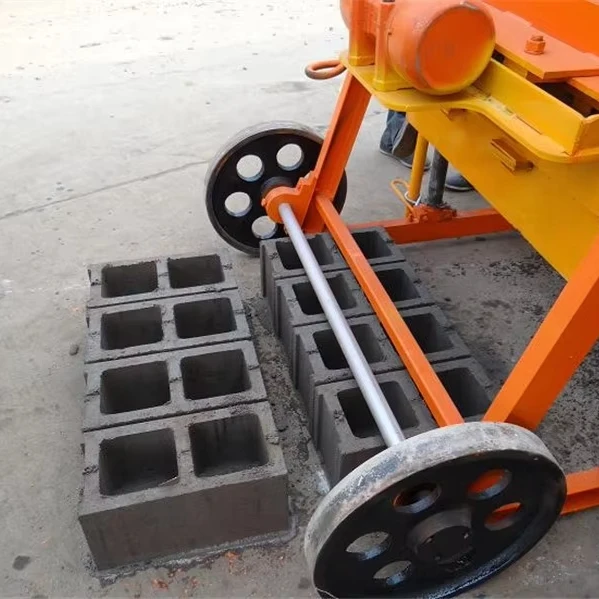
The 25-30 second moulding cycle governs how many pressing actions the QMJ2-45 completes per hour, but the pieces per mould define what that translates to in finished product. For 400×200×200mm hollow blocks, the output sits at 160 pieces per hour based on that format. The no-pallet egg-laying design means the machine deposits each block directly onto the ground and moves forward, eliminating pallet investment but requiring a flat, prepared surface. Power can be configured as diesel or electric depending on site supply, and the one-to-three worker requirement keeps operating costs low for project-based production.
The Hidden Cost of Ignoring Site Conditions
A mobile egg-laying machine produces blocks on whatever ground it sits on. If the surface is uneven, soft, or poorly drained, block dimensions vary and breakage rises during curing. I once visited a site in West Africa where the contractor skipped ground preparation to save time, and nearly a third of the first week’s output cracked before reaching the wall. Investing in a level, compacted production area pays for itself within the first few days of operation [NEED_CITE: ground preparation standards for egg-laying block production].
Why Source This Machine Through a Matched-System Approach
Block machinery is our single focus, so the QMJ2-45 is specified with its moulds, power configuration and spare wear parts as one coordinated package. We set the configuration against your actual mix design and local aggregate rather than defaulting to a catalogue standard. Moulds are designed for the block formats your market actually sells, with custom drawings available when standard formats do not match your specification. Automation can start at this manual mobile level and step up to semi-automatic when your volume grows, without changing suppliers.
Documentation & Verification
- Line layout stating the block format assumed for each QMJ2-45 output figure
- Machine specification sheet confirming power source and cycle time parameters
- Mould drawing and format list showing all available hollow brick dimensions
- Voltage and frequency confirmation document before QMJ2-45 production begins
- Factory test record on your specified block format before dispatch
- Operation manual covering mould change and daily maintenance procedures
Installation, Commissioning & Support
- Ground preparation guidance specifying surface flatness for QMJ2-45 egg-laying operation
- Power source confirmation matching diesel or electric configuration to your site supply
- On-site commissioning with first-run parameter setting for your local aggregate mix
- Operator training covering the 25-30 second moulding cycle and mould change procedure
- Wear parts list tied to your project timeline so spares arrive before they are needed
- Maintenance schedule aligned with one-to-three worker daily operation routines
What We Need to Configure Your QMJ2-45
To size this mobile block making machine for sale to your project, tell us the hollow block formats your site requires and the daily volume your construction schedule demands. Share your local aggregate type and whether diesel or electric power is available at the production area. Let us know the ground conditions where the machine will operate so we can advise on surface preparation.
Frequently Asked Questions
Q: How is the output capacity of the QMJ2-45 calculated, and which block format does each figure assume?
A: Every output figure we quote is tied to a specific block format. The 160 pieces per hour rating applies to 400×200×200mm hollow blocks, calculated from the 25-30 second moulding cycle and the number of cavities per mould for that format. Larger blocks yield fewer pieces per cycle, so the hourly output drops accordingly. We always state the assumed format so your daily planning matches reality.
Q: Where does the QMJ2-45 mobile machine sit compared to semi-automatic and automatic block machines in the range?
A: The QMJ2-45 is the entry point of our range, offering on-site production with no pallet or fixed-plant investment. Semi-automatic machines add pallet handling and higher output but need a curing yard. Automatic lines add batching and stacking for maximum volume but require a dedicated plant. The QMJ2-45 suits buyers prioritizing site mobility over daily throughput.
Q: What block formats can the QMJ2-45 produce, and how long does a mould change take?
A: The QMJ2-45 uses interchangeable moulds for hollow brick formats including 400×200×200mm, 400×150×200mm, and 400×100×200mm. Mould change is a manual procedure completed by the operating crew on site. We supply the format list and mould drawing with each machine so your team knows the procedure before the first change.
Q: What voltage, frequency and power source options are available for different target markets?
A: The QMJ2-45 can be configured with diesel engine or electric motor drive depending on your site supply. Voltage and frequency must be confirmed before production so the electrical components match your local grid. We request this detail during the quotation stage to avoid commissioning delays when the machine arrives.

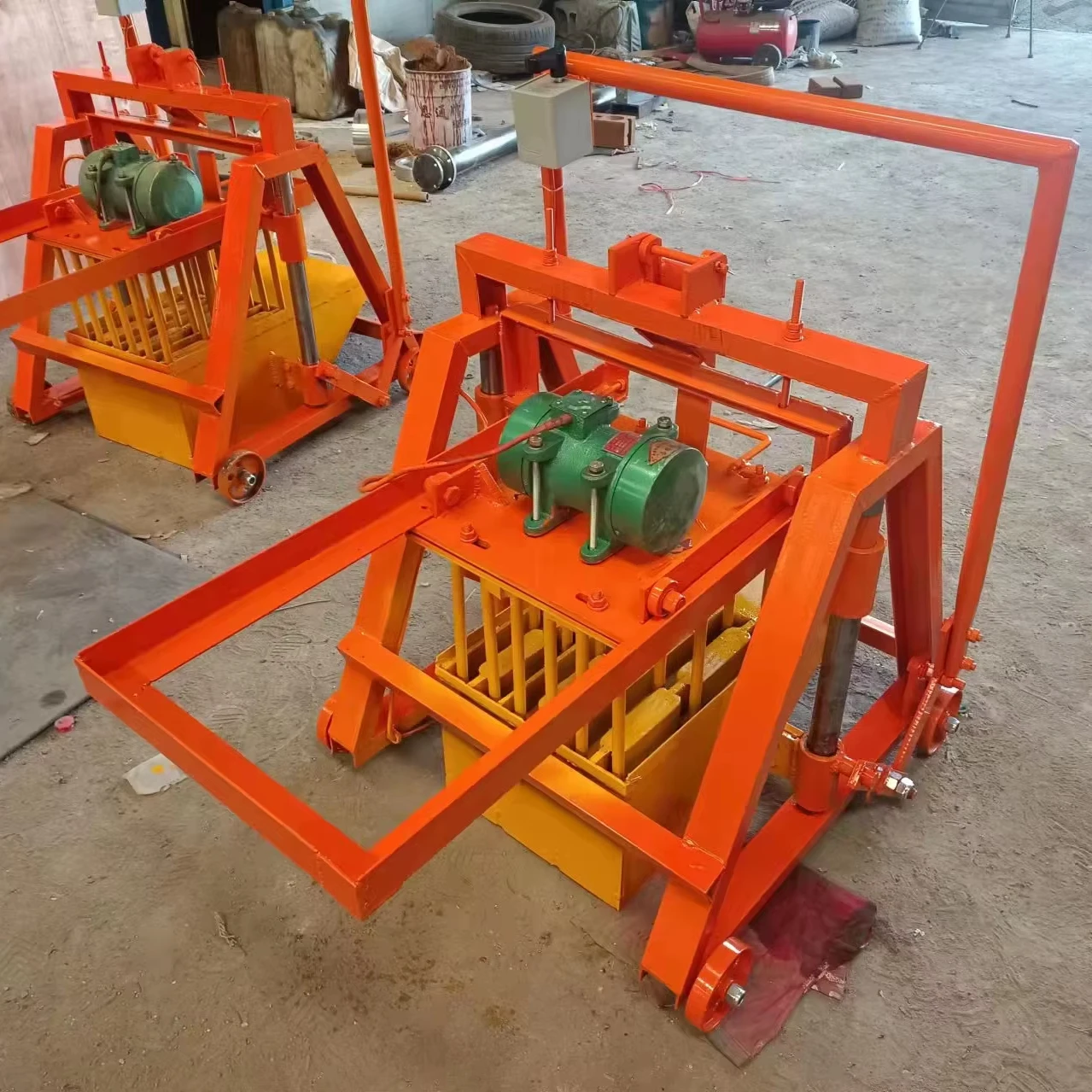
 Mobile block machine