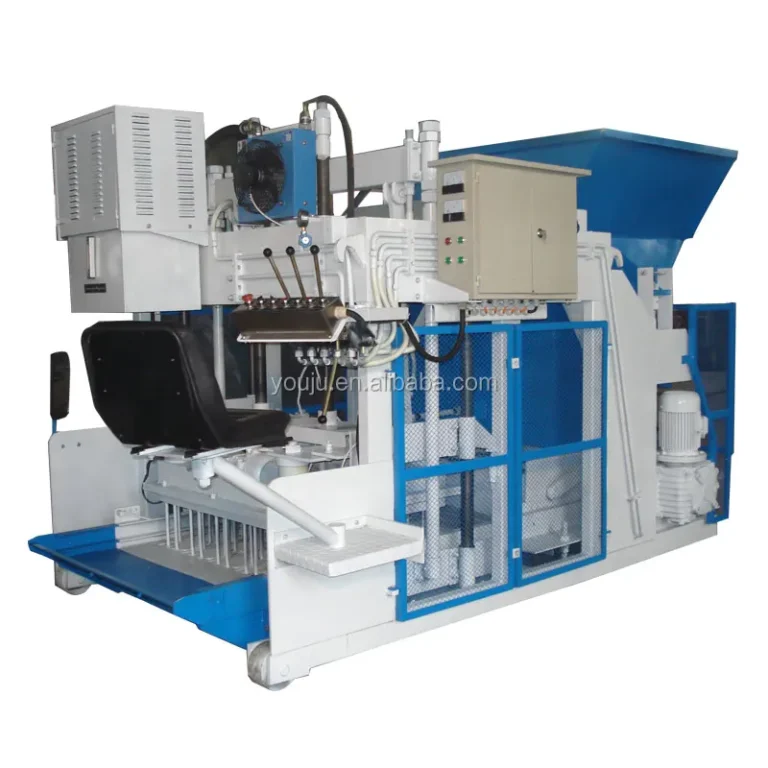
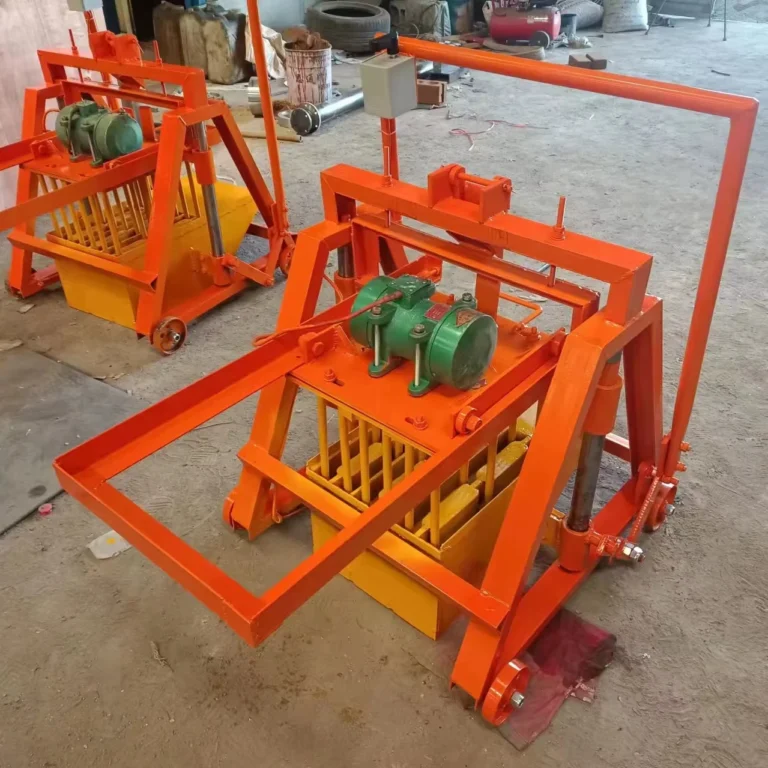
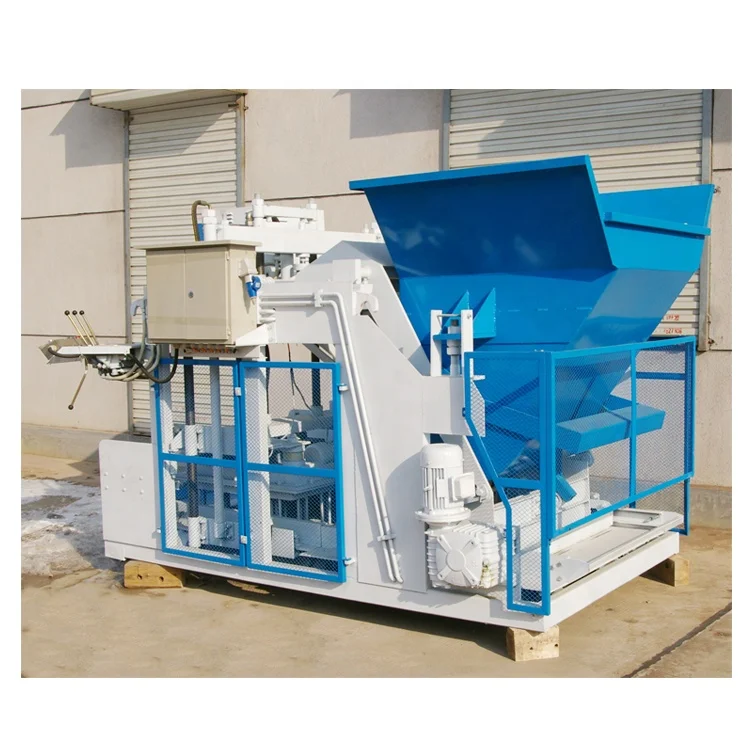
Matched System Specifying — every QMJ2-45 configuration is verified against the buyer’s real mix design and local aggregate before dispatch, eliminating the mismatch between catalogue defaults and on-site reality.
Technical Specifications
| Parameter |
Value |
| Model |
QMJ2-45 |
| Product Type |
Mobile Block Making Machine |
| Automation Level |
Manual / Mobile (egg-laying type) |
| Forming Method |
Hydraulic Static Pressure |
| Pallet Requirement |
No pallets required |
| Power Source |
Electric |
| Labor Requirement |
1 to 3 workers |
| Mould Change |
Interchangeable moulds for different hollow brick formats |
| Cycle Time |
25-30s (basis not stated in source — confirm block format / material / thickness) |
| Output Capacity |
2 pcs/cycle for 400×200×200mm hollow block; 4 pcs/cycle for 400×100×200mm hollow block |
| Mobility |
Free-moving, no fixed plant required |
| Standards |
ISO9001:2000, CE |
Application Suitability
| Application |
Material or Output |
| On-site hollow block production |
Crushed stone, sand, cement, and water mix |
| Small-scale startup block plant |
Hollow blocks in 400×200×200mm and 400×100×200mm formats |
| Housing project contractor production |
Cement-aggregate hollow blocks produced directly at the construction site |
| Building material supplier format addition |
Interchangeable hollow brick formats from a single machine base |
Why "Pieces per Hour" Means Nothing Without the Block Format
Every output figure we quote is tied to a specific mould size and mix, not a best-case catalogue number.
A buyer in West Africa once ordered a mobile block making machine for sale based on a quoted hourly capacity, only to discover the number assumed a 400×100×200mm solid format while his market demanded 400×200×200mm hollow blocks. His actual daily output was less than half of what he planned his labour and curing space around. The machine was not faulty — the quotation simply omitted the format assumption behind the number [NEED_CITE: common block machine quotation omissions in export markets]. When capacity is stated without the block dimensions, mould cavity count, and cycle time that produce it, the figure is meaningless for planning a real production day.

Where the QMJ2-45 Sits in the Full Block Machine Range
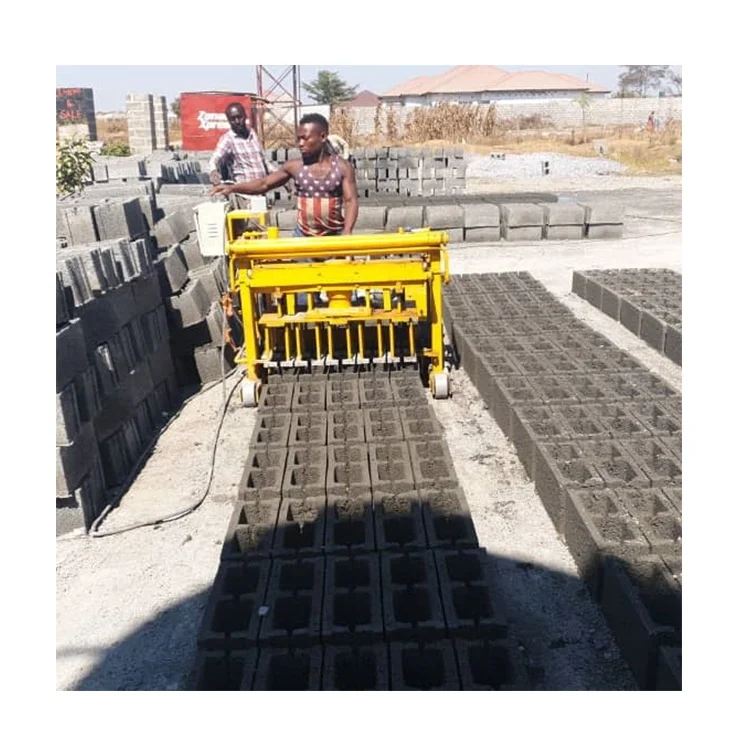
The QMJ2-45 occupies the entry tier of the block machine range. It is a no-pallet, egg-laying mobile block making machine for sale that lays blocks directly onto a flat concrete floor, removing the need for pallets, curing racks, and forklift handling at the investment stage where those costs matter most. Buyers who are setting up a first plant or producing blocks on a remote project site start here because the footprint is minimal and the capital outlay stays low.
The Upgrade Path from Egg-Laying to Automatic
When daily volume requirements grow beyond what a 1–3 worker crew can sustain, the natural next step is a semi-automatic stationary press with pallet feeding and a basic stacking station. The QMJ2-45 does not lock a buyer into a dead-end configuration; the mould formats and block dimensions it produces remain compatible with higher-tier lines, so the market relationships built on these hollow block sizes carry forward. This tiered approach lets a buyer prove local demand with low risk before committing to a full fixed plant [NEED_CITE: typical block plant scaling path from mobile to stationary].
Reading the Specs That Actually Matter on Site
The hydraulic static pressure forming method is the core determinant of block density and compressive strength on the QMJ2-45. Unlike vibration-only machines, static pressure compacts the mix uniformly through the mould cavity, which matters when local aggregate contains a higher clay or silt fraction that weakens the cement bond. The no-pallet design means the floor surface becomes part of the production system — a smooth, level concrete slab is essential, and any unevenness transfers directly into block height variation. Mould interchangeability across 400×200×200mm, 400×150×200mm, and 400×100×200mm hollow formats gives one machine the range to serve multiple market segments, but the cycle time of 25–30 seconds must be confirmed against the specific wall thickness and mix being run, because a denser mix or a thicker wall extends the pressing phase. The electric power source requires stable voltage at the site; fluctuating supply in rural project locations can cause inconsistent pressure delivery and affect block-to-block strength uniformity.
The Hidden Cost of Skipping the Mix Trial
I have watched a contractor in South Asia receive a mobile egg-laying machine, load it with locally sourced river sand high in silt, and produce an entire week of hollow blocks that crumbled under their own weight during curing. The machine was performing to specification — the problem was that nobody had run a trial with his actual aggregate before the machine left the factory. When a buyer skips the step of sending a sample of local raw material for a pre-shipment pressing trial, the mismatch between machine pressure settings and real-world mix behaviour only reveals itself after hundreds of substandard blocks have already been stacked in the yard [NEED_CITE: aggregate variability effects on concrete block compressive strength]. The cost of wasted cement, wasted labour, and lost buyer confidence far exceeds the time and freight of sending a bag of aggregate before production.
Why Procurement Through This Channel Works
Block machinery is the single focus here, which means the QMJ2-45 machine, its moulds, and the operational guidance are specified as one matched system rather than assembled from separate vendors who each only guarantee their own component. Every configuration is set against the buyer’s actual mix design and target block format — not a catalogue default that assumes ideal materials. Mould design covers the hollow block formats the buyer’s market actually sells, with custom drawings available when local building codes require non-standard dimensions. The automation level is selectable, so a buyer who starts with the QMJ2-45 manual egg-laying tier can move to semi-automatic and fully automatic lines later without abandoning the block formats already established. Pre-shipment factory testing runs the buyer’s own material sample to verify that pressure, cycle time, and block strength align before the machine is crated [NEED_CITE: factory testing protocols for export block machinery].
Documentation & Verification
- Line layout showing QMJ2-45 operating footprint and floor flatness tolerance
- Capacity calculation stating the exact hollow block format behind each output figure
- Mould drawing and format list for all included 400-series hollow block sizes
- Voltage and frequency confirmation sheet signed before production begins
- Factory test record using buyer-supplied aggregate sample at confirmed pressure settings
- Wear parts and mould availability list with first replacement intervals noted
Installation, Commissioning & Support
- Flat concrete slab required as the production surface for pallet-free egg-laying operation
- Electric power connection at confirmed voltage and frequency with a dedicated circuit breaker
- Machine arrives assembled with mould installed; no heavy foundation or anchor bolts needed
- First-day commissioning includes pressure adjustment to match the buyer’s verified mix design
- Operator training covers mould change procedure across all supplied hollow block formats
- Wear parts list provided so the first replacement order can be placed before stock runs out
What to Include in Your Inquiry
To size the QMJ2-45 correctly and confirm the right configuration, share the hollow block formats your market requires along with your target daily output per format. Provide a description or sample of your local aggregate — sand type, stone size, and any known clay content — so that pressure settings can be adjusted before dispatch. Confirm your site voltage, frequency, and the language you need on any control interfaces to avoid commissioning delays after the machine arrives.
Frequently Asked Questions
Q: How do I verify the real daily output for my specific block format and mix?
A: We run a factory test using a sample of your actual aggregate and the exact mould you intend to use, then document the cycle time and block count per hour for that specific format. The capacity calculation in your quotation states the block dimensions and mix behind every output figure, so you can plan labour and curing space against confirmed numbers rather than catalogue assumptions.
Q: Where does the QMJ2-45 sit on the range, and can I upgrade later?
A: The QMJ2-45 is the entry-tier mobile egg-laying machine, designed for low-investment startups and on-site production. When volume demand grows, you can move to a semi-automatic stationary line with pallet feeding and stacking. The hollow block formats you establish on the QMJ2-45 remain compatible with higher-tier equipment, so your market position carries forward.
Q: What voltage and control details should I confirm before the machine ships?
A: You need to confirm your site voltage, phase configuration, and frequency before production begins. Any control interface language preference should also be locked in at this stage. We document these details in a written confirmation sheet so that the electrical system matches your local supply when the machine is commissioned, avoiding rewiring delays.
Q: Which block formats can one QMJ2-45 produce, and how long does a mould change take?
A: The machine accepts interchangeable moulds for 400×200×200mm, 400×150×200mm, and 400×100×200mm hollow blocks, with custom moulds available for other formats. Mould change is a manual process that a trained operator completes within a standard shift break, allowing format switching without losing a full production day.

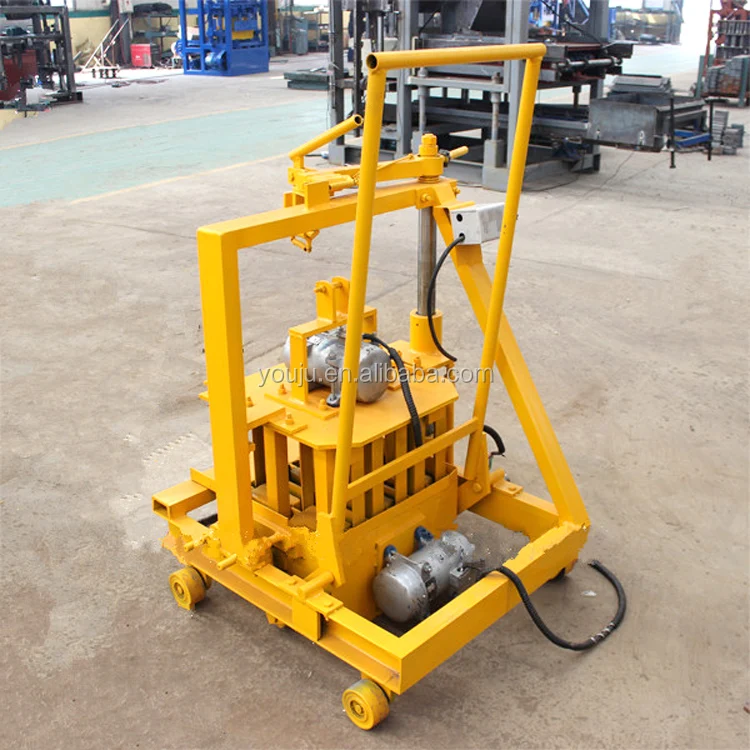
 Mobile block machine