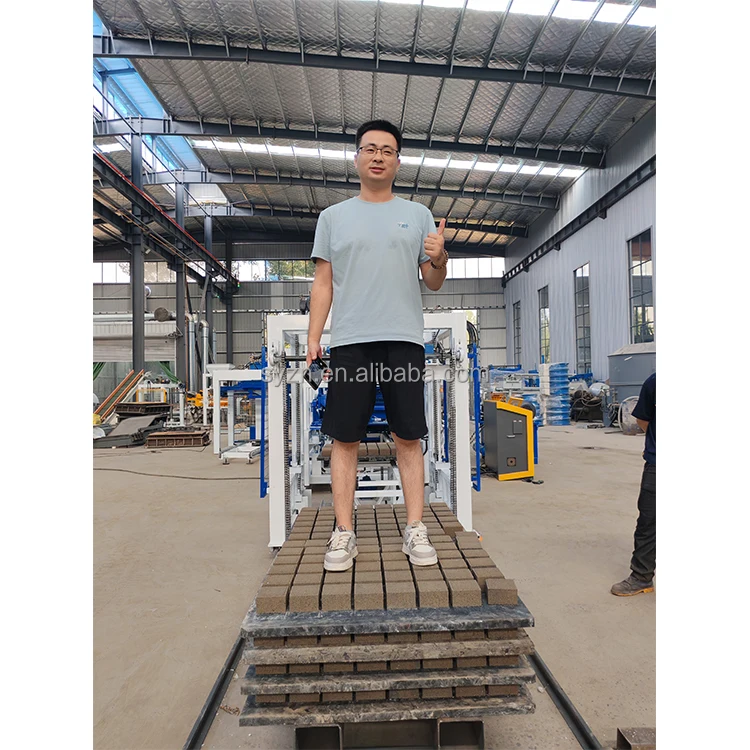
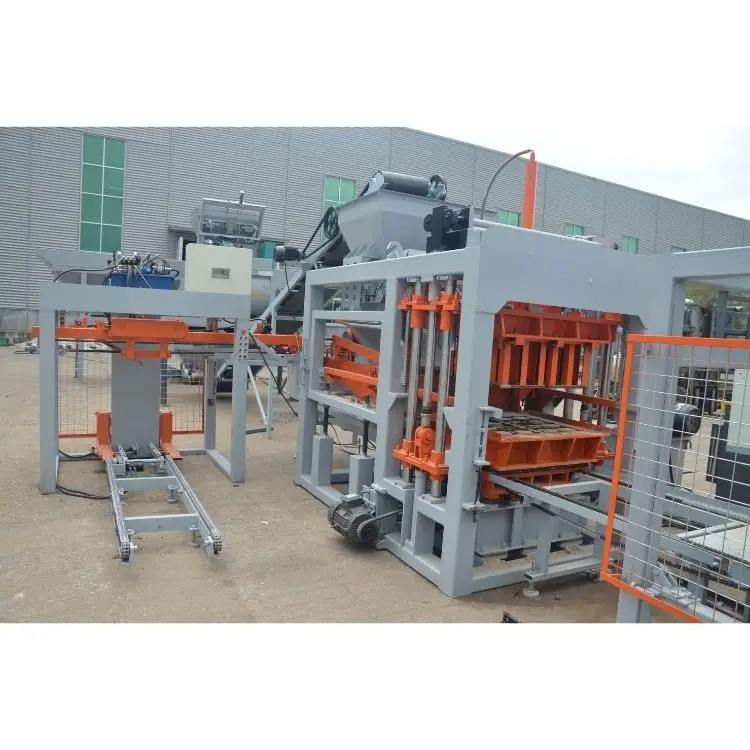
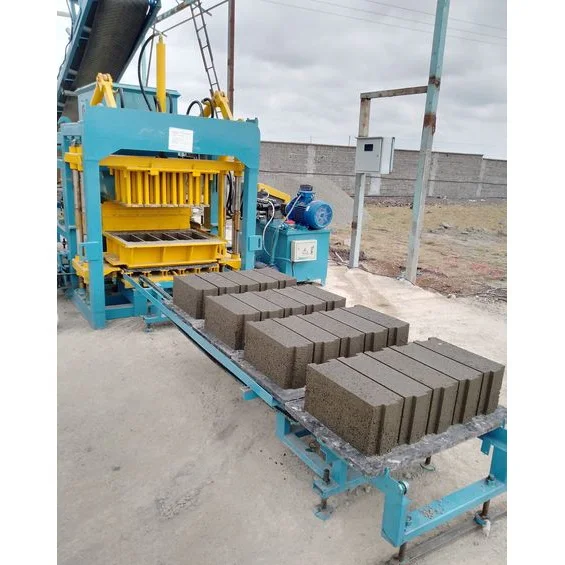
Matched System Configuration — The ECO 2700 interlocking brick machine is specified as one complete unit where hydraulic pressure, power source, and mould design are balanced against your local clay properties, not assembled from mismatched catalogue defaults.
Technical Specifications
| Parameter |
Value |
| Model |
ECO 2700 |
| Product Type |
Interlocking Clay Brick Machine |
| Automation Level |
Semi-automatic or Automatic (configurable) |
| Power Source |
Electric motor or Diesel engine (configurable) |
| Rated Power |
7.5 kW or 12 HP |
| Motor Brand Option |
Chinese Siemens Brand |
| Hydraulic Pressure |
16 MPa |
| Cycle Time |
10–15 s |
| Productivity per Format |
320–400 pcs/h (based on 300×150×100mm or 250×125×60mm interlocking brick, 1 pc/mold) |
| Overall Dimensions |
1000×1000×1800 mm |
| Total Mass |
1000 kg |
| Pallet Requirement |
No pallets required |
| Raw Material |
Clay (80–97%), Cement (0–8%), Water (3%) |
| Voltage & Frequency |
380V, 3-phase, 50Hz (customizable to local voltage) |
| Warranty |
1 year (excluding wearing parts) |
Application Suitability
| Application |
Material or Output |
| On-site interlocking brick production |
Clay (80–97%) blended with cement (0–8%) and water for structural wall units |
| Small-scale paver and building block manufacturing |
Compressed clay-cement mix forming 300×150×100mm or 250×125×60mm interlocking formats |
| Remote or off-grid construction projects |
Diesel engine configuration eliminating dependence on a stable electrical grid |
What "2500–3000 Pieces per Day" Actually Means
That figure assumes specific brick dimensions, a verified cycle time, and an eight-hour shift — not every interlocking format runs at the same speed.
When an interlocking brick machine manufacturer quotes daily output, the first question should be which format that number is tied to. A 250×125×60mm brick and a 300×150×100mm brick occupy different mould volumes, demand different compression times, and produce different counts per cycle. Without knowing the exact format behind the headline number, a buyer risks building a production plan on a figure that never materialises on the shop floor. I have watched contractors commit to housing project deadlines based on quoted throughput, only to discover the cycle time for their chosen brick size stretched the schedule by days. [NEED_CITE: block format impact on real daily output in clay brick production]

Semi-Automatic and Automatic from One Base
The ECO 2700 is offered in both semi-automatic and automatic tiers, allowing an entrepreneur to enter interlocking brick production with a lower capital outlay and add automation modules as volume grows. This is not a different machine bolted on afterwards — the base frame and hydraulic circuit are designed to accept pallet-free operation at either tier. Buyers surveying the full range of block machinery will find the ECO 2700 positioned in the entry-to-mid tier, below high-capacity fully automatic lines that serve industrial-scale plants.
Footprint and Site Flexibility
At 1000×1000×1800 mm and 1000 kg total mass, the ECO 2700 occupies a compact footprint that fits inside a standard workshop or under a temporary site shelter. The pallet-free design eliminates an entire infrastructure layer: no pallet purchase, no pallet return conveyor, no curing rack system. For construction contractors producing interlocking bricks directly on a project site, this means the machine arrives, connects to power or a diesel supply, and begins pressing bricks without weeks of ground preparation. [NEED_CITE: pallet-free versus pallet-based clay brick plant infrastructure requirements]
Hydraulic Pressure and Clay Density
The 16 MPa hydraulic pressure rating on the ECO 2700 is significant for interlocking clay brick formation because the interlocking geometry demands precise dimensional tolerance — even a few millimetres of variance prevents bricks from locking together on the wall. Hydraulic pressure works in concert with the mould cavity to compress the clay-cement mix into a dense, uniform shape. Lower pressure ratings on comparable machines of this class often result in bricks that chip at the interlocking edges during handling or fail to achieve the compressive strength required by local building codes. The 10–15 second cycle time allows the hydraulic ram to hold pressure long enough for the clay particles to fully consolidate before the mould releases.
The Cost of Ignoring Raw Material Verification
Ordering an interlocking brick machine without first confirming clay composition is the single most common cause of line stoppage after installation. Clay sourced from different pits varies widely in sand content, plasticity, and moisture retention — a mix that works in the factory test may produce crumbling bricks at the buyer’s site. When the raw material does not match the machine’s configured pressure and cycle parameters, the result is a high rejection rate that erodes daily output and damages the buyer’s market reputation. [NEED_CITE: impact of untested local aggregate on brick compressive strength]
Why Source This Machine Here
Shandong Shiyue Intelligent Machinery focuses exclusively on block machines and their supporting equipment, so the ECO 2700 is specified as part of a matched system rather than a standalone press. The mould design covers the interlocking brick formats the buyer’s market actually sells, with custom drawings available when local building codes demand non-standard dimensions. Automation level is selectable from the outset, meaning a semi-automatic start does not lock the buyer into a dead-end investment. Configuration is set against the buyer’s actual clay sample and cement availability, not a generic catalogue default. Voltage, frequency, and PLC display language are confirmed before production begins, avoiding the commissioning delays that plague machines shipped with unverified electrical specifications.
Documentation & Verification
- Factory test record on your specific clay-cement mix before dispatch
- Line layout and capacity calculation stating the interlocking brick format assumed
- Mould drawing and format list confirming every brick size covered
- Hydraulic and electrical schematic matching your voltage and frequency
- Voltage and control language confirmation document signed before production
- Operation and maintenance manual with wear parts and mould replacement schedule
Installation, Commissioning & Support
- Site foundation sized for the 1000 kg machine mass and 16 MPa hydraulic thrust
- Dedicated electrical circuit rated for the 7.5 kW motor at confirmed voltage and frequency
- On-site assembly guidance for the 1000×1000×1800 mm frame in confined workshops
- First-run commissioning with cycle time and pressure tuning to your local clay sample
- Operator training covering mould change, hydraulic system checks, and daily maintenance routines
- Wear parts and mould supply list with lead times for first replacement order
Before You Request a Quote
To configure the ECO 2700 accurately, provide the interlocking brick dimensions your market requires, a laboratory analysis of your local clay including sand content and plasticity index, and your site’s available voltage and frequency. Confirm whether your operation will run on grid power or diesel, and indicate the daily output target tied to a specific brick format so the capacity calculation reflects your actual production scenario.
Frequently Asked Questions
Q: How is the 2500–3000 pcs/day capacity calculated, and which brick format does it assume?
A: That figure is based on an eight-hour shift running 300×150×100mm or 250×125×60mm interlocking bricks at the stated 10–15 second cycle time, producing 320–400 pieces per hour. If your required format differs in size or thickness, the daily count will change accordingly, and we recalculate based on your specific mould drawing before confirming the order.
Q: Where does the ECO 2700 sit in the full machine range compared to higher-output automatic models?
A: The ECO 2700 occupies the entry-to-mid tier of our interlocking brick machine range. It serves entrepreneurs establishing a first production line and contractors pressing bricks on their own project sites. Higher-output automatic models sit above it, designed for industrial plants running continuous shifts with full pallet handling and automatic stacking infrastructure.
Q: Can I start with semi-automatic and upgrade to fully automatic later on the same machine?
A: Yes. The ECO 2700 base frame and hydraulic circuit are designed to accept automation modules after initial installation. You can begin with semi-automatic operation to reduce upfront investment and add automatic feeding or stacking features as your production volume grows, without replacing the core machine.
Q: What voltage and frequency options are available for my local grid?
A: The standard configuration is 380V, 3-phase, 50Hz, but the electrical system is customisable to match your local grid before production begins. We confirm voltage, frequency, and motor specifications during the quotation stage so the machine arrives ready to connect without requiring a local transformer or rewiring.

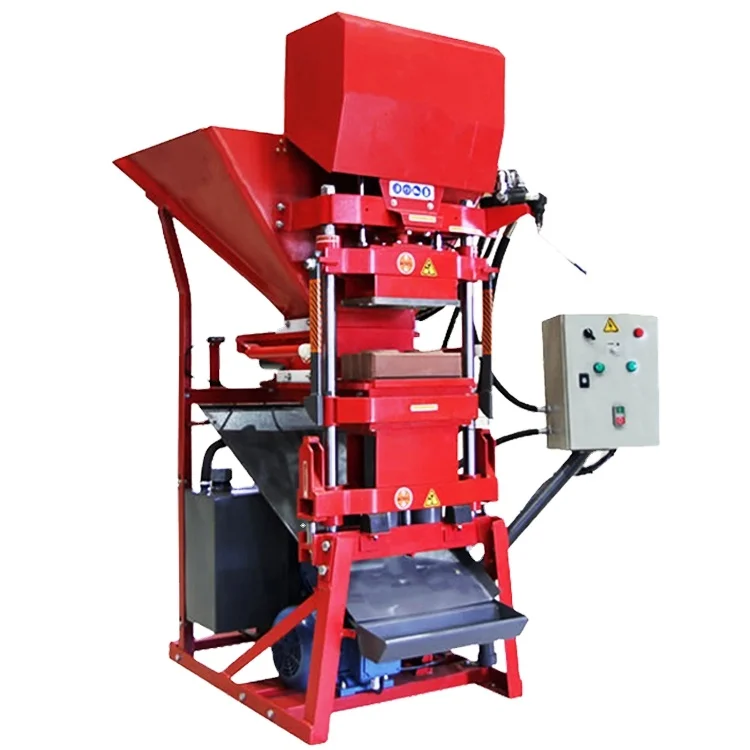
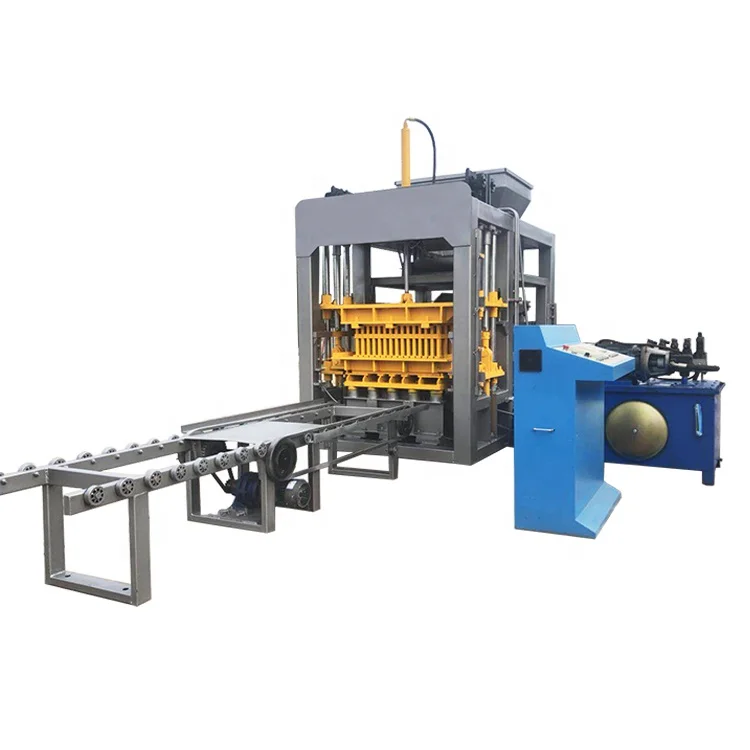 Automatic block machine