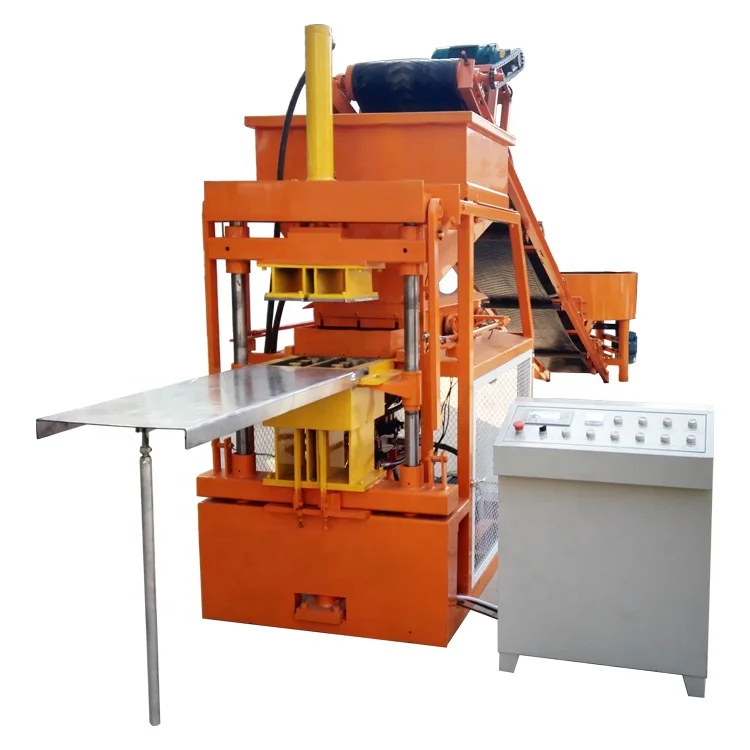
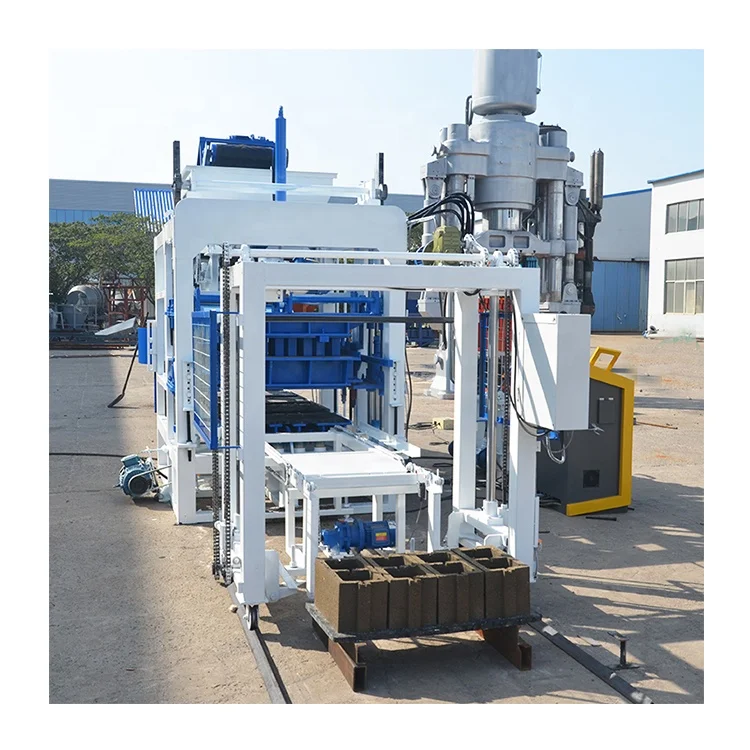
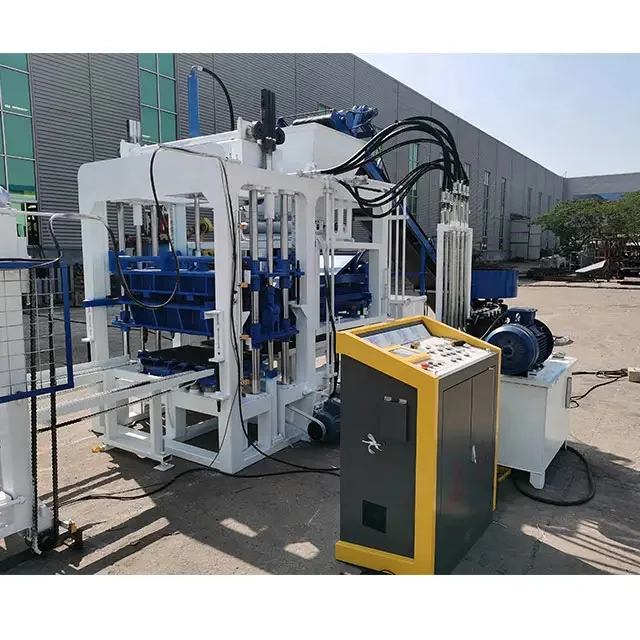
Matched System Specification — every QT8-15 unit leaves our Linyi workshop with mould, pallet, and stacker sized as one coordinated line rather than assembled from unrelated sources.
Technical Specifications
| Parameter |
Value |
| Model |
QT8-15 |
| Product Type |
Automatic Concrete Block Making Machine |
| Overall Dimensions (L×W×H) |
8300 x 1860 x 3000 mm |
| Pallet Size |
950 x 900 mm |
| Vibration Form |
Platform Vibration |
| Vibration Frequency |
2800–4500 RPM |
| Rated Pressure |
32 MPa (source lists 32 MPa and 21 MPa — confirm with current catalog) |
| Cycle Time per Format |
15–25 s (basis not stated in source — confirm block format and mix) |
| Block Comprehensive Strength |
up to 15 MPa |
| Control System |
PLC with touch screen interface |
| Hydraulic System |
Independent integrated station, isolated from dust and vibration |
| Stacking Method |
Automatic stacker, two pallets per cycle, 3–6 layers |
| Overall Power |
47 kW (source lists 47 kW and 46 kW — confirm with current catalog) |
| Key Features |
Manual/automatic mode transition, CE declaration applicable per company profile |
Application Suitability
| Application |
Material or Output |
| Hollow block production for structural walls |
Crushed stone, sand, cement blends |
| Paving block production for walkways and yards |
Aggregate with fine sand and pigment additives |
| Solid block production for load-bearing partitions |
Dense aggregate mixes with standard cement ratios |
| On-site contractor production for housing projects |
Locally sourced gravel and river sand |
What Buyers Miss When They Only Look at "15-Second Cycles"
Cycle time means nothing until you know which block format and mix design it was measured on.
Many quotation sheets list a single cycle figure and let the buyer assume it applies across every mould they plan to use. A 15-second cycle on a thin paving block does not translate to the same pace on a 200 mm hollow block, yet the daily output projection often assumes the faster number. I have watched buyers discover this gap only after commissioning, when real-world throughput falls noticeably short of what they budgeted for. The QT8-15 automatic block machine sits in our mid-to-high output tier, and we state capacity per format so the daily projection matches what actually leaves the press. [NEED_CITE: block format influence on cycle time in hydraulic vibration pressing]

Where the QT8-15 Sits in the Full Range
Our machine range spans from small semi-automatic presses for workshop volumes up to high-capacity fully automatic lines. The QT8-15 occupies the tier where buyers have outgrown manual pallet handling but are not yet ready for a continuous high-output plant. It pairs PLC-controlled automation with a platform vibration system, making it a realistic step for entrepreneurs moving from a first semi-automatic machine or contractors replacing ageing equipment. Compared to the smaller tier, this model adds an automatic stacker and a larger pallet area, which together remove the bottleneck of manual pallet transfer at higher volumes.
Matching the Automation Tier to Your Plant Layout
At this tier, the automatic stacker handles two pallets per cycle and stacks 3–6 layers depending on block height. That stacking capacity must align with the curing rack space and forklift schedule already in place at the buyer’s yard. A common mistake is specifying a high-tier stacker while the curing area can only accept three-layer racks, meaning the extra stacking height goes unused. We review the buyer’s existing curing footprint before confirming the stacker configuration, so the automation level matches the downstream reality instead of creating a new constraint. [NEED_CITE: curing area and stacker alignment in block plant layout]
Reading the Spec Sheet Beyond the Headline Numbers
The rated pressure and vibration frequency work together to determine block density. At 2800–4500 RPM platform vibration combined with hydraulic pressure up to 32 MPa, the press compacts the mix from both above and below, which matters when the local aggregate has a high fines content. The 950 x 900 mm pallet size sets the mould area — every format the buyer produces must fit within that envelope, and the mould change procedure must be practised before format switching becomes efficient on a daily basis. The independent hydraulic station sits away from the main vibration zone, keeping oil temperature and seal life within normal ranges even during continuous shifts. Power draw sits around 47 kW, which means the buyer needs a dedicated circuit with adequate capacity before the machine arrives, not after.
The Cost of Skipping the Format-by-Format Check
When a buyer orders based on a single headline output number and the machine arrives configured for a mix they cannot source locally, the result is weeks of trial runs while a new recipe is developed. Pallet handling, stacking, and curing sometimes arrive as separate line items that were never included in the original quotation, leaving finished blocks stacked by hand on the first day. I have seen projects where voltage and PLC language were confirmed only after the control cabinet was already wired, adding avoidable delays to commissioning. Each of these gaps is preventable when the specification conversation happens before the purchase order. [NEED_CITE: common specification gaps in international machinery procurement]
Why Buyers Source This Tier From Our Workshop
Block machinery is our single focus, which means the QT8-15 automatic block machine is not paired with a generic pallet or an off-brand stacker — every component in the line is specified as one system. We set the configuration against the buyer’s actual mix design and target block format instead of shipping a catalogue default. Moulds are designed for the formats the buyer’s local market actually sells, and custom drawings are accepted when a non-standard size is required. The automation level is selectable, so a buyer can begin with the standard stacker and add cubing or pallet return later without replacing the press. Installation support includes operator training at the buyer’s site so the team can run the manual and automatic modes before handover.
Documentation & Verification
- Line layout with capacity calculation stated per block format for the QT8-15
- Machine specification sheet confirming hydraulic pressure and power ratings
- Mould drawing and format list matching the 950 x 900 mm pallet
- Voltage, frequency, and PLC language confirmation record before production
- Factory test record on buyer’s target block format before dispatch
- Packing photographs and customs documentation support for shipment
Installation, Commissioning & Support
- Foundation plan sized to the 8300 x 1860 mm footprint with vibration isolation
- Dedicated 47 kW power circuit with confirmed voltage and frequency before wiring
- Hydraulic station pre-filled and tested, positioned away from press vibration
- PLC touch screen configured to buyer’s language before first power-on
- Operator training covering manual/automatic mode transition and mould change
- Wear parts and mould list supplied with reorder part numbers
What We Need Before Quoting
To match the QT8-15 to your actual production target, we need the block formats you plan to sell and the local aggregate available at your site. Share your daily volume expectation per format, your workshop dimensions, and the voltage and frequency standard at the installation location. If you already have pallets or curing racks in use, send their dimensions so the stacker and pallet feed align with what is already on the ground.
Frequently Asked Questions
Q: Where does the QT8-15 sit compared to smaller semi-automatic and larger high-capacity models?
A: The QT8-15 occupies the mid-to-high tier of our automatic range. Below it, semi-automatic models suit workshop volumes with manual pallet handling. Above it, high-capacity lines run continuous output for large-scale plants. This tier fits buyers who need PLC automation and an automatic stacker without committing to a full continuous line investment.
Q: What plant footprint and investment level should I expect for this automatic tier?
A: The press itself measures 8300 x 1860 x 3000 mm, and the full line including raw material feed, mixer, pallet return, and curing rack handling requires a longer layout. We provide a line drawing with station spacing once your block format and daily volume are confirmed, so you can plan the footprint before ordering.
Q: How does cycle time translate to realistic daily output for different block formats?
A: The listed 15–25 second cycle range depends on the block format, thickness, and mix design. A thin paving block cycles faster than a 200 mm hollow block. We state capacity per format in our quotation so your daily output projection is based on the actual block you plan to produce, not a single headline number.
Q: Can I start with a semi-automatic machine and upgrade to this tier later?
A: Yes. Our range allows a buyer to begin at a semi-automatic tier and move to the QT8-15 automatic block machine tier when volume justifies it. The pallet size and mould format can be planned at the first stage so the upgrade path does not require replacing downstream handling equipment.
Q: What automation is included — is stacking, pallet feeding, and cubing part of the configuration?
A: At this tier the automatic stacker and PLC control are included. Pallet feeding and cubing are configurable add-ons depending on your plant layout and labour plan. We confirm which stations are included in the line drawing before production so there are no surprises on arrival.

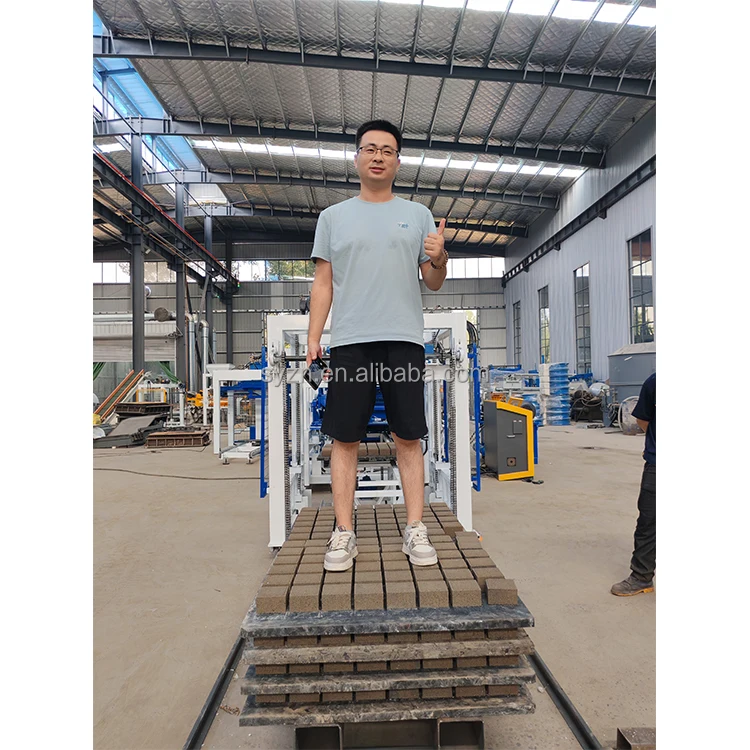
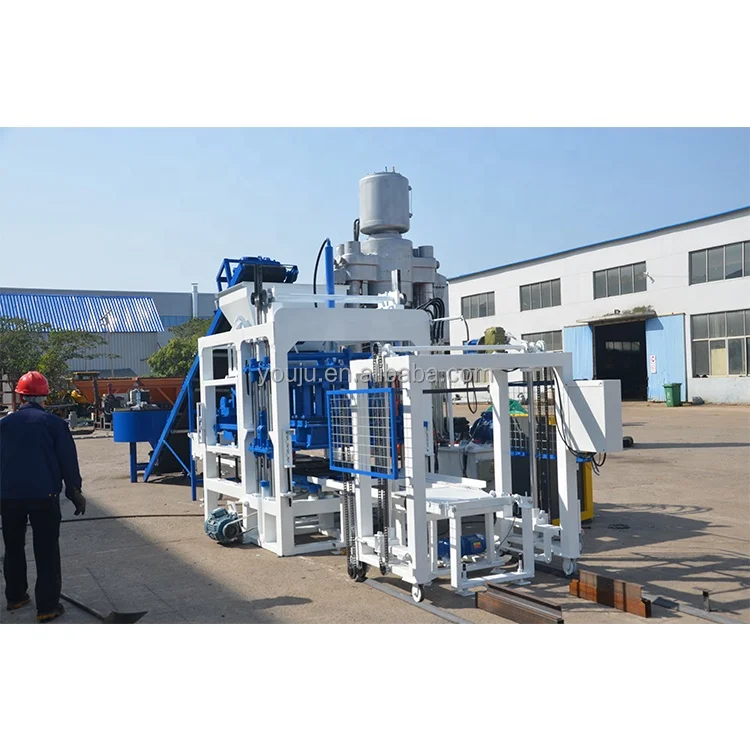 Automatic block machine