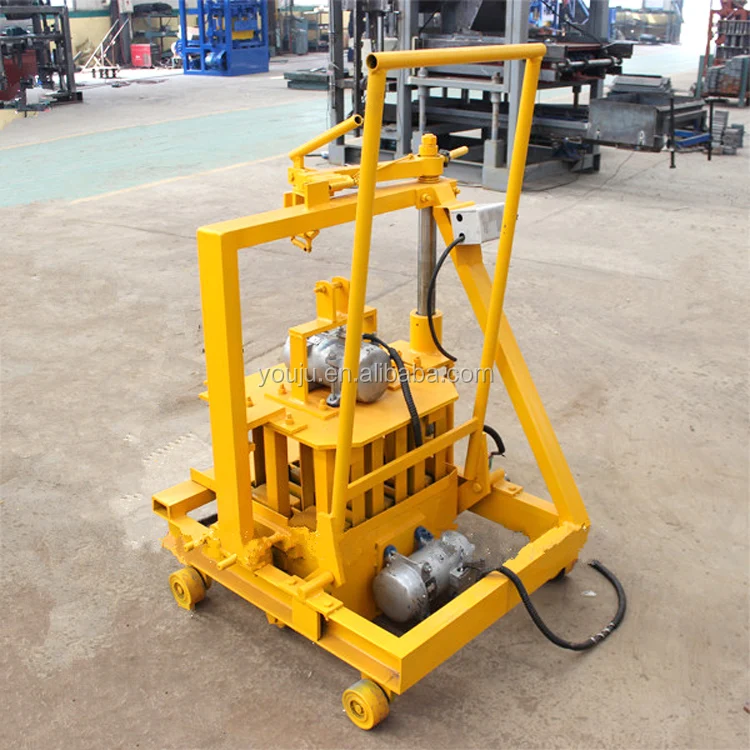
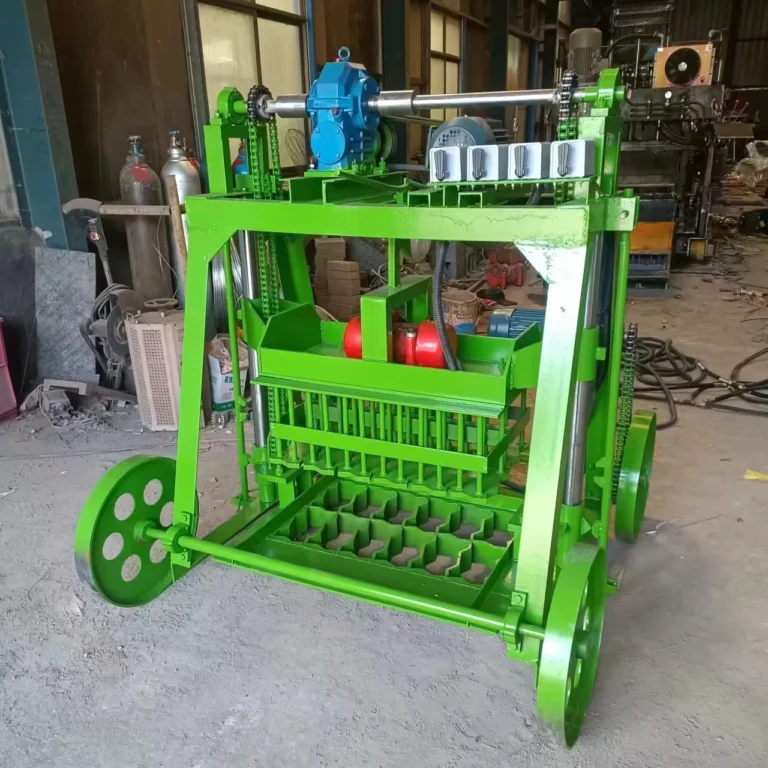
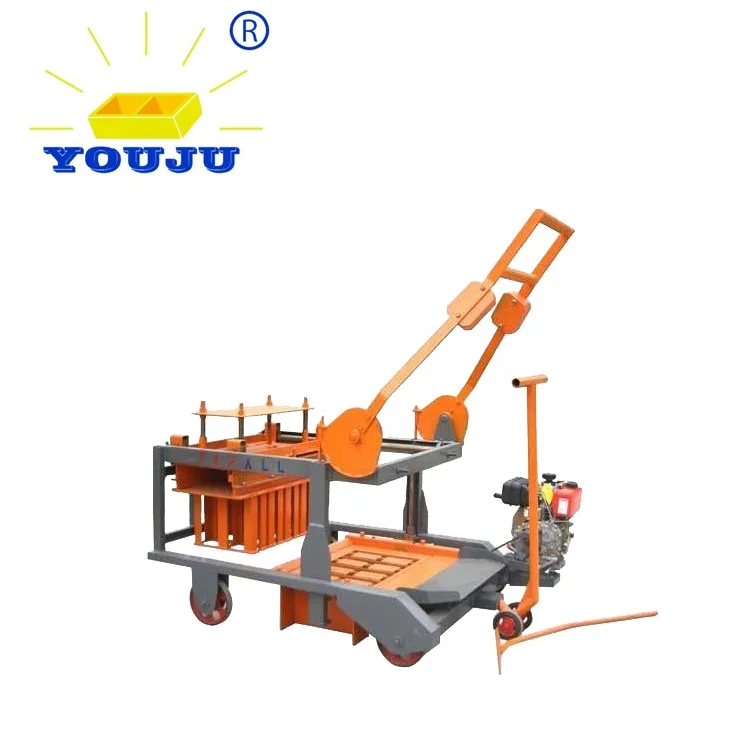
Matched System Design — the QMY18-15 is specified as a complete mobile unit with hydraulic station, PLC cabinet, and mould package aligned to your site conditions rather than shipped as a catalogue default.
Technical Specifications
| Parameter |
Value |
| Model |
QMY18-15 |
| Product Type |
Mobile Cement Block Making Machine |
| Working Method |
Hydraulic pressure forming |
| Rated Power |
24 kW |
| Voltage & Frequency |
Customized to local industrial supply (basis to be confirmed) |
| Control System |
PLC |
| Automation Level |
Semi-automatic |
| Output Capacity |
About 34,000 pcs per shift based on 400×200×200 mm hollow block |
| Pallet Requirement |
None — blocks produced directly on ground |
| Block Type |
Customizable to buyer format requirements |
| Hydraulic Pressure Station |
Integrated for block density control |
Application Suitability
| Application |
Material or Output |
| On-site hollow block production for building contractors |
Crushed stone, sand, cement, and water mix |
| Mobile solid block manufacturing at housing project sites |
Local aggregate with cement binder |
| First-time block plant setup with minimal infrastructure |
Custom format blocks laid directly on compacted ground |
| Remote construction sites without fixed plant access |
Interlocking or paving blocks from site-available raw materials |
Why the Voltage Question Must Come Before the Order
Confirming your local three-phase supply before production prevents weeks of idle equipment on site.
I spent years running commissioning visits after machines arrived overseas, and voltage mismatch remains one of the most frequent reasons a mobile block machine sits silent for weeks. A QMY18-15 rated at 24 kW needs a stable three-phase supply at the correct frequency; without that confirmation locked in writing before the machine enters production, you are gambling with your project timeline. [NEED_CITE: voltage and frequency standards by export market]
The cost is not just the rewiring. Concrete contractors lose their construction window while waiting for an electrician and a step-down transformer to arrive. For a Mobile Block Machine for sale at this capacity class, the electrical specification should be the second question you answer — right after which block format you intend to produce.

Where Mobile Tier Sits in the Range
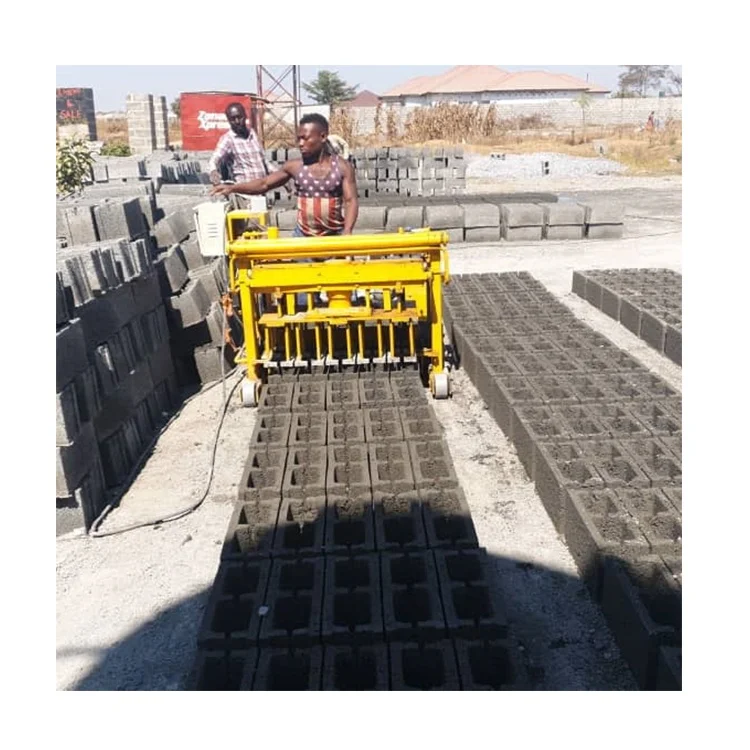
The Shiyue range spans from small egg-laying machines through semi-automatic static presses up to fully automatic lines with cubing and rack handling. The QMY18-15 occupies the mobile tier, purpose-built for buyers who need block output at a construction site without investing in pallets, a curing yard, or permanent foundations. A Mobile Cement Block Making Machine manufacturer configures this tier around ground-laying operation so the machine moves with your project.
Ground Conditions That Make or Break Pallet-Free Production
Pallet-free operation eliminates a significant recurring material cost, but it shifts the quality burden to your ground preparation. The surface must be level, compacted, and capable of supporting wet blocks without settlement during the initial curing hours. We have seen contractors lay blocks on loose fill and lose an entire day’s output to cracking and deformation. [NEED_CITE: ground preparation standards for mobile block production]
Reading the Specs That Actually Matter
The 24 kW rated power drives both the hydraulic pressure station and the vibration system simultaneously. On a mobile block machine, hydraulic pressure and vibration force must work together — pressure compacts the mix while vibration settles the aggregate into voids. If either is undersized for your specific mix design, blocks emerge with inconsistent density. The PLC control manages cycle timing so operators do not manually judge when each block is fully formed. Semi-automatic operation means the press cycle is automated while material feeding and machine repositioning remain manual, keeping the crew requirement modest.
Voltage customization is not optional for export buyers. A machine wound for 380V/50Hz will not run correctly on a 440V/60Hz supply, and the damage to the hydraulic pump motor can be irreversible. Confirming your site voltage, frequency, and preferred PLC display language before the machine enters the factory test stage eliminates the most common commissioning delays.
The Hidden Cost of Skipping Configuration Lock-In
Buyers who order a mobile machine from a catalogue without confirming mould format, voltage, and ground conditions routinely discover that their real daily output falls well below the quoted figure. The capacity number assumed a block size their market does not buy, or the machine arrived with a control panel in a language their operators cannot read. [NEED_CITE: common commissioning delays in exported block machinery] These are not warranty issues — the machine works as built — but they stall production and erode the project margin the buyer counted on.
Why Buyers Source This Tier From Shiyue
Block machinery is our single focus, which means the QMY18-15 is specified as a matched system — hydraulic station, PLC cabinet, mould, and ground-laying parameters all aligned before production starts. Configuration is set against your actual mix design and local aggregate, not a catalogue default that assumes materials you cannot source. Mould design covers the block formats your market actually sells, and custom drawings are supported when standard formats do not match. The automation level is selectable, so you can begin with semi-automatic operation and plan a future upgrade path. Installation support includes on-site commissioning and operator training so your crew is producing acceptable blocks from the first day.
Documentation & Verification
- Line layout stating the 400×200×200 mm hollow block basis for the 34,000 pcs/shift figure
- Voltage, frequency, and PLC language confirmation sheet signed before production
- Mould drawing and format list for every block type included in your order
- Factory test record and packing photographs before container loading
Installation, Commissioning & Support
- Compacted level ground required across the full production area for the QMY18-15 pallet-free operation
- Dedicated three-phase circuit at confirmed voltage and frequency to support the 24 kW rated load
- Machine arrives assembled with hydraulic station and PLC cabinet pre-wired and factory-tested
- On-site commissioning includes first-run parameter adjustment to match your local aggregate mix
- Operator training covers cycle timing, mould change procedure, and daily hydraulic system checks
- Wear parts list and mould maintenance schedule provided at handover
What We Need to Size Your Machine Correctly
To configure a QMY18-15 that actually meets your output target, we need your intended block format and dimensions, the raw materials available at your site, your local three-phase voltage and frequency, and the ground conditions where production will take place. Share these details early and we will return a capacity calculation tied to your specific product, not a generic catalogue figure.
Frequently Asked Questions
Q: How is the 34,000 pcs/shift capacity calculated and what block format does it assume?
A: That figure is based on continuous production of 400×200×200 mm hollow blocks under standard shift conditions. If your primary product is a different format — such as solid blocks or interlocking pavers — the cycle time and output per shift will differ. We provide a capacity calculation specific to your target block format before you confirm the order.
Q: What ground conditions are required for pallet-free mobile block production?
A: The ground must be compacted, level, and free of loose material so that freshly formed blocks do not settle or crack during initial curing. A concrete floor is ideal, but well-compacted hardcore or sand-cement screed also works. We assess your site conditions during the inquiry stage and advise on any preparation needed.
Q: Can the QMY18-15 be upgraded to a higher automation tier later?
A: The Shiyue range allows buyers to start at semi-automatic and move up as production volume justifies the investment. The PLC control architecture supports integration with automatic pallet feeding and stacking systems if you later transition to a static plant setup. We discuss the upgrade path during initial configuration.
Q: How are voltage and PLC language confirmed for the destination country?
A: We require your site voltage, frequency, and preferred PLC display language in writing before production begins. These parameters are recorded on a confirmation sheet that both parties sign. The machine then undergoes a factory test at the specified electrical settings before dispatch.

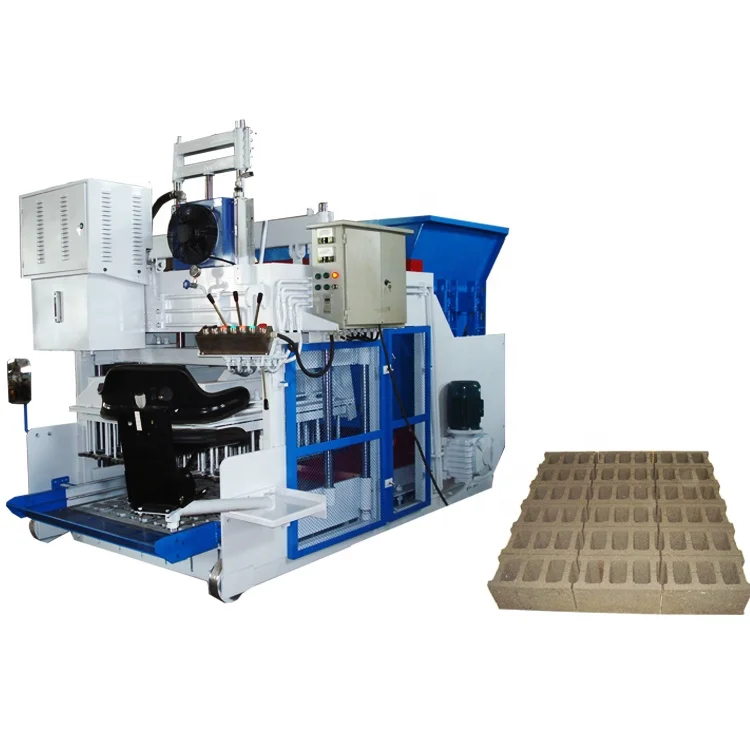
 Mobile block machine