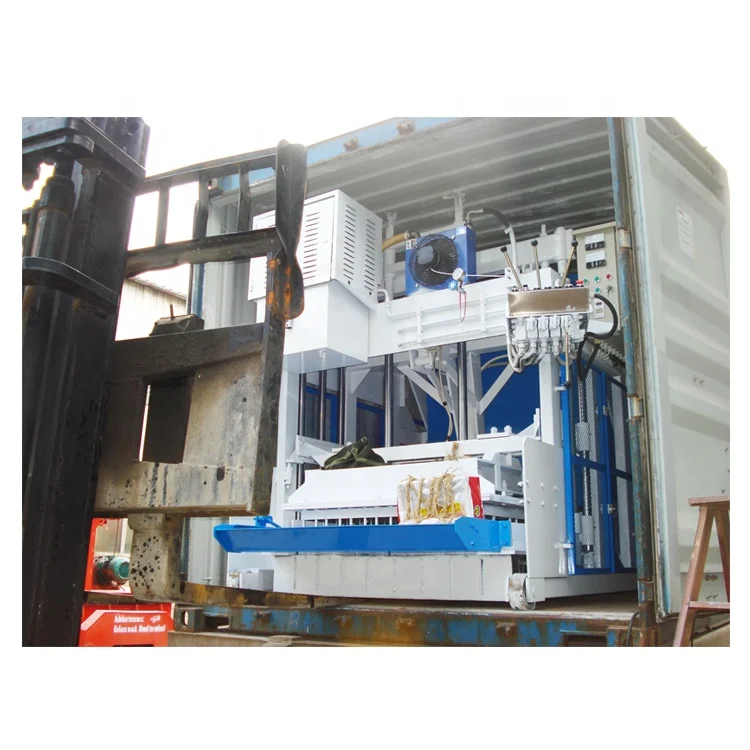
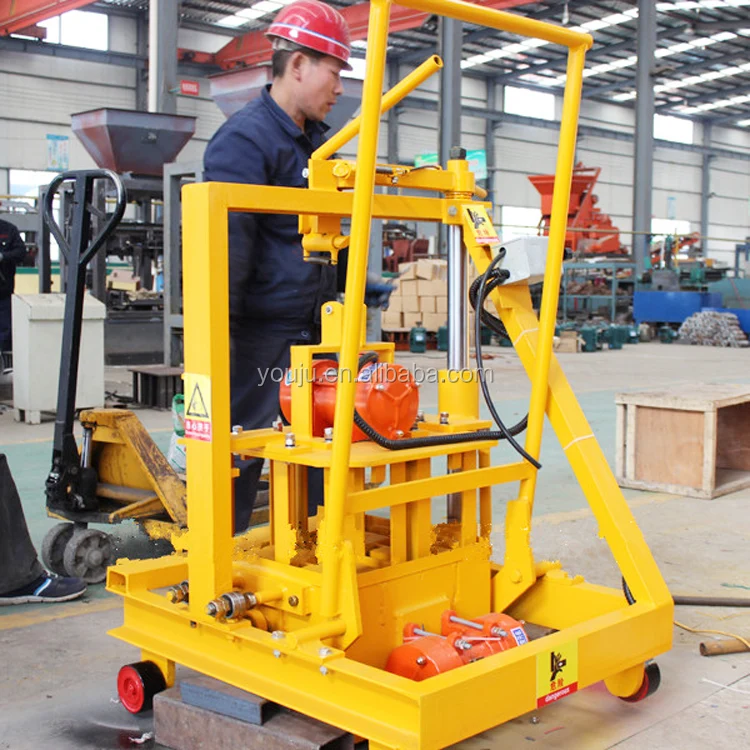
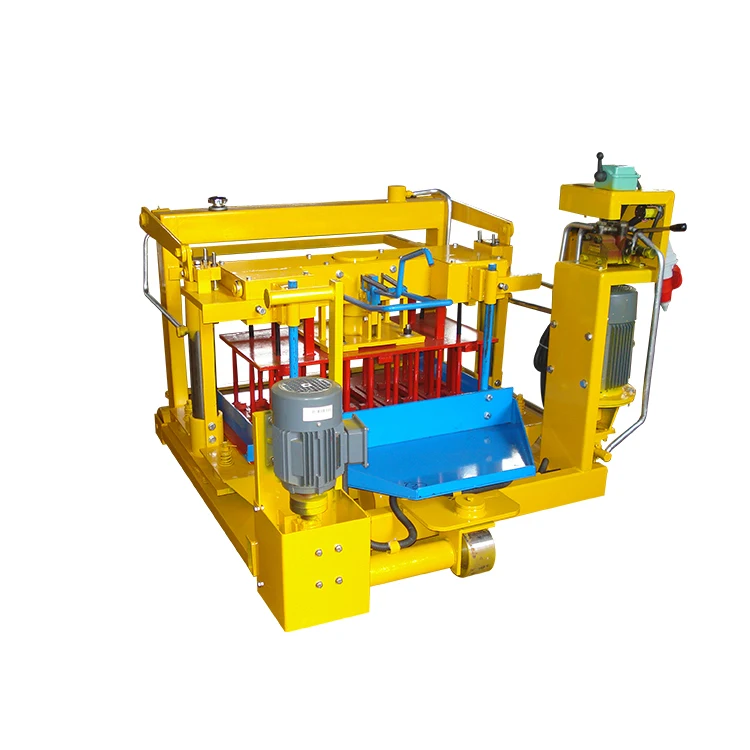
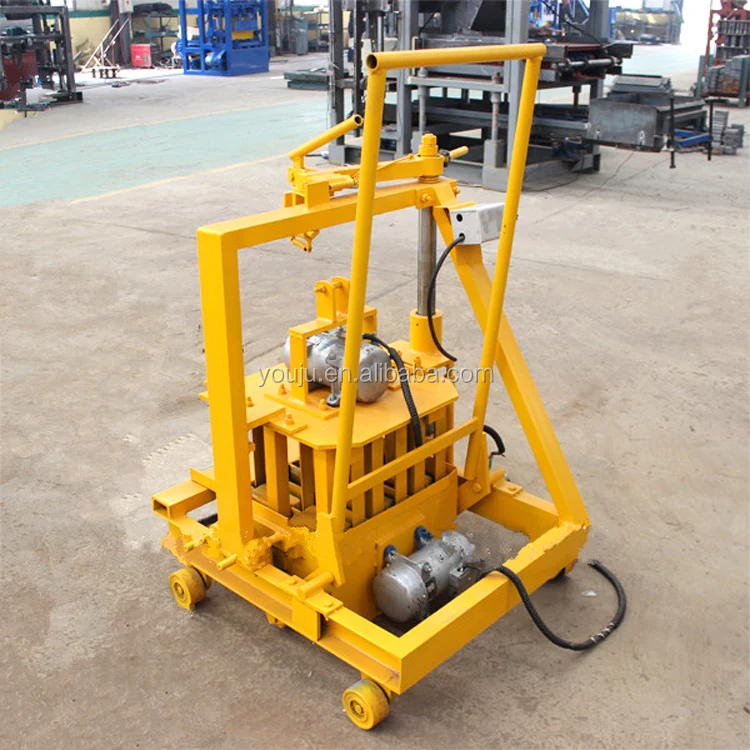
Single-focus configuration — every QMJ4-45 egg-laying block machine ships with vibration force and molding cycle tuned to the buyer’s confirmed block format and local aggregate sample before dispatch.
Technical Specifications
| Parameter |
Value |
| Model |
QMJ4-45 |
| Product Type |
Mobile Egg Laying Block Making Machine |
| Molding Capacity |
4 pcs/mould (basis not stated in source — confirm block format / material / thickness) |
| Molding Cycle |
40–45 s |
| Vibration Frequency |
2400 r/m |
| Vibration Method |
Mold vibration |
| Output Capacity |
2600–4000 pcs/day (basis not stated in source — confirm block format) |
| Hollow Block (400×200×200 mm) |
4 pcs/mould, approx. 3000 pcs per 8-hour day |
| Hollow Block (400×150×200 mm) |
5 pcs/mould, approx. 3500 pcs per 8-hour day |
| Hollow Block (400×120×200 mm) |
6 pcs/mould, approx. 4500 pcs per 8-hour day |
| Demold Method |
Manual |
| Turning Method |
Manual |
| Total Power |
6 kW |
| Power Source |
Diesel / Petrol engine |
| Pallet Requirement |
None (egg-laying type, lays blocks directly on ground) |
| Automation Level |
Manual |
| Certification |
CE |
Application Suitability
| Application |
Material or Output |
| On-site hollow block production at construction zones |
Crushed stone, sand, cement, water — blocks laid directly on leveled ground |
| Small-scale block yard startups |
Local river sand or quarry dust mixed with cement for hollow block formats |
| Contractors producing blocks alongside building projects |
400×200×200 mm, 400×150×200 mm, and 400×120×200 mm hollow blocks |
| Rural or off-grid block production |
Sites without grid electricity, powered by diesel or petrol engine |
What "2600–4000 Pieces Per Day" Actually Means on a Mobile Egg Laying Block Machine Manufacturer Floor
Output figures only hold weight when the block format behind them is named.
I have seen buyers compare two mobile egg laying block machine manufacturer quotes side by side, pick the higher number, and then discover the 4000-piece claim assumed the thinnest 120 mm block while their market demands 200 mm hollow blocks. The real daily throughput for a 400×200×200 mm hollow block on the QMJ4-45 sits around 3000 pieces per 8-hour shift — a meaningful difference from the headline range. [NEED_CITE: block format assumptions in capacity quotations across the industry]. When the block size is not stated in the offer, the number is nothing more than a marketing placeholder.

Where the QMJ4-45 Sits in the Complete Block Machine Range
The QMJ4-45 occupies the entry tier of our mobile block machine lineup, designed for buyers who need production capability without committing to a fixed plant. It lays blocks directly on the ground, removing the need for pallets, curing racks, and the associated handling equipment that a stationary line requires. This positions it below semi-automatic and fully automatic tiers in both capital outlay and daily throughput.
Buyers surveying the full range often start here to validate local demand for specific block formats before investing in higher-capacity stationary equipment. The mobile egg laying block machine manufacturer configuration keeps initial infrastructure requirements minimal — a flat, leveled surface is the primary site condition.
Matching the Machine Tier to Your Actual Project Timeline
A contractor working against a construction deadline needs blocks on-site immediately, not weeks after a stationary plant is commissioned and the curing racks are installed. The QMJ4-45 arrives, the engine is fueled, and production begins the same day on any prepared ground area. [NEED_CITE: typical on-site block production setup timelines for mobile versus stationary equipment].
For entrepreneurs testing a new block yard, the low capital requirement means the financial risk stays proportionate to the market being explored. If demand scales beyond what the mobile tier delivers, the buyer already understands which block formats sell and can specify a stationary line with confirmed data rather than guesses.
Vibration Frequency, Engine Power, and Block Density
The 2400 r/m mold vibration frequency on the QMJ4-45 is the primary factor determining block density and compressive strength. In egg-laying machines, vibration acts without hydraulic pressure assistance, so the frequency must be sufficient to consolidate the mix thoroughly within the 40–45 second molding cycle. A twice-vibration molding core upgrade improves particle packing, which translates to more consistent wall strength across different hollow block formats.
The 6 kW total power rating driven by a diesel or petrol engine means the machine operates independently of grid availability. This is critical for remote construction sites and rural block yards where electrical infrastructure is unreliable or absent. The manual demold and manual turning methods keep the mechanical complexity low, which reduces the number of components that can fail in dusty, high-temperature working environments.
Three documented hollow block formats — 400×200×200 mm, 400×150×200 mm, and 400×120×200 mm — each carry their own piece-per-mould count and daily output figure. The difference between 3000 and 4500 pieces per day is entirely a function of which format the buyer selects, not a variable the machine adjusts on its own.
The Cost of Ordering Without Confirming Block Format First
When a buyer accepts a quotation that quotes daily output without naming the assumed block format, the machine arrives configured for a size the local market does not buy. Mould swaps then consume hours of production time, and the output figure the purchasing decision was based on never materializes. [NEED_CITE: mould change downtime impact on daily block production targets]. The buyer ends up with equipment that technically works but produces the wrong product at the wrong volume.
Specifying a machine without confirming the local aggregate and mix design creates a second layer of mismatch. River sand with high clay content behaves differently under vibration than washed quarry dust, and a mix the machine was set up for at the factory may not produce blocks with adequate strength using locally available materials. The result is cracked blocks, rejected batches, and a reputation problem in the local market.
Why Procurement Through This Channel Reduces Configuration Risk
Every QMJ4-45 proposal starts with the buyer’s target block format and local raw material sample, so the vibration parameters and molding cycle are confirmed against actual production conditions rather than a default catalog setting. The mobile egg laying block machine manufacturer approach treats the machine, mould, and operating parameters as a single matched system.
Mould drawings and format lists are provided before shipment, allowing the buyer to verify that the block dimensions match local market demand. Capacity calculations in the documentation state the specific block format assumed for each output figure, eliminating ambiguity between quoted and achievable throughput. The diesel or petrol engine configuration is confirmed against the buyer’s site conditions, ensuring the power source matches what is actually available. [NEED_CITE: factory testing protocols for mobile block machines prior to dispatch].
Documentation & Verification
- Line layout showing ground preparation area required for egg-laying operation
- Capacity calculation sheet stating block format behind each daily output figure
- Mould drawing with dimensional verification against local market block sizes
- Machine specification sheet confirming vibration frequency and engine power rating
- Factory test record on buyer’s confirmed block format before dispatch
- Operation and maintenance manual with engine servicing intervals
Installation, Commissioning & Support
- Level ground surface required; no foundation or curing rack infrastructure for QMJ4-45 egg-laying operation
- Diesel or petrol engine fuel specification confirmed before first startup on site
- Manual demold and turning procedures demonstrated during operator training session
- Three hollow block mould formats verified against buyer’s local market dimensions at commissioning
- Mould and vibration system wear parts list provided with first replacement intervals noted
- Engine maintenance schedule aligned with the 6 kW power unit’s manufacturer recommendations
What to Include in Your Inquiry
To receive a QMJ4-45 configuration that matches your actual production requirements, provide the specific hollow block format your market demands, the type of sand or aggregate available locally, and whether grid electricity is accessible at the production site. This allows the proposal to confirm realistic daily output for your chosen block size rather than a generic range.
Frequently Asked Questions
Q: How is the daily output of the QMJ4-45 calculated, and which block format does each figure assume?
A: The output range depends entirely on the hollow block format selected. For 400×200×200 mm blocks at 4 pieces per mould with a 40–45 second cycle, expect approximately 3000 pieces per 8-hour day. The 400×150×200 mm format yields around 3500, and the 400×120×200 mm format reaches approximately 4500. Each figure assumes consistent mix supply and operator pace throughout the shift.
Q: Where does the QMJ4-45 sit compared to semi-automatic and fully automatic block machines?
A: It occupies the entry tier of the range, requiring no pallets, curing racks, or fixed plant infrastructure. Semi-automatic and fully automatic tiers add pallet handling, stacking, and higher throughput but require greater capital investment and site preparation. Buyers often start with the mobile tier to validate market demand before scaling to stationary lines.
Q: What site conditions are needed for an egg-laying machine versus a stationary block line?
A: The QMJ4-45 requires only a flat, leveled ground surface for block laying and sufficient open area for blocks to cure in place. A stationary line requires a dedicated building, curing racks, pallet inventory, and a forklift-compatible layout. The mobile machine’s site footprint is minimal and relocatable as the project moves.
Q: Can I upgrade from this mobile machine to a higher-tier automatic line later?
A: The block formats and market knowledge you develop running the QMJ4-45 directly inform the specification of a future stationary line. Moulds from the mobile tier are not directly transferable to automatic presses due to different mounting systems, but the confirmed block sizes and mix design data carry forward into the new configuration.
Q: What block formats and mould options are available within this machine tier?
A: The QMJ4-45 supports three standard hollow block formats — 400×200×200 mm, 400×150×200 mm, and 400×120×200 mm — each with its own mould producing 4, 5, or 6 pieces per cycle respectively. Custom mould designs can be reviewed against the machine’s vibration and molding parameters to confirm feasibility before production.

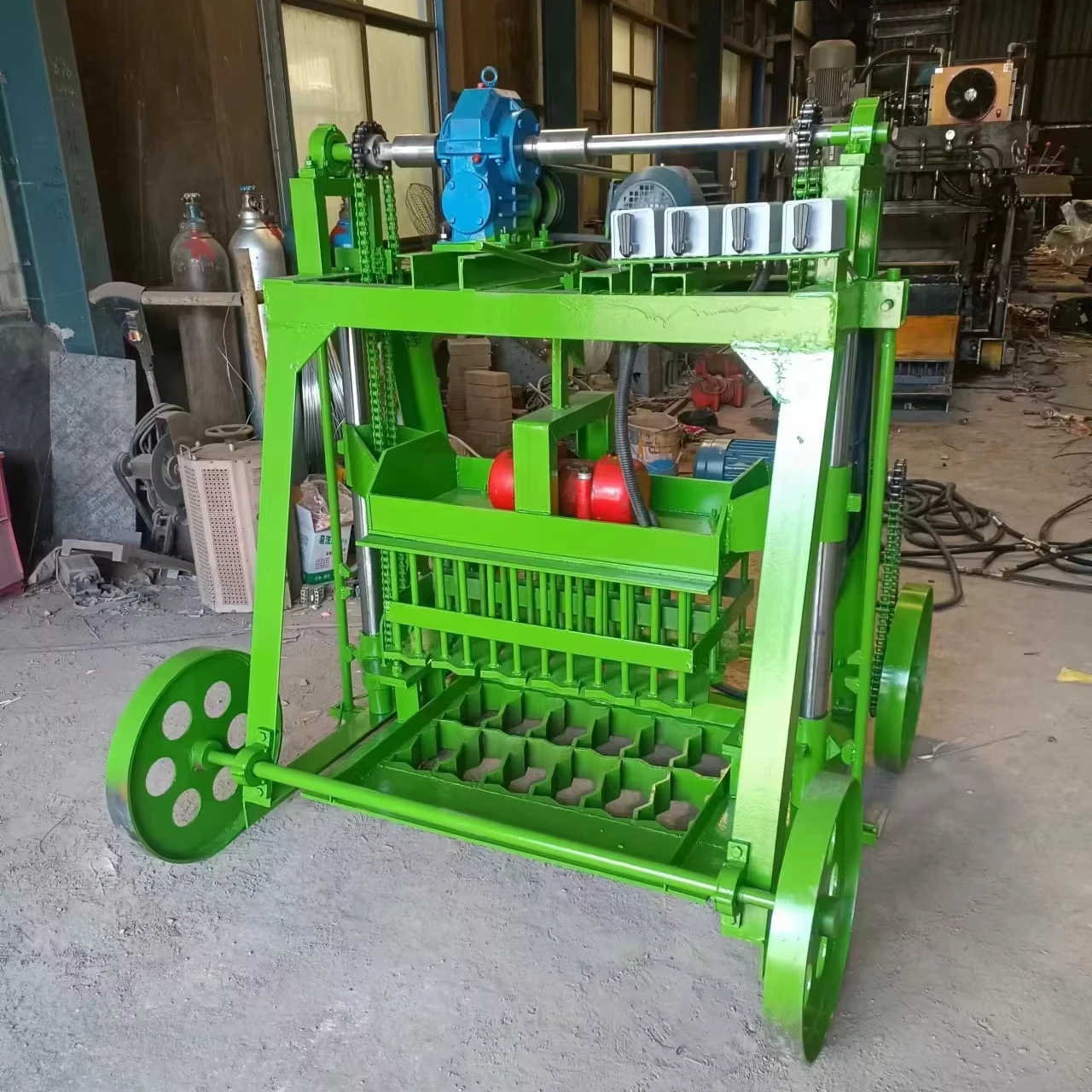
 Mobile block machine