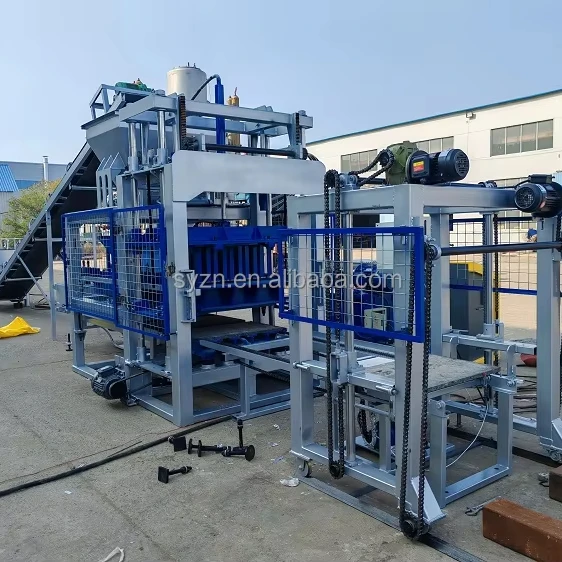
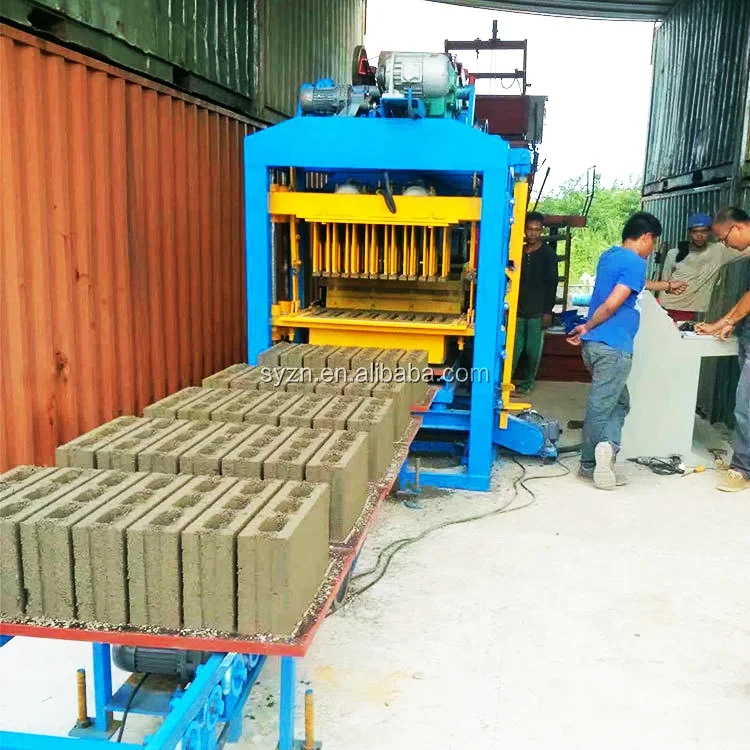
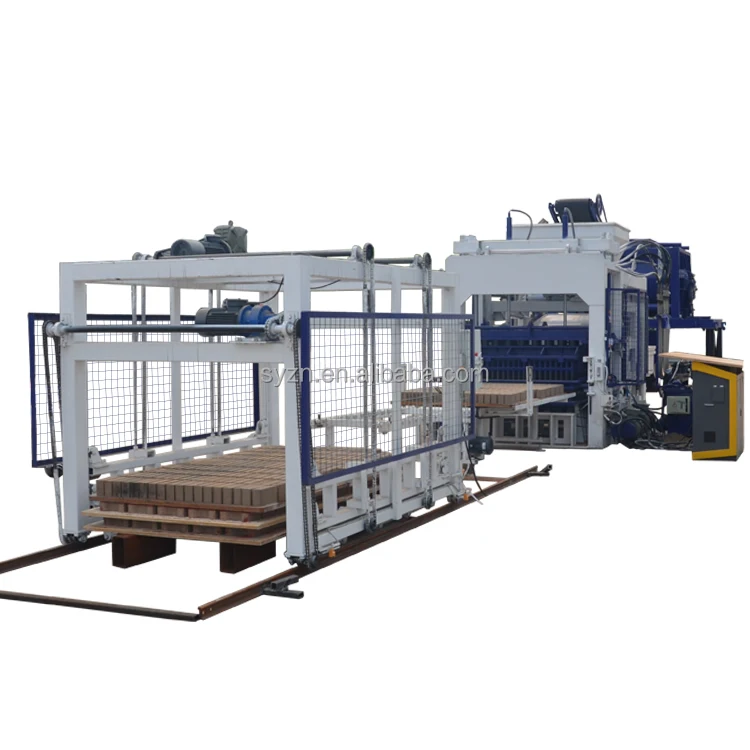
Matched System Configuration — the QTJ4-25 is specified as a press, mould, pallet and handling package rather than a standalone machine pulled from a catalogue.
Technical Specifications
| Parameter |
Value |
| Model |
QTJ4-25 |
| Product Type |
Automatic Concrete Block Making Machine |
| Overall Dimensions (L×W×H) |
6400×1500×2700 mm |
| Moulding Cycle |
25 s (basis not stated in source — confirm block format / material / thickness) |
| Vibration Frequency |
2800–5100 r/min |
| Exciting Power (Vibration Force) |
60 kN |
| Total Power |
17.9 kW |
| Mixer Model |
JQ350 |
| Pallet Size |
850×550×20 mm |
| Net Weight |
2500 kg |
| Applied Products |
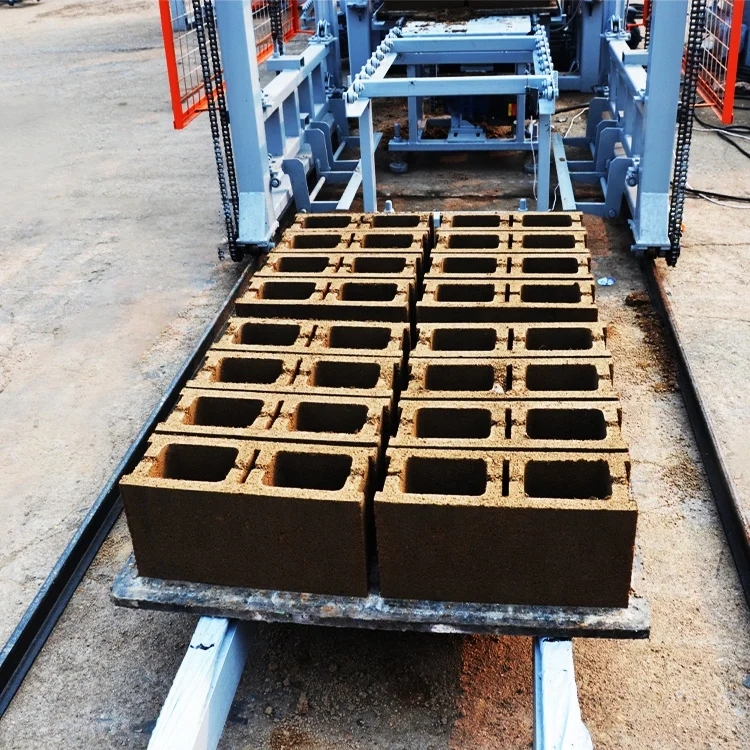
Concrete hollow blocks (8 inch, 6 inch), solid bricks |
| Raw Materials |
Crushed stones, sand, cement, dust, fly ash |
| Control System |
PLC control |
| Automation Features |
Automatic plate-supplying, material-disturbing, brick-discharging |
| Output Capacity (Hollow Block 390×190×190 mm) |
480 pcs/hr, 3800 pcs/8hr |
| Output Capacity (Hollow Block 400×150×200 mm) |
600 pcs/hr, 4800 pcs/8hr |
| Output Capacity (Solid Brick 240×115×53 mm) |
2100 pcs/hr, 17000 pcs/8hr |
| Voltage & Frequency |
Configurable (confirm before order) |
| Assembly State |
Nude packing, shipped in 20GP container |
Application Suitability
| Application |
Material or Output |
| Hollow block production for masonry walls |
8 inch and 6 inch formats from crushed stone, sand and cement |
| Solid brick production for paving and infill |
240×115×53 mm standard format from sand, fly ash and cement |
| Small-to-medium block plant start-up |
Locally available aggregates including fly ash and stone dust |
| On-site production for housing projects |
Medium-volume output using site-sourced sand and crushed stone |
What "480 Pieces per Hour" Actually Means for Your Plant
Capacity only matters when tied to the block format your market buys.
Many buyers receive quotations quoting a single cycle time without clarifying which block size it was measured on. The QTJ4-25 lists a 25-second moulding cycle, but output shifts from 480 pieces per hour on a 390×190×190 mm hollow block to 2100 pieces per hour on a standard solid brick. I have seen contractors order based on the higher figure and plan their curing yard around a volume the machine never reaches for their actual product [NEED_CITE: block format and cycle time assumptions in manufacturer quotations]. When you compare automatic concrete block making machine for sale options, always ask which format the stated capacity assumes.

Where the QTJ4-25 Sits in the Full Machine Range
The QTJ4-25 occupies the automatic tier, stepping above semi-automatic models by adding PLC-controlled plate-supplying, material feeding and brick discharging. For a buyer evaluating the complete block machine range, this model suits medium-volume plants that need consistent daily output without the investment of a high-capacity fully automatic line. The vibration system and hydraulic circuit are sized for hollow and solid brick formats rather than heavy paving blocks.
Matching Machine Tier to Your Investment and Footprint
Choosing between tiers comes down to daily output targets, available yard space and labour budget. The QTJ4-25 requires a curing area proportioned for roughly 3800 hollow blocks per eight-hour shift at the stated format [NEED_CITE: curing area sizing for concrete block plants]. Buyers stepping up from a mobile egg-laying machine will find the automatic pallet feed and discharge cut manual handling substantially, while those planning high-capacity paving block production may need the next tier up for the heavier vibration force and larger pallet size.
How Vibration Force and Pallet Size Shape Your Output Quality
The 60 kN exciting force combined with a variable vibration frequency between 2800 and 5100 r/min determines the density and compressive strength of each block. Higher frequency suits finer aggregates like fly ash, while lower frequency works with coarser crushed stone. The 850×550×20 mm pallet must match your existing curing racks and forklift tine width; ordering a pallet size that does not fit your current handling equipment delays production until replacement pallets arrive. Total power draw of 17.9 kW including the JQ350 mixer means most small-to-medium plants can run this automatic concrete block making machine for sale on a standard industrial supply, though voltage and frequency need confirming for your country before the machine enters production.
The Hidden Cost of Skipping the Voltage Question
Confirming voltage, frequency and PLC display language after the machine is already built leads to commissioning delays that stall an entire project timeline. A 2500 kg machine shipped in a 20GP container to a site with incompatible supply requires transformer rental or rewinding, both adding weeks. I always ask for the buyer’s local electrical standard before the order enters the production queue [NEED_CITE: voltage and frequency standards by export market]. The PLC display language also needs setting at the factory so operators can read fault codes on day one.
Why Buyers Source This Automatic Block Machine Here
Block machinery is the single focus, so the QTJ4-25 press, moulds, pallets and handling equipment arrive as one matched system instead of separate purchases that may not integrate. Configuration starts from the buyer’s actual mix design and local aggregate rather than a default catalogue setting. Mould design covers the hollow and solid brick formats the buyer’s market demands, with custom drawings available. Automation level is selectable, allowing a buyer to begin with semi-automatic pallet handling and add automatic stacking later. Installation support includes on-site commissioning and operator training so the crew can run the PLC system independently.
Documentation & Verification
- Line layout showing QTJ4-25 footprint with pallet flow and curing rack placement
- Capacity calculation sheet stating block format for each output figure
- Mould drawing and format list for hollow and solid brick specifications
- Hydraulic and electrical schematic matching the shipped 17.9 kW configuration
- Factory test record run on buyer’s target block format before dispatch
Installation, Commissioning & Support
- Foundation pad sized to the 6400×1500 mm footprint with drainage provision
- Dedicated circuit for the 17.9 kW total load with confirmed voltage and frequency
- Nude packing in 20GP container requiring on-site reassembly of the feeder and mixer
- PLC parameter tuning for local aggregate moisture content and block density target
- Operator training on mould change procedure between hollow and solid brick formats
- Wear parts list and hydraulic seal kit supplied for first maintenance interval
Preparing Your Specification Sheet
To size the QTJ4-25 correctly, share the block formats your market sells, the target daily output for each format, and your local aggregate type and moisture content. Confirm the voltage and frequency at your site along with the preferred PLC display language. If you already have curing racks and a forklift, provide the pallet dimensions they accept so the 850×550 mm pallet can be verified or adjusted before production begins.
Frequently Asked Questions
Q: How is output capacity calculated per block format on the QTJ4-25?
A: Each output figure is tied to a specific block size. The 480 pieces per hour rating applies to a 390×190×190 mm hollow block, while 2100 pieces per hour applies to a 240×115×53 mm solid brick. The 25-second moulding cycle may vary with material thickness and vibration settings, so request a capacity sheet stating your exact format before comparing quotations.
Q: Where does the QTJ4-25 sit between semi-automatic and high-capacity automatic lines?
A: It occupies the automatic tier with PLC-controlled plate-supplying, material feeding and brick discharging, removing manual pallet handling. It suits medium-volume plants producing hollow and solid bricks. Buyers needing higher output or heavy paving blocks should evaluate the next tier with a larger pallet and stronger vibration force.
Q: How do I confirm voltage, frequency and PLC language before shipment?
A: Provide your site’s electrical standard and preferred operator language at the inquiry stage. These details are locked before production so the motor winding and PLC display match your local supply. Confirming after the machine is built risks commissioning delays and transformer costs on arrival.
Q: What pallet size should I choose for my curing area and forklift?
A: The standard pallet is 850×550×20 mm. Check that this fits your existing curing rack shelves and that your forklift tine width can support it. If your handling equipment uses a different size, the pallet specification can be adjusted before the machine is configured to avoid double-handling on site.

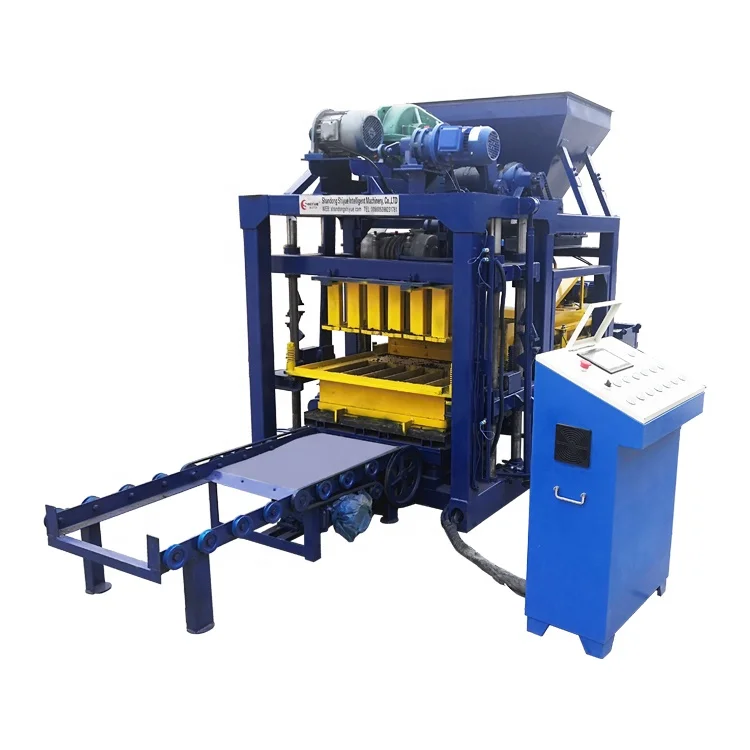
 High quality block machine