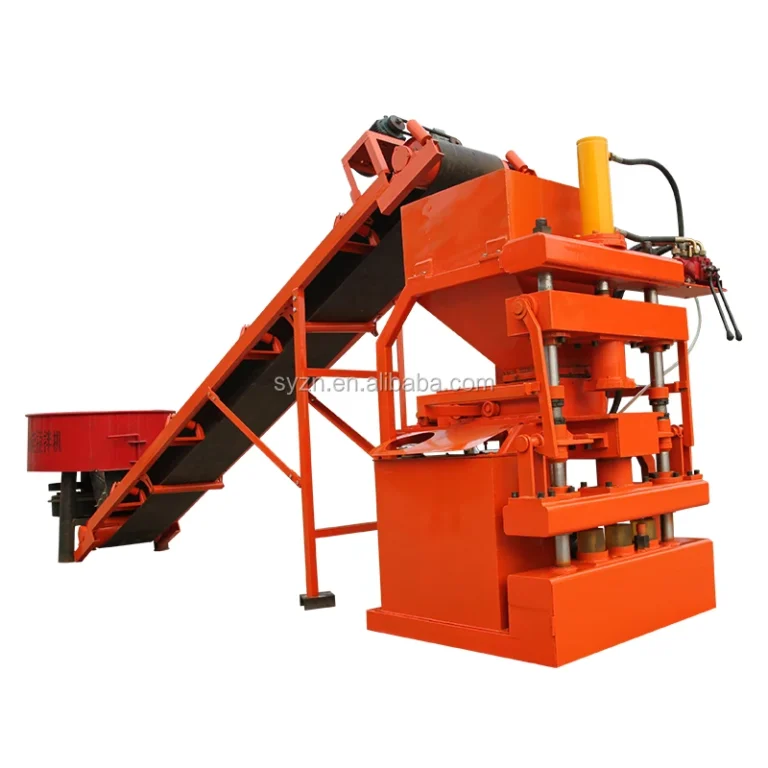
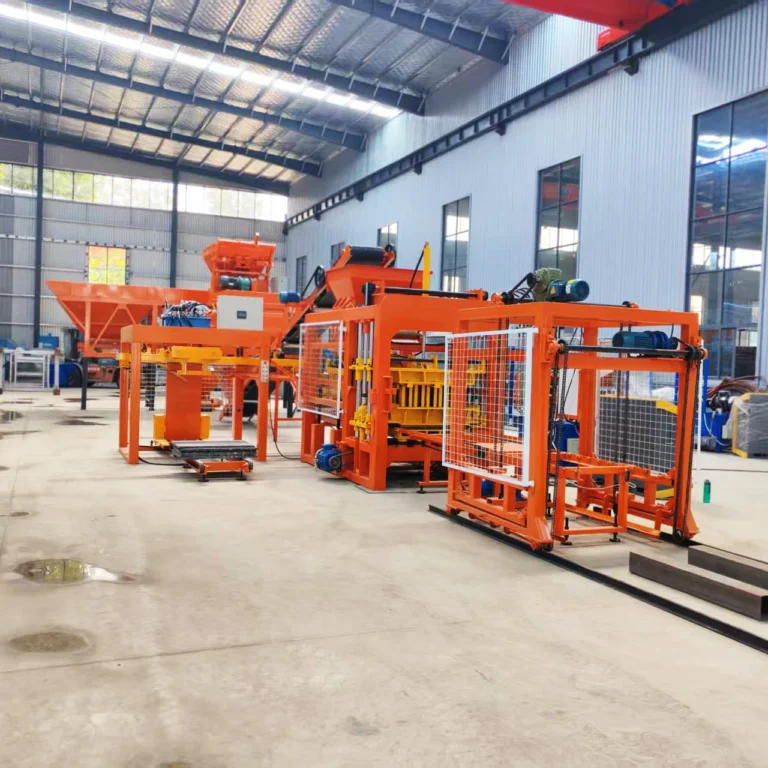
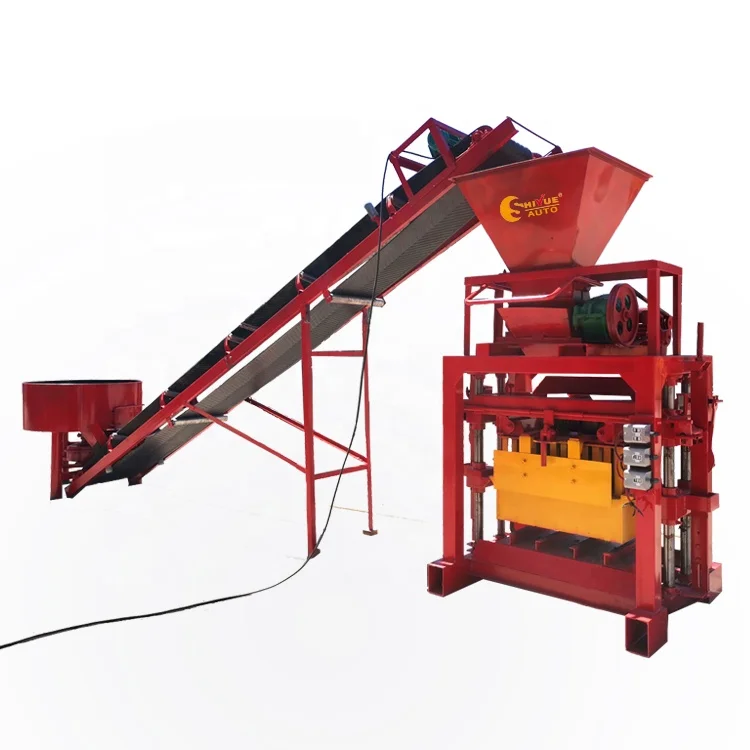
System-Matched Configuration — The QT6-15 is specified alongside pallet, mould and handling as one integrated line, not assembled from separate catalogue items, so cycle time and format match the buyer’s actual block market.
Technical Specifications
| Parameter |
Value |
| Model |
QT6-15 |
| Product Type |
Concrete Block Making Machine |
| Overall Dimensions (L×W×H) |
8200×1700×2950 mm |
| Total Mass |
7 T |
| Vibration Form |
Platform Vibration |
| Vibration Force |
45 kN |
| Vibration Frequency |
0-60 Hz |
| Moulding Mode |
Automatic load, vibration moulding |
| Molding Cycle |
15-20 s |
| Pallet Size |
880×850 mm |
| Overall Power |
37 kW |
| Hydraulic System |
Independent integrated station |
| Demolding Method |
Hydraulic |
| Control System |
PLC with touch screen |
| Factory Area Required |
1200 m² |
| Output (Hollow Block 400×200×200 mm) |
8640-11520 pcs/8hr (basis: 15-20s cycle) |
| Output (Hollow Block 400×150×200 mm) |
11520-15360 pcs/8hr (basis: 15-20s cycle) |
| Output (Solid Brick 240×115×53 mm) |
46080-61440 pcs/8hr (basis: 15-20s cycle) |
| Output (Rectangular Paver 200×100×60 mm) |
17280-23040 pcs/8hr (basis: 20-25s cycle) |
Application Suitability
| Application |
Material or Output |
| Hollow block for load-bearing walls |
Crushed stone, cement, sand with controlled fines content |
| Solid brick for masonry |
Fly ash, slag, natural aggregate blends |
| Rectangular paving brick |
High-density concrete mix for pedestrian and vehicular traffic |
| Zigzag interlocking paver |
Coloured concrete for driveways and public spaces |
| On-site contractor production |
Local aggregate matched to regional block formats |
What a Concrete Block Making Machine Manufacturer Leaves Out of the Cycle Time
Capacity means nothing until the block format, pallet size and local aggregate are pinned to a specific number.
I remember walking a client through a quote for a mid-tier automatic press where the catalogue listed a single headline cycle time. He had already committed to a production schedule based on that figure. But his target was a heavier 400×200×200 hollow block, not the standard test piece. Once we ran the numbers for his specific format and the high-clay river sand available in his region, the realistic output shifted considerably. That gap between brochure promises and site reality is where projects stall [NEED_CITE: common gap between catalogue capacity and site output in block production].

Positioning the QT6-15 Within the Full Shiyue Range
The QT6-15 sits in the mid-to-high automatic tier, above the semi-automatic and mobile egg-laying models that suit first-time entrepreneurs or small on-site contractor runs. Buyers surveying options for a first or replacement machine can use this model as a reference point: it assumes a fixed plant with curing space and pallet circulation, not an open yard. Understanding where this concrete block making machine manufacturer places the QT6-15 helps buyers decide whether the investment in full automation is justified by their daily volume targets and plant footprint.
Matching Machine Tier to Plant Footprint and Investment
A mobile or semi-automatic machine demands less capital and a smaller curing area but caps output and requires more manual pallet handling. The QT6-15, with its 1200 m² factory area requirement and 880×850 mm pallet system, assumes a dedicated production hall with room for curing racks and forklift circulation. Buyers comparing tiers need to weigh the labour reduction of automatic stacking against the space and capital a fixed plant demands [NEED_CITE: plant footprint considerations for automatic versus semi-automatic block lines].
Reading the Specs Against Your Block Format
The 45 kN vibration force and adjustable 0-60 Hz frequency are tuned to compact different mix densities, from lightweight hollow blocks to dense paving bricks. A higher frequency suits fine aggregate, while lower frequency drives larger stone into the mould cavity. The independent hydraulic station sits isolated from the main vibration, which prevents seal wear from accelerating under constant shaking. Pallet size at 880×850 mm defines the mould envelope: every format the buyer plans to produce must fit within that boundary, and the mould change time determines how much of a shift is lost between formats.
The Cost of Configuring a Line Without the Full Picture
Ordering a press without confirming pallet size against the buyer’s existing forklift and curing racks leads to double-handling on day one. Skipping voltage and PLC language confirmation delays commissioning by weeks while transformers or replacement HMI units ship across borders. And specifying a mix the local market cannot supply forces either a costly material import or a compromise on block strength that erodes the buyer’s reputation [NEED_CITE: consequences of mismatched pallet and curing infrastructure in block plants].
Why Source the QT6-15 Through This Range
Block machinery is the single focus here, so the press, mould, pallet and handling equipment are specified as one matched system rather than stitched together from separate vendors. Configuration starts from the buyer’s actual mix design and target block format, not a catalogue default. Moulds are designed for the formats the buyer’s market actually sells, with custom drawings available. The automation level is selectable, meaning a buyer can begin with semi-automatic pallet handling and add stacking later. Installation support includes operator training so the first production run is not a learning curve on live orders.
Documentation & Verification
- Line layout stating the block format assumed for every capacity figure
- Machine specification sheet confirming voltage, frequency and PLC display language
- Mould drawing and format list with cycle time for each block type
- Factory test record and packing photographs before container loading
- Hydraulic and electrical schematic for local maintenance reference
Installation, Commissioning & Support
- Foundation must accommodate 8200×1700 mm footprint and 7 T mass with vibration isolation
- 37 kW total power requires dedicated circuit with confirmed voltage and frequency
- PLC touch screen language configured before dispatch to avoid on-site delays
- Independent hydraulic station commissioned separately from main press vibration system
- Operator training covers mould change procedure and fault diagnosis response
- Wear parts list with mould and hydraulic seal schedule provided at handover
Before You Request a Quote
To size the line accurately, share your target block formats with dimensions, the daily volume you need to hit, and the raw materials available locally including aggregate type and moisture content. Confirm your site’s voltage and frequency, the language your operators need on the PLC screen, and the dimensions of your existing curing area and forklift so the pallet specification aligns with what you already have on the ground.
Frequently Asked Questions
Q: How is QT6-15 capacity verified per block format?
A: Each output figure is tied to a specific block dimension, pallet size of 880×850 mm, and a stated molding cycle. For example, the 400×200×200 mm hollow block figure assumes a 15-20 second cycle. Buyers should request a capacity calculation document that lists their exact target format rather than relying on a single headline number.
Q: Where does the QT6-15 sit compared to semi-automatic and mobile options?
A: It occupies the mid-to-high automatic tier, requiring a fixed plant of approximately 1200 m². Semi-automatic models suit smaller footprints with manual pallet handling, while mobile egg-laying machines serve on-site contractor production without curing racks. The choice depends on daily volume targets and available land.
Q: What factory area does the QT6-15 line require?
A: The machine itself occupies an 8200×1700 mm footprint, but the full line including raw material feeding, pallet circulation, stacking and curing rack handling needs around 1200 m². Buyers should confirm ceiling height and forklift turning radius before finalising the layout.
Q: Which voltage and PLC language options are confirmed before production?
A: Voltage, frequency and PLC touch screen display language are confirmed during the quotation stage, before production begins. This prevents commissioning delays caused by incompatible power supply or unreadable fault codes on site.

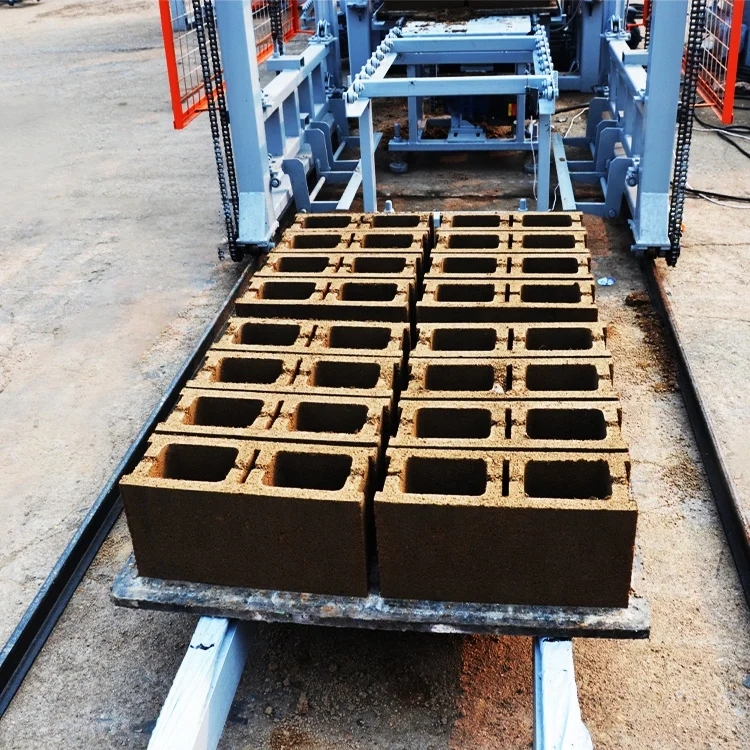
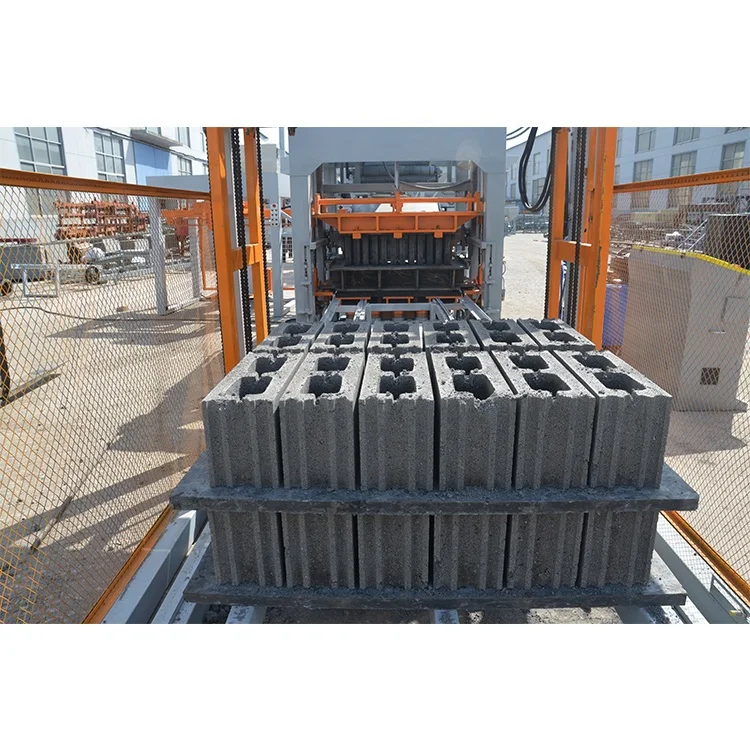 High quality block machine