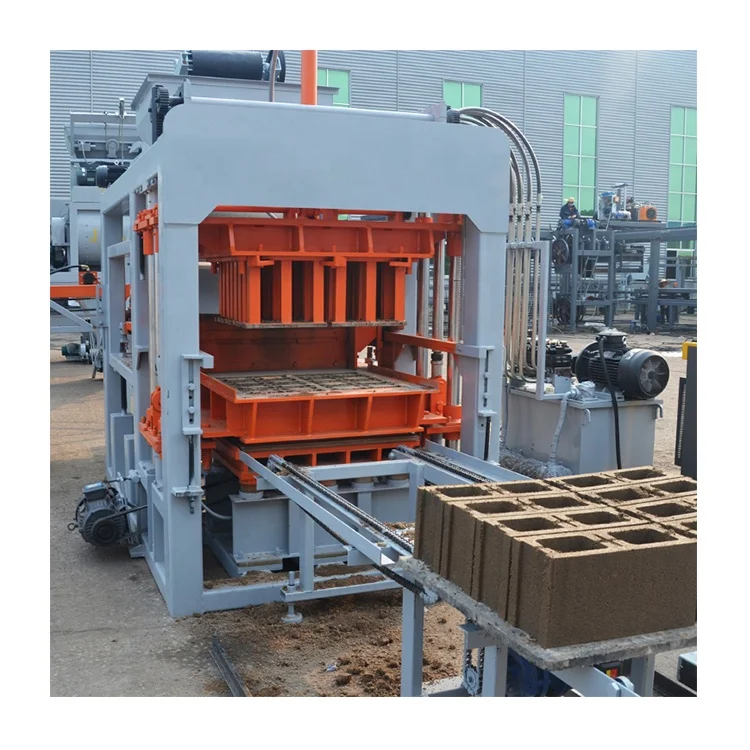
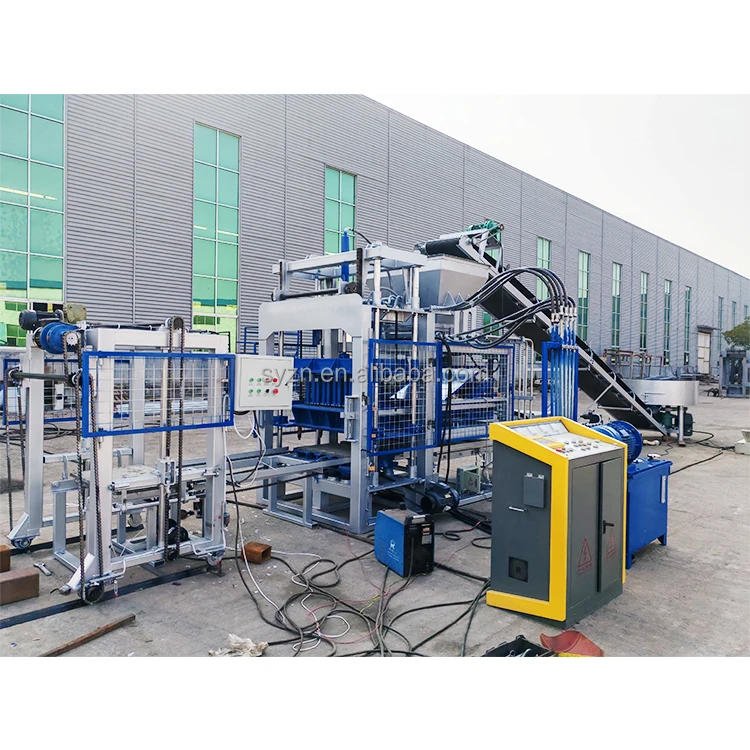
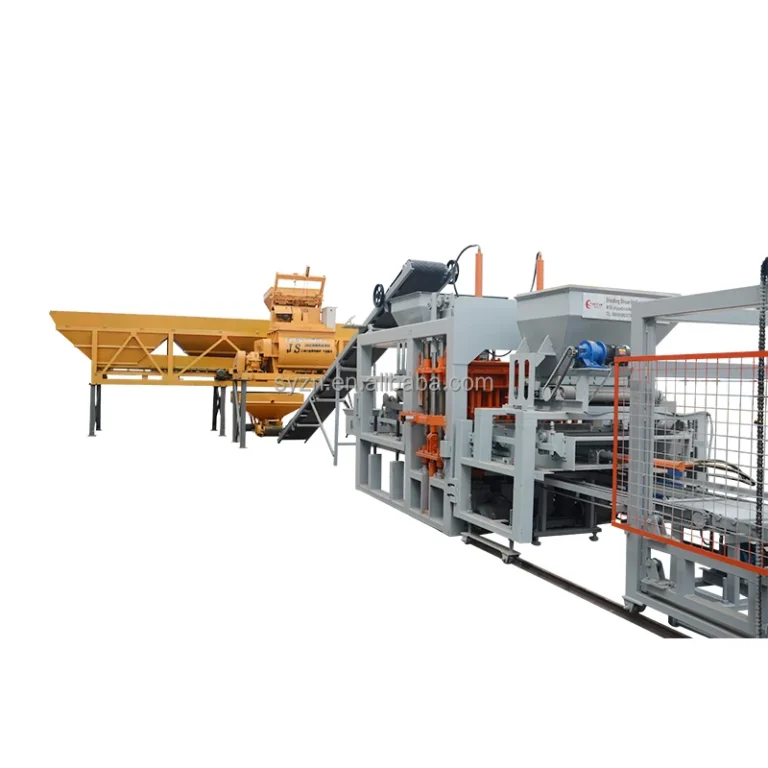
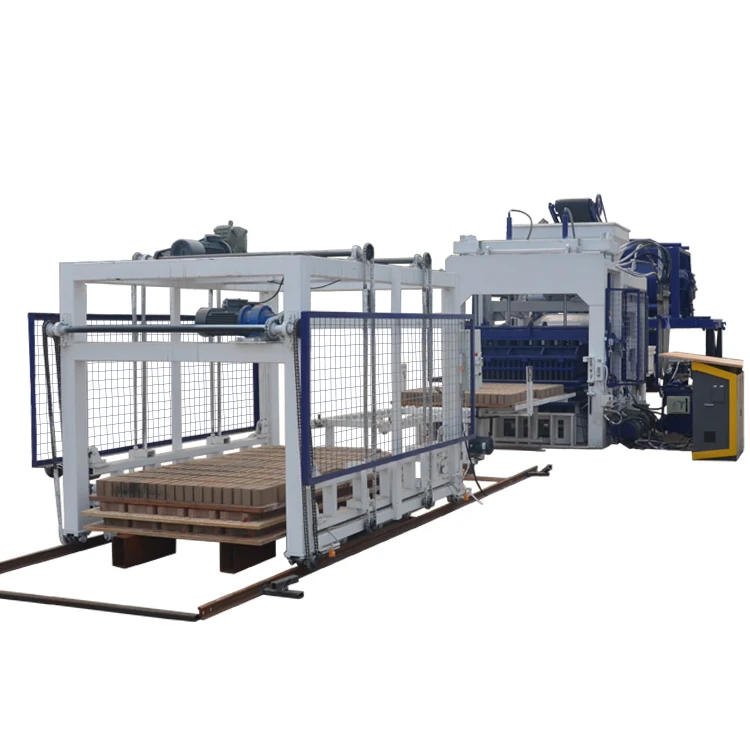
Matched system specification — the QTJ4-25 block making machine manufacturer approach defines the press, mould, pallet and handling as one line rather than a collection of separate purchases, reducing commissioning surprises on site.
Technical Specifications
| Parameter |
Value |
| Model |
QTJ4-25 |
| Product Type |
Semi-Automatic Concrete Block Making Machine |
| Overall Dimensions (L×W×H) |
6400 × 1500 × 2700 mm |
| Moulding Cycle |
25 s |
| Vibration Frequency |
2800–5100 r/min |
| Exciting Force |
60 kN |
| Vibration Type |
Bed mould vertical vibration + upper mould compression vibration |
| Total Power |
17.9 kW |
| Mixer Model |
JQ350 |
| Pallet Size |
850 × 550 × 20 mm |
| Net Weight |
2500 kg |
| Output Capacity (390×190×190 mm hollow block) |
480 pcs/h, 3800 pcs/8h (4 pcs/mould) |
| Output Capacity (400×150×200 mm hollow block) |
600 pcs/h, 4800 pcs/8h (5 pcs/mould) |
| Output Capacity (240×115×53 mm solid brick) |
2100 pcs/h, 17000 pcs/8h (18 pcs/mould) |
| Applied Products |
Concrete hollow blocks (8 inch, 6 inch), solid bricks, pavers, kerbstones |
| Raw Materials |
Crushed stone, sand, cement, dust, fly ash |
| Automation Level |
Semi-automatic |
| Key Features |
Hydraulic station equipped; manual pallet handling and stacking |
Application Suitability
| Application |
Material or Output |
| Small to medium hollow block plants |
8-inch and 6-inch hollow blocks from crushed stone, sand and cement |
| Contractor on-site production |
Solid bricks and hollow blocks for housing and wall projects |
| Paver and kerbstone expansion |
Interlocking pavers and kerbstones added to existing product range |
| First block plant for entrepreneurs |
Mixed format output with semi-automatic operation and moderate investment |
| Fly ash brick production |
Solid bricks using fly ash, cement and local aggregate blends |
Why "480 Pieces per Hour" Is Not the Whole Story
Every capacity figure only means something when the block format is named beside it.
The QTJ4-25 block making machine manufacturer quotes 480 pieces per hour based on a 390×190×190 mm hollow block at four pieces per mould. Switch the mould to a 240×115×53 mm solid brick at eighteen pieces per mould and the same press reaches 2100 pieces per hour. Buyers who compare machines on a single headline number often discover that the format their market actually demands produces far fewer blocks than the brochure suggested [NEED_CITE: block format assumptions in capacity quotations]. This is the reason capacity must always be read alongside the mould drawing and cycle time for the specific product the plant will sell.

Placing the QTJ4-25 Within the Full Shiyue Range
The Shiyue lineup spans mobile egg-laying presses for on-site work, semi-automatic machines like the QTJ4-25 for growing plants, and fully automatic lines with robotic stacking and cubing. The QTJ4-25 sits at the point where a buyer has moved past hand-operated production but does not yet need the capital outlay of a high-capacity automatic plant. Its semi-automatic configuration keeps the operator in the loop for pallet handling while the press cycle itself runs on a fixed 25-second rhythm.
Where Semi-Automatic Operation Still Makes Sense
Semi-automatic plants remain the practical choice where labour is available at moderate cost and the daily target does not demand continuous unattended running. The QTJ4-25 block making machine manufacturer configuration lets a two-person crew manage pallet feeding and stacking while the mixer and press operate through their cycle [NEED_CITE: labour requirements for semi-automatic block plants]. When the plant is ready to grow, the automation level can be raised within the Shiyue range, adding automatic pallet feeders and stackers without replacing the press itself.
Reading the Vibration and Power Numbers
The dual vibration system pairs bed mould vertical vibration with upper mould compression vibration, which together compact the concrete mix from both directions. An exciting force of 60 kN at up to 5100 r/min is adequate for hollow blocks and standard solid bricks; denser paver mixes may require higher force ratings found in larger Shiyue models. Total connected power of 17.9 kW including the JQ350 mixer means the plant needs a dedicated circuit sized for continuous motor starting load. Pallet dimensions of 850×550×20 mm must be checked against the curing racks and forklift the buyer already owns, because a mismatch here creates bottlenecks after the press, not at it.
What Happens When Pallet and Curing Area Do Not Match
A pallet size chosen without reference to the curing yard leads to double-handling that erodes the press output. If the curing racks were built for a different pallet dimension, every block must be restacked by hand before it enters the rack, and the QTJ4-25 block making machine manufacturer cycle time becomes irrelevant because the bottleneck has shifted downstream [NEED_CITE: pallet size and curing area coordination in block plants]. The same problem appears when the yard forklift cannot accommodate the pallet width, leaving finished blocks sitting on the machine until someone moves them.
What the Buyer Actually Receives
Block machinery is the single focus of the Shiyue range, so the QTJ4-25 is specified together with its mould, pallet and handling equipment as one system rather than sourced from separate suppliers. Configuration is set against the buyer’s mix design and local aggregate, not a catalogue default. Mould design covers the formats the buyer’s market sells, with custom mould options available to buyer drawings. Automation level starts semi-automatic and can be raised later. Installation support includes on-site commissioning and operator training so the crew can run the press independently from the first week.
Documentation & Verification
- Line layout and capacity calculation stating block format assumed for each QTJ4-25 output figure
- Machine specification sheet with voltage, frequency and PLC language confirmed before production
- Mould drawing and format list showing every block type the QTJ4-25 will produce
- Pallet specification matched to buyer curing area dimensions and forklift capacity
- Hydraulic and electrical schematic for on-site maintenance reference
- Factory test record on buyer’s target block format before dispatch
Installation, Commissioning & Support
- Foundation pad leveled to support 6400 × 1500 mm machine footprint and 2500 kg static load
- Dedicated power circuit rated for 17.9 kW continuous draw with voltage and frequency confirmed before wiring
- Machine shipped partially assembled; vibration table and mixer mounted on site to reduce transit damage
- First production run supervised to set moulding cycle, vibration frequency and feed timing for local mix
- Operator training covers mould change procedure, pallet handling and daily vibration motor inspection
- Wear parts list supplied with hydraulic seals and vibration motor bearings identified for first reorder
Starting the Conversation
To size the QTJ4-25 against your actual production target, share the block format you plan to sell most, the daily output you need for that format, and the local aggregate and cement available at your site. Confirm the voltage, frequency and control display language required at the destination so the electrical panel can be built correctly before shipment. If you already have curing racks or a forklift, send their dimensions so the pallet size can be matched from the start.
Frequently Asked Questions
Q: How is the QTJ4-25 output calculated for each block format?
A: Each capacity figure is tied to a specific mould and block dimension. The 480 pieces per hour figure assumes a 390×190×190 mm hollow block at four pieces per mould with a 25-second cycle. Different block sizes use different moulds and produce different counts per cycle, so always request the capacity table that lists every format you intend to run.
Q: What electrical details must be confirmed before the QTJ4-25 ships?
A: Voltage, frequency and control display language need to be agreed during the order stage. The QTJ4-25 block making machine manufacturer builds the electrical panel to these specifications, so any change after production begins delays dispatch. Buyers in regions with unstable supply should also discuss whether a voltage stabilizer is needed.
Q: When should a buyer consider stepping up from the QTJ4-25 to a larger Shiyue model?
A: If your daily target for a single block format consistently exceeds what a semi-automatic crew can manage, or if you need multiple formats running on the same shift, a higher-tier automatic model reduces labour and increases throughput. The QTJ4-25 remains the right choice for plants that value flexibility over maximum single-format volume.
Q: Can the QTJ4-25 run custom moulds for special block shapes?
A: Yes. Mould design is available to buyer drawings, covering non-standard hollow blocks, decorative pavers or kerbstones that your local market demands. The mould drawing is confirmed with the buyer before production so the format fits the vibration table and pallet dimensions without modification on site.
Q: How many pallets should a QTJ4-25 buyer order for a typical day?
A: Pallet quantity depends on daily output, curing time and how quickly pallets return from the curing yard to the press. For a plant running hollow blocks on an eight-hour shift, buyers typically hold enough pallets to cover one full curing cycle plus a buffer, so the press is never waiting for an empty pallet to return.

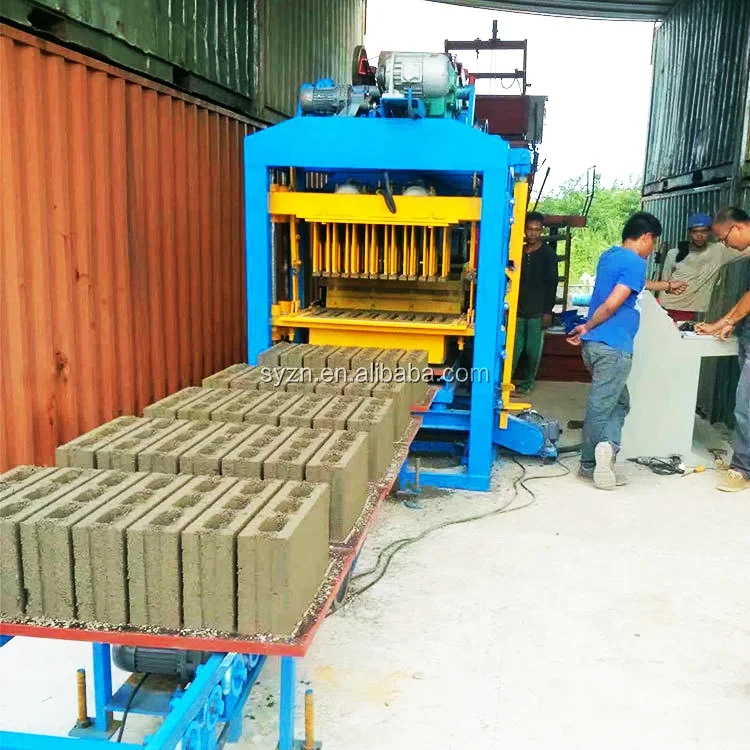
 High quality block machine