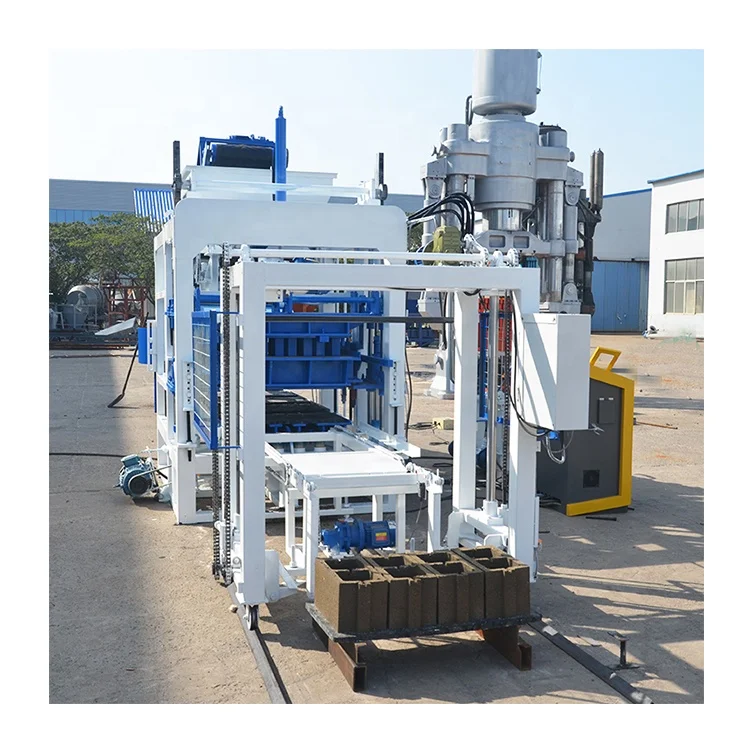
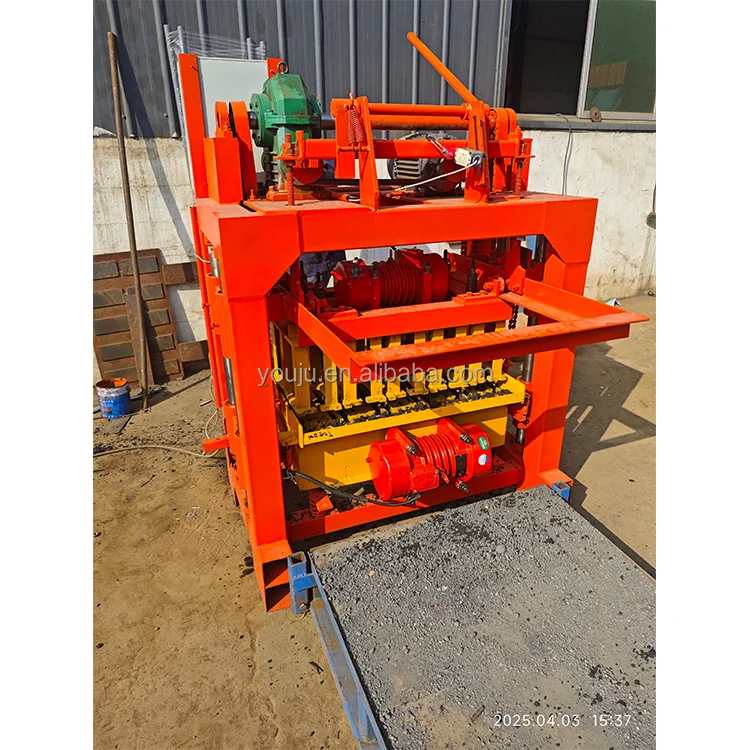
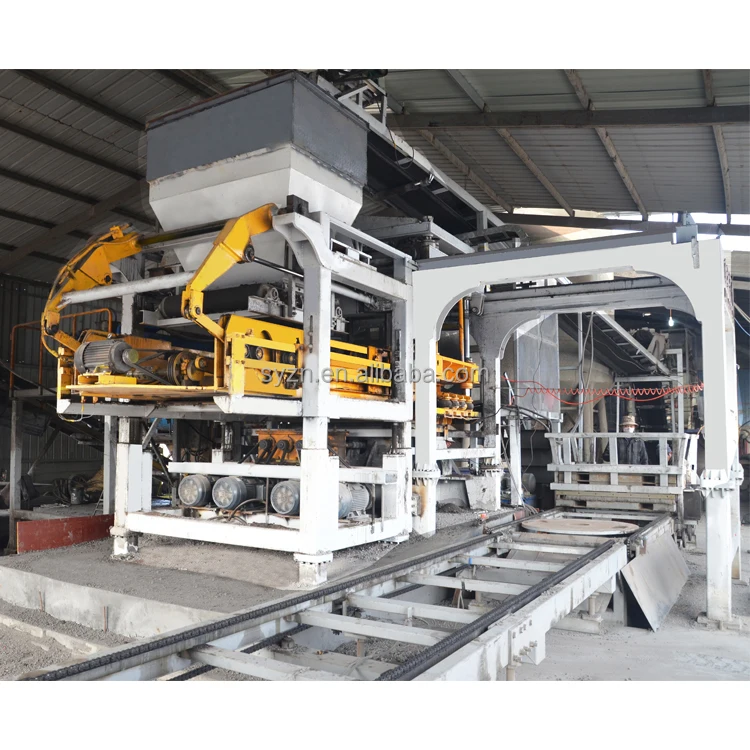
Matched System Supply — every QTJ4-24 block machine leaves the factory with pallets, moulds and handling gear specified as one package, not assembled from mismatched sources.
Technical Specifications
| Parameter |
Value |
| Model |
QTJ4-24 |
| Product Type |
Stationary Block Making Machine |
| Molding Method |
Mechanical (vibration + pressure) |
| Overall Dimensions (L×W×H) |
3600×1700×2560 mm |
| Pallet Size |
850×450 mm |
| Molding Cycle |
24–26 s (basis not stated in source — confirm block format / material / thickness) |
| Overall Power |
11.95 kW |
| Vibration Force |
45 kN |
| Vibration Configuration |
2×3 kW lower vibrators + 2×1.5 kW upper vibrators |
| Total Mass |
2 T |
| Reducer for Mold Lifting |
350-type |
| Material Distribution |
Full-automatic spiral |
| Materials Processed |
Cement, sand, stone |
| Control System |
To be confirmed (PLC / manual) |
| Voltage & Frequency |
To be confirmed before ordering |
| Automation Level |
To be confirmed |
| Warranty |
1 year for whole machine (excluding spare parts) |
Application Suitability
| Application |
Material or Output |
| Hollow block production |
Cement, sand, crushed stone aggregate |
| Solid block production |
Cement, sand, fine aggregate blends |
| Interlocking brick production |
Cement, stone dust, sand mixtures |
| Paving block production |
Cement, coarse aggregate, pigment (with compatible mould) |
| Small-to-medium block plants |
First-plant entrepreneurs adding a compact stationary line |
| Contractor on-site production |
Hollow and solid blocks for project-specific masonry needs |
What a "24-Second Cycle" Actually Means for Your Daily Output
Cycle time without a stated block format is a number that hides more than it reveals.
I have sat across from buyers in São Paulo and Miami who signed off on a stationary block machine based purely on a cycles-per-hour figure, only to discover that the quoted cycle assumed a thin paver while their actual product was a 200 mm hollow block requiring nearly double the press time. The QTJ4-24 block machine manufacturer you choose should document the cycle against each specific format you intend to run — hollow, solid, interlocking — so your daily output projection holds up once the line is running [NEED_CITE: block cycle time variation by format and wall thickness].

Where the QTJ4-24 Sits in the Stationary Machine Range
The QTJ4-24 occupies the entry-to-mid tier of stationary block machines, using mechanical vibration rather than a full hydraulic press circuit. That places it squarely in front of buyers who need dependable hollow and solid block output without the capital outlay and maintenance overhead of a high-pressure hydraulic line. The vibration-plus-pressure molding method keeps the electrical draw at 11.95 kW total, which matters when you are connecting to a generator or a workshop supply with limited headroom.
How the Full Range Stretches Beyond the Press
A stationary block machine is only one station on the line. Before the press cycles, raw material must be metered and mixed; after the press opens, loaded pallets must travel to the curing area. The QTJ4-24 block machine manufacturer scope here includes specifying the upstream spiral feeder, the pallet return path, and the stacking method so the press is never left waiting on an empty pallet or a jammed mixer discharge [NEED_CITE: block production line station synchronization requirements].
Reading the Specs That Matter on Site
The 45 kN vibration force is delivered through four motors — two 3 kW units below the mould table and two 1.5 kW units above — which means the vibration reaches the concrete from both directions. In practice this dual-level configuration produces more uniform density across the block height, especially on taller hollow block formats where single-plane vibration leaves the top section weaker. The 850×450 mm pallet size defines how many blocks you produce per cycle and must match the curing rack spacing and the forklift tine width already in your yard. The 350-type reducer on the mould lifting mechanism handles the repeated vertical travel, and its rating determines how often you will be replacing gears under continuous two-shift operation.
The Hidden Cost of Skipping Configuration Alignment
When a buyer orders a stationary block machine without confirming voltage, frequency, and control language before production, the machine arrives and sits idle while transformers are sourced or panels are rewired. I have watched three-week delays turn into six-week delays because a 60 Hz motor was shipped to a 50 Hz market, and the resulting speed drop cut vibration force below the threshold needed for proper compaction [NEED_CITE: industrial motor frequency mismatch consequences]. The automation level, mould format list, and stacking method must all be locked in at the proposal stage, not discovered when the crate is opened.
Why This QTJ4-24 Block Machine Manufacturer Approaches the Range Differently
Every machine in the range is configured against the buyer’s actual mix design and local aggregate rather than a default catalogue recipe, which means the vibration force and cycle time are validated for the material you can actually source. Mould design covers the formats your market sells, including custom drawings when standard moulds do not match local block dimensions. Pallet size and material are chosen with your existing curing racks and forklifts in mind, preventing a mismatch that would force you to replace your entire yard infrastructure. The automation level is selectable, so a buyer can start with manual pallet handling on the QTJ4-24 and upgrade to semi-automatic stacking as volume grows.
Documentation & Verification
- Line layout and capacity calculation stating the block format assumed for each cycle time figure
- Machine specification sheet confirming vibration force, pallet size, and overall power for your site conditions
- Mould drawing and format list covering every block type included in the purchase
- Voltage and control language confirmation document signed off before production begins
- Factory test record with photographs taken on your specified block format and mix
Installation, Commissioning & Support
- Foundation must accommodate the 3600×1700 mm footprint and the 2 T static mass with dynamic vibration loads
- Electrical supply must match confirmed voltage and frequency for the 11.95 kW total draw across all motors
- Machine ships dismantled to container dimensions; reassembly on site requires the specified 350-type reducer alignment
- First production run conducted with operator training on mould change procedure and spiral feeder adjustment
- Wear parts list supplied covering vibration motors, reducer components, and mould liners for planned replacement intervals
Before You Request a Quotation
Provide the specific block formats you need to produce, your target daily output, and the local aggregate available at your site. Confirm the voltage and frequency at your facility along with the preferred control language for the operator interface. If you have existing curing racks, pallets, or forklifts, share their dimensions so the line can be matched to your current yard setup rather than forcing a full replacement.
Frequently Asked Questions
Q: What block format does the 24–26 s cycle time assume?
A: The published cycle range has not been tied to a specific block format or wall thickness in the source data. Before quoting, we calculate the actual cycle per format — hollow, solid, interlocking, or paver — using your mix design, so the daily output figure you plan against reflects the block you will actually produce rather than a catalogue best-case scenario.
Q: Is the QTJ4-24 semi-automatic or fully mechanical?
A: The QTJ4-24 uses mechanical vibration with pressure molding, and its automation level — from manual pallet handling through to semi-automatic stacking — is confirmed during the proposal stage. The spiral material feeder operates automatically, but pallet loading and block stacking method depend on the configuration you select, which directly determines how many operators the line requires per shift.
Q: What voltage and control language options are available?
A: Voltage and frequency are configured to match your local supply before the machine enters production, avoiding costly on-site rewiring or transformer rentals. The control interface language is confirmed at the same stage so operators can read cycle data and fault codes in their working language from the first day of commissioning.
Q: When should a buyer step up from the QTJ4-24 to a hydraulic model?
A: Buyers move to a hydraulic press when block strength requirements, production volume, or format diversity exceed what mechanical vibration alone can deliver. If your market demands high-density pavers or your daily target requires faster cycle times across multiple formats, the range includes hydraulic models with higher pressure ratings that we can compare against your specific output and product requirements.
Q: What moulds and pallet sizes are compatible?
A: The QTJ4-24 accepts moulds for hollow blocks, solid blocks, interlocking bricks, and paving blocks within the 850×450 mm pallet envelope. Custom moulds can be designed to buyer drawings when local block dimensions differ from standard formats, and pallet material is selected to match your curing method and forklift specifications.

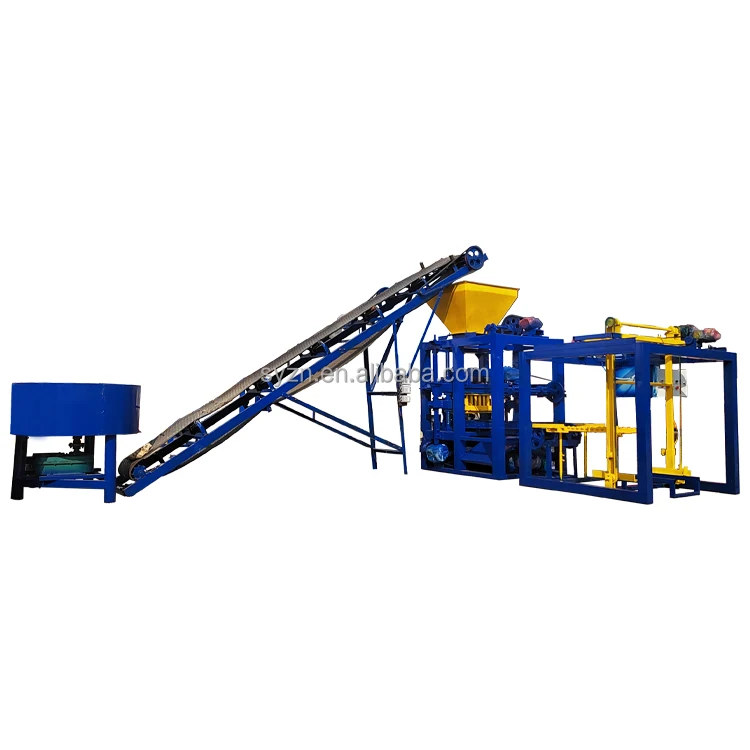
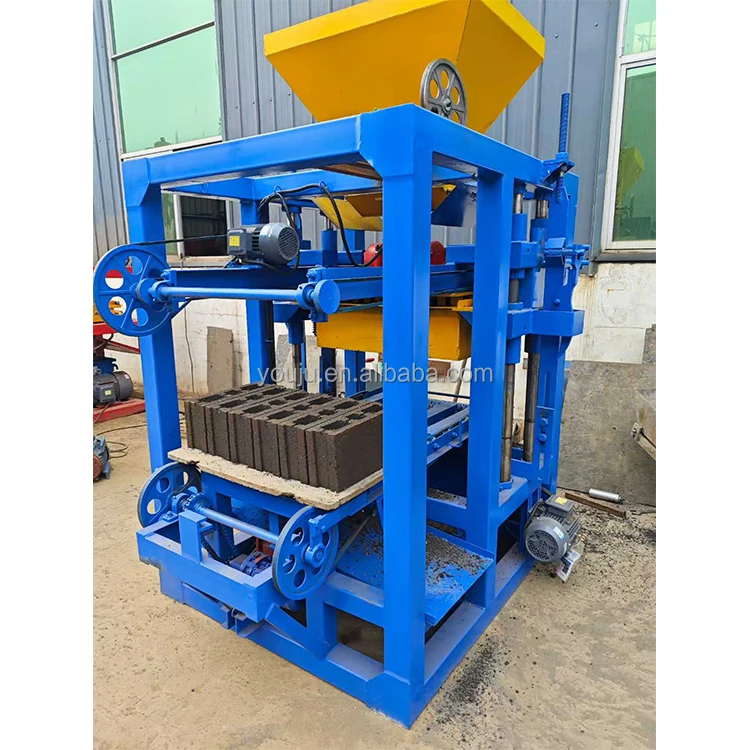 Stationary block machine