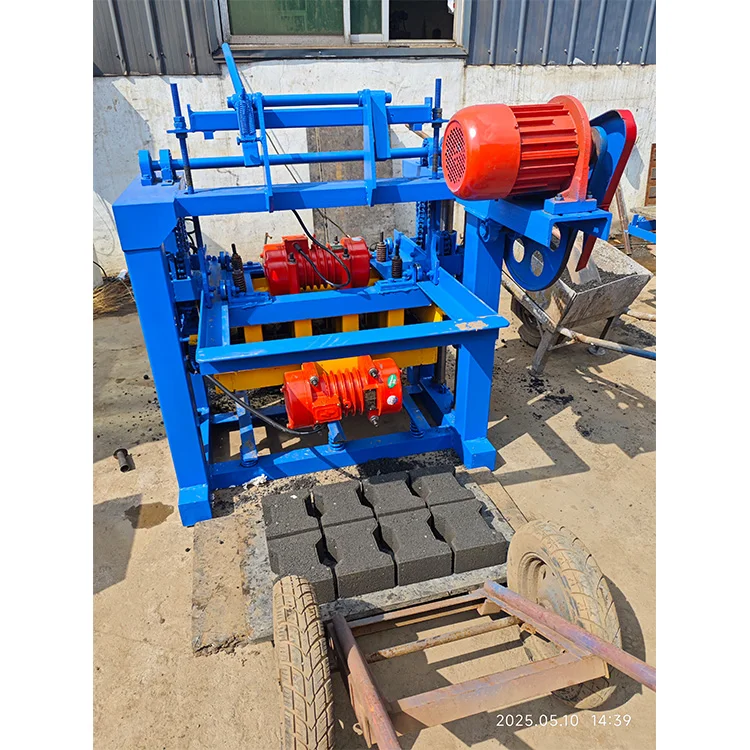
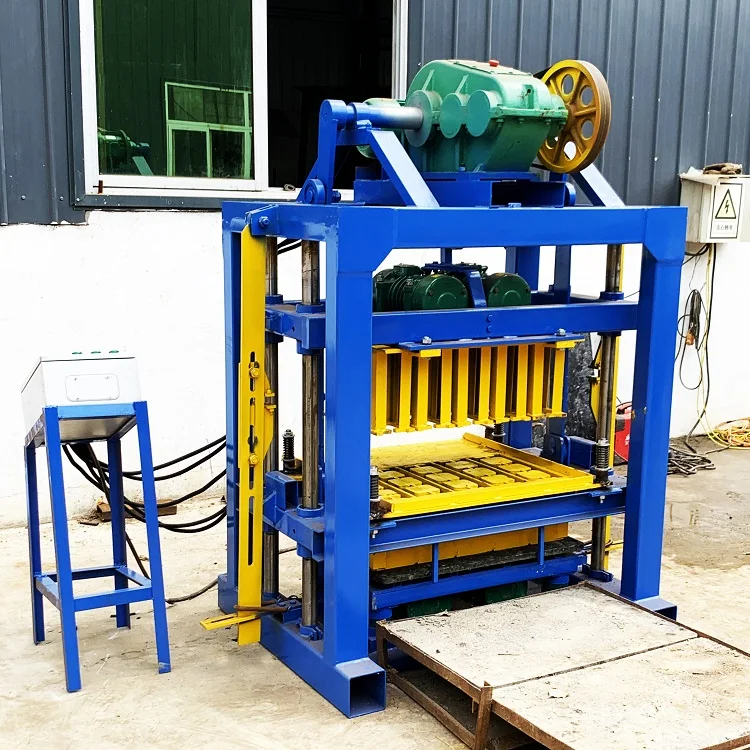
Complete system matching — every QTJ4-24 unit leaves our facility with pallet, mould and mixer specified as one coordinated line rather than separate catalogue items.
Technical Specifications
| Parameter |
Value |
| Model |
QTJ4-24 |
| Product Type |
Semi-Automatic Concrete Block Making Machine |
| Machine Frame |
Dragon gate style, super steel construction, four wear-resisting vertical shafts |
| Vibrating System |
Platform vibration: lower two 3kW motors driving vertical vibration box; upper 1.5kW attached vibration device |
| Elevating System |
Cone-shape motor with JZQ250 speed reducer and V-belt drive |
| Mould Format Capacity |
390×190×190mm — 4 pcs/mould; 240×115×53mm — 21 pcs/mould |
| Pallet Size |
850mm × 450mm |
| Overall Dimensions (working state) |
3600mm × 1700mm × 2560mm |
| Total Mass |
1750 kg |
| Overall Power |
14.25 kW |
| Voltage & Frequency |
Configurable to buyer’s site standard (basis to be confirmed) |
| Control System |
Electronic controlling part (PLC / MCC option to be confirmed) |
| Cycle Time |
Varies by block format, material and thickness (basis to be confirmed) |
| Output Capacity |
Varies by block format, material and thickness (basis to be confirmed) |
| Automation Level |
Semi-automatic (mechanical and electronic combination) |
| Stacking Method |
Manual pallet handling; auto stacker available as optional equipment |
| Basic Supporting Equipment |
JQ350 pan mixer, 6m belt conveyor, trolley |
| Optional Supporting Equipment |
Auto stacker (3–6 layers), block clamper, diesel generator, wheel loader, forklift |
| Material Storing Device |
Material releasing hopper (top of frame) with material storing hopper below |
| Delivery Device |
Cycloidal pin wheel speed reducer, chains, V-belt, delivery wheel, self-conveying frame |
Application Suitability
| Application |
Material or Output |
| Hollow block production for residential construction |
Crushed stone, sand, cement and water |
| Solid block manufacturing for load-bearing walls |
Quarry dust, gravel and Portland cement blends |
| Standard brick production for masonry infill |
Fine aggregate with cement binder |
| On-site block making for contractor-led housing projects |
Locally sourced laterite, sand or gravel mixes |
| Small workshop production for building material distributors |
Variable aggregate gradings suited to regional supply |
What "Pieces per Mould" Actually Means for Your Daily Output
Capacity figures only matter when tied to a specific block format and mix.
Buyers regularly receive quotations quoting cycles per hour with no mention of which block size that cycle assumes. A 390×190×190mm hollow block mould producing 4 pieces per cycle delivers a very different daily total than a 240×115×53mm solid brick mould producing 21 pieces per cycle on the same Semi-Automatic Block Machine manufacturer platform. The vibration time, material fill depth and demoulding resistance all shift between formats. I have seen first-time plant owners in West Africa plan their curing yard around one output figure, only to discover on commissioning day that the number applied to a format their market does not buy [NEED_CITE: block format demand by regional construction market].

Where the QTJ4-24 Sits in the Full Block Machine Range
The QTJ4-24 occupies the entry tier of our stationary range, positioned for buyers who need a working block plant without the capital outlay of a fully automatic line. The semi-automatic configuration keeps the operator in the loop for pallet handling and stacking while the machine handles vibration, material feeding and mould cycling. This tier suits entrepreneurs evaluating their first block production investment and contractors who want on-site output without committing to a fixed factory layout. The QTJ4-24 Semi-Automatic Block Machine manufacturer package includes the mixer, conveyor and trolley so the line can run from day one.
Understanding the Upgrade Path Before You Commit
Starting semi-automatic does not lock a buyer into manual operation permanently. The optional auto stacker adds 3 to 6 layers of pallet handling depending on block height, reducing the labour needed at the end of the line. If daily volume grows beyond what manual pallet transfer can sustain, stepping up to a higher tier in the stationary range becomes a conversation about automation level rather than replacing the entire press. I always recommend buyers map their projected output across the first few years of operation before choosing between tiers [NEED_CITE: typical block plant output growth trajectory].
Vibration Force, Pallet Size and Frame Rigidity
The dual vibration system pairs two 3kW lower motors driving a vertical vibration box with a 1.5kW upper attached device, concentrating compaction energy through the platform. For hollow blocks at 390×190×190mm, this vibration profile suits mixes with moderate fine aggregate content where uniform consolidation across the mould cavity determines wall thickness consistency. The dragon gate frame with four wear-resisting vertical shafts maintains mould alignment through thousands of cycles — when shafts wear unevenly, block dimensions drift and reject rates climb. The 850×450mm pallet size defines both the curing rack spacing the buyer must build and the forklift tine width needed on site. Getting pallet specification wrong against an existing curing area forces either a yard rebuild or a pallet reorder before first production.
The Hidden Cost of Skipping Mix Validation
A Semi-Automatic Block Machine manufacturer may quote impressive cycle times based on clean, graded river sand tested at the factory. Ship that same configuration to a site running laterite dust or unwashed quarry fines and the material flow through the storing hopper changes entirely — bridging, incomplete mould fill and extended vibration times follow. Block strength drops because the vibration force was never matched to the actual particle size distribution. Moulds wear faster when abrasive fines dominate the mix. This is why requesting the buyer’s aggregate sample and running a test before finalising the configuration matters more than the machine price on the quotation [NEED_CITE: aggregate variation impact on block compaction].
Why Buyers Source This Range Here
Block machinery remains our single focus, so the QTJ4-24 ships with mixer, conveyor, pallet specification and mould format treated as one system. Configuration starts from the buyer’s actual mix design and target block format rather than a catalogue default. Mould design covers the formats the buyer’s local market purchases, including custom drawings where standard options do not match. Automation level stays selectable — a buyer can begin semi-automatic and add stacking equipment later. Installation support includes operator training on the specific vibration and feed settings that suit the buyer’s material [NEED_CITE: block machine installation and commissioning standards].
Documentation & Verification
- Line layout showing QTJ4-24 footprint with mixer and conveyor placement per block format
- Capacity calculation document stating which mould format each output figure assumes
- Mould drawing and format list covering hollow block and standard brick options
- Machine specification sheet confirming voltage, frequency and control language before shipment
- Factory test record with packing photographs provided before container loading
- Hydraulic and electrical schematic for on-site maintenance reference
Installation, Commissioning & Support
- Foundation pad sized to the 3600×1700mm working footprint with vibration isolation considerations
- Power supply matching the confirmed voltage and 14.25kW total draw on a dedicated circuit
- Machine arrives assembled with supporting equipment palletised for single-container loading
- First-run commissioning covers vibration timing and material feed calibration to buyer’s mix
- Operator training addresses mould change procedure for each purchased format
- Wear parts list identifies vertical shafts, vibration box bearings and belt replacements
What to Share When Requesting a Configuration
Provide the block formats your local market purchases along with your target daily output so the correct tier and mould set can be matched. Share your aggregate source and typical mix proportions so vibration settings and hopper configuration are set before build. Confirm the voltage, frequency and preferred control display language at your site to avoid commissioning delays after arrival.
Frequently Asked Questions
Q: How is the output capacity of the QTJ4-24 calculated and which block format does it assume?
A: Output depends on the mould format installed, the material mix and the vibration cycle time set for that combination. A 390×190×190mm hollow block produces 4 pieces per mould while a 240×115×53mm brick produces 21 pieces per mould. We provide a capacity calculation document that states the assumed format, mix and cycle time so buyers can project realistic daily totals.
Q: Where does the QTJ4-24 sit within the full block machine range and when should a buyer step up?
A: This model is the entry tier in our stationary range, suited to first-time plants and contractor-led on-site production. When daily volume exceeds what manual pallet handling can sustain or when format variety demands faster mould changes, stepping to a higher automation tier becomes appropriate. The upgrade path is planned before initial purchase so foundations and curing layouts accommodate growth.
Q: What voltage, frequency and control language options are confirmed before shipping?
A: Voltage and frequency are configured to match the buyer’s site electrical standard, and the control display language is set before dispatch. We request these details during the quotation stage and confirm them on the specification sheet. This prevents the common problem of machines arriving with incompatible power requirements or unreadable operator interfaces.
Q: Which supporting equipment is included versus optional and how does that affect plant footprint?
A: The basic package includes a JQ350 pan mixer, 6m belt conveyor and trolley. The auto stacker, block clamper and material handling equipment are optional additions. Each item changes the line length and curing yard layout, so we provide a complete line layout drawing showing total footprint before the buyer commits to a configuration.

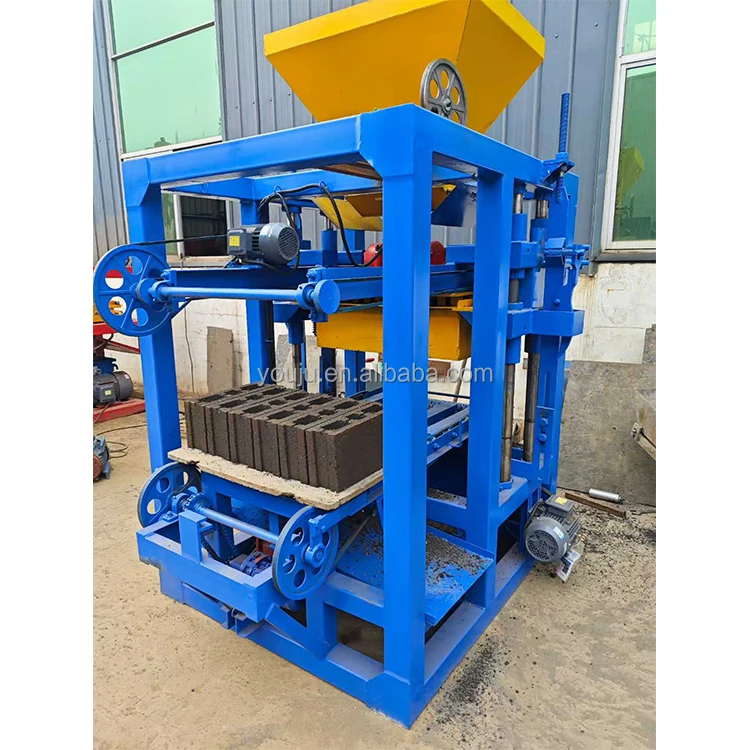
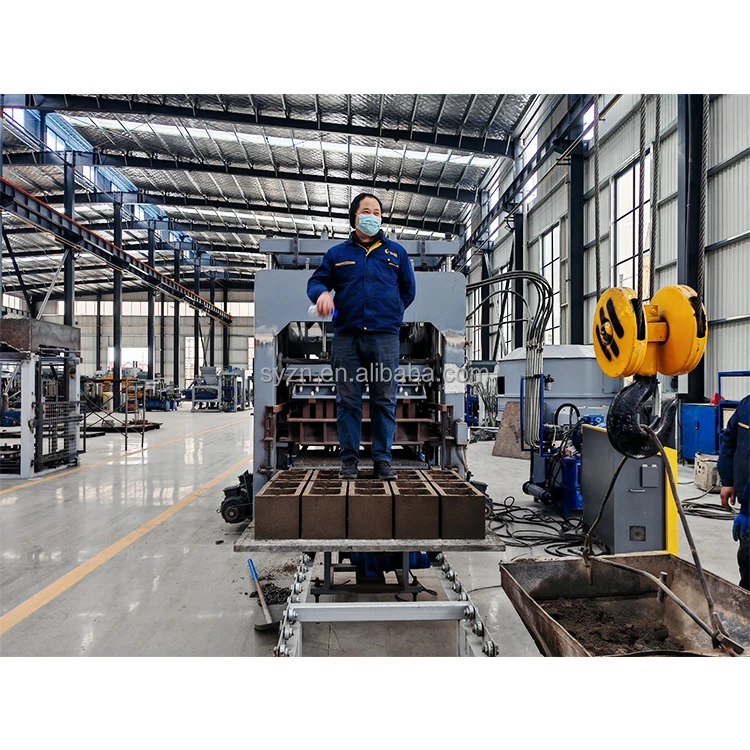 Stationary block machine
![QT18-25 Pallet-free Block Machine | Manufacturer Full Range 记录ID数字之和: 8+0+3+7+0 = 18 18 mod 6 = 0 → 结构0: [品类词] for [应用或物料] – [站点修饰词] 第一层站点角色:全品类目录类 → Manufacturer / Factory Supply / Full Range 第三层修饰词选取:18 mod 3 = 0 → Manufacturer Pallet-free Block Making Machine for Concrete Blocks – Manufacturer 字符数(含空格):69](https://shiyueblockmachine.com/wp-content/uploads/2026/04/Hbf4267631888473ab66c2307a4c79f52J.webp)