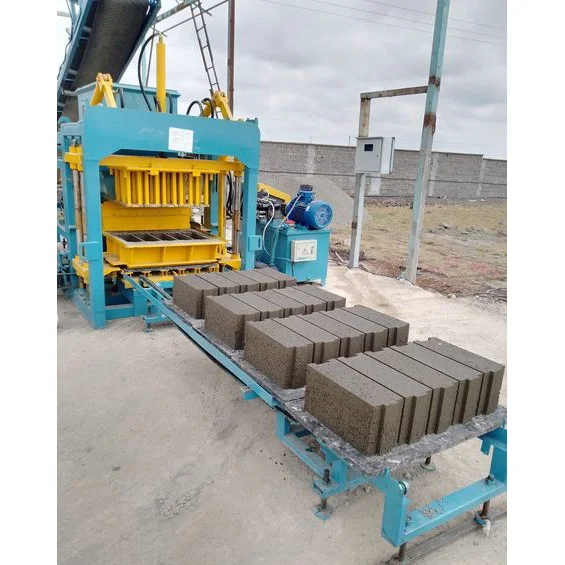
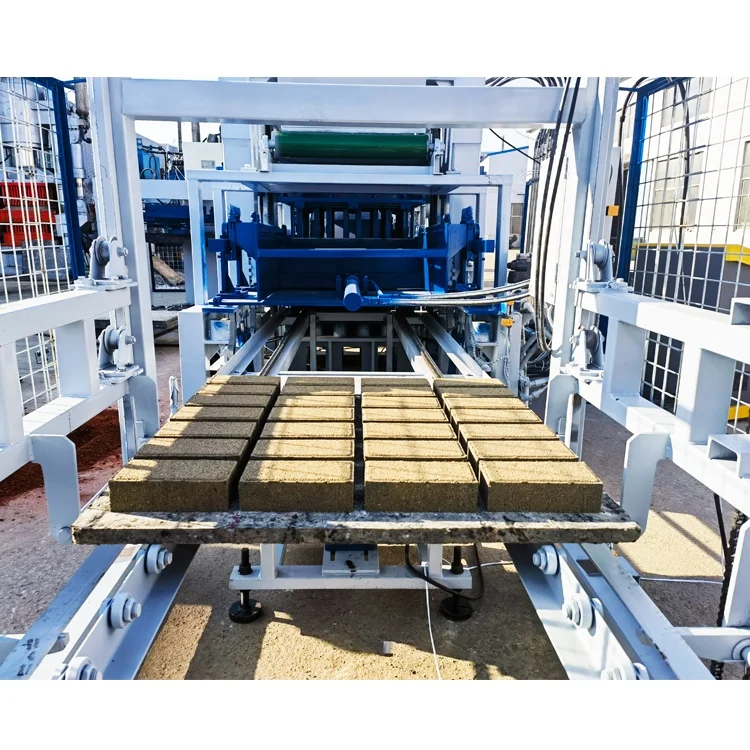
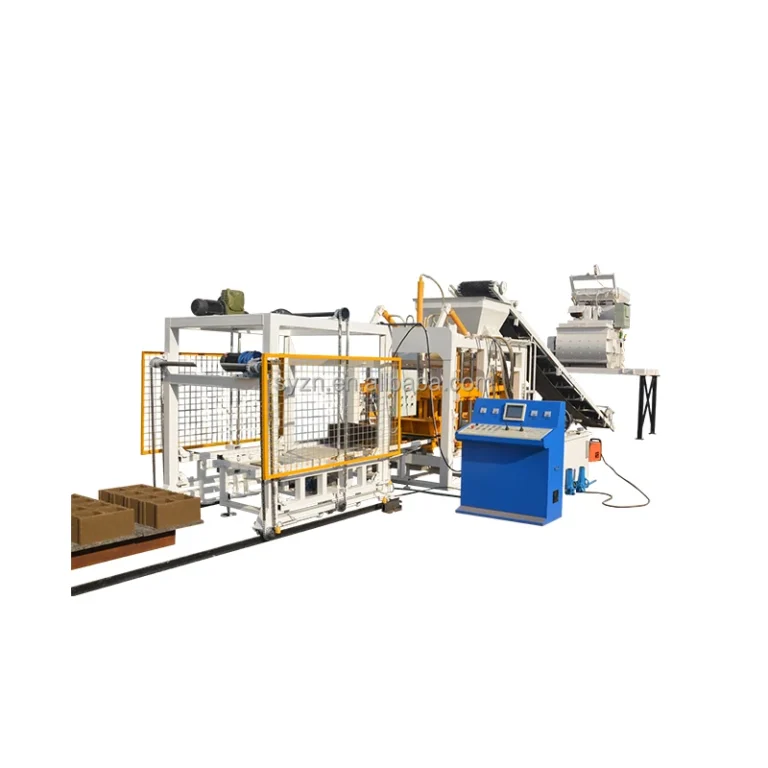
Mid-Tier Production Footprint — the QT4-18 spans small workshop output and high-capacity lines, letting buyers start with semi-automatic operation and scale automation later without replacing the press.
Technical Specifications
| Parameter |
Value |
| Model |
QT4-18 |
| Product Type |
Hydraulic Block Making Machine |
| Overall Dimensions (L×W×H) |
3900×1600×2300 mm |
| Molding Cycle |
15–25 s depending on block format |
| Vibration Force |
40–50 kN |
| Total Power |
24 kW |
| Mixer Model |
JQ350 |
| Pallet Size |
850×550×25 mm |
| Total Weight |
3 T |
| Applied Products |
Paver, solid block, hollow block, curbstone |
| Raw Materials |
Crushed stones, sand, cement, dust, fly ash |
| Output Capacity (400×200×200 mm hollow block) |
1200–1680 pcs/hr (9600–13440 pcs/8 hr) |
| Output Capacity (400×150×200 mm hollow block) |
1800–2400 pcs/hr (14400–19200 pcs/8 hr) |
| Output Capacity (240×115×53 mm solid brick) |
3240 pcs/hr (16200–19440 pcs/8 hr) |
| Control System |
PLC control system |
| Included Equipment |
Block making machine, hydraulic station, PLC control cabinet, pallet feeder, brick conveyor, block sweeper |
| Free Accessories |
Manual hydraulic trolley, spare parts and tools |
| Hydraulic Pressure |
Value to be confirmed with manufacturer |
| Voltage & Frequency |
To be confirmed before order |
| Automation Level |
Semi-automatic with PLC |
Application Suitability
| Application |
Material or Output |
| Hollow block production for residential and commercial walls |
Crushed stone, sand, cement, fly ash mixes |
| Solid brick manufacturing for load-bearing and partition walls |
Cement, sand and stone dust blends |
| Interlocking paver and curbstone production for municipal projects |
Aggregate-graded mixes with cement binder |
| On-site block making for housing and infrastructure contractors |
Locally sourced sand and crushed stone |
| Small-to-medium block plant start-up with upgrade path |
Multi-format output on a single machine |
Why "1200 Blocks per Hour" Means Nothing Without the Format
Every capacity figure must name the block size it assumes — otherwise the number is marketing, not engineering.
I have walked onto sites in Latin America where the owner pointed at a silent press and said the supplier promised fifteen thousand blocks a day. The contract quoted a cycle count with no format attached. When the moulds arrived for the hollow block the local market actually buys, real output dropped to roughly half the brochure claim. The QT4-18 block making machine manufacturer documentation here ties each output number to a named block dimension so buyers can compare machines on equal terms [NEED_CITE: block machine capacity calculation standards by format].

Where the QT4-18 Sits in the Full Range
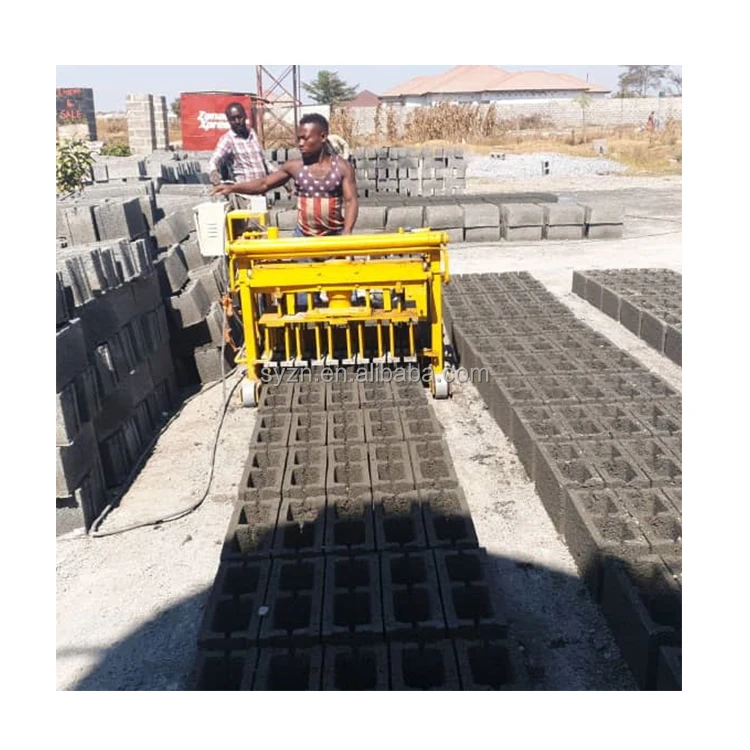
The SHIYUE range stretches from mobile egg-laying units for single-site contractors up to fully automatic lines with stacking and cubing. The QT4-18 occupies the middle tier: a stationary hydraulic press with PLC control, suitable for a fixed small-to-medium plant. Buyers who need higher daily volumes or fully automated pallet handling can step up to the next tier without changing block format or mould supplier.
Semi-Automatic Today, Automated Tomorrow
This press ships as a semi-automatic configuration with PLC-controlled cycle consistency. Pallet feeding, block conveying and sweeping are included, but stacking and curing rack handling remain manual at this tier. The control architecture leaves headroom to add automatic stacking and cubing modules later, so an entrepreneur launching a first block plant does not have to fund full automation on day one [NEED_CITE: automation upgrade paths for block production lines].
Reading the Core Parameters Against Your Site
The 40–50 kN vibration force works in tandem with the hydraulic station to compact the mix. If your local aggregate is river sand with high clay content, the vibration amplitude must be matched to that mix — otherwise block density falls and mould wear accelerates. The 850×550×25 mm pallet size dictates your curing rack spacing and forklift tine width; ordering pallets that do not match your existing yard layout creates handling bottlenecks the press itself cannot solve. A 15–25 s molding cycle across hollow, solid and paver formats means the operator changes moulds and lets the PLC adjust timing rather than reprogramming manually. Total installed power of 24 kW including the JQ350 mixer keeps the electrical demand within reach of a standard industrial supply, though voltage and frequency must be confirmed before production begins.
The Hidden Cost of a Mismatched Configuration
I have seen plants shut for weeks because the voltage on the nameplate did not match the local grid, and the PLC display arrived in a language the operators could not read. Commissioning stalls, the electrician improvises, and warranty coverage becomes ambiguous. Similarly, a pallet size chosen without checking the curing yard means every pallet is manhandled twice. These are not defects in the block making machine manufacturer hardware — they are specification gaps that surface only after the container is opened [NEED_CITE: common commissioning delays in exported block machinery].
Why Source This Tier Through SHIYUE
Block machinery is our single product focus, so the press, mould, pallet and handling equipment are specified as one matched system rather than assembled from separate suppliers. Capacity calculations state the block format behind every number, eliminating the gap between brochure output and site reality. Mould design covers the formats your local market actually sells, including custom drawings when standard sizes do not match. Automation level is selectable at order and expandable afterward, so investment scales with demand. Factory test records and packing photographs are provided before the machine leaves the workshop.
Documentation & Verification
- Line layout and capacity sheet stating the block format behind each output figure
- Machine specification with voltage, frequency and PLC display language confirmed before production
- Mould drawing and format list matching buyer’s local block dimensions
- Factory test record on buyer’s target format before dispatch
- Packing photographs and loading plan provided prior to shipment
Installation, Commissioning & Support
- Foundation plan sized to the 3900×1600 mm footprint and 3 T operating weight
- Dedicated electrical circuit rated for the 24 kW total draw including the JQ350 mixer
- Machine arrives partially dismantled for container loading; reassembly guided on site
- First-run commissioning covers PLC parameter tuning to buyer’s mix design
- Operator training on mould change procedure and daily maintenance checkpoints
- Wear parts list and mould inventory supplied with initial spare parts kit
Before You Send the Inquiry
To size the QT4-18 accurately, share the block formats your market demands, the aggregate and sand sources available locally, and your target daily output per format. Include your site voltage, frequency and preferred PLC display language so the electrical package is built correctly from the start. If you already have curing racks and forklifts on site, send the pallet dimensions you are using — the 850×550 mm pallet can then be verified or adjusted before the order is locked.
Frequently Asked Questions
Q: How is the QT4-18’s capacity calculated per block format, and what does the 15–25 s cycle assume?
A: Each output figure is tied to a specific block dimension. The 1200–1680 pcs/hr rate applies to 400×200×200 mm hollow blocks, while 3240 pcs/hr applies to 240×115×53 mm solid bricks. The cycle range accounts for format-dependent vibration and pressing sequences controlled by the PLC.
Q: Where does the QT4-18 sit in the SHIYUE full machine range?
A: It occupies the mid-tier stationary press position, above mobile egg-laying units and below high-capacity automatic lines. Buyers who outgrow this tier can step up to larger pallet sizes and fully automated stacking without changing block format families or mould suppliers.
Q: Can I start semi-automatic and upgrade to full automatic stacking later?
A: Yes. The PLC control architecture supports adding automatic stacking and cubing modules after initial installation. The press and pallet feeder remain in place; only the downstream handling stations are added when production volume justifies the investment.
Q: What voltage, frequency and PLC language options are confirmed before shipment?
A: Voltage and frequency are configured to the buyer’s grid specification and confirmed before production begins. The PLC display language is selected at the same stage. Both items appear on the pre-production specification sheet for buyer sign-off.
Q: What plant footprint does the QT4-18 require compared to higher-tier models?
A: The press itself measures 3900×1600 mm, with additional space needed for the mixer, pallet feeder and block conveyor. Higher-tier machines use larger pallets and longer lines, demanding a bigger building envelope. A site plan review at inquiry stage confirms whether the QT4-18 or a larger model fits your available floor area.

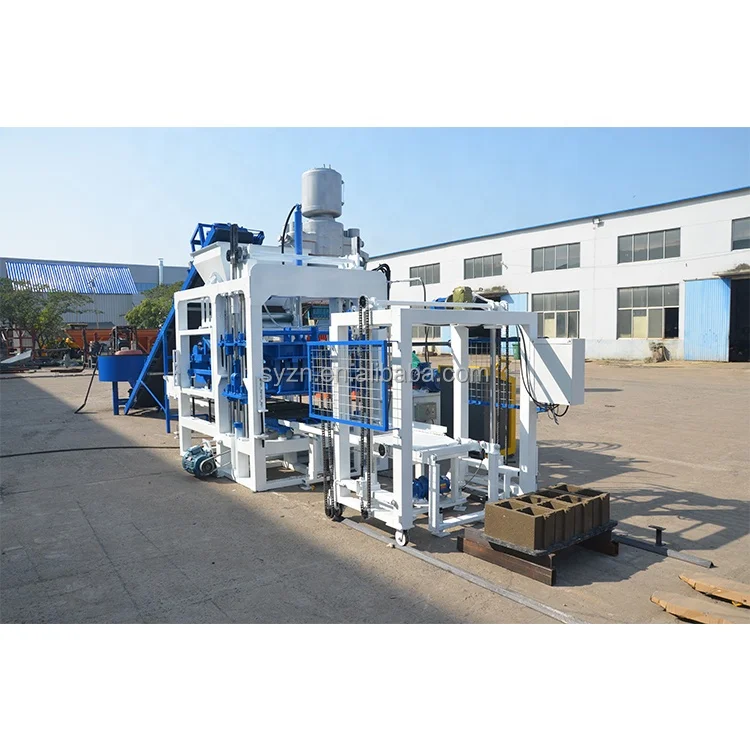
 High quality block machine