Matched System Design — Machine, mould, pallet and handling specified together against your actual mix, not assembled from catalogue defaults.
Technical Specifications
| Parameter |
Value |
| Model |
QMY4-30 |
| Product Type |
Mobile Egg-Laying Block Making Machine |
| Overall Dimensions (L×W×H) |
1300 × 1500 × 1000 mm |
| Net Weight |
950 – 1000 kg |
| Vibration Method |
Mold Vibration |
| Exciting Force |
28.6 kN |
| Excitation Frequency |
4500 r/min |
| Total Installed Power |
5.95 kW |
| Molding Cycle |
30 s (basis not stated in source — confirm block format / material / thickness) |
| Daily Output Capacity |
3000 pcs/day over 8 hours (basis to be confirmed) |
| Raw Material Compatibility |
Concrete, sand, cement, fly ash, lime, gypsum, stone dust, river sand, construction waste, slag, mine tailings, coal gangue |
| Mould Format |
Customizable per buyer design |
| Automation Level |
Manual / Mobile (egg-laying) |
| Voltage & Frequency |
Configurable per buyer market (to be confirmed) |
Application Suitability
| Application |
Material or Output |
| On-site block production without a fixed plant |
Concrete and local aggregates laid directly on prepared ground |
| Remote or difficult terrain projects |
Mountainous, hilly, desert, and coastal site conditions |
| Housing and development projects producing locally |
Fly ash, river sand, and cement blends sourced near project site |
| Small contractor and individual owner production |
Raw earth brick and concrete block formats for local sale |
| Construction waste recycling into saleable blocks |
Crushed demolition debris mixed with cement binder |
What "3000 Pieces per Day" Actually Means for a Mobile Block Making Machine
Capacity figures only hold weight when the block format, mix design, and site conditions are stated alongside them.
A Mobile Block Making Machine manufacturer quoting cycles per hour without naming the block size leaves buyers guessing. On a Kenyan site I worked, red soil with high clay content absorbed vibration energy differently than the clean river sand used during factory testing, and daily output dropped well below the quoted figure. The 3000 pcs/day number attached to the QMY4-30 assumes conditions that must be verified against your local aggregate and target block format before the machine ships. [NEED_CITE: aggregate gradation effects on block compaction and cycle time]

Where the QMY4-30 Sits in the Complete Block Machine Range
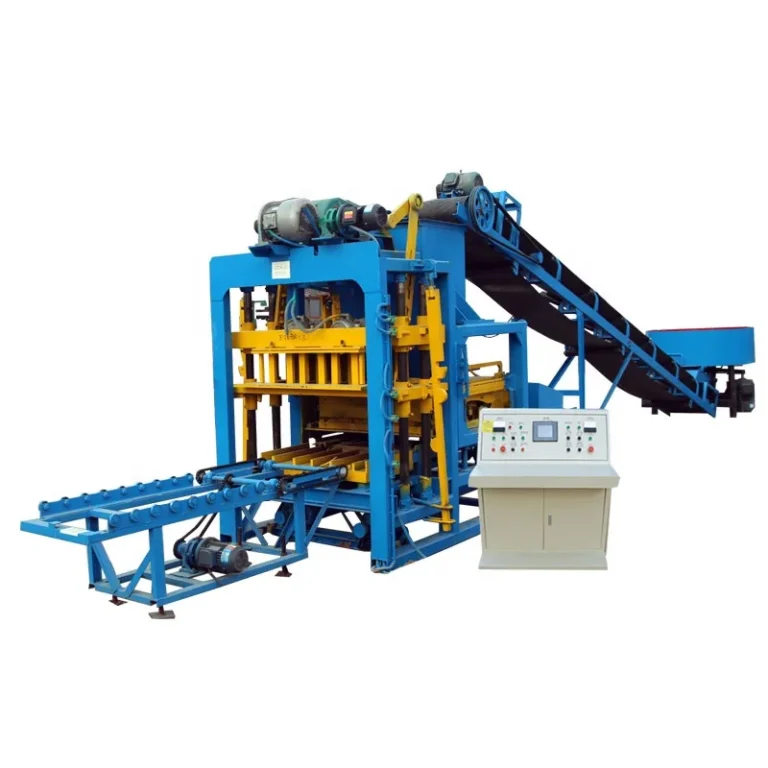
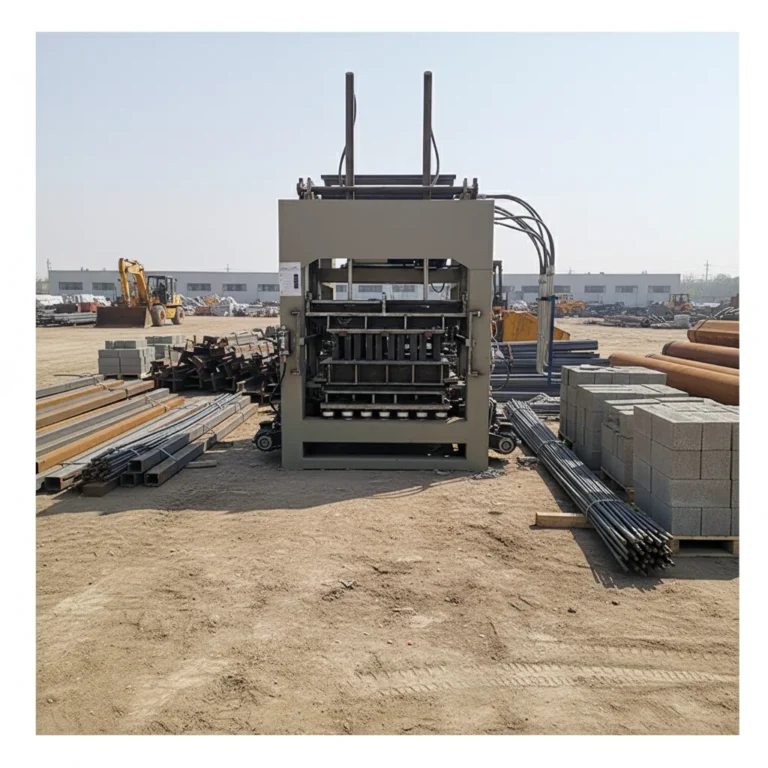
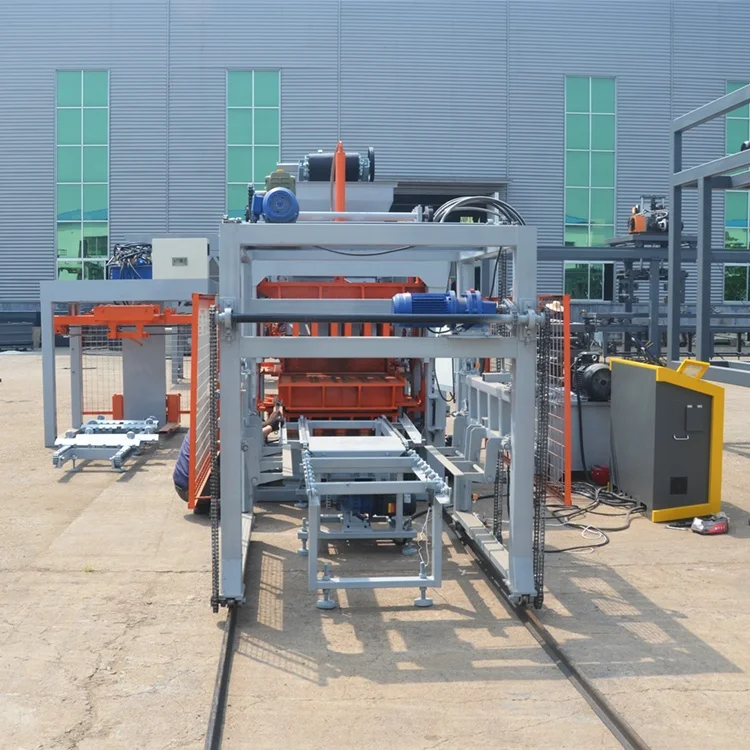
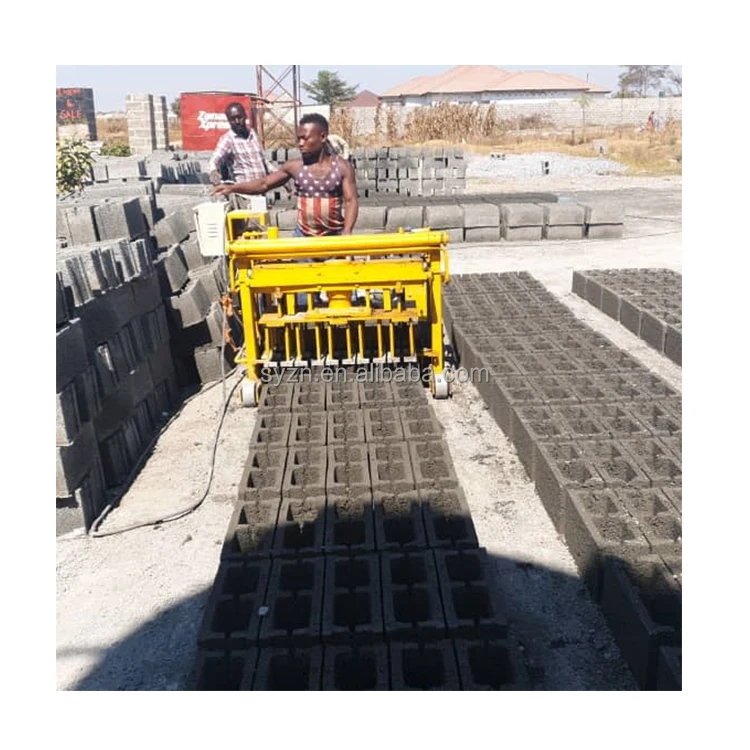
The QMY4-30 occupies the entry tier of the Shiyue range, built for buyers who need block production without committing to a fixed batching plant, conveyor system, or automatic stacking line. It sits below semi-automatic stationary machines that add pallet feeding and mechanical stacking, and well below fully automatic lines with PLC-controlled batching and cubing. For an entrepreneur setting up a first plant or a contractor producing on a remote job site, the QMY4-30 mobile block making machine removes the infrastructure cost entirely — you prepare a flat concrete floor and the machine lays blocks directly on it, moving forward on its own wheels after each cycle.
Footprint and Site Reality for Egg-Laying Production
A stationary press demands a dedicated building, curing racks, forklift lanes, and pallet return conveyors. The QMY4-30 collapses that requirement into a 1300 × 1500 mm footprint that moves with the work. The trade-off is that every variable the factory normally controls — ground flatness, mix consistency, ambient curing temperature — now falls on the operator. [NEED_CITE: site preparation standards for mobile egg-laying block production] I have watched crews lose an entire morning because the ground was not level within a few millimetres, causing fresh blocks to slump on one side before the next cycle completed.
Vibration Force, Excitation Frequency, and What They Mean on Site
The 28.6 kN exciting force and 4500 r/min frequency work together to compact the mix inside the mould cavity. Higher frequency with lower force suits fine, dry mixes like fly ash blends, while denser aggregate with larger stone particles needs more force to settle fully. The QMY4-30 uses mould vibration rather than table vibration, meaning energy transfers directly through the mould walls into the material. For a buyer using locally sourced crushed stone or construction waste, the mould vibration approach reduces segregation compared to table vibration, but it also means the mould design itself must channel that energy efficiently — a poorly designed mould will leave weak corners regardless of the excitation rating. Total installed power at 5.95 kW keeps the machine within reach of a standard site generator, avoiding the need for a dedicated transformer on remote projects.
The Hidden Cost of Skipping Mix Verification
Buyers who order a Mobile Block Making Machine manufacturer’s standard configuration without sending a sample of their local aggregate often discover the mismatch on the first production day. The machine runs, the mould fills, but blocks crack during handling or fail a simple drop test because the vibration profile was tuned for a different material. [NEED_CITE: block compressive strength variability due to unverified aggregate properties] I recall a coastal project where shell fragments in the sand created voids that no amount of vibration could close, and the crew spent two weeks adjusting water content by hand before we reconfigured the mould geometry to compensate.
Why Buyers Source This Tier from Shiyue
Block machinery as a single focus means the QMY4-30 is not a press bolted onto a generic frame — the mould, pallet handling approach, and vibration parameters are specified as one system. Machine configuration is set against your actual mix design and local aggregate rather than a catalogue default, which matters especially for egg-laying machines where the operator controls every variable on the ground. Mould design covers the formats your local market actually buys, with custom drawings available when standard sizes do not match. The automation level is selectable, so a buyer starting with the QMY4-30 mobile block making machine can move to a semi-automatic stationary tier later without scrapping the knowledge gained from the first setup. Installation support includes operator training focused on the specific mix and block format you will produce.
Documentation & Verification
- Line layout and capacity calculation stating the exact block format assumed for the daily output figure
- Machine specification sheet with confirmed voltage, frequency, and control language for your market
- Mould drawing and format list showing included block sizes and any custom tooling required
- Factory test record performed on your target material blend before dispatch
- Packing photographs and customs documentation support for smooth port clearance
Installation, Commissioning & Support
- Flat concrete ground surface required; the 1300 × 1500 mm footprint needs a prepared lane at least three metres wide for continuous egg-laying travel
- 5.95 kW total power draw suits a portable diesel generator on sites without grid connection
- Machine ships partially assembled; on-site setup focuses on mould mounting, vibration calibration, and test runs
- First-day commissioning includes mix proportion adjustment using your local aggregate sample
- Operator training covers mould change procedure, vibration tuning, and daily maintenance checkpoints
- Wear parts list and mould inventory provided at handover for planned replacement scheduling
What to Prepare Before Requesting a Quote
To configure the QMY4-30 correctly, we need your target block format and dimensions, a sample or lab report of your local aggregate and sand, your site voltage and frequency, and the daily output volume you need to meet project deadlines. If you have existing curing space or handling equipment on site, share those details so the proposal accounts for the full production workflow.
Frequently Asked Questions
Q: How is the 3000 pcs/day capacity verified, and which block format does it assume?
A: That figure is a reference value that depends entirely on the block size, wall thickness, and mix design used during testing. Before confirming capacity for your project, we run a production test using your specific block format and local material sample, then document the verified cycle time and daily output in the proposal.
Q: Where does the QMY4-30 sit compared to semi-automatic and fully automatic tiers?
A: The QMY4-30 is the entry tier, designed for on-site production without fixed infrastructure. Semi-automatic machines add pallet feeding and mechanical stacking for higher volume in a fixed location, while fully automatic lines include PLC batching, automatic cubing, and curing rack handling for continuous high-capacity plant operation.
Q: What voltage and frequency options are available for different export markets?
A: Voltage and frequency are configured to match your local grid or generator specification. We confirm the exact supply standard, plug type, and control panel language during the proposal stage so the machine arrives ready for immediate connection without an on-site transformer or rewiring.
Q: What site preparation does a mobile egg-laying setup require?
A: You need a flat, firm concrete surface for the machine to travel across as it lays blocks. The prepared lane should be wider than the 1300 × 1500 mm machine footprint to allow steering clearance, and the surface must be level enough to prevent freshly laid blocks from slumping before the cement sets.
Q: Can I start with the QMY4-30 and later move to a higher automation tier?
A: Yes. The QMY4-30 serves as a practical starting point for buyers learning block production with their local materials. When volume demands grow, you can move to a semi-automatic or fully automatic stationary line within the Shiyue range, and the mould design knowledge you gain transfers directly to the larger system.

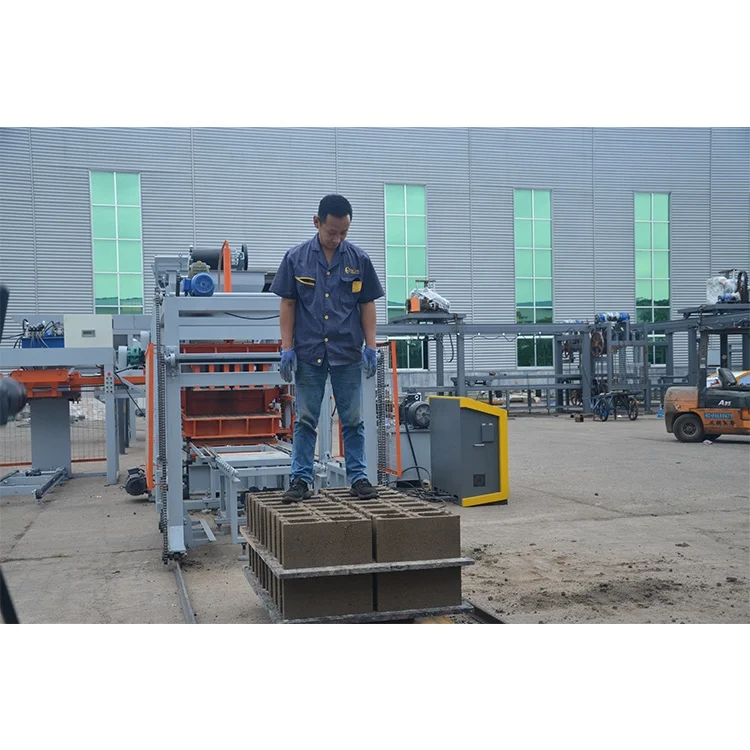 High quality block machine