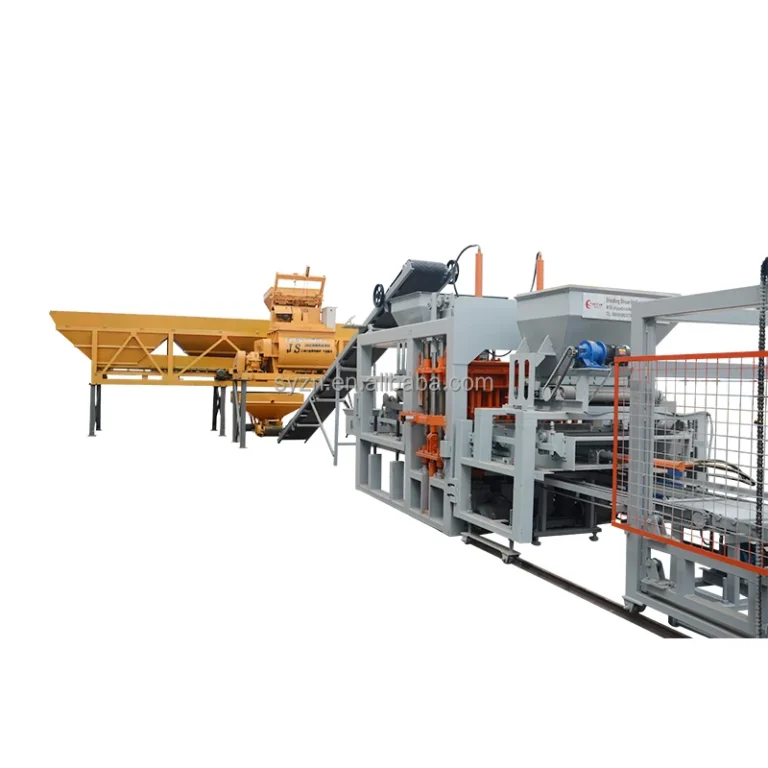
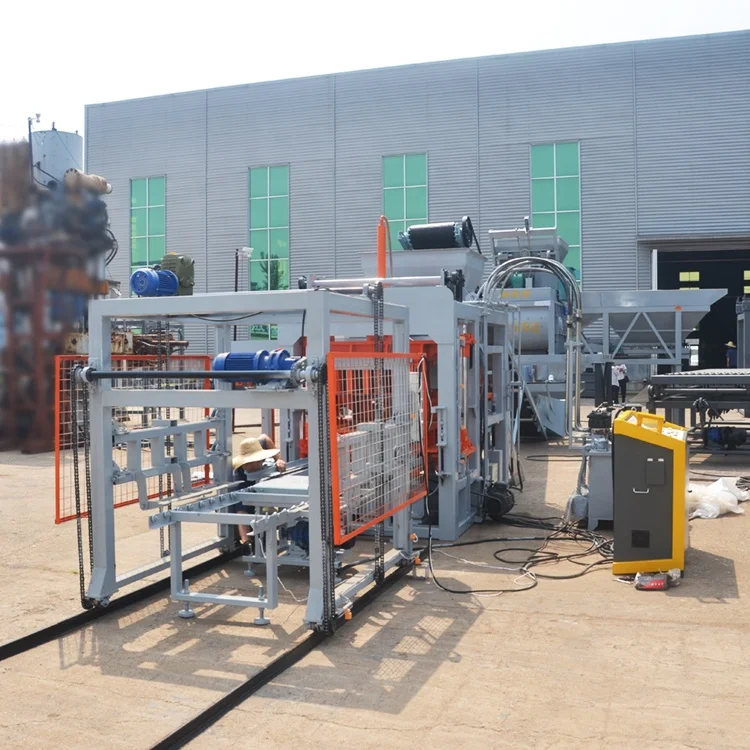
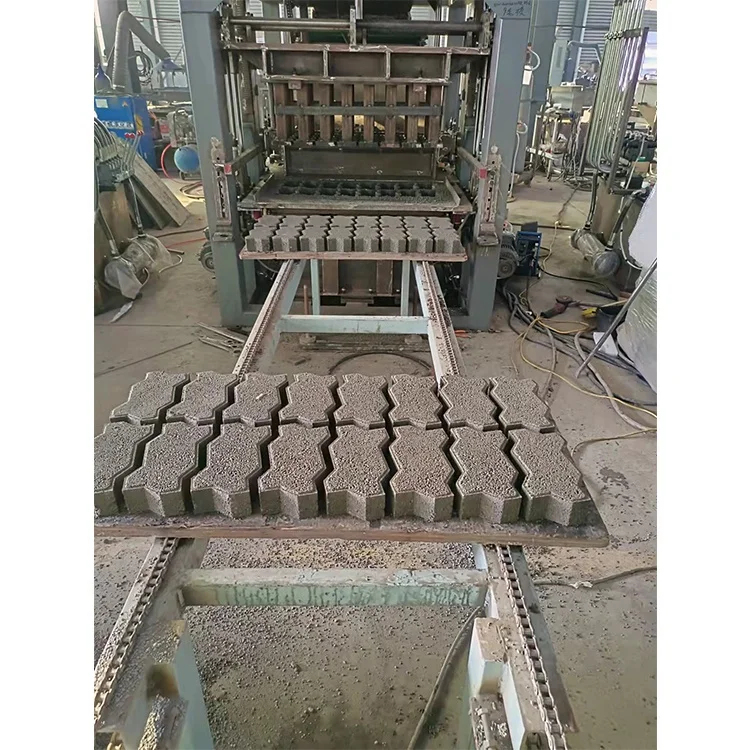
Matched System Design — the QT4-15A block machine, moulds, pallets and handling equipment are specified together as one coordinated line rather than sourced separately.
Technical Specifications
| Parameter |
Value |
| Model |
QT4-15A |
| Product Type |
Automatic Concrete Block Making Machine |
| Overall Dimensions (L×W×H) |
7100×1600×2610 mm |
| Molding Cycle |
15–25 s |
| Vibration Frequency |
4600 r/min |
| Vibration Force |
40–50 kN |
| Total Power |
18.45 kW |
| Mixer Model |
JQ350 |
| Pallet Size |
850×550×25 mm |
| Total Weight |
3 T |
| Control System |
PLC control system |
| Hydraulic Station |
Included |
| Included Equipment |
Block making machine, hydraulic station, PLC control system, pallet feeder, brick conveyor, block sweeper |
| Free Accessories |
Manual hydraulic trolley, spare parts and tools |
| Output — Hollow Block 400×200×200 mm |
4 pcs/mould, 408 pcs/h, 3264 pcs/8 hr |
| Output — Hollow Block 400×150×200 mm |
5 pcs/mould, 510 pcs/h, 4080 pcs/8 hr |
| Output — Solid Brick 240×115×53 mm |
18 pcs/mould, 2100 pcs/h, 17000 pcs/8 hr |
| Applied Products |
Paver, solid block, hollow block, curbstone |
| Raw Materials |
Crushed stones, sand, cement, dust, fly ash |
Application Suitability
| Application |
Material or Output |
| Hollow block production for housing projects |
Crushed stone, sand, cement, fly ash — 400×200×200 mm and 400×150×200 mm formats |
| Solid brick manufacturing for masonry walls |
Cement and fine aggregate — 240×115×53 mm standard brick format |
| Paver and curbstone production for infrastructure |
Crushed stone and cement mixes for surface and edge formats |
| On-site block production for development contractors |
Locally sourced aggregate with cement binder across multiple mould formats |
What "Pieces per Hour" Actually Means on the QT4-15A
Every output figure here is tied to a specific block format, mould cavity count, and an eight-hour shift assumption — no single "up to X per hour" headline number.
Buyers comparing automatic block making machine manufacturer options often see capacity stated as one peak figure without disclosing which block size produced it. A hollow block and a solid brick share the same pallet cycle, yet their per-mould counts differ dramatically. I have watched contractors order a machine based on a brochure number, only to discover their actual product format yields far fewer units per shift than expected [NEED_CITE: block machine capacity calculation methods by format].

Where the QT4-15A Fits in the Full Machine Range
The SHIYUE line spans semi-automatic machines for smaller workshops through high-capacity fully automatic plants. The QT4-15A sits in the mid-tier of this automatic block making machine manufacturer range, delivering PLC-controlled cycling with integrated pallet feeding and brick conveying. It targets buyers who need consistent automated output without the floor space and capital outlay of a high-capacity line.
Semi-Automatic Versus This Tier
Semi-automatic machines in the range require manual pallet handling and stacking, keeping investment lower but tying labour to every cycle. The QT4-15A removes the operator from pallet feeding and block conveying, reducing the labour count on the press itself. Buyers planning to scale can start at this tier and move upward as demand grows [NEED_CITE: automation level comparison in block production plants].
Reading the Vibration and Pressure Numbers Together
Vibration force of 40–50 kN at 4600 r/min works alongside the hydraulic station to compact the mix inside the mould cavity. Neither number alone determines block strength. The vibration must fluidise the mix while hydraulic pressure locks the particles into position. If the local aggregate carries high clay or silt content, the vibration frequency may need adjustment — a reason to share material samples before finalising the configuration. Pallet size at 850×550×25 mm should be checked against the buyer’s existing curing racks and forklift fork dimensions to avoid mismatches after the machine arrives.
When the Wrong Configuration Costs More Than the Machine
A buyer who skips voltage and frequency confirmation before production may receive a machine that cannot connect to the local grid, stalling commissioning for weeks. Pallets specified without regard to the curing yard layout force manual re-stacking that erases the automation advantage. Mould formats ordered without verifying local market dimensions mean the machine produces blocks the market does not buy [NEED_CITE: common commissioning delays in exported block machinery].
Why Source This Range Here
Block machinery is the single focus, so the QT4-15A is not a generic press resold under a different label — the mould, pallet, and handling equipment are matched to the same production parameters. Configuration is set against the buyer’s actual mix design and target block format, not a default catalogue entry. Mould design covers the formats the buyer’s market requires, including custom drawings where standard sizes do not apply. Automation level is selectable within the range, so a buyer can begin semi-automatic and upgrade later.
Documentation & Verification
- Line layout and capacity calculation stating the block format assumed for each output figure
- Machine specification sheet confirming vibration force, hydraulic pressure, and pallet size
- Voltage, frequency, and PLC display language confirmation document before production
- Mould drawing and format list for buyer verification against local market dimensions
- Factory test record on the buyer’s specified block format before dispatch
- Operation and maintenance manual with wear parts and mould replacement list
Installation, Commissioning & Support
- Foundation plan based on 7100×1600×2610 mm machine footprint and 3 T operating weight
- Power supply confirmation matching 18.45 kW total draw at the buyer’s local voltage and frequency
- Hydraulic station and PLC control system commissioning with parameter tuning on site
- Pallet feeder and brick conveyor alignment verified during first production run
- Operator training covering mould change procedure and cycle adjustment across formats
- Wear parts list and mould maintenance schedule provided at handover
Before You Request a Quote
Share the block formats your market actually sells, the daily volume you need per format, and the raw materials available locally including aggregate type and cement grade. Confirm your site’s voltage, frequency, and preferred PLC display language. Let us know whether you already have curing racks and forklifts so pallet size can be matched from the start.
Frequently Asked Questions
Q: How is output capacity calculated per block format on the QT4-15A?
A: Each output figure is based on a specific mould cavity count and block dimension. For example, the 400×200×200 mm hollow block mould holds 4 cavities, yielding 408 pieces per hour at the stated cycle range. Solid brick output is higher because 18 cavities fit the same pallet. Daily figures assume an eight-hour production shift.
Q: Where does the QT4-15A sit compared to semi-automatic and higher-tier machines?
A: It occupies the mid-tier of the automatic range. Semi-automatic models require manual pallet handling at lower investment. Higher-tier automatic lines add stacking and cubing systems with larger footprints. The QT4-15A integrates pallet feeding and brick conveying without the space demand of a full high-capacity plant.
Q: How are voltage, frequency, and PLC language confirmed before shipment?
A: The buyer provides local grid specifications and preferred control language during the inquiry stage. A written confirmation document is issued before production begins. This step prevents commissioning delays caused by mismatched electrical supply or unreadable PLC displays on arrival.
Q: How is pallet size matched to existing curing and handling equipment?
A: The standard pallet size is 850×550×25 mm. Buyers share their curing rack dimensions and forklift fork specifications so compatibility is verified before order. Mismatched pallets force manual re-handling that undermines the automation investment.

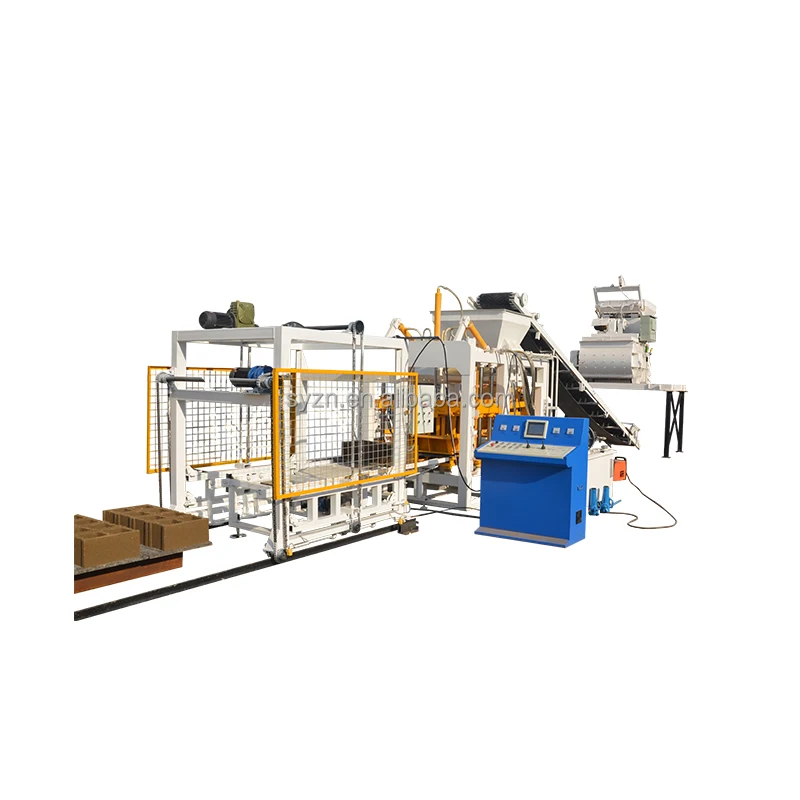
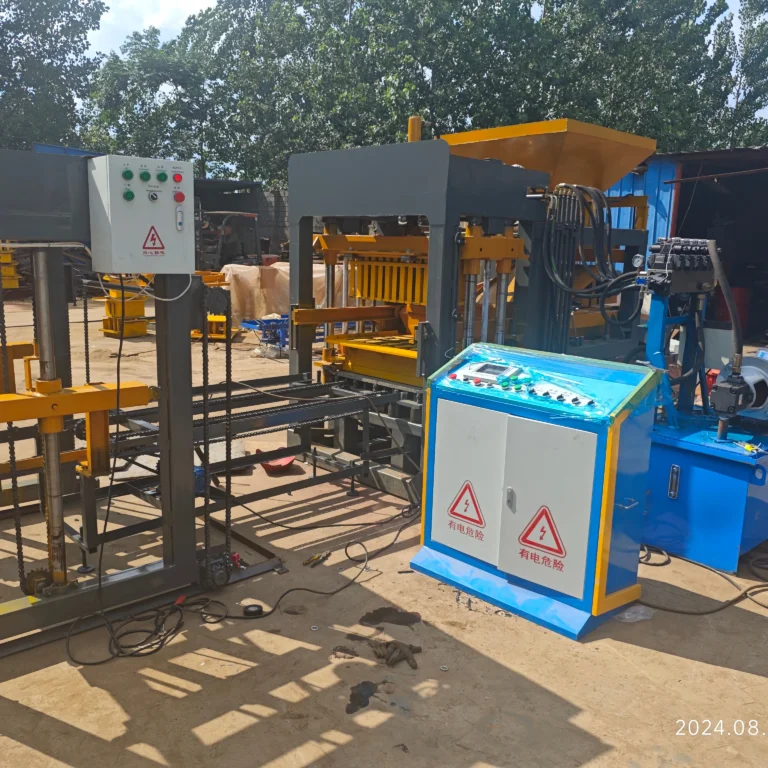 High quality block machine