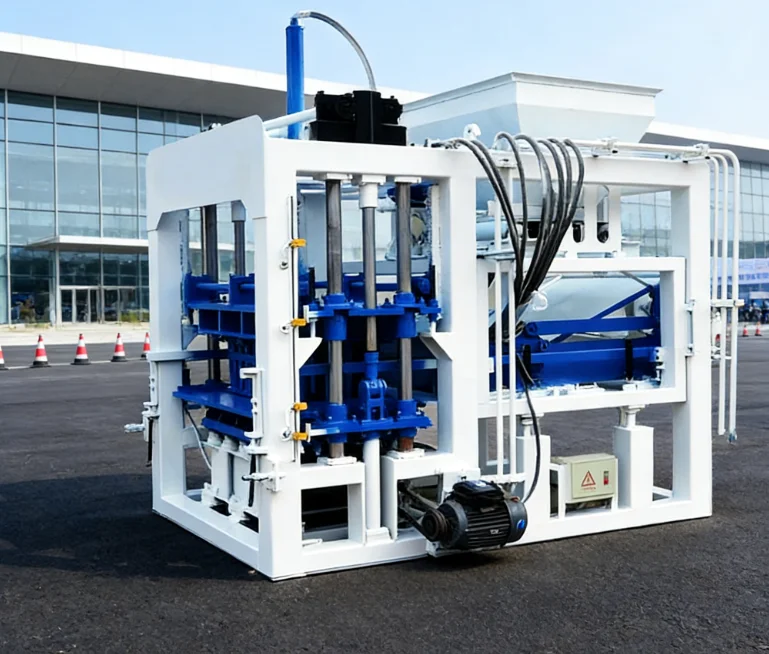
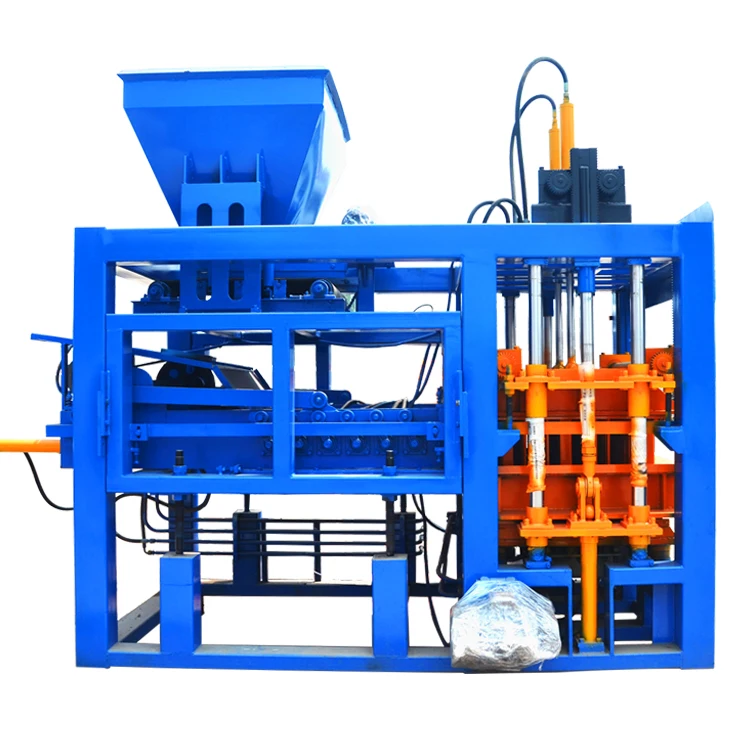
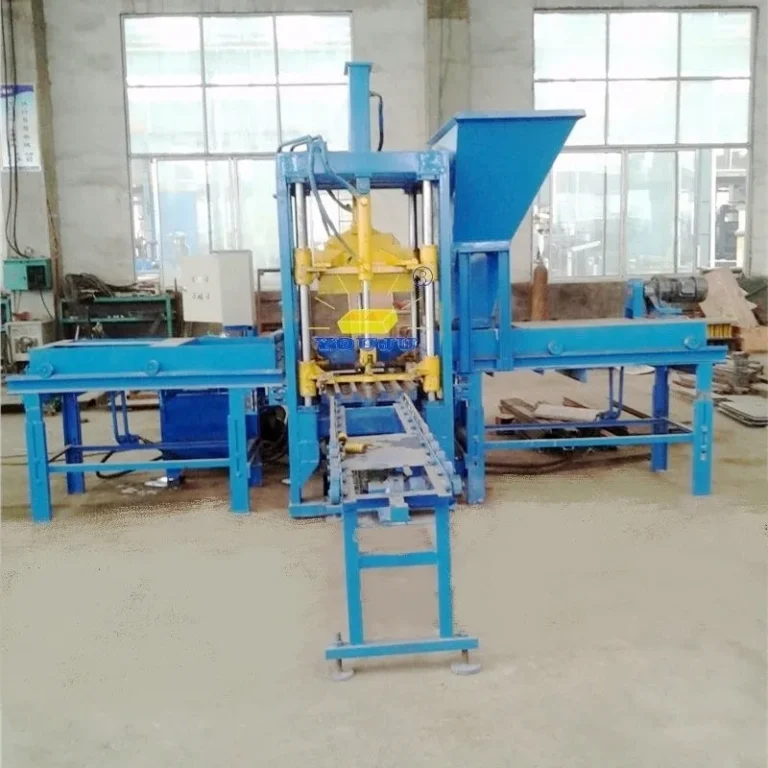
QTJ 4-40 Semi-Automatic Block Making Machine for Hollow Block – Full Range
Matched System Design — Every component from the 850×450 mm pallet to the platform vibration unit is specified as one working set, eliminating the mismatch between press output and downstream handling that plagues multi-supplier lines.
Technical Specifications
| Parameter |
Value |
| Model |
QTJ4-40 |
| Product Type |
Semi-Automatic Hydraulic Block Making Machine |
| Mould Format Examples |
400×200×200 mm (4 pcs/mould); 400×150×200 mm (5 pcs/mould); 225×112.5×60 mm (9 pcs/mould) |
| Daily Output |
2,880 pcs/day based on 400×200×200 mm hollow block, 4 pcs/mould; 4,000 pcs/day based on 400×150×200 mm block; 7,200 pcs/day based on 225×112.5×60 mm block |
| Hourly Output |
360 pcs/h based on 400×200×200 mm block; 500 pcs/h based on 400×150×200 mm block; 900 pcs/h based on 225×112.5×60 mm block |
| Vibration Form |
Platform vibration |
| Vibration Frequency |
2,800 r/min |
| Pallet Size |
850×450 mm |
| Overall Dimensions (L×W×H) |
1,350×1,460×1,800 mm |
| Recommended Factory Area |
200 m² |
| Worker Requirement |
1–3 people |
| Automation Level |
Semi-automatic (top die push/pull, automatic scraper, manual pallet handling) |
| Raw Material Ratio |
Cement 8–10%, sand 30–40%, stone 50–60% (approx. 1:4:5) |
Application Suitability
| Application |
Material or Output |
| Hollow block production for load-bearing walls |
Cement, sand, crushed stone, gravel |
| Solid block manufacturing for partition walls |
Cement, fly ash, slag, sand |
| Paving block and interlocking brick for walkways |
Cement, crushed stone, colored pigments |
| Kerbstone and curbing for road edges |
Cement, coarse aggregate, sand |
Why "Pieces per Day" Means Nothing Without the Block Format
A Semi-Automatic Block Making Machine manufacturer quoting a single daily figure is hiding the variable that actually determines your revenue: which block your market buys.
The 2,880-piece daily output only applies when you run 400×200×200 mm hollow blocks at four pieces per mould. Switch the same QTJ4-40 to 225×112.5×60 mm pavers and the count rises to 7,200 pieces, but the tonnage, cement consumption, and pallet turnover rate change entirely. Buyers who skip this step routinely arrive at their new plant to find the machine cannot physically produce the format their customers demand at the quoted volume [NEED_CITE: block format impact on cycle time and daily throughput].

Where This Tier Sits on the Investment Ladder
The QTJ4-40 occupies the space between a mobile egg-layer and a full automatic line. It delivers stationary output with hydraulic compaction, but pallet feeding and stacking remain manual. For an entrepreneur funding a first plant or a contractor producing blocks on a remote job site, this tier removes the capital barrier of automatic pallet circuits while still exceeding what a mobile machine can sustain over a full shift.
Footprint and Pallet Logistics That Must Match Your Site
The 200 m² recommended area assumes space for raw material stock, the press, curing racks, and finished block staging. The 850×450 mm pallet size is fixed — before ordering, confirm that your existing curing area shelving and forklift tine spacing can accept this dimension. A pallet that does not fit your racks forces you to rebuild the curing zone or handle blocks by hand, wiping out the output advantage [NEED_CITE: pallet sizing for curing area and forklift compatibility].
Vibration, Pressure, and the Mix You Can Actually Source
Platform vibration at 2,800 r/min works in concert with the hydraulic top die to compact the mix from both axes. The 1:4:5 cement-sand-stone ratio is a starting point; if your local aggregate is volcanic ash, recycled concrete, or river gravel with high fines content, the vibration frequency and hydraulic pressure must be adjusted to that specific material. A mix the machine was not configured for will produce blocks that crumble at the edges or fail the drop test.
What Happens When Pallet Handling Is an Afterthought
Buyers who focus exclusively on press capacity and leave pallet feeding, stacking, and curing out of the scope quickly discover that the bottleneck is not the machine — it is the operator walking 400 meters per hour to move wet pallets to the rack. The manual pallet handling on this tier is honest and workable for 1–3 people, but only if the floor plan places the curing racks within a short reach and the stacking height matches what a single worker can safely lift [NEED_CITE: manual pallet handling workflow in semi-automatic block plants].
What We Build In Before the Machine Leaves
Block machinery is our single focus, so the QTJ4-40 ships as a matched system: press, mould, pallet, and handling specified together. The configuration is set against the buyer’s actual mix design and target block format, not a catalogue default. Moulds are designed for the formats the local market sells, including custom drawings when needed. Automation is selectable — you can start semi-automatic and add automatic pallet feeding later without replacing the press.
Documentation & Verification
- Line layout and capacity calculation stating the block format assumed for each output figure
- Mould drawing and format list confirming dimensions and cavity count per mould
- Pallet specification matched to your curing rack spacing and forklift capacity
- Voltage, frequency, and control language confirmation signed before production begins
- Factory test record on your specified mix and block format prior to dispatch
Installation, Commissioning & Support
- Foundation pad leveled within tolerance for the 1,350×1,460 mm footprint before arrival
- Power supply confirmed at site voltage and frequency with dedicated breaker for the vibration motor
- Machine arrives dismantled for container loading; reassembly supervised on site
- First-run parameter tuning with your local aggregate and cement ratio
- Operator training covering mould change, scraper adjustment, and daily lubrication points
- Wear parts and mould list supplied with recommended replacement intervals
What to Have Ready When You Inquire
Send the block format your market actually sells — dimensions, wall thickness, and target daily volume. Include a photo or description of your local aggregate and the cement you can source. If you already have a curing area, share the rack dimensions and forklift model so the pallet size can be verified. Confirm your site voltage and frequency, and let us know if you need the control display in a specific language.
Frequently Asked Questions
Q: How do I verify the real daily output for the block format my market actually sells?
A: Every output figure we quote is tied to a specific mould cavity count and block dimension. Request the capacity calculation sheet that lists hourly and daily output per format, then match it against the block your local customers order most. Running a format not listed on the sheet requires a separate cycle time confirmation.
Q: Where does the QTJ4-40 semi-automatic tier sit compared to automatic and mobile machines?
A: It sits above mobile egg-layers in output and compaction quality, and below fully automatic lines in capital cost. Pallet feeding and stacking are manual. This tier suits a first plant or a job-site operation that needs stationary volume without the investment in automatic pallet circuits and stackers.
Q: What plant footprint and pallet handling setup do I need alongside this machine?
A: Plan for approximately 200 m² including raw material stock, press, curing racks, and finished staging. The 850×450 mm pallet size is fixed — verify that your curing rack spacing and forklift tine width accept it before ordering, otherwise you will need to rebuild the curing area.
Q: Can I start with this semi-automatic tier and upgrade to a higher automation level later?
A: Yes. The press itself can be retained when you add automatic pallet feeding, stacking, or cubing at a later stage. The upgrade path depends on the model’s structural compatibility with the automatic circuit, which we confirm during the initial specification so the machine is built ready for future expansion.
Q: What voltage, frequency, and control language options are available for my destination market?
A: Voltage and frequency are configured to your site supply before production begins — this must be confirmed in writing, not assumed. The control display language is also set at the factory. Providing your destination market details at the inquiry stage avoids commissioning delays when the machine arrives.

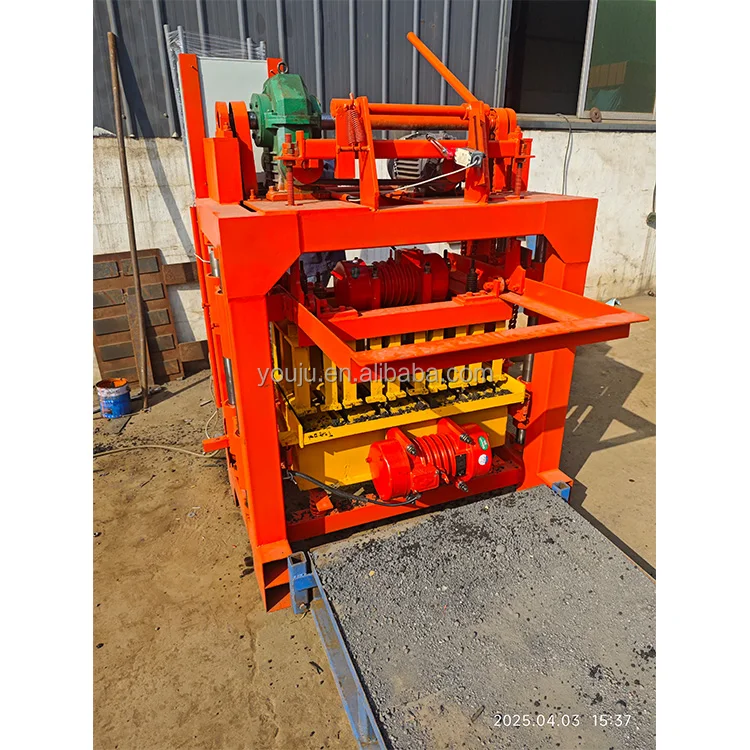
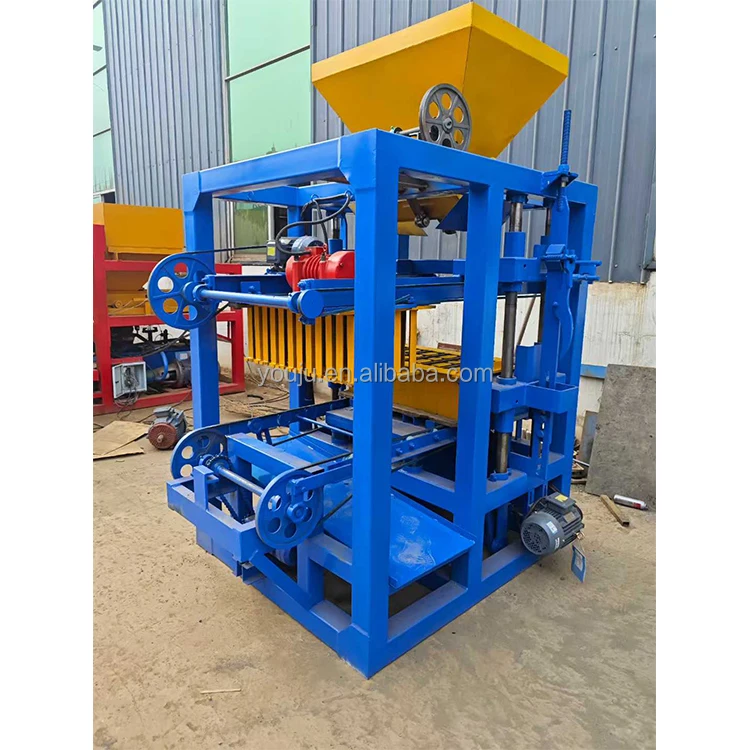 Stationary block machine