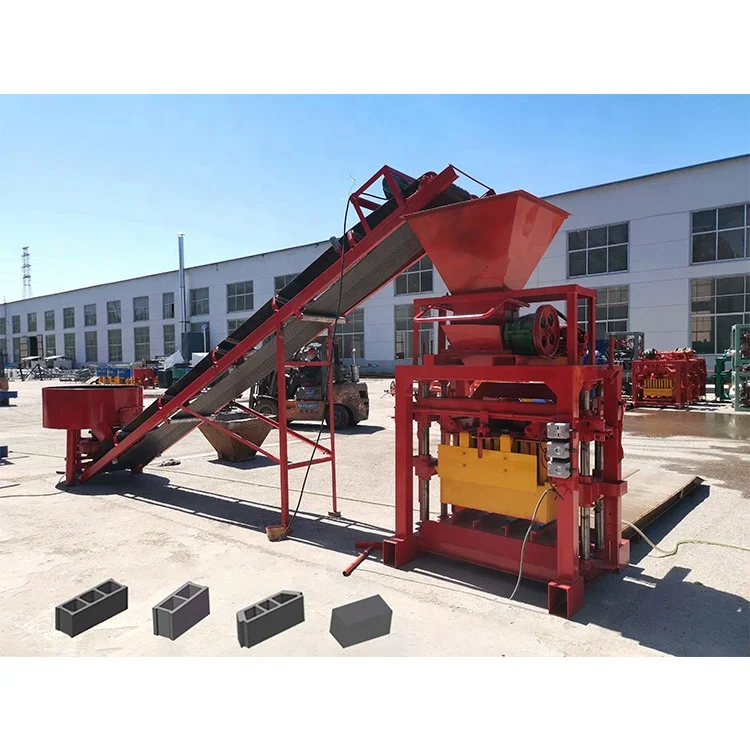
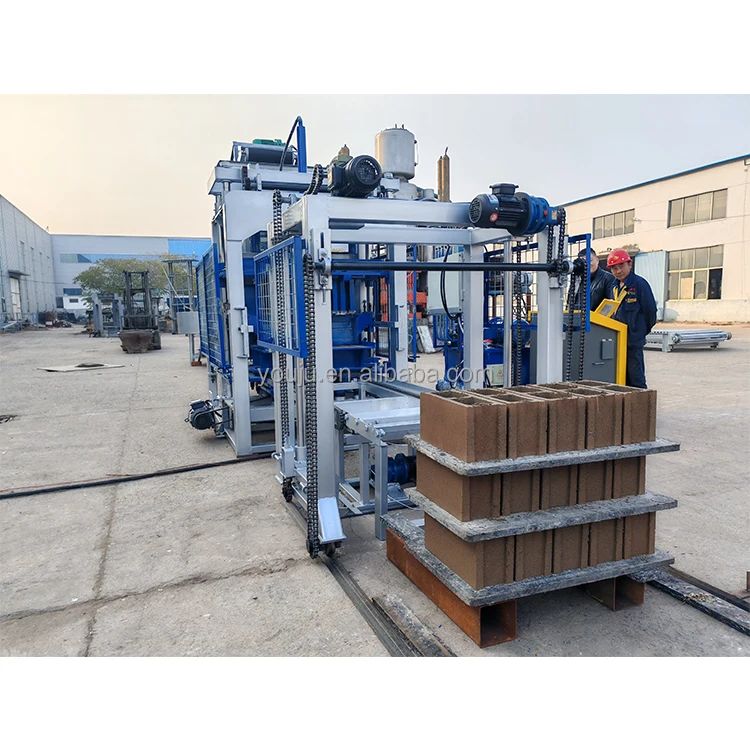
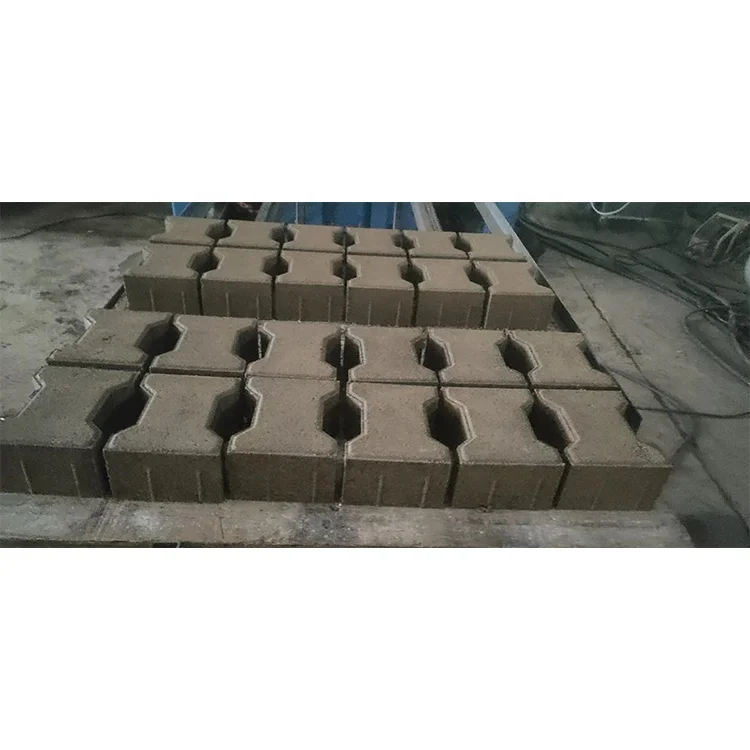
Complete range clarity — every semi-automatic tier we quote states the block format assumed in the capacity calculation, so the daily output figure you see is the one you actually produce on your site.
Technical Specifications
| Parameter |
Value |
| Model |
QTJ4-24 |
| Product Type |
Semi-Automatic Concrete Block Making Machine |
| Molding Type |
Platform Vibration |
| Overall Dimensions (L×W×H) |
3600mm × 1700mm × 2560mm (working state) |
| Total Mass |
1750 kgs |
| Overall Power |
14.25 kW |
| Pallet Size |
850mm × 450mm |
| Standard Mould Format |
390mm × 190mm × 190mm (4 pcs/mould); 240mm × 115mm × 53mm (21 pcs/mould) |
| Vibrating System |
Lower platform vibration (2 × 3 kW motors) + Upper platform vibration (1.5 kW) |
| Elevating System |
Cone-shape motor with JZQ250 speed reducer, V-belt drive |
| Delivery Device |
Cycloidal pin wheel speed reducer with chain and V-belt transmission |
| Machine Frame |
Dragon gate style, super steel construction, four wear-resisting vertical guide shafts |
| Automation Level |
Semi-automatic |
| Supporting Equipment (basic) |
JQ350 pan mixer, 6m belt conveyor |
| Supporting Equipment (optional) |
Auto stacker, block clamper, diesel generator, wheel loader, forklift |
| Voltage & Frequency |
Configurable to destination market (confirm before production) |
| Output Capacity |
Depends on block format and local mix design (basis to be confirmed) |
Application Suitability
| Application |
Material or Output |
| Hollow block production |
Crushed stone, river sand or local aggregate blended with cement |
| Solid brick manufacturing |
Sand, fly ash or stone dust mix with cement binder |
| On-site project production |
Locally sourced aggregate for housing and development contractors |
| First plant setup |
Entrepreneurs starting with controlled investment in block production |
What "Cycles Per Hour" Leaves Out About a Semi-Automatic Block Machine Manufacturer
A cycle time only matters once you know which block format it was measured on.
I once watched a buyer quote a machine by its cycle count and place an order without confirming whether that count applied to a 390mm hollow block or a much smaller solid brick. The machine arrived, ran the hollow format his market actually bought, and produced roughly half the daily volume he had budgeted for. The frustration on the other end of the phone was something I have not forgotten [NEED_CITE: buyer expectations versus actual block format output in semi-automatic plants]. A semi-automatic block machine manufacturer that quotes capacity without naming the format is giving you a number you cannot plan around.

Where the QTJ4-24 Sits in the Full Stationary Range
This model occupies the entry tier of our stationary semi-automatic range, built for buyers who need a fixed production point rather than a mobile egg-laying unit. It pairs with a JQ350 pan mixer and a 6m belt conveyor as a matched set, meaning the press is not left waiting for material from an undersized mixer. As a semi-automatic block machine manufacturer, we position this tier for first-plant buyers and contractors who want to control initial investment while keeping the door open to higher automation later.
The Upgrade Path Built Into the Platform
The semi-automatic operation means pallets are handled manually at the start, but the frame and control architecture allow an auto stacker to be added once daily volumes justify it. Buyers who begin with the QTJ4-24 and later add PLC-controlled stacking and cubing do not replace the press — they extend the line around it. This is the same platform vibration and dragon gate frame, just with more stations connected upstream and downstream [NEED_CITE: automation upgrade path from semi-automatic to full PLC control in block production].
Reading the Specs That Actually Matter On-Site
The dual-vibration system combines two 3 kW lower platform motors driving a vertical vibration box with a 1.5 kW upper attached vibrator. In block making, lower vibration compacts the mix from beneath while upper vibration settles the top surface — the balance between the two determines whether a hollow block comes out with consistent wall density or soft shoulders. The dragon gate frame with four wear-resisting vertical guide shafts keeps the mould aligned through thousands of cycles, which matters when your local aggregate is abrasive and guide wear would otherwise shift the mould position over a production run. The 850mm × 450mm pallet size must match the curing racks and forklift tines you already have on-site, because a mismatch means pallets sit crooked on racks and blocks crack during curing. The 14.25 kW total power draw determines whether your site transformer can handle the press, mixer and conveyor together, or whether you need to stage the start sequence.
The Cost of Skipping the Format Conversation
When a line is ordered without confirming which block format drives revenue in the buyer’s market, the machine often arrives configured for a smaller format that cycles faster but sells slower locally. The buyer then either accepts lower daily revenue or pays for a new mould set and recalibrates the vibration balance for a format the machine was not originally tuned around [NEED_CITE: costs of re-configuring block machines after arrival due to format mismatch]. Pallet size is another quiet cost: if your curing area was built around a different pallet dimension, every pallet has to be re-stacked by hand before it enters the rack.
Why Buyers Source This Tier From Us
Block machinery is our single focus, so the QTJ4-24 arrives with its mixer, conveyor and pallet handling specified as one system rather than assembled from separate suppliers who will not talk to each other when a timing issue appears. We set the configuration against your actual mix design and local aggregate, not a catalogue default, because a machine tuned for river sand behaves very differently on volcanic ash. Mould design covers the formats your market actually buys, with custom drawings available if your local standard does not match our catalogue. The automation level is selectable: start semi-automatic and add stacking later without replacing the press. Installation support includes operator training on your specific format, and wear parts and mould support continue after commissioning.
Documentation & Verification
- Line layout and capacity calculation stating the block format assumed for each output tier
- Machine specification sheet with voltage, frequency and control language confirmed before production
- Mould drawing and format list matching your local market block dimensions
- Pallet specification aligned to your existing curing racks and forklift capacity
- Factory test record run on your block format before the machine leaves the workshop
- Hydraulic and electrical schematic for your site maintenance team
Installation, Commissioning & Support
- Foundation pad sized to the 3600mm × 1700mm working footprint with vibration isolation
- Dedicated power circuit rated for the 14.25 kW total draw across press, mixer and conveyor
- Machine arrives as a stationary platform unit, assembled and leveled on your prepared slab
- First-run commissioning includes vibration balance adjustment for your local aggregate mix
- Operator training covers mould change procedure and daily guide shaft inspection
- Wear parts list covers vibration box components, guide shafts and mould liner replacements
Before You Send an Inquiry
Tell us which block format your market buys most — the hollow block dimension, the solid brick size, or both — and what daily volume you need from that specific format. Share your local aggregate type and whether you can source river sand or are working with crushed stone, fly ash or volcanic material. Confirm your site voltage, frequency and the control panel language your operators read, so the machine arrives ready to run rather than waiting for an electrical rework [NEED_CITE: voltage and frequency confirmation process for export block machinery].
Frequently Asked Questions
Q: Where does the QTJ4-24 sit in the full block machine range, and when should I move to the next tier?
A: It is the entry tier of our stationary semi-automatic range, suited to first-plant buyers and contractors controlling initial investment. You move to the next tier when daily volume targets exceed what manual pallet handling can sustain, or when you need fully automatic stacking and cubing to reduce labour on the line.
Q: What is the realistic daily output for hollow blocks versus solid bricks on this machine?
A: The output depends entirely on the block format, your local mix design and the cycle time achieved with that specific aggregate. We calculate daily output per format and state the assumption in the proposal, so you see the number that applies to your product, not a generic figure.
Q: What plant footprint is needed for a semi-automatic line with mixer, conveyor and curing area?
A: The press itself occupies a 3600mm × 1700mm working footprint, and you need additional space for the JQ350 mixer, the 6m belt conveyor, pallet storage and a curing area sized to your daily output and pallet dimensions. We provide a line layout drawing with the proposal.
Q: Can I start with the QTJ4-24 and upgrade to automatic stacking and PLC control later?
A: Yes. The machine frame and control architecture allow an auto stacker to be added once volumes justify the investment. The press, vibration system and mould setup remain in place while the downstream handling stations are extended around it.
Q: What voltage and control language options are available for my destination market?
A: Voltage and frequency are configurable to your site supply and must be confirmed before production begins. The control panel language is also confirmed at the quotation stage so your operators can read the display on day one without translation delays.

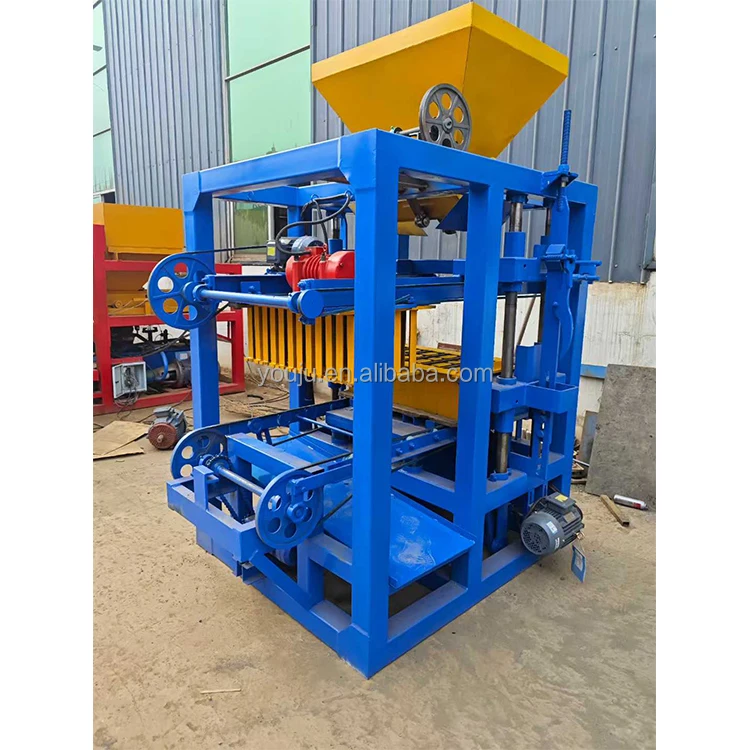
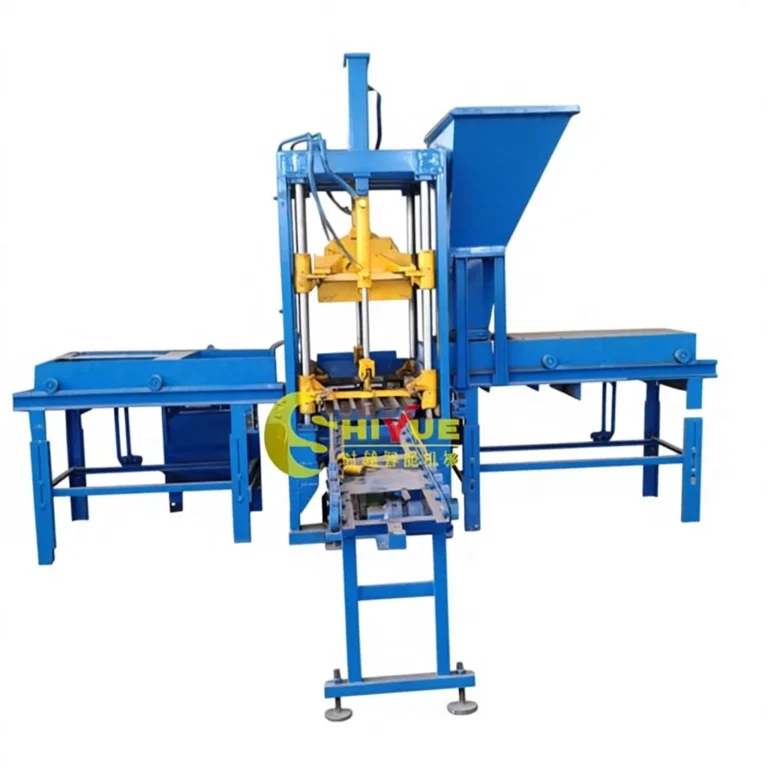 Stationary block machine