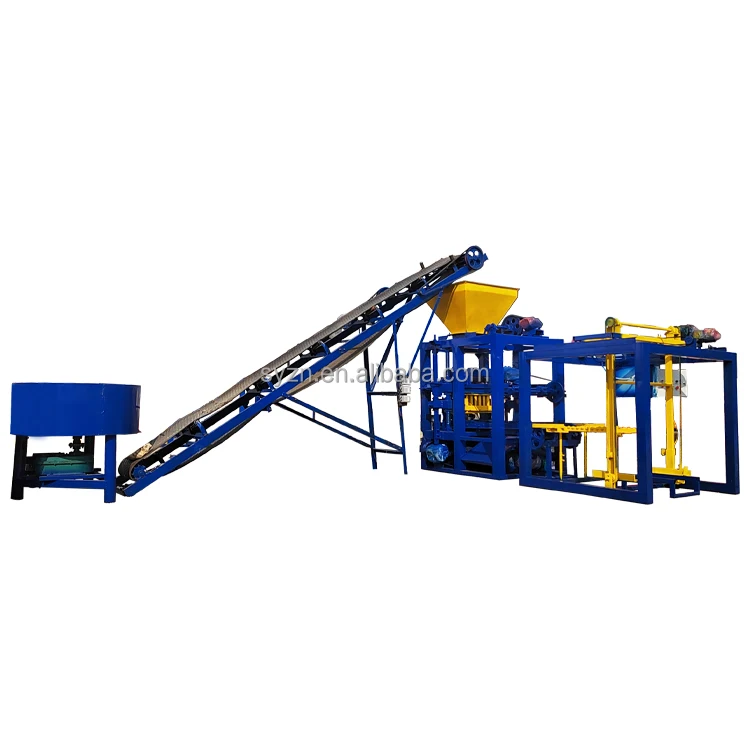
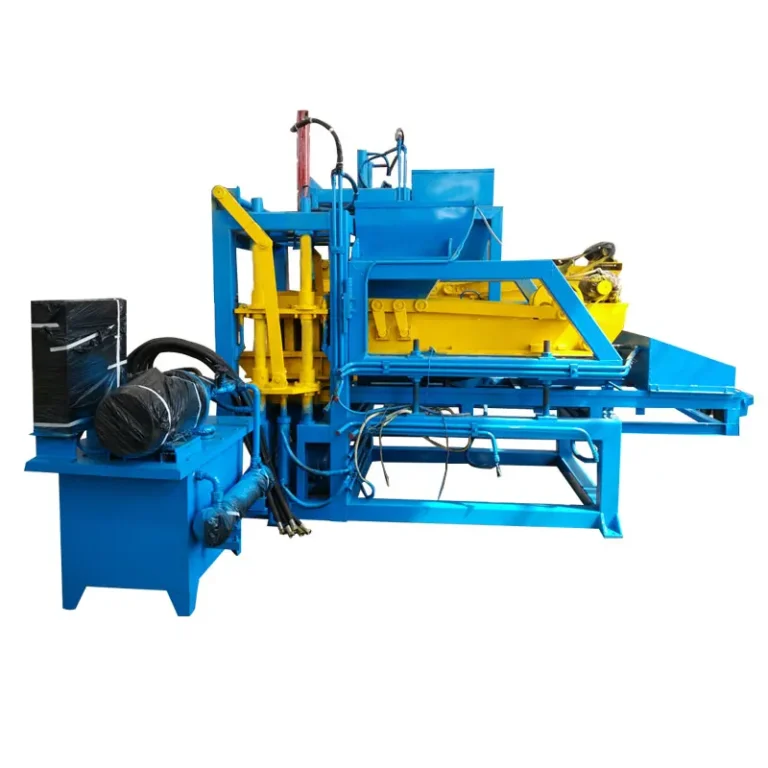
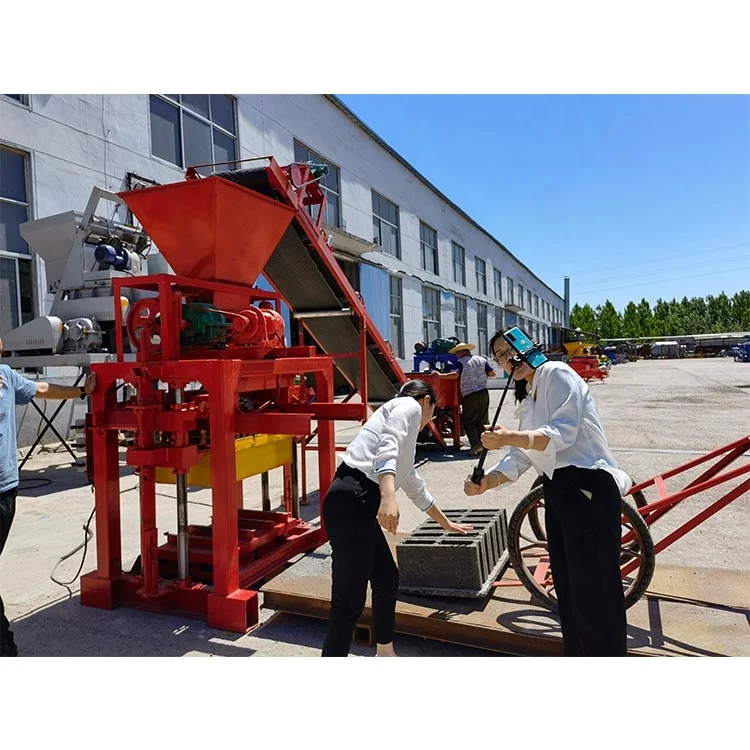
Matched System Sizing — every QTF3-20 leaves our factory with its mould, pallet, and hydraulic settings tuned to the buyer’s confirmed block format and local aggregate, not a catalogue default.
Technical Specifications
| Parameter |
Value |
| Model |
QTF3-20 |
| Product Type |
Automatic Hydraulic Concrete Block Making Machine |
| Main Vibration Form |
Platform vibration with hydraulic pressure |
| Cycle Time |
20 seconds (basis not stated in source — confirm block format and material) |
| Vibrating Frequency |
4600 rolls/minute |
| Total Motor Power |
14.25 kW (rated or peak not specified in source) |
| Pallet Size |
680 × 530 mm |
| Control System |
Configurable — PLC or manual (confirm before production) |
| Voltage & Frequency |
Configurable to site supply (confirm before production) |
| Standards |
CE, ISO 9001 |
| Raw Material Compatibility |
Crushed stone, sand, cement, fly ash, cinder, slag, gangue, gravel, perlite, industrial waste |
Application Suitability
| Application |
Material or Output |
| Hollow and solid wall block production |
Crushed stone, sand, cement, fly ash blends |
| Paving stone manufacturing with face mix |
Aggregate base layer with colored face layer |
| Kerbstone and edger production |
High-density concrete mixes |
| Interlocking and grass block molding |
Sand-cement and permeable aggregate blends |
| Landscaping and slope protection blocks |
Lightweight aggregate and perlite mixes |
What a "20-Second Cycle" Actually Means for Your Output
The cycle time stamped on a block machine plate only translates into real daily output when the assumed block format is stated alongside it.
I have watched buyers receive a machine quoting a fixed cycle time, then discover on commissioning day that their primary product — a 200 mm hollow block, for instance — needs a longer press cycle than the thinner paver format used for the factory test. The automatic concrete block making machine for sale you are evaluating here lists a 20-second cycle, but that figure shifts with block height, cavity count, and mix stiffness [NEED_CITE: how block geometry affects hydraulic press cycle duration]. Before any capacity promise is put in writing, the exact format must be locked in so the daily output calculation reflects what you will actually produce, not a best-case showroom run.

Where the QTF3-20 Sits in the Stationary Range
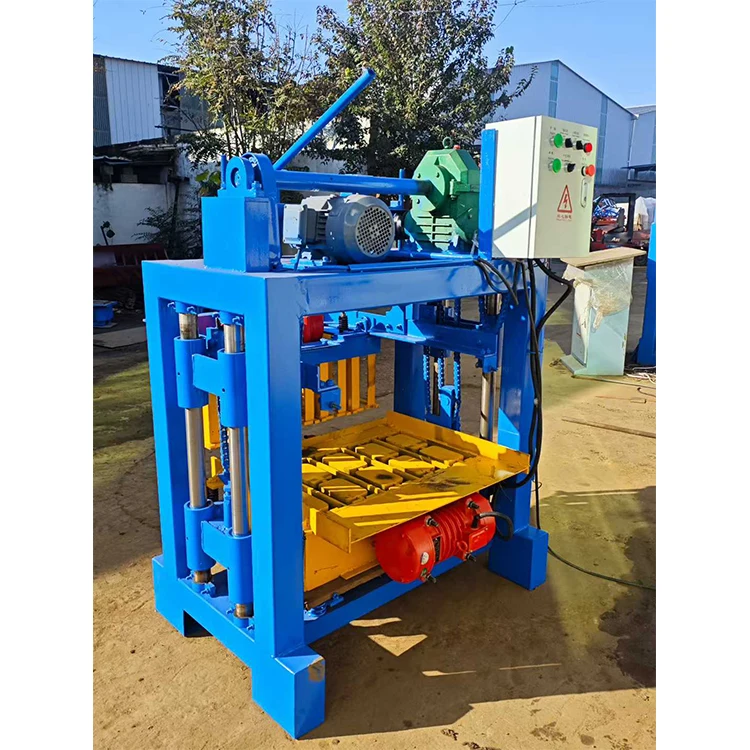
The QTF3-20 fills the compact automatic tier of our stationary block machine lineup. It targets urban and rural block enterprises that need hydraulic compression molding with platform vibration but do not yet require a high-capacity fully automatic line with robotic stacking and cubing. Buyers stepping up from a manual egg-layer or a semi-automatic press will find the jump in consistency significant, while those already running a larger automatic plant can position this machine as a dedicated format line.
Matching Automation Level to Your Labour Reality
Automation on a stationary block machine ranges from manual pallet handling at one end to fully automatic stacking and cubing at the other. The QTF3-20 is configurable across this range, meaning you can start with semi-automatic pallet feeding and add automatic stacking later [NEED_CITE: modular automation upgrades on stationary block presses]. The decision point is not simply headcount — it is whether your curing area and forklift schedule can absorb the pace the press delivers when pallets arrive at full cycle speed.
Reading the Specs That Shape Your Daily Output
Platform vibration combined with hydraulic pressure determines the density and compressive strength of every block the QTF3-20 produces. The 4600 rolls/minute vibrating frequency works with the hydraulic system to compact the mix uniformly across the mould cavity, which matters when you switch between a lightweight hollow block and a dense paving stone in the same shift. The 680 × 530 mm pallet size dictates how many blocks are formed per cycle and, just as critically, whether those loaded pallets fit your existing curing racks and forklift tine spacing. A pallet chosen without checking the curing area layout causes bottlenecks downstream of the press. Motor power at 14.25 kW places the QTF3-20 in the mid-range stationary footprint, so site electrical planning should account for starting current alongside the mixer and conveyor loads on the same circuit.
The Hidden Cost of Skipping the Pallet and Voltage Conversation
Buyers who confirm the press but leave pallet size and electrical supply as afterthoughts often face delays that dwarf the machine’s own price. A pallet that does not match the curing rack spacing means building new racks or restacking by hand. A motor wound for 415 V arriving at a site running 380 V / 50 Hz stalls the entire line until a replacement inverter or motor arrives [NEED_CITE: industrial motor voltage mismatch consequences]. These are not engineering failures — they are confirmation gaps that a structured pre-order checklist eliminates before production starts.
Why Buyers Source This Machine Here
Block machinery is our single focus, so the QTF3-20 is specified as one matched system — press, mould, pallet, and handling — rather than assembled from separate suppliers. Every configuration is set against the buyer’s actual mix design, local aggregate, and target block format instead of a catalogue default. Mould design covers the formats the buyer’s market sells, including custom drawings for non-standard profiles. Automation level is selectable, so a buyer can commission the QTF3-20 as semi-automatic today and upgrade stacking and cubing later without replacing the press. Installation support includes on-site commissioning and operator training so the crew running the machine on day one understands mould change procedure, cycle adjustment, and daily maintenance checkpoints.
Documentation & Verification
- Line layout and capacity calculation stating the exact block format assumed for each output figure
- Machine specification sheet confirming pallet size, vibration frequency, and motor power
- Voltage, frequency, and PLC display language written confirmation before production starts
- Mould drawing and format list included at quotation stage
- Factory test record on your target block format before dispatch
- Operation and maintenance manual with wear parts and mould replacement schedule
Installation, Commissioning & Support
- Foundation plan sized for the QTF3-20 vibration load and hydraulic power unit weight
- Dedicated electrical circuit rated for 14.25 kW total motor draw plus starting surge
- Machine shipped in dismantled state with reassembly sequence documented
- On-site commissioning covering hydraulic pressure, vibration amplitude, and cycle tuning per your mix
- Operator training on mould change, pallet alignment, and daily greasing schedule
- Wear parts list with reorder intervals for hydraulic seals and vibration mounts
What to Include in Your Inquiry
Tell us the primary block format you intend to produce, the daily output target, and the raw materials available at your site. Share your local voltage, frequency, and preferred PLC display language so the electrical package is confirmed before the machine enters production. If you already have curing racks and a forklift, send the dimensions — we will size the pallet and handling stations to match.
Frequently Asked Questions
Q: How is the QTF3-20 daily output calculated, and which block format is assumed?
A: The 20-second cycle time is a baseline figure that shifts depending on block height, cavity count, and mix stiffness. We calculate daily output only after you confirm the primary block format, so the capacity sheet you receive states pieces per hour for your specific product, not a generic catalogue number.
Q: Where does the QTF3-20 sit compared to semi-automatic and higher-tier automatic models?
A: It occupies the compact automatic tier of our stationary range. Semi-automatic models suit lower investment starts, while higher-tier machines add robotic stacking and cubing. The QTF3-20 bridges that gap — automatic pressing with selectable automation on pallet handling and stacking.
Q: What pallet size does it use, and how does that affect my curing area layout?
A: The QTF3-20 runs on 680 × 530 mm pallets. Before ordering, we check this size against your curing rack spacing and forklift tine width so loaded pallets move straight from press to curing without restacking or new rack construction.
Q: Can I start with this tier and upgrade automation or capacity later?
A: Yes. The QTF3-20 supports a step-up path from semi-automatic pallet feeding to automatic stacking and cubing. The press itself remains the same; the upgrade adds handling stations around it without replacing the core machine.
Q: What voltage and control language options are available for my market?
A: Voltage and frequency are configured to your site supply, and the PLC display language is set before production. Both are written into the order confirmation so the machine arrives ready to connect, not waiting for a transformer or a software reload.

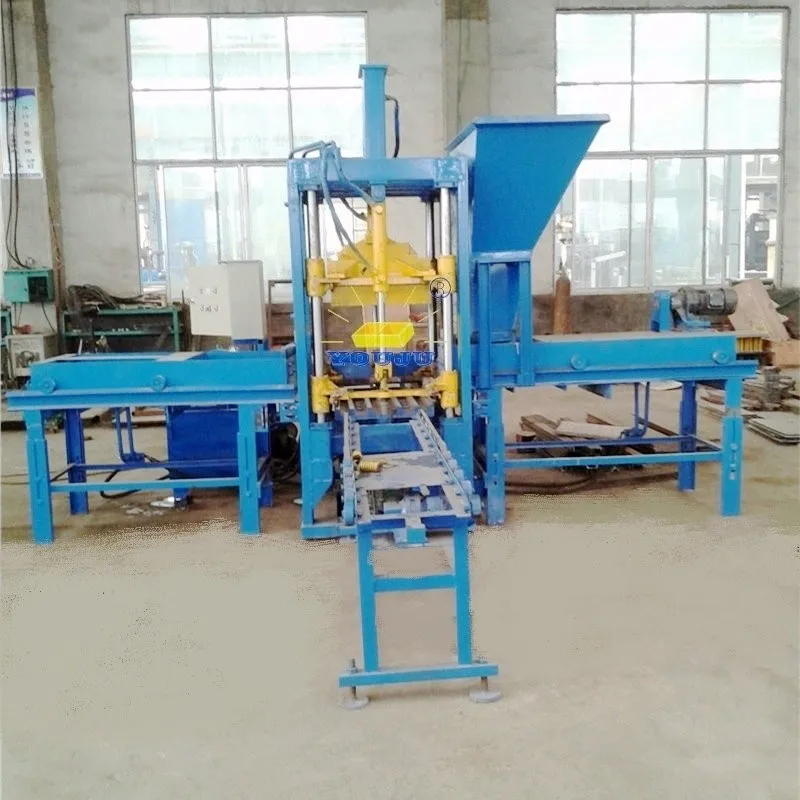
 Stationary block machine