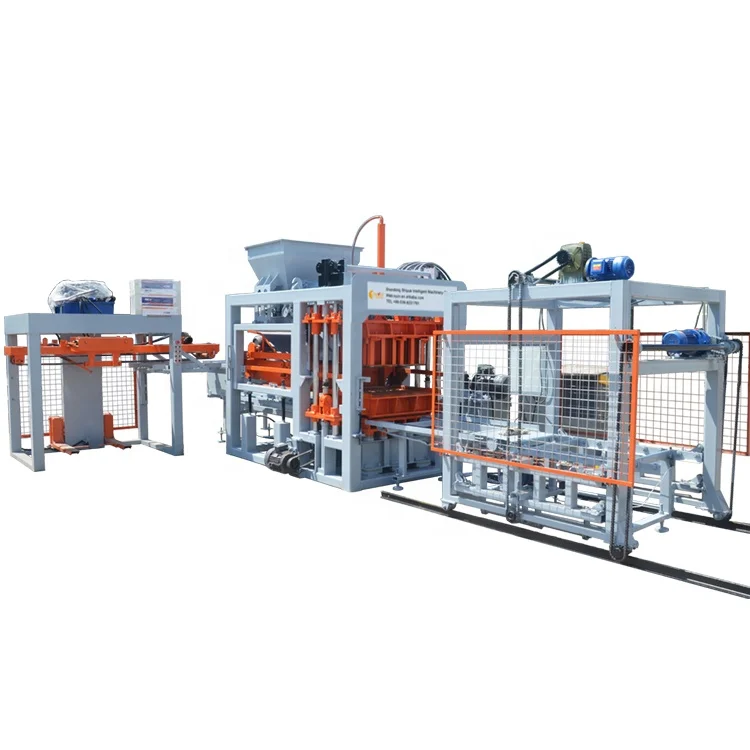
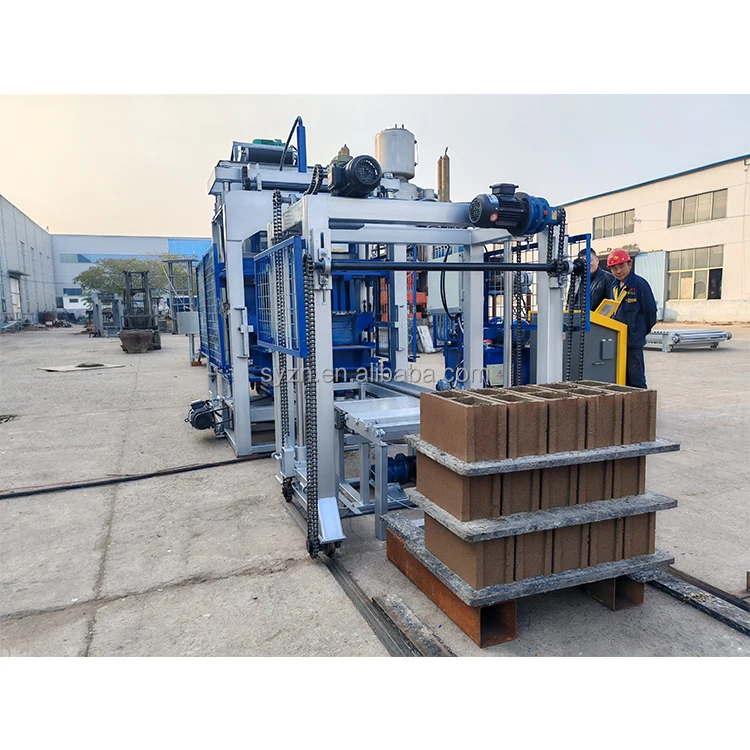
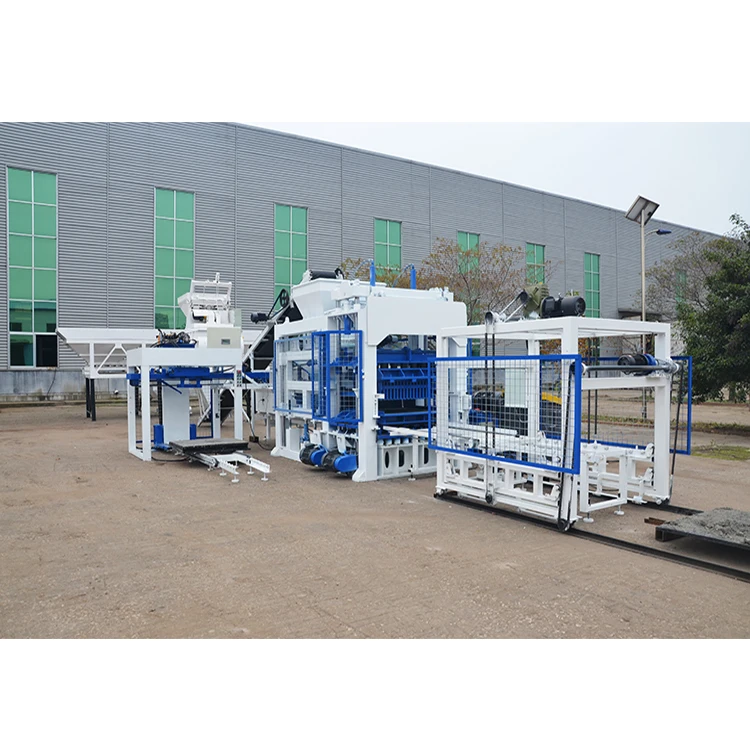
Matched System Configuration — Machine, mould, pallet and handling are specified together against the buyer’s actual block format and local material, not pulled from separate catalogues.
Technical Specifications
| Parameter |
Value |
| Model |
QTJ4-26 |
| Product Type |
Semi-Automatic Concrete Block Making Machine |
| Overall Dimensions (L×W×H) |
2060×1730×2580 mm |
| Net Weight |
1800 kg |
| Molding Cycle |
26 s |
| Vibration Frequency |
4200 r/min |
| Exciting Force |
35.5 kN |
| Total Power |
14.25 kW |
| Mixer Model |
JQ350 |
| Pallet Size |
850×450×20 mm |
| Guide System |
Four guide pillars |
| Vibration Type |
Dual vibrating motors under mould, direct vertical vibration combined with upper mould pressing |
| Automation Level |
Semi-automatic (automatic mould movement) |
| Output — Hollow Block 390×190×190 mm |
4 pcs/mould, 480 pcs/h, 3800 pcs/8h |
| Output — Hollow Block 400×150×200 mm |
5 pcs/mould, 600 pcs/h, 4800 pcs/8h |
| Output — Solid Brick 240×115×53 mm |
18 pcs/mould, 2100 pcs/h, 17000 pcs/8h |
| Raw Materials |
Crushed stone, sand, cement, fly ash, stone dust |
| Voltage & Frequency |
(basis to be confirmed per target market) |
| Control System |
(basis to be confirmed — PLC or relay logic) |
Application Suitability
| Application |
Material or Output |
| Small to medium block production plant |
Hollow blocks (8-inch, 6-inch) from crushed stone, sand and cement |
| On-site block production by contractors |
Solid bricks and hollow blocks from locally available aggregate |
| First-time block plant with limited capital |
Semi-automatic operation producing up to 4800 hollow blocks per 8-hour shift (based on 400×150×200 mm format) |
| Workshop diversifying building material range |
Solid bricks 240×115×53 mm using fly ash or stone dust blends |
What "Cycles per Hour" Hides About the QTJ4-26 Block Machine
Real daily output depends entirely on which block format you run, not a single cycles-per-hour number.
Many buyers receive a quotation stating a machine produces a certain number of cycles per hour and assume that figure applies to every block type they plan to sell. In practice, a 26-second cycle on a solid brick mould delivers far more pieces than the same cycle on a large hollow block mould, because the piece count per mould differs dramatically. A semi-automatic block machine like the QTJ4-26 must be evaluated format by format, with daily output calculated against the specific blocks your market actually buys. I have watched buyers discover after delivery that their expected daily volume was based on a small solid brick they had no intention of producing. [NEED_CITE: block format and cycle time relationship in concrete block production]
Where the QTJ4-26 Sits in the Full Range
The QTJ4-26 occupies the entry-to-mid tier of the semi-automatic block machine range, designed for buyers who need a clear starting point before scaling to higher automation. Its four-pillar guide system and automatic mould travel give consistent forming across both hollow and solid formats without requiring the full infrastructure of an automatic line. For a first-time plant owner or a contractor producing on-site, this tier removes the complexity of pallet feeding systems and automatic stackers while still delivering uniform block density through direct vertical vibration.
Comparing Semi-Automatic, Automatic and Mobile Tiers
Moving up the range to fully automatic lines adds pallet circulation, automatic stacking and cubing, and higher output tiers suited to continuous production plants. Moving down to mobile or egg-laying machines removes the need for fixed plant infrastructure but limits format options and requires manual pallet handling at every stage. The QTJ4-26 semi-automatic block machine sits between these extremes — buyers get automatic mould movement and a matched JQ350 mixer without investing in the full material handling and stacking systems of a high-capacity line. [NEED_CITE: automation tiers in concrete block making machinery]
Reading the Specs That Matter for Block Quality
The 4200 r/min vibration frequency and 35.5 kN exciting force from dual under-mould motors deliver direct vertical vibration that, combined with upper mould pressing, compacts the concrete mix uniformly through the block height. This matters because hollow blocks need consistent wall density to meet structural strength requirements, and uneven vibration leaves weak zones that fail compression testing. The four-pillar guide system keeps upper and lower mould halves aligned across every cycle, which directly affects block dimensional accuracy — a specification contractors check on-site with simple gauge measurements. The 850×450 mm pallet size should be verified against the buyer’s existing curing rack dimensions and forklift capacity before the machine enters production, because a mismatch forces manual handling that the semi-automatic configuration was meant to reduce. The 26-second molding cycle is consistent across the listed formats, but actual throughput shifts with mould change time and the operator’s speed in pallet handling at this automation level.

The Cost of Specifying the Machine Before the Material
I worked with a buyer who ordered a semi-automatic machine configured for standard river sand, only to find on arrival that his local aggregate was volcanic ash with entirely different moisture absorption and particle shape. The vibration force and cycle timing that worked in our factory test produced crumbling blocks on his site, and daily output dropped to a fraction of the quoted capacity. This happens because the mix design, aggregate gradation and moisture content all interact with the machine’s vibration parameters — a configuration set without the buyer’s actual material data is a guess, not an engineering decision. Every time I now receive an inquiry, I ask for the buyer’s local material composition before finalizing the QTJ4-26 block machine configuration. [NEED_CITE: effect of local aggregate on concrete block forming parameters]
What Separates a Matched Configuration from a Catalogue Order
The QTJ4-26 semi-automatic block machine is specified as one system where mould, pallet and mixer are chosen together against the buyer’s target block format and local raw material. Mould design covers the formats the buyer’s market actually sells, including custom drawings when standard formats do not match local building codes. Capacity calculations state which block format each output figure assumes, so the buyer can compare real daily production against market demand before committing. Pallet size and material are confirmed against the buyer’s existing curing area and handling equipment, not selected from a default list. Voltage, frequency and control language are verified with the buyer’s target market before the machine enters production, avoiding commissioning delays after the machine arrives on site.
Documentation & Verification
- Line layout and capacity calculation stating which block format each output figure assumes
- Mould drawing and format list for each block type in the buyer’s market
- Pallet specification matched to buyer’s curing rack and forklift
- Voltage, frequency and control language confirmation before production
- Factory test record on the buyer’s specified block format before dispatch
- Operation and maintenance manual with wear parts and mould replacement list
Installation, Commissioning & Support
- Foundation pad sized to 2060×1730 mm footprint with vibration isolation for the 35.5 kN exciting force
- Dedicated power circuit rated for 14.25 kW total draw including JQ350 mixer startup surge
- Machine shipped as single unit at 1800 kg — forklift capacity at site must be confirmed before arrival
- First-cycle parameter adjustment on buyer’s actual raw material during commissioning
- Operator training on mould change procedure and four-pillar guide alignment checks
- Wear parts list covering vibration motor mounts and mould liner replacement intervals
What to Prepare Before Requesting a Quote
To match the QTJ4-26 semi-automatic block machine to your project, share the specific block formats your market sells, including dimensions and required compressive strength. Confirm your local raw material — the type of sand, aggregate or fly ash available, along with typical moisture content. Provide your site voltage and frequency, the language needed for the control interface, and the dimensions of your existing curing area and any forklift you plan to use for pallet handling.
Frequently Asked Questions
Q: How is the QTJ4-26 output capacity calculated, and what format does each figure assume?
A: Each output figure is tied to a specific block format. The 3800 pieces per 8-hour shift assumes the 390×190×190 mm hollow block at 4 pieces per mould, while 4800 pieces per 8-hour shift assumes the 400×150×200 mm hollow block at 5 pieces per mould. Solid brick output of 17000 pieces per 8-hour shift is based on the 240×115×53 mm format at 18 pieces per mould.
Q: Where does the QTJ4-26 sit compared to fully automatic and mobile machines?
A: It occupies the entry-to-mid tier with automatic mould movement but manual pallet handling, suited for first-time plants and on-site contractors. Fully automatic lines add pallet circulation and stacking for higher volumes, while mobile machines sacrifice format options for portability without fixed plant infrastructure.
Q: What voltage and frequency options are available?
A: Voltage and frequency must be confirmed before production to match the buyer’s local grid. This is verified during the inquiry stage along with control system language, so the QTJ4-26 block machine arrives ready for immediate commissioning without electrical conversion or reprogramming.
Q: Can a buyer start with the QTJ4-26 and upgrade later?
A: The semi-automatic configuration provides a starting point where buyers can add automatic pallet feeding, stacking or cubing systems as production volume grows. The four-pillar guide system and vibration platform remain the core press, with automation additions layered around it.
Q: What mould formats are available, and can custom moulds be designed?
A: Standard moulds cover 390×190×190 mm hollow, 400×150×200 mm hollow and 240×115×53 mm solid brick. Custom moulds can be designed to buyer drawings for formats that match local building codes or specific contractor requirements, with drawings confirmed before the machine enters production.

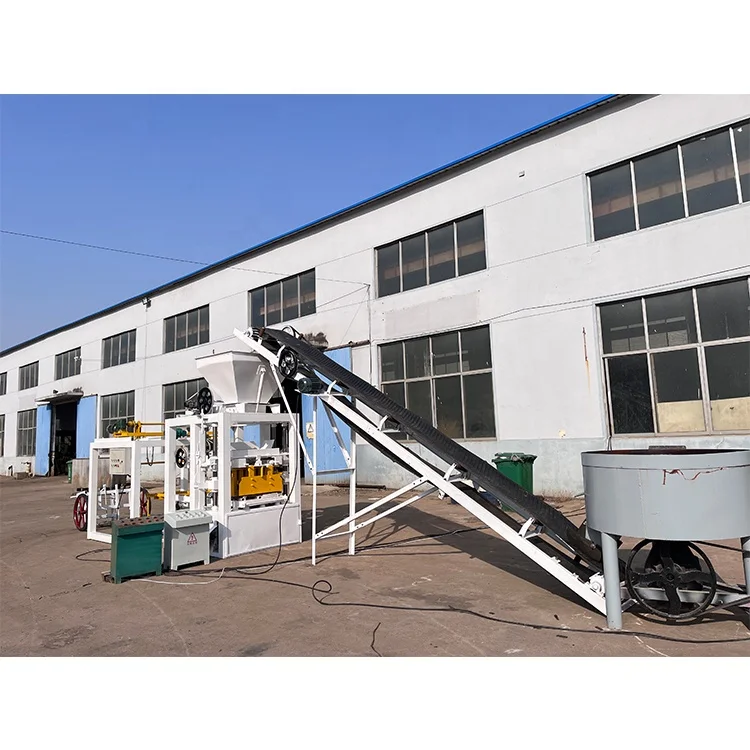
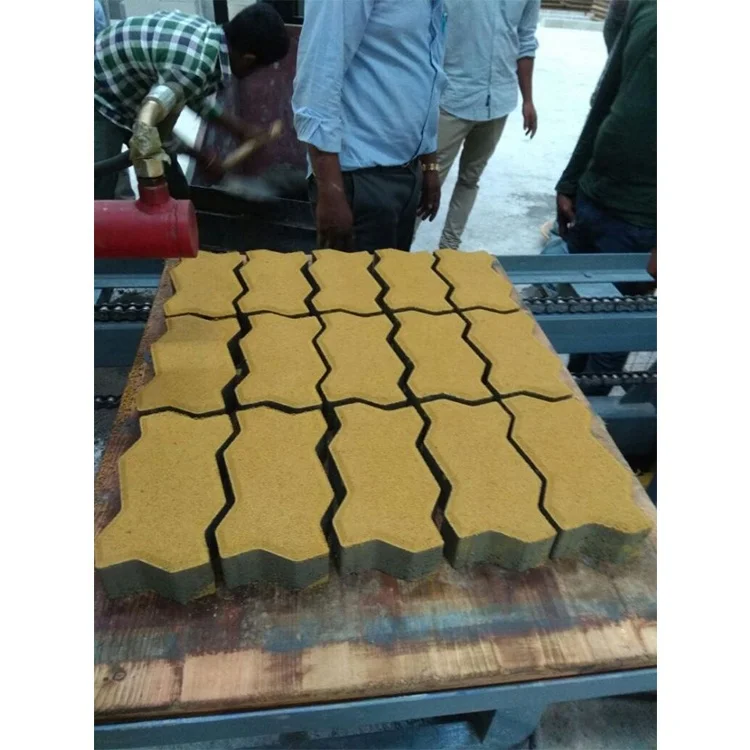 High quality block machine