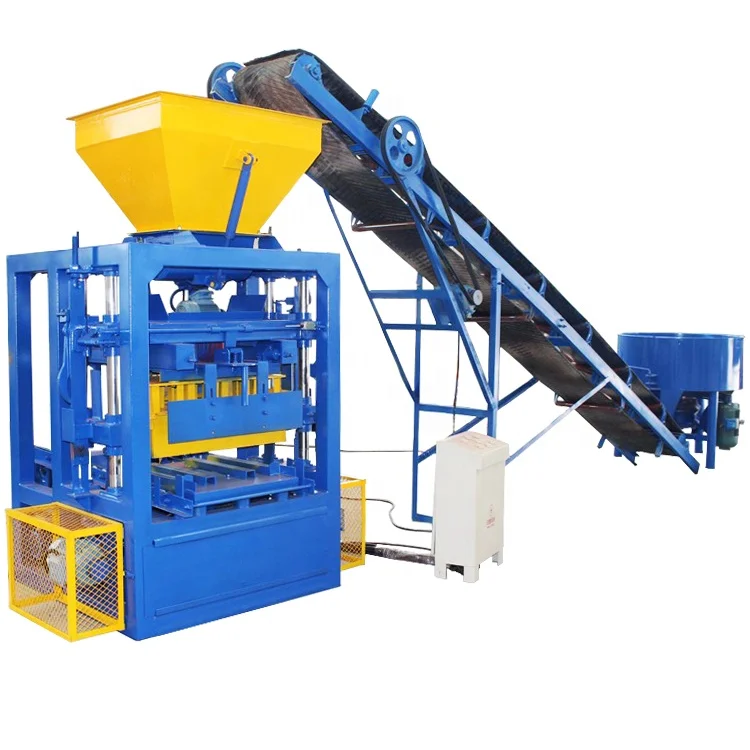
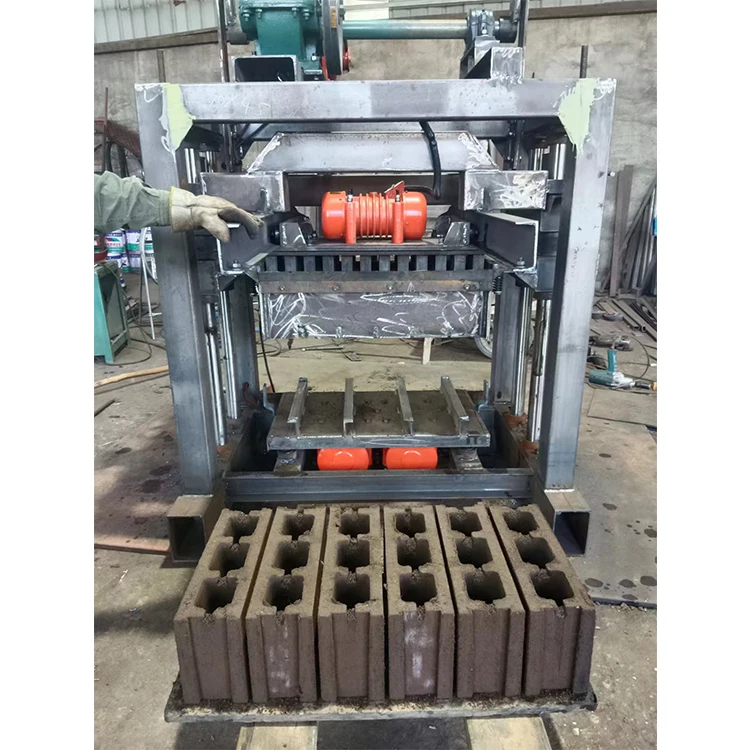
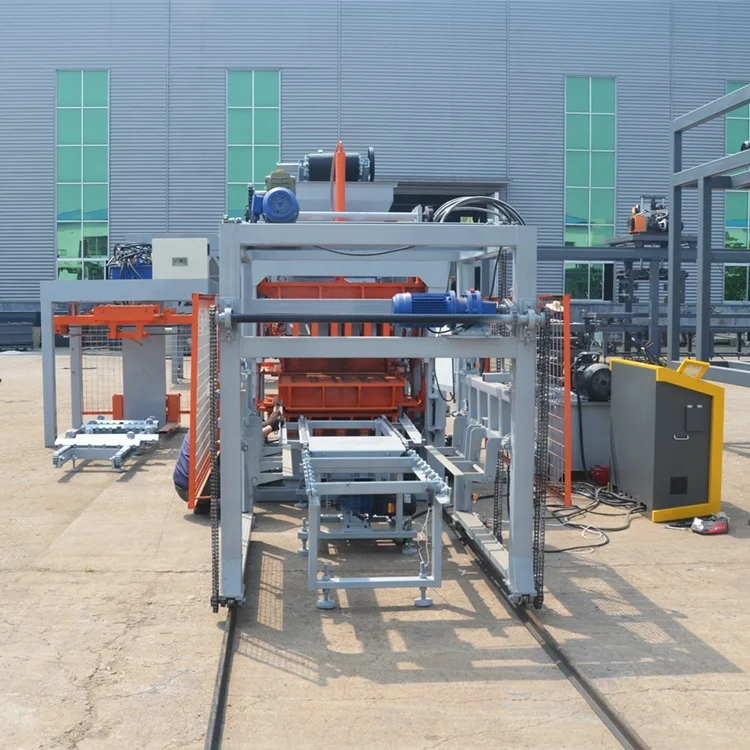
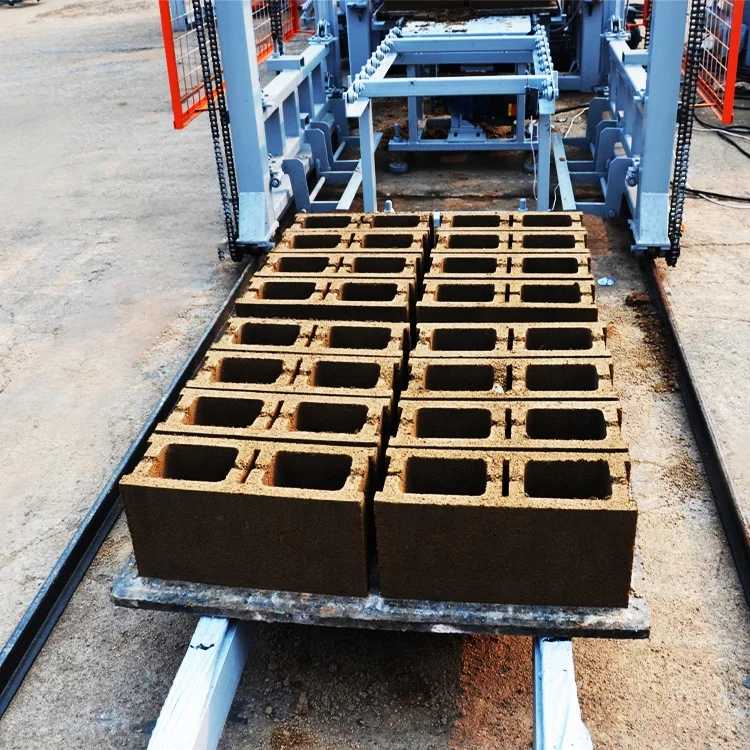
Matched system specification — The QT12-15 is positioned at the high-capacity end of the Shiyue automatic block machine range, configured with matched moulds, pallets, and handling equipment rather than assembled from separate suppliers.
Technical Specifications
| Parameter |
Value |
| Model |
QT12-15 |
| Product Type |
Hydraulic Block Making Machine Line |
| Total Power |
62KW |
| Pallet Size |
1300x900mm |
| Moulding Cycle |
15-30 seconds (basis not stated in source — confirm block format / material / thickness) |
| Vibration Type |
Table vibration |
| Vibration Force |
120KN (source value — verify against manufacturer catalog) |
| Voltage |
Customized according to buyer’s local industrial voltage |
| Mould Format Options |
Hollow block, solid block, interlocking brick, pavement brick, slope protection brick, porous brick |
| Control System |
PLC (to be confirmed at configuration stage) |
| Automation Level |
Configurable from semi-automatic to fully automatic stacking (to be confirmed) |
Application Suitability
| Application |
Material or Output |
| Hollow block production for building construction |
Crushed stone, cement, sand, and water mix |
| Solid block manufacturing for structural walls |
Heavy aggregate and cement blends |
| Interlocking brick paving for driveways and walkways |
Fine aggregate with pigment additives |
| Pavement brick for road and infrastructure projects |
High-density concrete mix with color oxides |
| Slope protection brick for embankments |
Porous concrete mix for water permeability |
| Porous brick for urban drainage systems |
Open-graded aggregate and cement |
What "High Capacity" Leaves Out When Sizing a Block Making Machine Manufacturer
Capacity figures are meaningless unless the specific block format and local aggregate are stated in the proposal.
Many buyers see a cycle time of 15-30 seconds and assume they can run any format at that speed. In reality, a large hollow block requires a longer vibration cycle to achieve the necessary density, while a thin paving brick might cycle faster but demands precise pallet handling to avoid surface damage. I have seen projects delayed because the line was quoted based on a lightweight block that the local market does not even purchase. [NEED_CITE: block format impact on daily output]

Defining the Footprint for High-Output Plants
When a buyer surveys the complete block machine range, the QT12-15 sits in the tier that demands a dedicated plant footprint. The 1300x900mm pallet size is a critical determinant; it allows for multi-cavity layouts that produce more volume per cycle, but it also dictates the size of the curing racks and the turning radius required for forklifts in the yard. This block making machine manufacturer provides a line layout that calculates the curing area based on the pallet dimensions, ensuring the press is not left waiting for empty boards to return from the yard.
Automation Tiers and Handling Integration
The investment level for this tier extends beyond the press itself. A buyer can select a semi-automatic configuration where pallets are fed manually, or step up to a fully automatic line with stackers and cubing systems. The choice depends on local labor costs and the available space for automatic rack handlers. Shiyue specifies the automation level as part of the initial proposal, matching the cycle time of the handling equipment to the press so that bottlenecks do not shift from the moulding station to the stacking station. [NEED_CITE: automation upgrade paths in block production]
Reading the Specs: Pressure, Vibration, and Pallet Matching
The total power of 62KW supports the hydraulic system and the table vibration unit, but the key to block strength is how the vibration force interacts with the hydraulic pressure. A high vibration frequency is necessary to settle the concrete mix into complex interlocking shapes, while the hydraulic pressure provides the final compression. The 120KN vibration force must be verified against the specific mould design; if the pallet size is 1300x900mm, the energy must be distributed evenly across that entire surface to prevent height variations in the finished blocks. Furthermore, the voltage must be customized to the buyer’s local industrial grid; a mismatch in frequency can alter the vibration motor speed, fundamentally changing the block density and leading to inconsistent strength across the production run.
The Cost of Ignoring Local Grid and Pallet Constraints
Arriving on a site to find the local transformer cannot support the 62KW total power is a common, expensive failure. If the voltage is not confirmed before production, the machine may arrive with a motor configured for 380V/50Hz while the site runs on 440V/60Hz, requiring weeks of downtime to source replacement components. Similarly, specifying a pallet material that warps under local humidity or UV exposure leads to jammed pallet feeders and inconsistent block heights, negating the precision of the mould design. [NEED_CITE: industrial voltage standards and frequency mismatches]
Why Source the QT12-15 Through Shiyue
Shiyue focuses exclusively on block machinery, meaning the QT12-15 is not sold as a standalone press but as a matched system. The mould design is created based on the buyer’s target block format and local aggregate, not a catalogue default. The proposal includes a capacity calculation that states the assumed block format for every output figure. Pallet size and material are selected to match the buyer’s existing curing area and forklift capacity. The automation level is selectable, allowing a buyer to start semi-automatic and upgrade to full stacking and cubing later. Installation support includes operator training on the specific PLC language requested by the buyer.
Documentation & Verification
- Line layout and capacity calculation stating the block format assumed for each output figure.
- Machine specification sheet with confirmed voltage, frequency, and total power.
- Mould drawing and format list for all requested block types.
- Pallet specification matching the 1300x900mm size and local climate conditions.
- Factory test record on the buyer’s target mix design before dispatch.
- CE declaration where applicable for the destination market.
Installation, Commissioning & Support
- Foundation design based on the 62KW total power and dynamic vibration loads.
- Power connection verification for the customized voltage and frequency before motor startup.
- Pallet feeder alignment to ensure smooth cycling of the 1300x900mm boards.
- PLC programming in the requested language for the local operators.
- Training on mould change procedures to minimize downtime between formats.
- Wear parts list for the hydraulic and vibration components.
Preparing Your Technical Inquiry
To receive a configuration that matches your site, provide the target block format and the daily output required for that specific shape. Include the local industrial voltage, frequency, and the language required for the control display. Describe the available space for the curing area and the type of forklift currently in use, so the pallet handling system can be specified to integrate with your existing equipment.
Frequently Asked Questions
Q: How does the QT12-15 compare to smaller tiers in the Shiyue range?
A: The QT12-15 requires a larger plant footprint and a higher initial investment than semi-automatic models, primarily due to the 1300x900mm pallet size and the 62KW power requirement. It is designed for buyers who need high daily output and plan to run multiple mould formats on a continuous production schedule.
Q: What block format is assumed when capacity is quoted?
A: Capacity varies significantly by format; a hollow block takes longer to mould than a thin paving brick. Our proposals state the exact cycle time and daily output for each specific block format you intend to produce, rather than a single generic figure.
Q: Can I start semi-automatic and upgrade later?
A: Yes, the automation level is selectable. You can begin with manual pallet handling and later integrate automatic stackers and cubing systems, provided the initial foundation and line layout were planned to accommodate the upgrade path.
Q: How is pallet size matched to my curing area?
A: The 1300x900mm pallet must fit your existing curing racks and be compatible with your forklift’s fork dimensions. We confirm these details during the proposal stage to ensure the handling equipment does not require replacement upon the machine’s arrival.

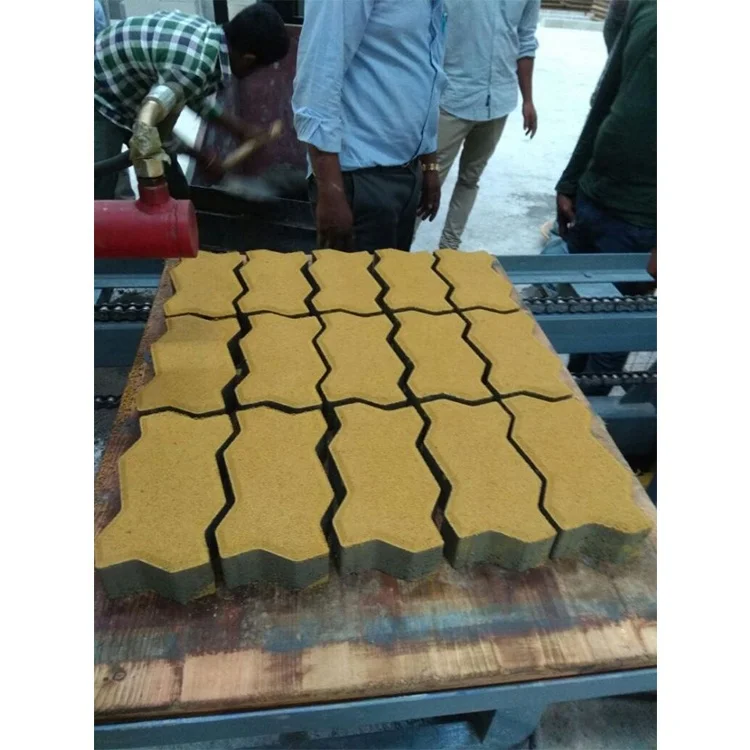
 High quality block machine