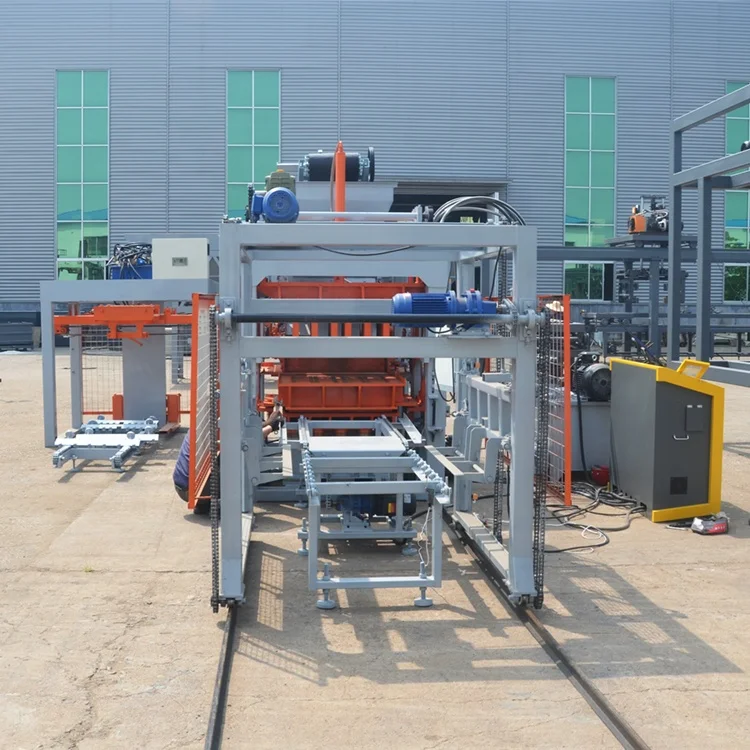
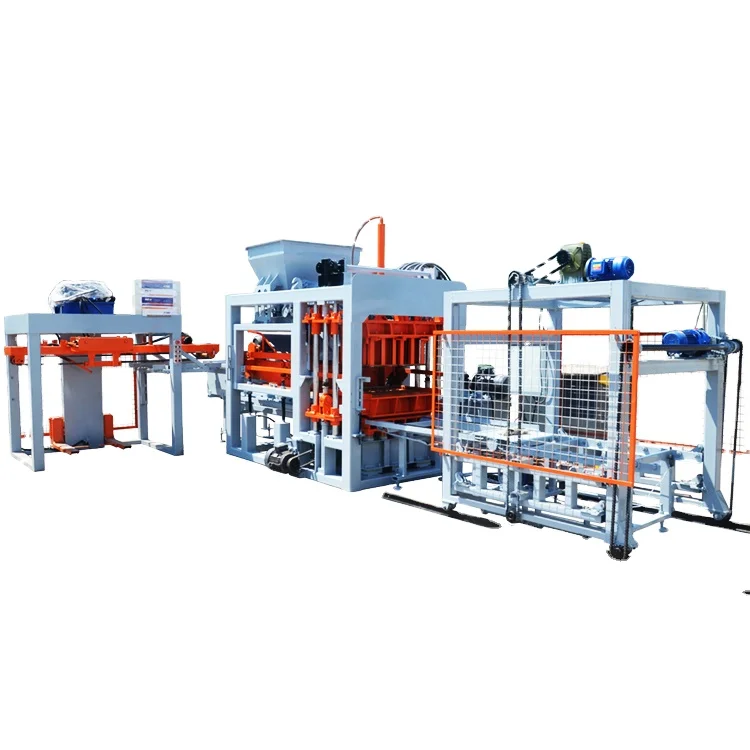
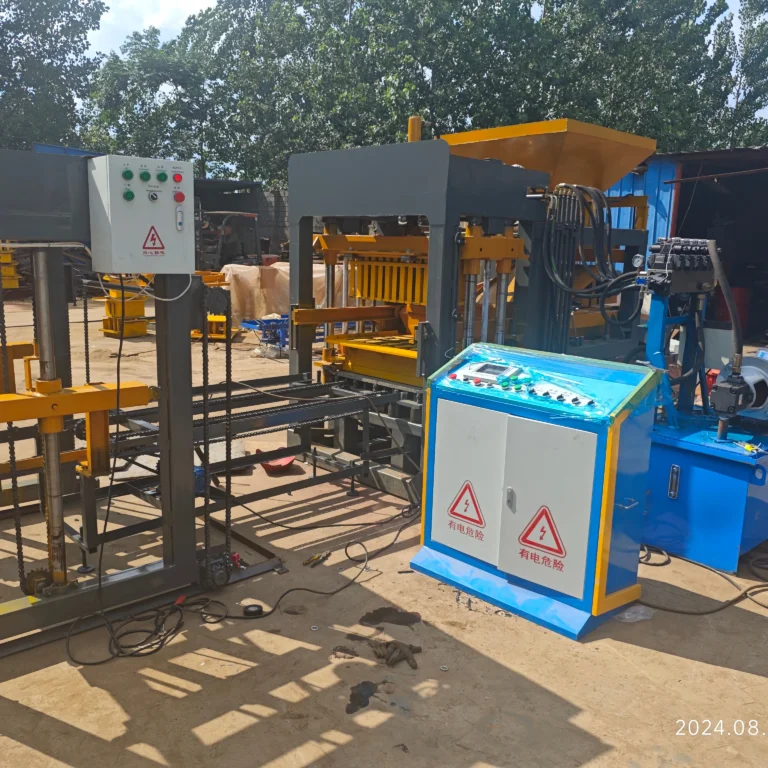
Matched System Sizing — the QT10-15 is specified against your target block format, local aggregate, and existing pallet dimensions so the line arrives as one coordinated unit rather than a collection of mismatched stations.
Technical Specifications
| Parameter |
Value |
| Model |
QT10-15 |
| Product Type |
Automatic Concrete Block Making Machine |
| Control System |
PLC control cabinet |
| Hydraulic System |
Independent integrated hydraulic station |
| Vibration Mode |
Vertical station mode resonance, automatic FM-AM |
| Mould Change |
Simple replacement for multi-format production |
| Standard Components |
Pallet feed machine, block making machine, storage hopper, conveyor, hydraulic unit, PLC control cabinet |
| Output Capacity (400×200×200mm hollow block) |
1800–2400 pcs/hour; 14400–19200 pcs/8hr (basis: 10 pcs/mould, 15–20s cycle) |
| Output Capacity (240×115×53mm solid brick) |
8928–11160 pcs/hour; 71424–89280 pcs/8hr (basis: 62 pcs/mould, 15–20s cycle) |
| Output Capacity (200×100×60mm paving block) |
5184–6480 pcs/hour; 41472–51840 pcs/8hr (basis: 27 pcs/mould, 20–25s cycle) |
| Cycle Time (hollow block) |
15–20s |
| Cycle Time (paving block) |
20–25s |
| Automation Level |
Automatic |
| Warranty |
1 year for the whole machine (excluding spare parts) |
| Voltage & Frequency |
Configurable to buyer’s site (verify against site conditions) |
| Overall Dimensions |
Available on request (basis to be confirmed) |
| Net Weight |
Available on request (basis to be confirmed) |
| Pallet Size |
Configurable based on curing area and forklift (basis to be confirmed) |
| Hydraulic Pressure |
Available on request (basis to be confirmed) |
| Vibration Force |
Available on request (basis to be confirmed) |
| PLC Display Language |
Configurable before shipment (basis to be confirmed) |
Application Suitability
| Application |
Material or Output |
| Hollow block production for building walls |
Crushed stone, river sand, cement, fly ash blends |
| Multicellular brick manufacturing |
Lightweight aggregate, cement, industrial by-products |
| Paving block and kerbstone for roads and yards |
Granite chips, quartz sand, cement at high compaction |
| Standard solid brick for masonry |
Clay alternatives, stone dust, cement mixes |
| High-volume construction block plants |
Continuous daily shifts with automatic pallet circulation |
| Building material manufacturing facilities |
Multiple block formats through scheduled mould changes |
Why Quoted Capacity Figures Rarely Match Day-One Output
Every capacity number on the QT10-15 is tied to a specific block format, mould cavity count, and cycle time — no headline figure without a footnote.
When a buyer sees "10,000 blocks per day" on a brochure, the format behind that number is usually the smallest, fastest-cycle product the machine can produce. A few years back, an African customer ordered a line based on a catalogue output number. When the machines arrived and ran on local stone powder with high clay content, actual throughput was roughly half the brochure claim. The vibration and pressure parameters needed re-tuning for that specific mix, and the commissioning took weeks longer than planned [NEED_CITE: effect of local aggregate variation on block machine cycle time]. That situation could have been avoided if the capacity discussion had started with the buyer’s actual block format and raw material. With the QT10-15 automatic block making machine manufacturer documentation, every output figure you see is stated per format so your production plan is realistic before the machine ships.
Where the QT10-15 Sits in the Full Machine Range
The Shiyue range spans from small workshop machines to high-capacity automatic lines, and the QT10-15 occupies the upper tier. Buyers evaluating their first plant investment need to understand that this model requires a dedicated production area with pallet circulation space, curing racks, and room for raw material storage alongside the press. Compared to semi-automatic or mobile egg-laying models lower in the range, the QT10-15 demands a higher initial outlay but delivers continuous automatic cycling that those smaller machines cannot match.
Matching the Machine Tier to Your Investment Stage
For entrepreneurs setting up a first block plant, the decision often comes down to whether the local market can absorb the volume this tier produces. Existing producers moving from semi-automatic operation find that the QT10-15 removes manual pallet handling from the workflow and introduces consistent cycle timing through PLC control. Building material distributors surveying the full range use this model to serve buyers who have outgrown smaller presses and need documented capacity across multiple block formats [NEED_CITE: block plant capacity planning for developing construction markets].
How Vibration, Pressure, and Mould Design Work Together
The QT10-15 uses vertical station mode resonance with automatic FM-AM vibration, meaning the system adjusts frequency and amplitude to suit the block format in the mould. Hydraulic pressure from the independent integrated station works in combination with this vibration to compact the mix — too much pressure without sufficient vibration leaves air pockets, while vibration without adequate pressure produces blocks that crumble during handling. The independent hydraulic station is physically separated from the main vibration zone, which keeps dust and shock loading away from valves and seals. Pallet size must be confirmed against the buyer’s curing area dimensions and existing forklift capacity, because a mismatch here means blocks pile up on the floor instead of flowing into the curing racks as intended.

What Happens When Supporting Equipment Is Left Out
A common purchasing mistake is treating the block press as the entire investment. The QT10-15 cycles automatically, but if pallet feeding, stacking, and curing rack handling are not included in the quotation, output lands on the floor and workers sort it by hand. That bottleneck erases the throughput advantage the automatic press was supposed to deliver. Buyers who confirm the full line scope — from raw material feeding through to cubing — before signing avoid discovering hidden labour costs after the machine is running [NEED_CITE: block production line bottlenecks from incomplete equipment scope].
Why Procurement Through This Range Works Differently
Block machinery is the single focus here, which means the QT10-15 arrives with its mould, pallet, and handling equipment specified as one matched system rather than assembled from separate suppliers. Configuration is set against the buyer’s actual mix design and local aggregate, not a catalogue default. Mould design covers the formats the buyer’s market actually sells, with custom drawings available when standard formats do not match. The automation level is selectable, so a buyer can start with a configuration that fits the current budget and add stacking or cubing modules later. Installation support includes operator training on the specific PLC language confirmed before shipment.
Documentation & Verification
- Line layout with capacity calculation per block format for the QT10-15
- Machine specification sheet confirming hydraulic pressure, vibration force, and pallet size
- Mould drawing and format list showing all compatible block types
- Factory test record demonstrating cycle times before shipment
- Voltage, frequency, and PLC display language confirmation document
- Operation and maintenance manual with wear parts list
Installation, Commissioning & Support
- Foundation plan based on QT10-15 overall dimensions and vibration load requirements
- Dedicated power circuit matching confirmed voltage and frequency before machine arrival
- Pallet feed machine and conveyor alignment during on-site assembly
- PLC control cabinet commissioning with display language verified against operator preference
- Operator training covering mould change procedure and cycle time adjustment
- Hydraulic and vibration wear parts list supplied with first shipment
Planning Your Inquiry
To size the QT10-15 automatic block making machine correctly for your plant, share your target block format and the daily volume your market requires. Include details on local raw materials — especially aggregate type and any known moisture or clay content — along with your site voltage, frequency, and the pallet dimensions your existing forklift and curing area can handle. If you are replacing an older press, note the current machine model and what is working or failing in your present setup.
Frequently Asked Questions
Q: How is the QT10-15 hourly capacity calculated, and which block format does each figure assume?
A: Each capacity figure is tied to a specific block size, mould cavity count, and cycle time. For example, the 1800–2400 pcs/hour hollow block rating assumes a 400×200×200mm block with 10 cavities per mould and a 15–20 second cycle. Different formats such as paving blocks have longer cycles and separate stated outputs.
Q: Where does the QT10-15 sit on the range compared to semi-automatic and mobile models?
A: The QT10-15 is in the high-capacity automatic tier, requiring a dedicated plant footprint with pallet circulation and curing space. Semi-automatic and mobile models sit lower in the range with smaller footprints and lower investment, suited for on-site production or smaller daily volumes where continuous automatic cycling is not required.
Q: What supporting equipment is included in the quotation versus priced separately?
A: The standard quotation covers the pallet feed machine, block making machine, storage hopper, conveyor, hydraulic unit, and PLC control cabinet. Automatic stacking, curing rack handling, and cubing systems are available as selectable additions. Confirm the full line scope during the proposal stage to avoid manual handling bottlenecks.
Q: What voltage, frequency, and PLC language options are confirmed before shipment?
A: Voltage and frequency are configured to match the buyer’s site electrical supply, and the PLC display language is confirmed during the order process. These details are documented before production begins so commissioning is not delayed by electrical or interface mismatches when the QT10-15 arrives on site.

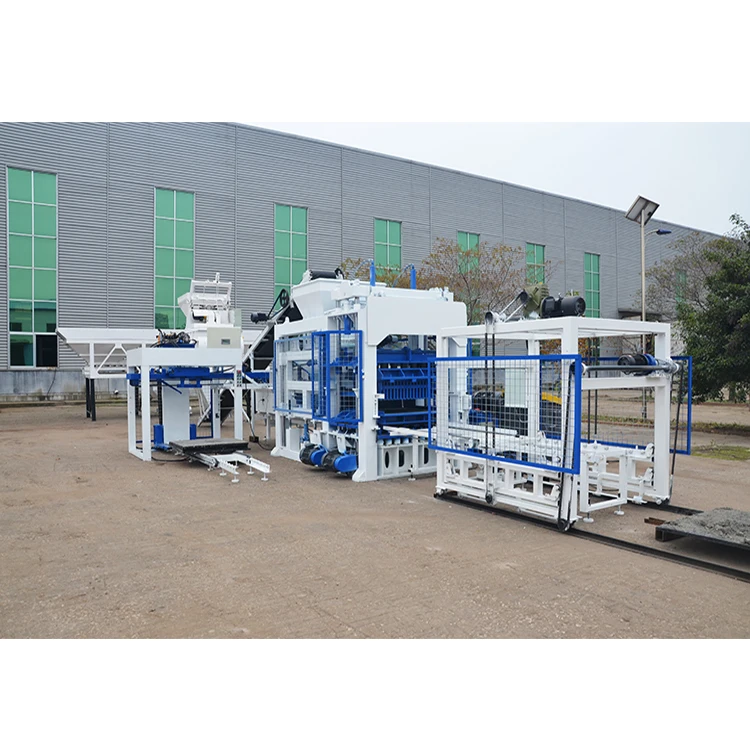
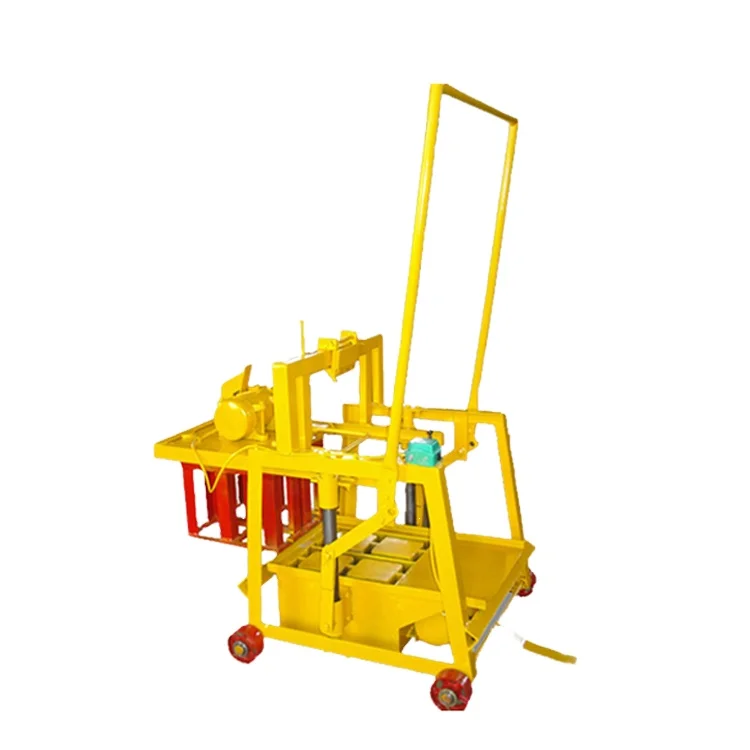 High quality block machine