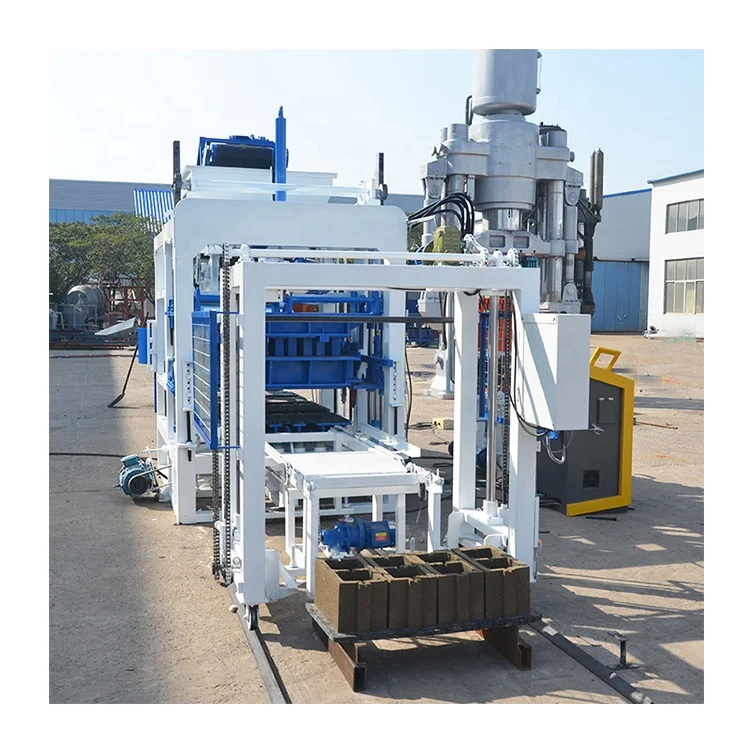
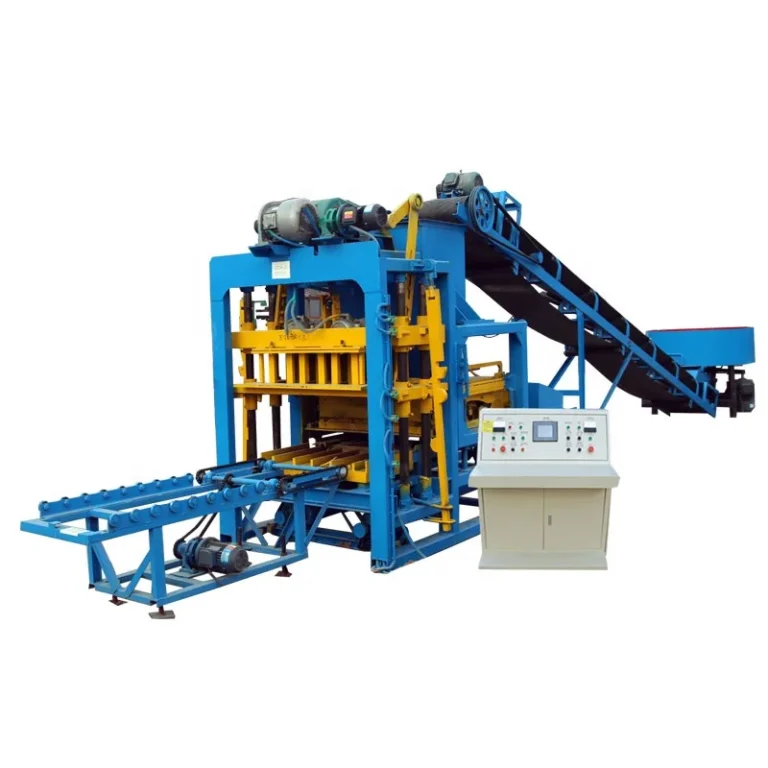
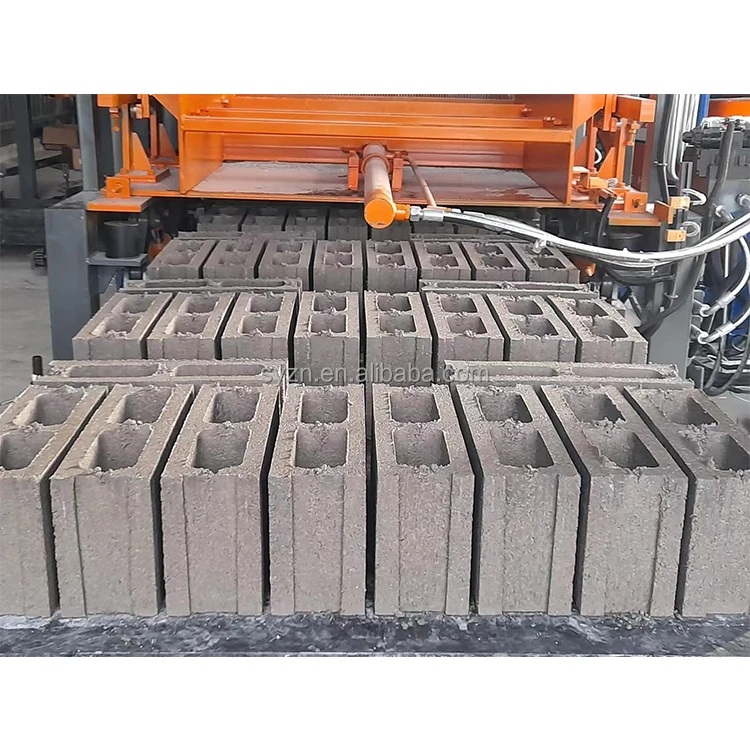
Matched System Sizing — the QT4-18 block machine is configured against your actual aggregate and target block format, not a generic catalogue default.
Technical Specifications
| Parameter |
Value |
| Model |
QT4-18 |
| Product Type |
Concrete Block Making Machine |
| Overall Dimensions (L×W×H) |
3900 × 1600 × 2300 mm |
| Molding Cycle |
15–25 s |
| Vibration Force (Exciting Power) |
40–50 kN |
| Total Power |
24 kW |
| Mixer Model |
JQ350 |
| Pallet Size |
850 × 550 × 25 mm |
| Net Weight |
3 T |
| Applied Products |
Paver, solid brick, hollow block, curbstone |
| Raw Materials |
Crushed stone, sand, cement, fly ash, dust |
| Output — Hollow Block 400×200×200 mm |
1200–1680 pcs/hr |
| Output — Hollow Block 400×150×200 mm |
1800–2400 pcs/hr |
| Output — Solid Brick 240×115×53 mm |
3240 pcs/hr |
| Automation Level |
Semi-automatic |
| Hydraulic Station |
Included (high pressure, stable running) |
| Assembly & Shipping State |
Nude packing in 20 GP container |
Application Suitability
| Application |
Material or Output |
| Hollow block production for residential walls |
Crushed stone and cement blends, 400×200×200 mm and 400×150×200 mm formats |
| Solid brick manufacturing for load-bearing structures |
Sand, cement, and fly ash mixes, 240×115×53 mm standard format |
| Paver and curbstone production for infrastructure projects |
High-density aggregate mixes with hydraulic compression |
| On-site block production for housing developments |
Locally sourced river sand and crushed stone, semi-automatic operation |
| First plant setup by entrepreneurs |
Versatile format switching with moderate daily volume |
What "Pieces per Hour" Actually Means for the QT4-18 Block Machine
Output only becomes real when the block format and mix design are locked in together.
Capacity figures on block machines are routinely quoted without naming the format behind the number. A buyer sees a large hourly figure, signs the order, and then discovers the machine produces far fewer units of the block their market actually demands. With the QT4-18 Concrete Block Making Machine, every capacity figure is tied to a specific block dimension—400×200×200 mm hollow, 400×150×200 mm hollow, or 240×115×53 mm solid—so there is no ambiguity when you plan daily output [NEED_CITE: block machine capacity calculation standards by format]. I have watched contractors in East Africa receive machines rated at impressive cycles per hour, only to find that the cycle time assumed a small solid brick while their entire business depended on 200 mm hollow blocks. The mismatch does not show up until commissioning week, when the pallets come off the line and the count falls short.

Where the QT4-18 Sits in the Full Machine Range
The SHIYUE range spans mobile egg-laying units at the entry level, semi-automatic presses like the QT4-18 in the mid tier, and high-capacity fully automatic lines at the top. This QT4-18 block machine for sale occupies the position where a buyer has outgrown manual pallet handling but is not yet ready to invest in the footprint and utility demands of a fully automatic stacking and cubing system. The semi-automatic configuration keeps the plant layout compact at roughly 3900 × 1600 mm for the press itself, which matters when the curing yard is limited.
Understanding the Automation Boundary
Semi-automatic here means the hydraulic press cycle, vibration, and mould compression run under controlled sequencing, while pallet feeding and product removal still involve operator intervention. This boundary is deliberate: it keeps the capital outlay manageable for a first plant and leaves a clear upgrade path. When production volume eventually justifies it, automatic pallet feeders and stackers can be added to the line without replacing the QT4-18 Concrete Block Making Machine itself [NEED_CITE: block plant automation upgrade paths for semi-automatic presses]. Buyers who start at this tier often run for several seasons before deciding whether to add automation or purchase a second unit.
Reading the Specs That Actually Shape Daily Output
The 40–50 kN vibration force and the included high-pressure hydraulic station work together to compact the mix. Vibration alone settles the aggregate; hydraulic compression from the upper mould then squeezes out voids, and the combination determines the final block density and wall strength. If the local aggregate is angular crushed stone rather than rounded river gravel, the vibration frequency and amplitude must be adjusted to achieve proper fill in the mould cavity before the hydraulic head comes down.
The 850 × 550 mm pallet size defines how many blocks are formed per cycle and how those wet blocks travel to the curing area. A mismatch between pallet dimensions and the buyer’s existing forklift or curing rack spacing creates handling bottlenecks that have nothing to do with the press cycle itself. The 15–25 second molding cycle range reflects different block formats—thinner solid bricks cycle faster, while deeper hollow blocks need the longer end of that window to fill and compact fully. The 24 kW total power draw, including the JQ350 mixer, determines the electrical supply requirement; a site with an undersized transformer will experience voltage drops that shorten contactor life and cause inconsistent vibration.
The Cost of Skipping Format-Level Specification
When a buyer orders a block machine based only on a headline hourly number, the real expenses arrive later. Moulds that do not match the local market’s best-selling block format sit unused while the buyer pays for custom tooling. Pallets specified without checking the curing yard dimensions force the plant to rearrange racks or buy a different forklift. Voltage confirmed too late means the control panel arrives with the wrong contactor ratings, delaying commissioning by weeks while replacement parts ship overseas [NEED_CITE: common commissioning delays in exported concrete machinery]. Every one of these issues is preventable if the format, pallet, and electrical specification are settled before the order is placed.
Why Buyers Source This Tier from SHIYUE
Block machinery is our single focus, which means the QT4-18 press, its moulds, pallets, and handling equipment are specified as one matched system rather than assembled from unrelated suppliers. We set the configuration against the buyer’s actual mix design and local aggregate, running a test press with customer-supplied material before the machine leaves the factory. Mould design covers every format the buyer’s market sells, and custom mould drawings are available when standard formats do not match. The semi-automatic starting point leaves room to add automation stations later without scrapping the press. Installation support includes operator training on-site so the crew understands mould change procedure, hydraulic pressure adjustment, and daily maintenance from the first production run [NEED_CITE: on-site commissioning practices for semi-automatic block plants].
Documentation & Verification
- Line layout showing QT4-18 placement and pallet flow path
- Capacity calculation sheet stating the exact block format assumed
- Mould drawing and format list matching your market products
- Voltage and PLC language confirmation before production
- Factory test record using your submitted aggregate sample
- Packing photographs and customs documentation for import clearance
Installation, Commissioning & Support
- Foundation pad must accommodate 3900 × 1600 mm footprint with level tolerance
- Dedicated 24 kW circuit with correct voltage and frequency confirmed before wiring
- Press shipped nude-packed in a 20 GP container for straightforward unloading
- Hydraulic pressure and vibration parameters set against your actual mix on arrival
- Operator training covers mould change, pallet handling, and daily inspection routines
- Wear parts list and mould inventory provided for first-year maintenance planning
Before You Request a Quote
To size the QT4-18 Concrete Block Making Machine correctly for your project, share the specific block formats your market demands, the daily volume you plan to run, and the raw materials available locally. Confirm your site voltage, frequency, and preferred control language so the electrical panel is built right the first time. If you have an existing curing yard or forklift, provide the dimensions so the pallet specification aligns with your handling setup.
Frequently Asked Questions
Q: How does output change when switching from hollow blocks to pavers on the QT4-18?
A: Pavers are thinner and denser than hollow blocks, so the molding cycle shifts within the 15–25 second range. The vibration force and hydraulic pressure settings are adjusted for the paver mix, which typically uses finer aggregate. Output per hour is calculated specifically for the paver format and provided in the capacity sheet before order confirmation.
Q: Where does this semi-automatic model sit compared to fully automatic lines?
A: The QT4-18 occupies the mid tier, offering controlled press cycles without the automatic pallet feeding, stacking, and cubing that define higher-capacity lines. It suits buyers who need consistent block quality but handle pallets manually. The automation level can be upgraded later by adding individual stations around the existing press.
Q: What plant footprint does the QT4-18 require?
A: The press itself measures 3900 × 1600 × 2300 mm. Total line footprint depends on mixer placement, pallet storage, and curing rack layout. A site plan showing available floor area and ceiling height allows us to draft a line layout that keeps material flow efficient without wasting space.
Q: Can I start with this machine and add automation later?
A: Yes. The semi-automatic configuration is designed with future pallet feeders, stackers, and cubing systems in mind. When your production volume justifies the investment, automation stations are added to the existing line without replacing the QT4-18 press itself.
Q: What mould formats are available, and can custom moulds be designed?
A: Standard moulds cover hollow blocks, solid bricks, pavers, and curbstones in common dimensions. Custom mould design is available to buyer drawings for formats not in the standard range. Mould drawings and a complete format list are provided with the quotation for buyer review.

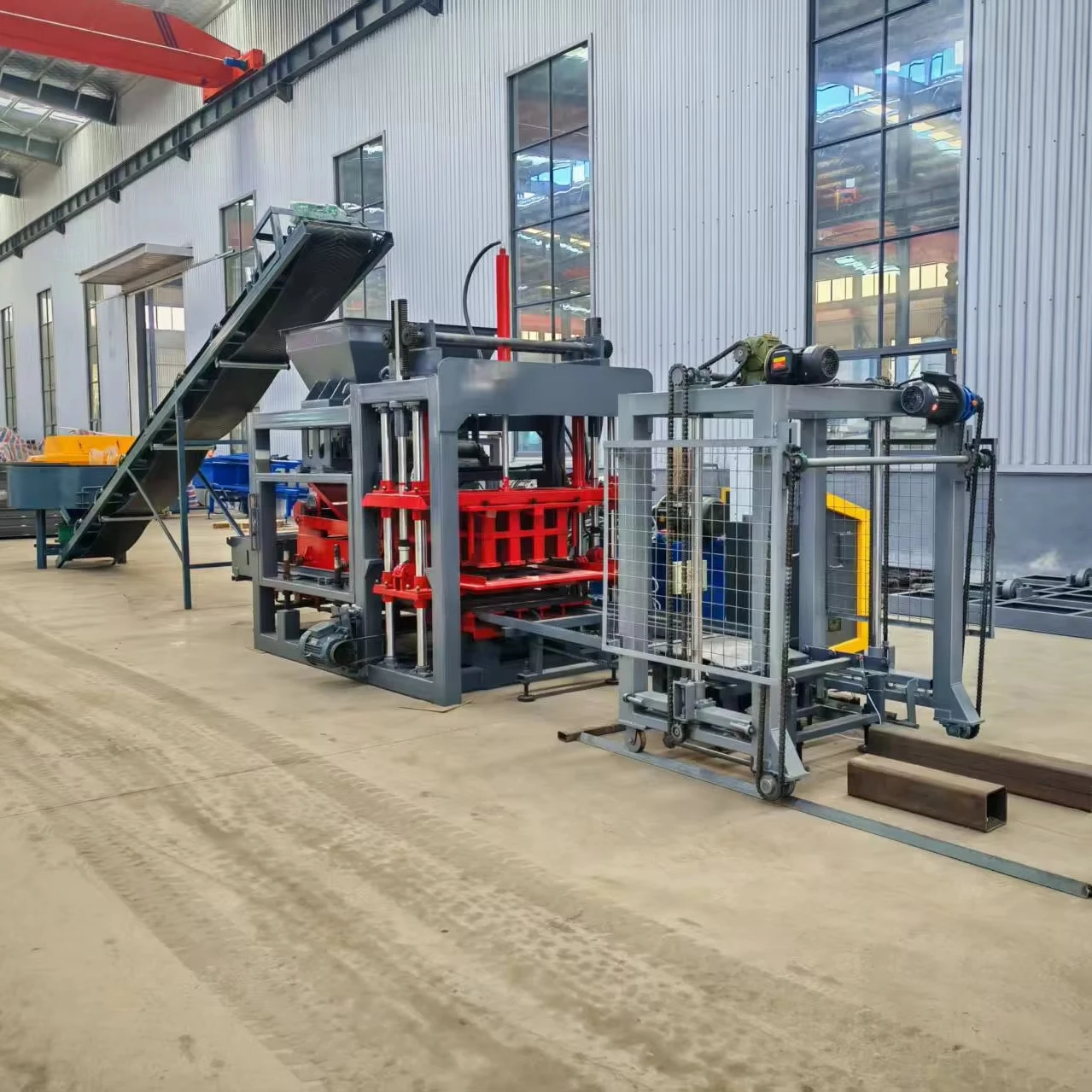
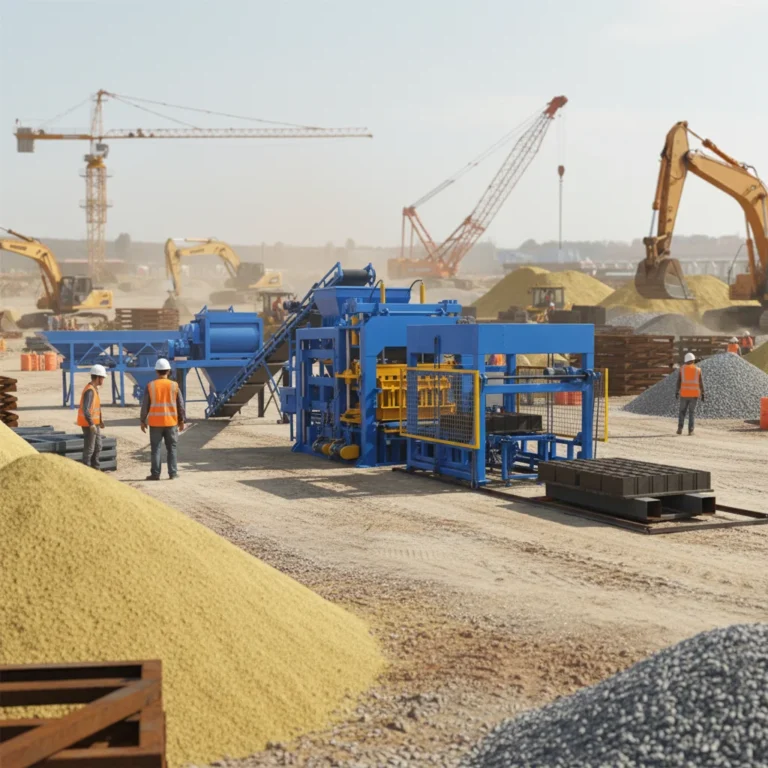 High quality block machine