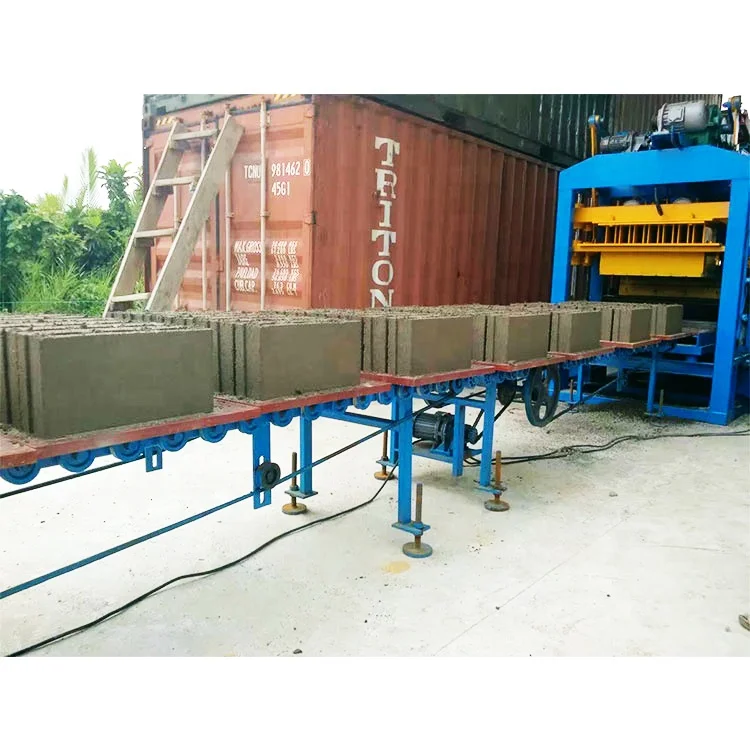
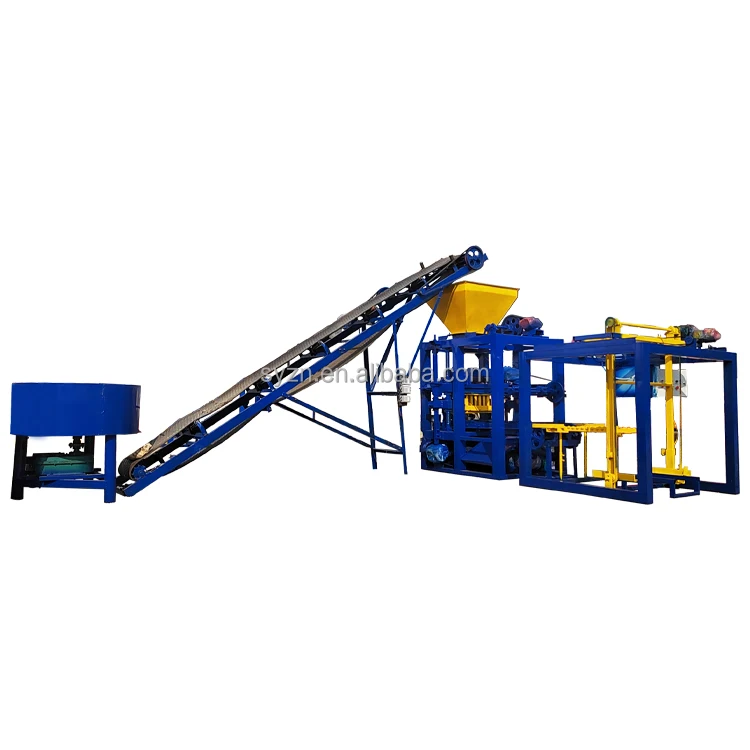
Matched System Design — the QT4-18 hydraulic concrete block making machine is specified alongside its mould, pallet, and handling requirements as one production unit rather than a standalone press, ensuring capacity figures align with your actual block format and local material conditions.
Technical Specifications
| Parameter |
Value |
| Model |
QT4-18 |
| Product Type |
Hydraulic Concrete Block Making Machine |
| Overall Dimensions (L×W×H) |
3900×1600×2300 mm |
| Molding Cycle |
15-25s (basis not stated in source — confirm block format / material / thickness) |
| Vibration Force (Exciting Power) |
40-50 KN |
| Rated Power |
24 kW |
| Mixer Model |
JQ350 |
| Pallet Size |
850×550×25 mm |
| Total Weight |
3 T |
| Applied Products |
Paver, solid brick, hollow block, curbstone |
| Raw Materials |
Crushed stones, sand, cement, dust, fly ash |
| Output Capacity |
1200-1680 pcs/hr based on 400×200×200mm hollow block (4 pcs/mould) |
| Output Capacity |
1800-2400 pcs/hr based on 400×150×200mm hollow block |
| Output Capacity |
3240 pcs/hr based on 240×115×53mm solid brick |
| Daily Output (8hr) |
9600-13440 pcs based on 400×200×200mm hollow block |
| Daily Output (8hr) |
14400-19200 pcs based on 400×150×200mm hollow block |
| Daily Output (8hr) |
16200-19440 pcs based on 240×115×53mm solid brick |
| Automation Level |
Semi-automatic |
| Hydraulic Station |
Equipped (high pressure, stable operation) |
| Vibration System |
Bed mould vertical vibration + upper mould compression vibration |
| Assembly State |
Nude packing in 20GP container |
Application Suitability
| Application |
Material or Output |
| Hollow block production for masonry walls |
Crushed stone, sand, cement, fly ash mixes; 400×200×200mm or 400×150×200mm formats |
| Solid brick manufacturing |
Standard clay-replacement or concrete mixes; 240×115×53mm format |
| Paving block and curbstone production |
High-density concrete mixes with fine aggregate; format-dependent output |
| On-site block production for housing projects |
Semi-automatic operation suitable for contractor yards with limited automation infrastructure |
| First block plant setup for entrepreneurs |
Medium output tier with manageable labour requirements and moderate investment |
What "1200 Pieces per Hour" Actually Means for Your Plant
Every capacity figure quoted for the QT4-18 is tied to a specific block format, so your real daily output depends entirely on the product mix your market demands.
I have watched buyers receive machines rated at impressive hourly numbers, only to discover those figures assumed a standard hollow block their local market does not buy. When they switched moulds to the smaller solid brick or interlocking paver their customers actually order, the cycle time shifted and daily throughput changed accordingly. The concrete block making machine manufacturer you choose should provide capacity calculations per format, not a single headline number. This machine produces 1200-1680 pieces per hour when running 400×200×200mm hollow blocks at four per mould, but that same press yields 3240 pieces per hour on 240×115×53mm solid bricks [NEED_CITE: block format impact on cycle time and daily throughput]. Without this breakdown before purchase, buyers plan their curing area and labour force around a number that never materialises on the factory floor.

Where the QT4-18 Sits in the Full Machine Range
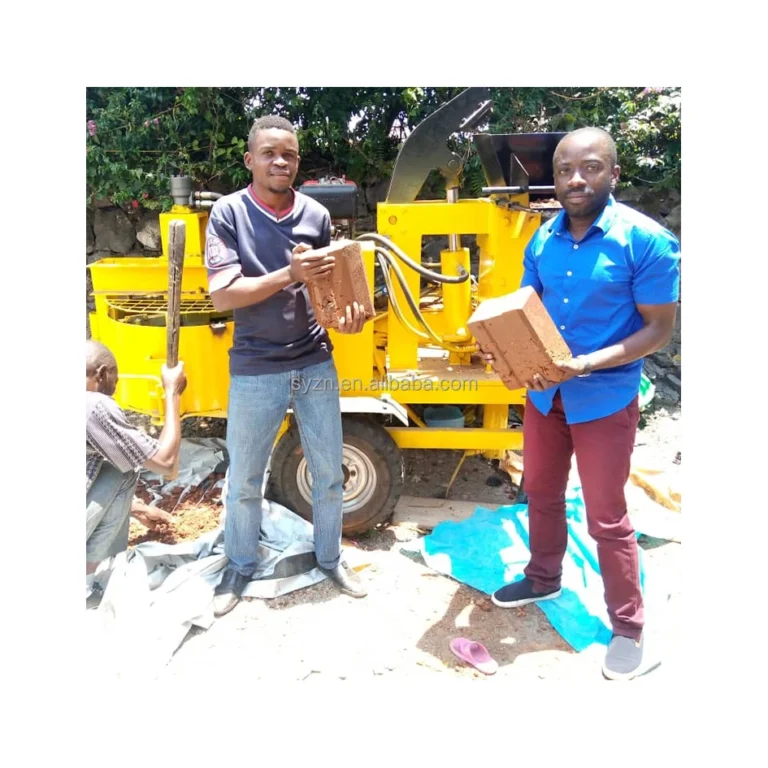
The SHIYUE range spans mobile egg-laying machines for on-site work, semi-automatic presses like this QT4-18 block machine for sale, and fully automatic lines with stacking and cubing. This model occupies the medium-output, semi-automatic tier — it requires manual pallet handling at the curing end but delivers consistent hydraulic pressing and vibration forming. Buyers stepping into block production for the first time often start here because the investment and plant footprint remain manageable while daily output covers a small-to-medium block yard.
Understanding the Upgrade Path from Semi-Automatic
A semi-automatic configuration does not lock you into manual operation permanently. The QT4-18 can be integrated into a line that later adds automatic pallet feeding, stacking, and cubing stations around the press. The hydraulic station and vibration system remain the core forming elements; what changes is how pallets move in and out and how finished blocks are handled after pressing. Plant owners who begin with this tier and add automation stations as their order volume grows avoid over-investing on day one while preserving the option to scale [NEED_CITE: semi-automatic to automatic upgrade path in block production].
How Hydraulic Pressure and Vibration Force Determine Block Density
The QT4-18 pairs a high-pressure hydraulic station with a dual vibration system — bed mould vertical vibration combined with upper mould compression vibration. Hydraulic pressure alone compresses the mix, but without sufficient vibration, air pockets remain and block strength drops. Vibration alone settles the aggregate, but without hydraulic compression from above, the block lacks dimensional consistency. The 40-50 KN vibration force on this machine works with the hydraulic circuit to compact crushed stone, sand, and cement into a dense matrix. The pallet size of 850×550×25 mm is chosen to match standard curing rack dimensions and forklift tine spacing, so blocks can move from press to curing area without re-handling. A 24 kW rated power draw covers the mixer, hydraulic pump, and vibration motors running simultaneously [NEED_CITE: hydraulic pressure and vibration force requirements for concrete block forming].
The Cost of Skipping the Material Report Before Quotation
I once configured a semi-automatic block line for a buyer whose local sand carried a high clay content that was not disclosed until the machine arrived on site. The standard vibration settings could not compact that mix properly, and daily output dropped significantly until I adjusted the vibration duration and feed timing in person. When buyers skip providing a raw material sample or aggregate report before the quotation stage, the machine ships configured for a generic mix. The consequence is not just lower output — it is inconsistent block strength from batch to batch, rejected deliveries, and an emergency service visit that could have been avoided [NEED_CITE: local aggregate variation and block machine configuration mismatch]. Matching vibration force and hydraulic pressure to your specific crushed stone gradation and cement type is what makes the quoted capacity achievable in your plant.
Why This Concrete Block Making Machine Manufacturer Configures Differently
Block machinery is our single focus, which means the QT4-18 press, its moulds, pallets, and handling equipment are specified as one matched system rather than assembled from separate suppliers. The machine configuration is set against your actual mix design and target block format, not a catalogue default. Mould design covers the hollow block, solid brick, paver, and curbstone formats your market sells, with custom drawings available for non-standard sizes. The automation level is selectable — you can start semi-automatic and add stations later. Installation support includes on-site commissioning and operator training so your crew understands cycle settings and mould change procedures from the first production day.
Documentation & Verification
- Line layout and capacity calculation stating the block format assumed for each output tier
- Machine specification sheet with vibration force and hydraulic pressure matched to your mix
- Mould drawing and format list covering hollow, solid, paver, and curbstone options
- Pallet specification confirming size and material against your curing area and forklift
- Voltage, frequency, and PLC display language confirmation before production begins
- Factory test record demonstrating cycle time on your specified block format before dispatch
Installation, Commissioning & Support
- Foundation must support 3 T total machine weight with level tolerance across the 3900×1600 mm footprint
- Dedicated 24 kW power circuit required with voltage and frequency confirmed to your local grid standard
- Machine ships nude-packed in a 20GP container and requires on-site assembly of hydraulic and vibration components
- First-run commissioning includes cycle time adjustment and vibration parameter tuning for your local aggregate
- Operator training covers mould change procedure, hydraulic station maintenance, and daily lubrication schedule
- Wear parts list and mould maintenance intervals provided in the operation manual at handover
What to Share Before Requesting a Quotation
To receive an accurate configuration proposal for the QT4-18, provide your target block format and dimensions, expected daily production volume, and a sample or lab report of your local sand and crushed stone. Include your available workshop floor area, ceiling height, and existing forklift or pallet handling equipment. Specify your local voltage, frequency, and preferred control panel language so the electrical cabinet and PLC display are configured correctly before the machine leaves the factory.
Frequently Asked Questions
Q: How does the QT4-18 compare to fully automatic and mobile options in the range?
A: The QT4-18 sits in the semi-automatic tier with medium daily output, requiring manual pallet handling at the curing end. Fully automatic lines add stacking and cubing for higher volume, while mobile egg-laying machines produce blocks directly on the ground without pallets. The right choice depends on your production volume, available labour, and whether you operate a fixed plant or move between project sites.
Q: What plant footprint should I expect for the QT4-18?
A: The machine itself measures 3900×1600×2300 mm, but you must also allocate space for the JQ350 mixer, raw material storage, pallet staging, and a curing area sized for your daily output. A typical semi-automatic layout with this press requires a workshop bay plus an adjacent open or covered curing yard. Exact dimensions depend on which block format you produce and your target daily volume.
Q: Which block formats can the QT4-18 produce and how does output change?
A: The press accepts moulds for hollow blocks, solid bricks, paving blocks, and kerbstones. Output varies by format — running 400×200×200mm hollow blocks yields 1200-1680 pieces per hour, while 240×115×53mm solid bricks reach 3240 pieces per hour. Your actual daily production depends on which format your market orders and how many mould changes you run per shift.
Q: Can I start semi-automatic and upgrade to full automation later?
A: Yes. The QT4-18 press and hydraulic station remain the core forming elements. As your order volume grows, you can add automatic pallet feeding, stacking, and cubing stations around the existing press. The upgrade path is planned during initial line layout so that foundation work and electrical capacity accommodate future automation stations without major rework.
Q: What supporting equipment do I need to complete the line?
A: A complete semi-automatic line with the QT4-18 requires the JQ350 mixer for material preparation, pallets at 850×550×25 mm for block forming, and a curing rack system sized to your daily output. Manual pallet handling is standard at this tier. You may also add a conveyor between mixer and press, and a pallet return system to reduce labour as your production volume increases.

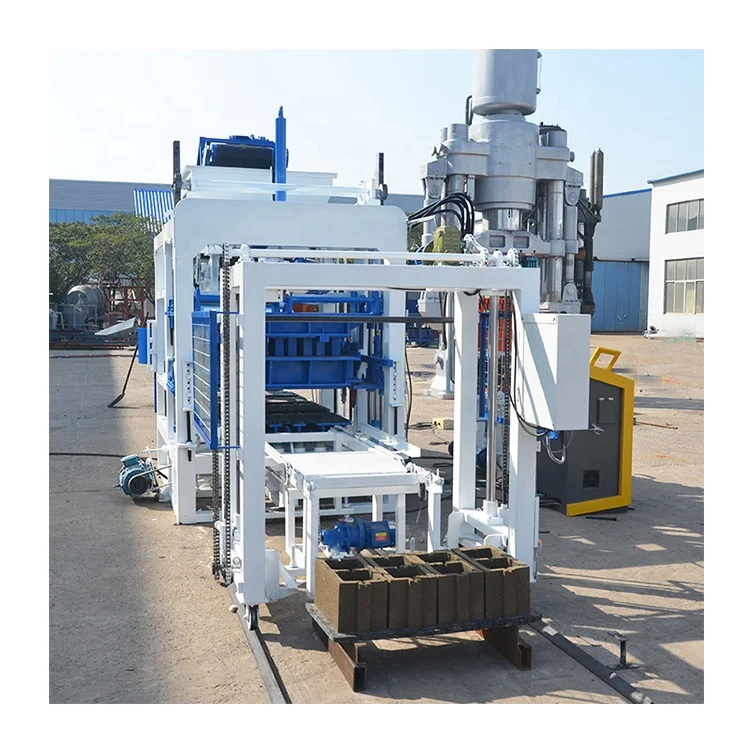 High quality block machine