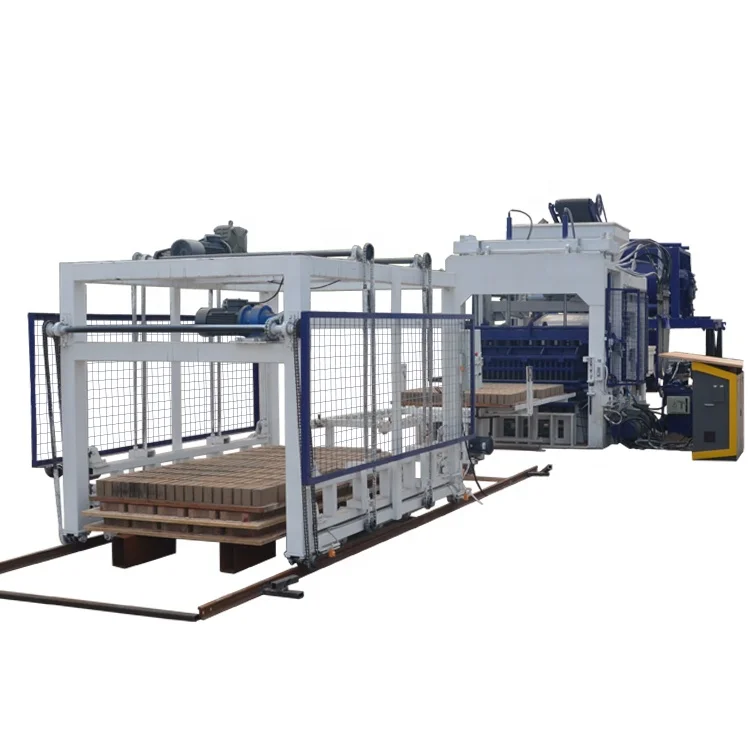
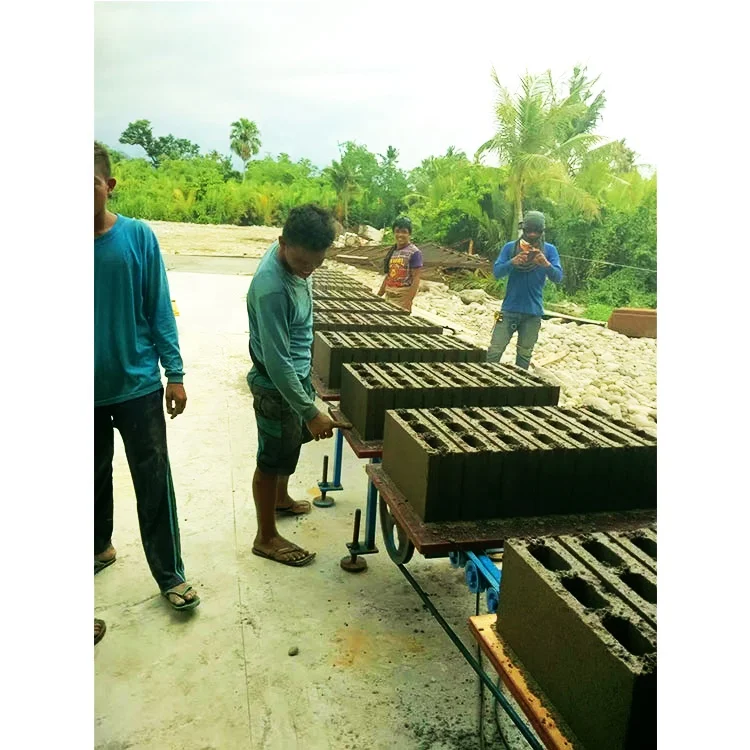
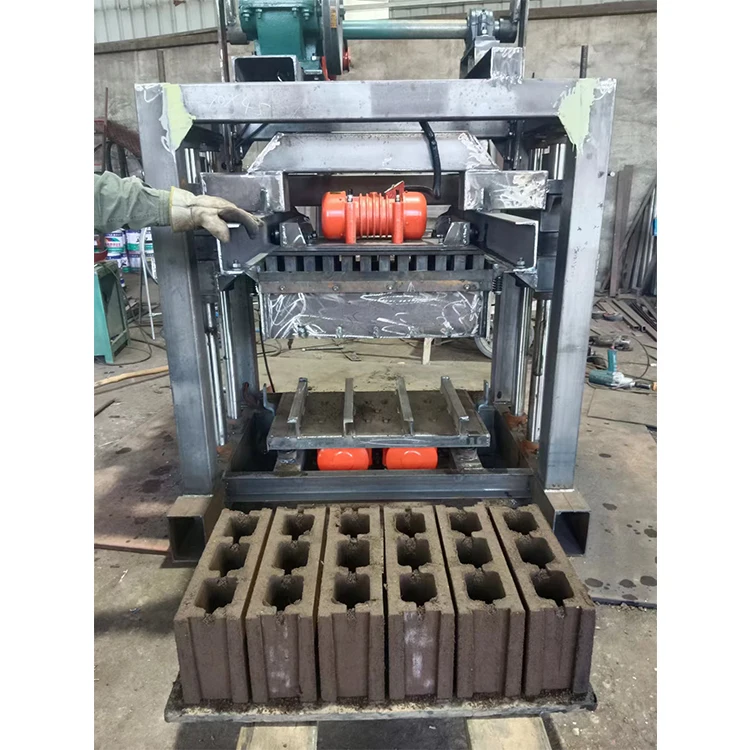
Fully automatic block line — The QT6-15 occupies the mid-to-high tier of the Shiyue range, specified as one matched system from mixer to pallet feeder so the press is never left waiting for upstream stations.
Technical Specifications
| Parameter |
Value |
| Model |
QT6-15 |
| Product Type |
Fully Automatic Hydraulic Vibration Block Making Machine |
| Overall Dimensions (L×W×H) |
7400×1900×2660 mm |
| Total Weight |
7 T |
| Vibration Frequency |
4600 r/min |
| Exciting Power (Vibration Force) |
40-50 kN |
| Molding Cycle |
15-25 s (basis not stated in source — confirm block format / material / thickness) |
| Total Power |
31.25 kW |
| Mixer Model |
JQ350 |
| Pallet Size |
850×550×25 mm |
| Control System |
PLC control system |
| Applied Products |
Paver, solid block, hollow block, curbstone |
| Raw Materials |
Crushed stones, sand, cement, dust, fly ash |
| Output — Hollow Block 400×200×200 mm |
1200-1680 pcs/hr, 9600-13440 pcs/8hr (cycle 15-20 s) |
| Output — Hollow Block 400×150×200 mm |
1800-2400 pcs/hr, 14400-19200 pcs/8hr (cycle 15-20 s) |
| Output — Solid Brick 240×115×53 mm |
3240 pcs/hr, 16200-19440 pcs/8hr (cycle 15-20 s) |
| Automation Level |
Fully automatic with hydraulic station, pallet feeder, brick conveyor, block sweeper |
| Voltage & Frequency |
To be confirmed before production |
| PLC Display Language |
To be confirmed before production |
| Container Loading |
Nude packing in 20GP, approx. 500 pcs of pallets loaded |
Application Suitability
| Application |
Material or Output |
| Hollow block production for housing projects |
Crushed stone, sand, and cement at 400×200×200 mm or 400×150×200 mm |
| Solid brick manufacturing for masonry walls |
Fly ash, dust, and cement blends at 240×115×53 mm |
| Paver and curbstone production for infrastructure |
Aggregate-cement mixes in various surface textures |
| First-time block plant setup |
Multi-format output from a single press with matched pallet and feeder system |
| Contractor on-site production for development projects |
Local aggregate and cement with format changeover via mould swap |
Why "Pieces per Hour" Means Nothing Without the Block Format
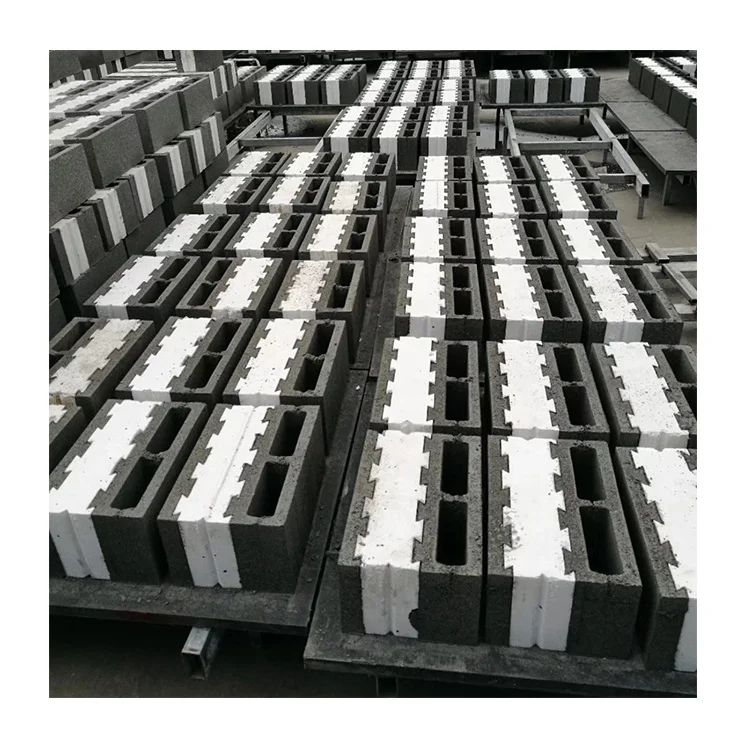
Every capacity figure for the QT6-15 block making machine manufacturer is tied to a specific block dimension, because quoting cycles without format is how buyers end up disappointed.
I once watched a buyer in West Africa receive a block machine rated for a certain hourly output, only to discover that figure assumed a small solid brick while his entire business plan depended on 200 mm hollow blocks. The real daily throughput was barely half what he had modeled. [NEED_CITE: capacity calculation standards for concrete block machines] The QT6-15 capacity table lists each format separately — 400×200×200 mm hollow blocks, 400×150×200 mm hollow blocks, and 240×115×53 mm solid bricks — so your production model matches what actually runs on the pallet.

Where the QT6-15 Sits in the Full Machine Range
The Shiyue range spans mobile egg-laying machines at the entry end, semi-automatic workshop presses in the middle, and high-capacity continuous lines at the top. The QT6-15 block making machine manufacturer lands firmly in the mid-to-high automatic tier, offering PLC-controlled full cycles with a hydraulic station and pallet feeder included as standard. Buyers stepping up from a semi-automatic press will see the difference in labour reduction and cycle consistency; buyers comparing downward from a high-capacity line will see where the trade-off between output and investment sits.
Automation Level and Future Upgrade Path
A semi-automatic configuration still requires operators to handle pallets manually between the press and the curing area. The QT6-15 in its fully automatic setup removes that step with an integrated pallet feeder and brick conveyor, meaning the operator’s role shifts from material handling to monitoring. [NEED_CITE: automation levels in concrete block production lines] For buyers not yet ready to commit to full automation, the machine platform allows adding stacking and cubing modules later, so the initial investment does not lock you into a configuration you cannot expand.
Vibration Force, Hydraulic Pressure, and What They Mean for Block Strength
The 40-50 kN vibration force at 4600 r/min works in combination with hydraulic pressure to compact the mix into a dense, consistent block. Vibration alone loosens and settles the aggregate; hydraulic pressure then squeezes out air voids and locks the particles together. If your local aggregate has high clay or silt content, the vibration frequency and pressure must be adjusted to prevent the mix from sticking to the mould or producing blocks with weak corners. The JQ350 mixer feeds the press at a rate matched to the 15-25 s molding cycle, so the press does not idle between charges. Pallet size at 850×550×25 mm must align with your curing racks and forklift dimensions — ordering pallets that do not fit your existing handling equipment creates a bottleneck before the first block is even produced.
What Happens When the Line Is Not Specified as a System
A block press does not operate alone. If the pallet feeder cannot keep pace with the press cycle, the machine pauses. If the curing rack system cannot absorb the daily output, pallets pile up on the floor and block the conveyor. I have seen plants where the mixer was undersized for the press, forcing the operator to run the QT6-15 at reduced speed just to avoid running dry. [NEED_CITE: block plant line balancing and cycle time matching] These are not machine failures — they are specification failures that only appear after installation.
Why Buyers Source This Tier from Shiyue
Block machinery is our single focus, which means the QT6-15 machine, mould, pallet, and handling equipment are specified as one matched system rather than assembled from separate suppliers. Configuration is set against your actual mix design, local aggregate, and target block format — not pulled from a catalogue default. Mould design covers the formats your market actually sells, and custom drawings are available if your region demands a format we do not stock. Automation level is selectable, so you can start at the automation stage that fits your budget and expand later. Installation support includes operator training, and mould and wear parts supply continues after commissioning.
Documentation & Verification
- Line layout and capacity calculation stating the block format assumed for each output tier
- Machine specification sheet with voltage, frequency, and PLC display language locked before production
- Mould drawing and format list showing every block type the quoted moulds will produce
- Pallet specification matching your curing rack spacing and forklift fork width
- Factory test record and packing photographs provided before the container is sealed
Installation, Commissioning & Support
- Foundation must support 7 T machine weight with level tolerance across the 7400 mm length
- 31.25 kW total power requires dedicated circuit with confirmed voltage and frequency before wiring
- Machine ships as complete set with hydraulic station, PLC cabinet, pallet feeder, and block sweeper
- Commissioning includes first-run parameter tuning for your local aggregate and cement ratio
- Operator training covers mould change procedure, PLC fault reading, and daily greasing schedule
- Wear parts and mould availability confirmed at order so first replacement does not halt production
Before You Send the Inquiry
Tell us which block format sells in your market and what daily volume you need to sustain the business. Share your local aggregate type — whether it is river sand, crushed granite, or recycled concrete — and any clay or silt readings you have. Confirm the voltage and frequency at your site, the language your operators need on the PLC display, and whether you already have curing racks and forklifts that the pallet size must fit.
Frequently Asked Questions
Q: How does the QT6-15 output tier compare to semi-automatic and higher-capacity automatic models?
A: The QT6-15 sits above semi-automatic workshop machines that rely on manual pallet handling, and below high-capacity continuous lines designed for 24-hour shifts. It delivers fully automatic cycles with integrated pallet feeding and PLC control, targeting buyers who need consistent output across an eight-hour shift without the investment of a large-scale continuous plant.
Q: What plant footprint and utility connections does the QT6-15 require?
A: The machine itself occupies roughly 7.4 m in length and 1.9 m in width, but you must add space for raw material storage, the JQ350 mixer, pallet return paths, and curing racks. A level concrete foundation, a dedicated electrical circuit matching the confirmed voltage, and water supply for mix batching are all required before commissioning begins.
Q: Which block formats are included in the standard mould set?
A: The standard set typically covers one hollow block, one solid brick, and one paver format. Additional moulds for curbstones, interlocking pavers, or custom dimensions are quoted separately based on your drawings. Every quoted mould is listed on the format document so you know exactly what the machine will produce on arrival.
Q: Can I start semi-automatic and upgrade to full automation later?
A: Yes. The QT6-15 platform supports starting with manual pallet handling and adding automatic pallet feeding, stacking, or cubing modules as production volume grows. The hydraulic station and PLC architecture remain the same, so the upgrade is an addition to the line rather than a machine replacement.

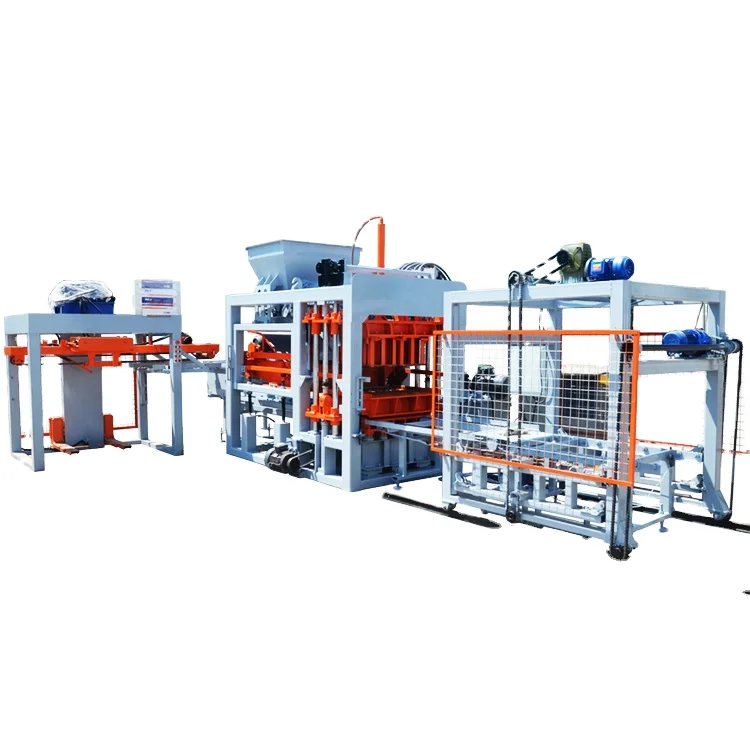
 High quality block machine