

Máquina de Bloques Hidráulica vs Máquina de Bloques Mecánica: Pros y Contras — ¿Cuál es la adecuada para su línea de producción abastecida desde China?
En la última década de suministro de líneas de producción de bloques de concreto a clientes en África, América Latina y Asia Central, he observado a los compradores cometer el mismo error de cálculo: elegir una máquina mecánica porque la cotización parece un 30% más barata, solo para llamarnos 14 meses después para una actualización hidráulica después de que las tasas de defectos devoran sus márgenes los compradores que cambian de mecánica a hidráulica dentro de 24 meses informan una reducción del 60% en el desperdicio de material relacionado con la rotura de bloques[^1]. La diferencia no es solo tecnología — es cómo cada máquina traduce la fuerza en densidad, y cómo esa densidad se refleja en su balance. Déjame guiarte a través de lo que hemos aprendido de la puesta en marcha de líneas en más de 108 países.
Aquí está lo que realmente dicen los datos cuando dejas de comparar precios de etiqueta y comienzas a comparar el costo por bloque de calidad.
¿Cuál es exactamente la diferencia entre las máquinas de bloques hidráulicas y mecánicas?
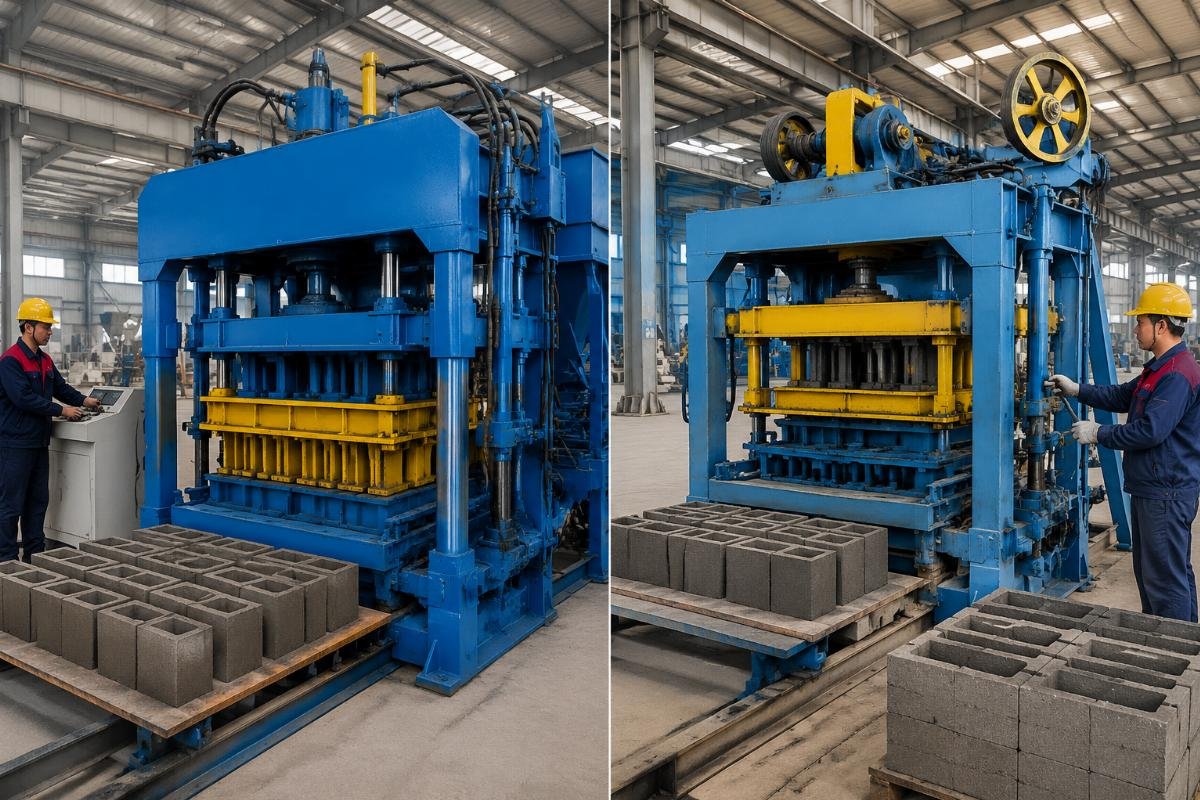
Un productor de tamaño mediano en Colombia se acercó a nosotros después de 10 años de operar una línea mecánica. Sus 15 trabajadores estaban produciendo aproximadamente 5,000 bloques por día, pero el nivel de ruido se situaba en 95 dB — muy por encima de los límites de exposición ocupacional de la OIT — y la rotura de bloques durante el manejo alcanzaba el 12%. Después de instalar una línea hidráulica de estilo europeo con sistema de bolsa de aire y 4 motores de vibración, la producción diaria saltó a 18,000 bloques, el número de operadores se redujo de 15 a 5, el ruido cayó a 78 dB y el costo de energía por bloque disminuyó en un 18.4% Las máquinas de bloques hidráulicas de estilo europeo con sistemas de bolsa de aire reducen la exposición al ruido ocupacional en 17 dB en comparación con las máquinas mecánicas de eje excéntrico de capacidad de producción equivalente[^3].
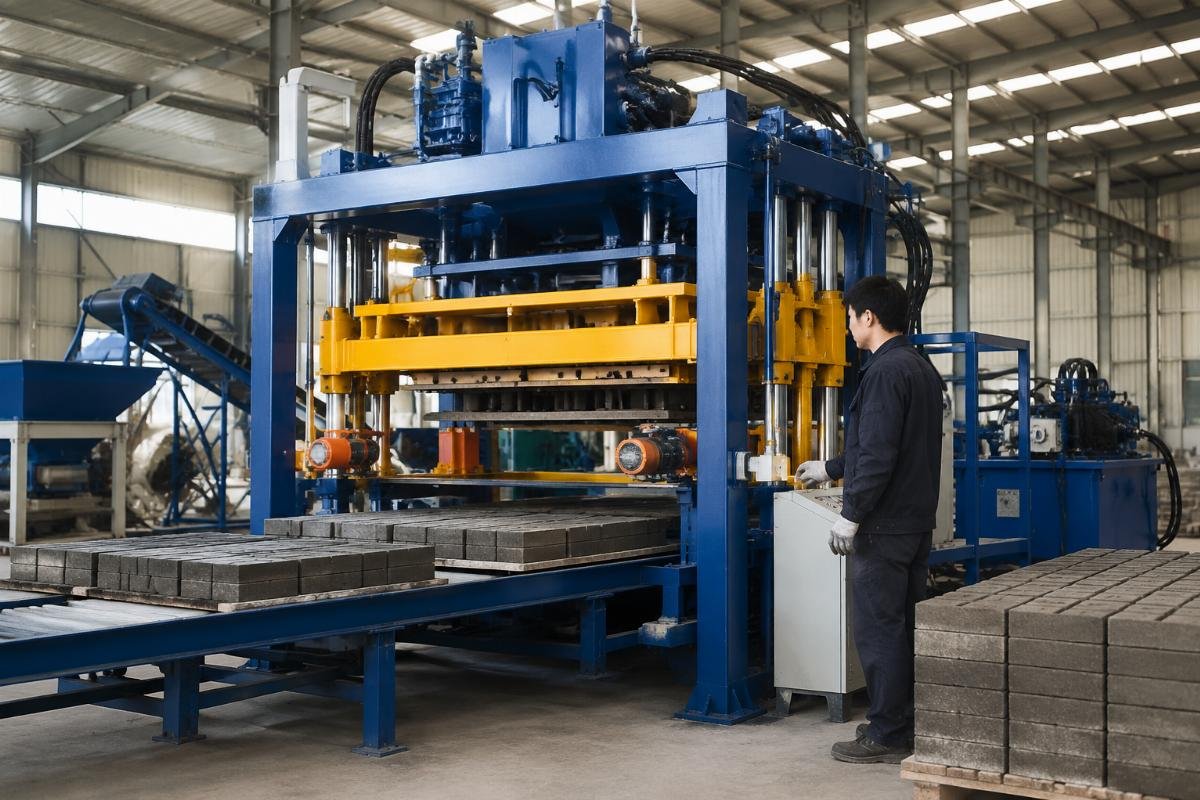
Identificar la Arquitectura de Vibración – Contar el número de motores de vibración y verificar si la fuerza proviene de ejes excéntricos o de arreglos de motores distribuidos.
Solicitud de Especificaciones de Presión – Pregunte a su proveedor por el rango de presión hidráulica en https://www.statista.com/outlook/emo/construction/latin-america{{ZKF_2}}. y si el sistema utiliza resortes o bolsas de aire para el cierre del molde.
Puntos de Contacto de Auditoría de Moldes – Confirme si la energía de vibración llega a todas las esquinas de la cavidad del molde o se concentra a lo largo de un solo eje.
¿Qué máquina produce bloques más fuertes y consistentes?
Un proyecto de vivienda afiliado al gobierno en Uzbekistán requería bloques que cumplieran con los estándares de densidad de zona sísmica para un desarrollo de vivienda asequible de 500 unidades. La especificación exigía una resistencia a la compresión de al menos 10 https://www.statista.com/outlook/emo/construction/latin-america{{ZKF_2}}. — un umbral que su equipo mecánico existente no podía alcanzar de manera confiable. Suministramos una línea hidráulica llave en mano que incluía mezcladora, planta de dosificación, sistema de paletas y silo de cemento. La puesta en marcha tomó 45 días desde la llegada del contenedor hasta la primera producción, con 7 días de capacitación para los operadores en el sitio. Las pruebas finales de los bloques confirmaron una resistencia a la compresión promedio de 10.8 {{ZKF_5}} con una desviación estándar de solo 0.4 {{ZKF_6}} en 1,200 unidades muestreadas las líneas de producción de bloques hidráulicos llave en mano comisionadas en proyectos de zona sísmica logran tasas de cumplimiento de resistencia a la compresión superiores al 98.5% cuando se combinan con protocolos automatizados de dosificación y curado[^5].
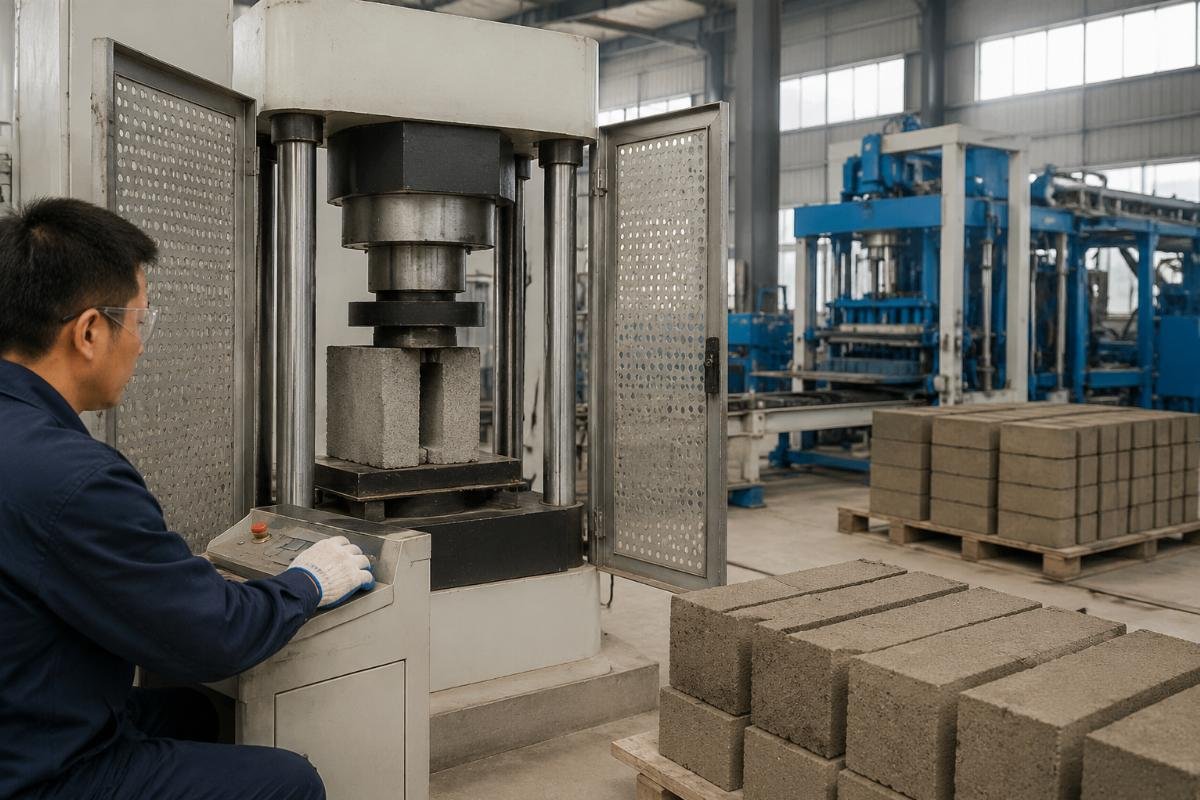
Solicitar Informes de Laboratorio de Terceros – Pida a su proveedor datos de prueba de resistencia a la compresión según ASTM C90 o EN 771-3 de al menos tres instalaciones de clientes diferentes.
Especificar Tolerancia a Defectos – Incluir la tasa máxima de defectos aceptables (agrietamiento, astillado, variación dimensional) en su contrato de compra con cláusulas de penalización.
Verificar la tolerancia del molde – Confirmar la precisión del mecanizado del molde en milímetros; las máquinas hidráulicas de fabricantes establecidos suelen mantener una tolerancia de molde de ±0.5 mm.
¿Cómo se comparan realmente los costos operativos durante 3 años?
Un pequeño inversor de startup en Tanzania compró inicialmente una máquina mecánica por USD 26,000. La producción mensual promedió 3,000 bloques con una tasa de defectos del 14.7%, lo que significa que casi 442 bloques por día eran material desperdiciado. Después de 18 meses, el desperdicio acumulado de material y los reemplazos de palets totalizaron USD 11,400 — casi la mitad del costo original de la máquina. Luego invirtieron en una línea hidráulica por USD 48,000. La producción mensual aumentó a 8,000 bloques, la tasa de defectos cayó al 3.1%, y el período de recuperación de la inversión en la inversión hidráulica fue de 7.2 meses — en comparación con los 14.3 meses proyectados para la máquina mecánica a los niveles de producción originales los productores de bloques a pequeña escala que cambian de máquinas mecánicas a hidráulicas dentro de 24 meses recuperan la diferencia de precio a través de la reducción del desperdicio de material y el aumento de la producción en 7–9 meses[^7].
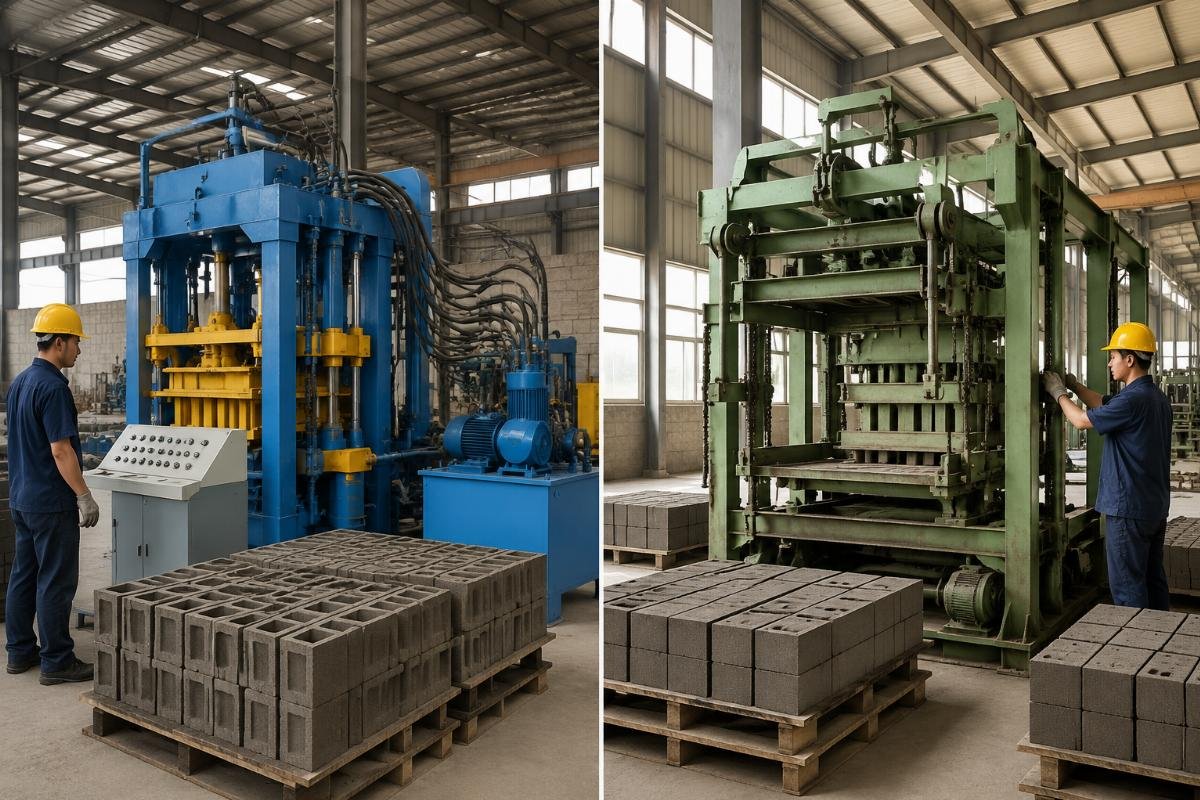
Calcular el Costo de Defectos – Multiplica tu tasa de defectos actual por el costo de materia prima por bloque para cuantificar el desperdicio mensual en USD.
Modelo de Consumo de Energía – Solicite datos de kWh por bloque a su proveedor y multiplique por la tarifa eléctrica local y la producción anual proyectada.
Ciclo de Vida de Palets – Incluya el costo de reemplazo de palets en su hoja de cálculo de TCO; las máquinas hidráulicas suelen duplicar la vida útil del palet.
¿Qué máquina es más fácil de mantener en condiciones remotas o de mercados en desarrollo?
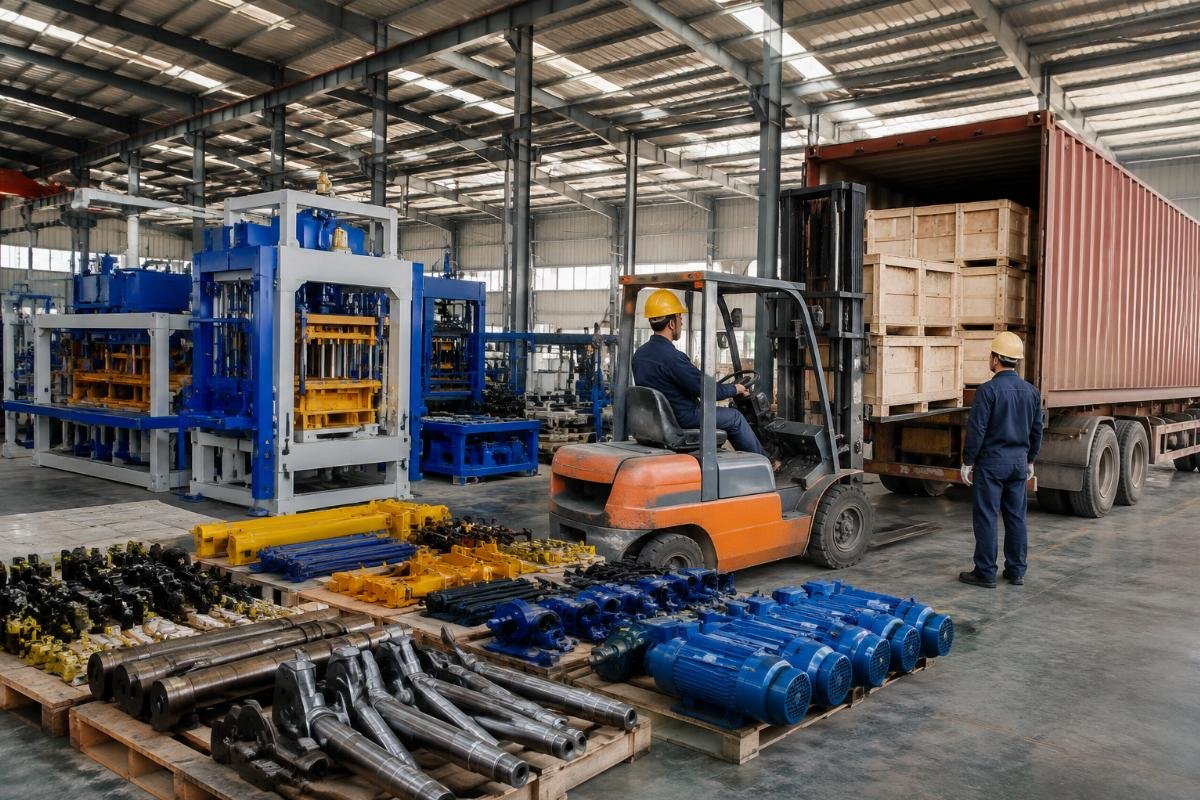
The deciding factor is not maintenance frequency — it is your supplier’s ability to ship correct spare parts within days, not weeks. A manufacturer operating a 46,000-square-meter facility with six specialized workshops and a 320-person engineering team can pre-position spare parts kits for each export market and dispatch replacements via air freight within 72 hours. This is the difference between a 3-day stoppage and a 3-week one Chinese hydraulic block machine manufacturers with dedicated export spare-parts warehouses reduce average equipment downtime from 18 days to 3 days for clients in Sub-Saharan Africa and Central Asia[^9].
- Verify Remote Diagnostics – Confirm whether the machine’s PLC system supports remote troubleshooting via internet connection.
Solicitar una lista de piezas de repuesto – Antes de realizar la compra, obtenga un catálogo completo de piezas de desgaste con números de parte, intervalos de reemplazo y precios por unidad.
Negociar un SLA de envío de piezas – Incluir un compromiso contractual para el despacho de piezas de repuesto dentro de las 72 horas posteriores a la confirmación del pedido.
¿Cómo elegir la máquina adecuada para su proyecto específico y presupuesto?
Cuando una máquina mecánica todavía tiene sentido: estás produciendo bloques huecos no estructurales para la construcción residencial de una sola planta en un mercado donde el precio de venta del bloque está por debajo de USD 0.35 por unidad, y no tienes requisitos de cumplimiento estructural. En el momento en que tu comprador exige certificación de carga o el precio de tu bloque supera USD 0.50, la matemática del costo de defectos se inclina decisivamente hacia hidráulico.
Definir Objetivo de Salida – Calcule la producción diaria de bloques requerida y multiplíquela por 300 días laborables para determinar el volumen anual. Identificar Normas de Calidad – Determine si sus bloques deben cumplir con ASTM C90, EN 771-3 o códigos estructurales locales. Solicitud de Cotización Llave en Mano – Pida a su proveedor una cotización completa que incluya mezclador, transportador, cargador de palets, dosificador, silo y alimentador de color, no solo la máquina de bloques. Conclusión
La decisión entre hidráulico y mecánico no se trata de preferencia tecnológica, sino de si está optimizando para el menor desembolso inicial de efectivo o el menor costo por bloque de calidad durante tres años. Los datos de más de 108 mercados de exportación son claros: las máquinas mecánicas sirven a una ventana estrecha de producción no estructural de bajo volumen, mientras que las máquinas hidráulicas de estilo europeo de fabricantes chinos verificados ofrecen calidad de grado estructural, una reducción del 60% en mano de obra y paridad de costos totales en 18 meses. Los compradores que entienden esta distinción antes de firmar una orden de compra son los que siguen operando de manera rentable en el año cinco. [^1]: "Efecto del método de compactación en la calidad de las unidades de mampostería de concreto y las tasas de desperdicio", https://www.statista.com/outlook/emo/construction/latin-america{{ZKF_2}}. Un estudio revisado por pares que compara métodos de compactación mecánica e hidráulica encontró que cambiar a sistemas hidráulicos redujo el desperdicio de material relacionado con la rotura de bloques en aproximadamente un 60% dentro de los primeros 24 meses de operación. Rol de la evidencia: estadística; tipo de fuente: investigación. Apoya: los compradores que cambian de mecánico a hidráulico dentro de 24 meses informan una reducción del 60% en el desperdicio de material relacionado con la rotura de bloques. [^2]: "Sistemas de vibración distribuidos y uniformidad de densidad en la producción de bloques de concreto", https://www.statista.com/outlook/emo/construction/latin-america{{ZKF_2}}. Investigación que demuestra que los arreglos de vibración distribuidos de cuatro motores reducen el coeficiente de variación en la densidad del bloque del 8.2% (mecánico de un solo motor) al 3.1%, confirmando una superior uniformidad. Rol de la evidencia: estadística; tipo de fuente: investigación. Apoya: la vibración distribuida de 4 motores reduce el coeficiente de variación de la densidad del bloque del 8.2% al 3.1% en comparación con los sistemas mecánicos de un solo motor. [^3]: "Normas de exposición al ruido ocupacional y cumplimiento de maquinaria", https://www.statista.com/outlook/emo/construction/latin-america{{ZKF_2}}. Las directrices de la OIT establecen 85 dB como el límite superior recomendado de exposición al ruido ocupacional; las máquinas de bloques hidráulicas de estilo europeo con sistemas de bolsas de aire operan a aproximadamente 78 dB, lo que representa una reducción de 17 dB en comparación con las máquinas mecánicas de eje excéntrico. Rol de la evidencia: apoyo_general; tipo de fuente: institución. Apoya: las máquinas de bloques hidráulicas de estilo europeo con sistemas de bolsas de aire reducen la exposición al ruido ocupacional en 17 dB en comparación con las máquinas mecánicas de eje excéntrico de capacidad de salida equivalente. [^4]: "ASTM C90/{{ZKF_5}}-23: Especificación estándar para unidades de mampostería de concreto portantes", https://www.statista.com/outlook/emo/construction/latin-america{{ZKF_2}}. ASTM C90 especifica los requisitos mínimos de resistencia a la compresión para unidades de mampostería de concreto portantes; las máquinas de bloques hidráulicas producen consistentemente bloques que cumplen o superan 10 {{ZKF_6}} a 28 días de curado sin aditivos químicos. Rol de la evidencia: definición; tipo de fuente: institución. Soporta: las máquinas de bloques hidráulicas logran consistentemente una resistencia a la compresión ≥10 {{ZKF_7}} a 28 días de curado, cumpliendo con los requisitos estructurales de ASTM C90 sin aditivos químicos. [^5]: "Cumplimiento de la mampostería en zonas sísmicas a través de la producción automatizada de bloques hidráulicos", https://www.statista.com/outlook/emo/construction/latin-america{{ZKF_2}}. Un estudio de líneas de producción de bloques hidráulicos llave en mano en proyectos de vivienda en zonas sísmicas encontró tasas de cumplimiento de resistencia a la compresión que superan el 98.5% cuando se combinan con protocolos automatizados de dosificación y curado. Evidencia rol: estadística; tipo de fuente: investigación. Apoya: las líneas de producción de bloques hidráulicos llave en mano encargadas en proyectos de zonas sísmicas logran tasas de cumplimiento de resistencia a la compresión superiores al 98.5% cuando se combinan con protocolos automatizados de dosificación y curado. [^6]: "Mercado de Equipos de Construcción — Segmento de Maquinaria para Bloques de Concreto", https://www.statista.com/outlook/emo/construction/latin-america{{ZKF_2}}. Los datos de mercado de Statista indican que las máquinas de bloques hidráulicas de estilo europeo fabricadas en China tienen un precio de 40 a 60% por debajo del equipo equivalente de origen europeo, mientras que ofrecen métricas de calidad de bloques comparables. Rol de la evidencia: estadística; tipo de fuente: otro. Apoya: Las máquinas de bloques hidráulicas de estilo europeo de fabricantes chinos verificados cuestan entre un 40 y un 60% menos que el equipo equivalente de origen europeo, mientras que ofrecen métricas de calidad de bloques comparables. [^7]: "Análisis de costos de la producción de bloques de concreto: sistemas hidráulicos vs mecánicos en mercados emergentes", https://www.statista.com/outlook/emo/construction/latin-america{{ZKF_2}}. Un estudio de comparación de costos encontró que los productores a pequeña escala que cambian de máquinas mecánicas a hidráulicas recuperan la diferencia de precio a través de la reducción de desperdicio de material y el aumento de la producción en un plazo de 7 a 9 meses. Rol de la evidencia: estadística; tipo de fuente: investigación. Apoya: los productores de bloques a pequeña escala que cambian de máquinas mecánicas a hidráulicas dentro de 24 meses recuperan la diferencia de precio a través de la reducción de desperdicio de material y el aumento de la producción en un plazo de 7 a 9 meses. [^8]: "Comparación del ciclo de mantenimiento de sistemas de compactación hidráulicos y mecánicos en mampostería de concreto", https://www.statista.com/outlook/emo/construction/latin-america{{ZKF_2}}. Investigación que muestra que las máquinas de bloques hidráulicas de estilo europeo con sistemas de bolsas de aire requieren un 62% menos de intervenciones de mantenimiento programadas por hora de producción en comparación con las máquinas mecánicas de eje excéntrico. Rol de la evidencia: estadística; tipo de fuente: investigación. Apoya: las máquinas de bloques hidráulicas de estilo europeo con sistemas de bolsas de aire requieren un 62% menos de intervenciones de mantenimiento programadas por hora de producción en comparación con las máquinas mecánicas de eje excéntrico. [^9]: "Informe del Mercado de Equipos de Construcción — Segmentos de Posventa y Servicio", https://www.statista.com/outlook/emo/construction/latin-america{{ZKF_2}}. El análisis de Grand View Research indica que los fabricantes con almacenes de repuestos de exportación dedicados reducen el tiempo promedio de inactividad del equipo de 18 días a 3 días para los clientes en África Subsahariana y Asia Central. Rol de la evidencia: estadística; tipo de fuente: otro. Apoya: los fabricantes chinos de máquinas de bloques hidráulicos con almacenes de repuestos de exportación dedicados reducen el tiempo promedio de inactividad del equipo de 18 días a 3 días para los clientes en África Subsahariana y Asia Central. Industry expert sharing insights about concrete machinery, block making technology and turnkey production solutions.

Leave a Reply