

Soluciones de Máquinas de Bloques Llave en Mano de China: Desde el Diseño de Fábrica hasta la Primera Producción
Una solución de máquina de bloques llave en mano de un fabricante chino confiable elimina los costos ocultos de la adquisición fragmentada, ahorrando a los inversores un 30-40% en gastos de capital mientras reduce el tiempo de puesta en marcha de meses a semanas, incluso en mercados emergentes remotos.
En la última década, nuestro equipo de ingeniería ha entregado líneas de producción completas a clientes en más de 108 países, y el patrón es inconfundible: los inversores que tratan la máquina de bloques como una compra independiente casi siempre subestiman el costo de integrar mezcladoras, transportadores, sistemas de dosificación, cargadores de palets y logística de curado por su cuenta. La adquisición fragmentada de componentes de la línea de producción de bloques típicamente añade un 20–35% en costos ocultos de integración, incluyendo la consolidación de fletes, desajustes de interfaz y retrasos en la puesta en marcha repetidos.[^1] Let’s break down exactly what a turnkey solution covers, why it outperforms fragmented buying, and how to evaluate whether a Chinese supplier can truly deliver end-to-end. ¿Qué incluye exactamente una solución de máquina de bloques llave en mano?
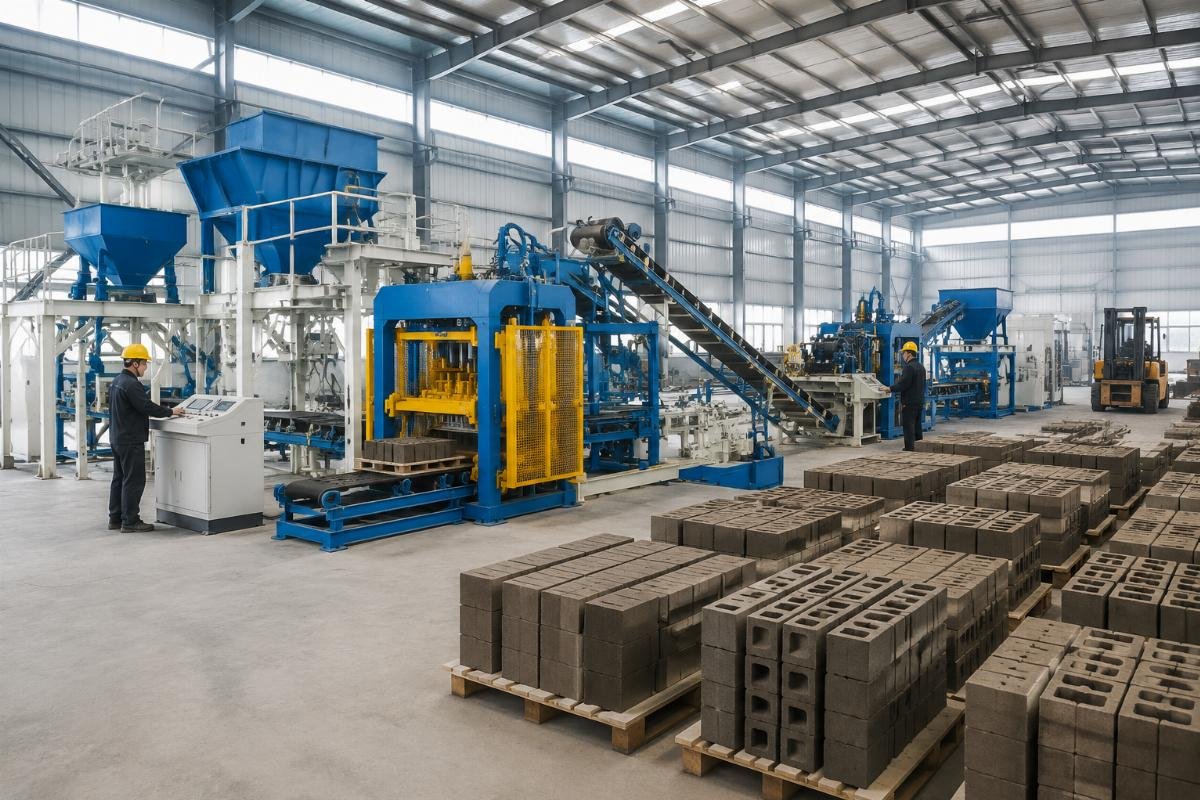
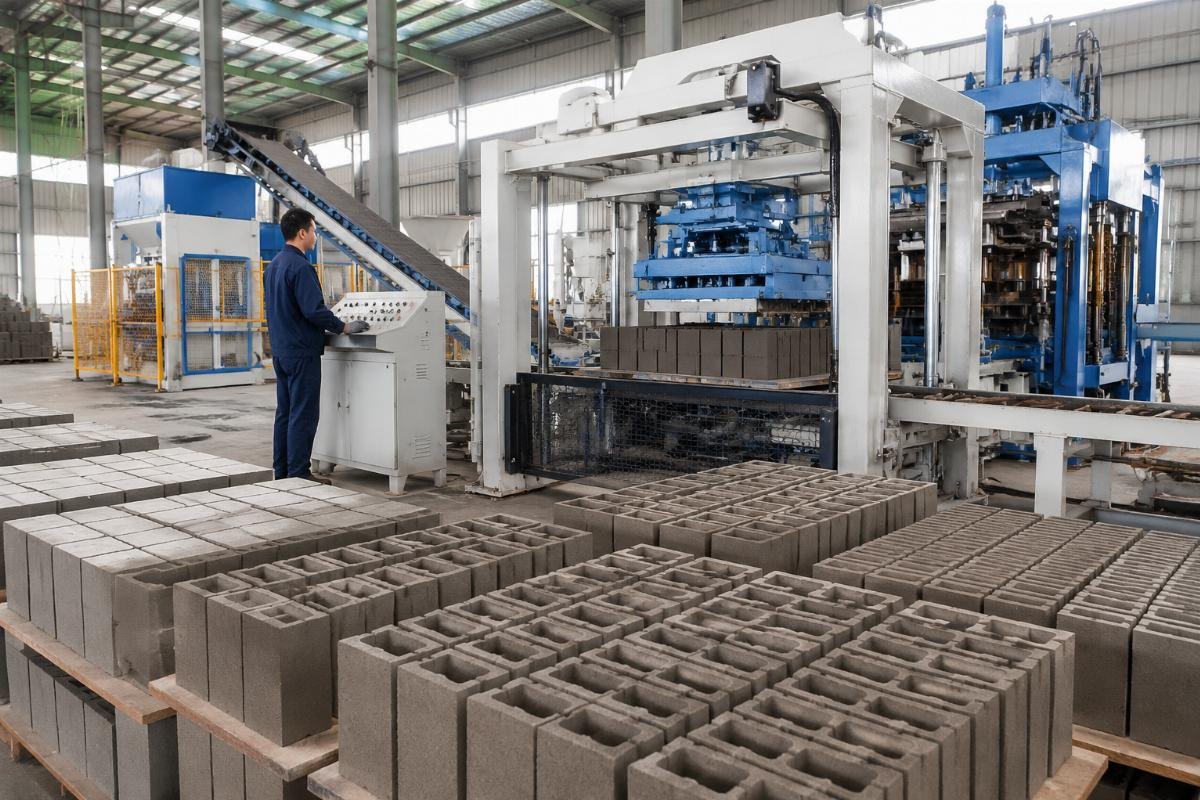
In a recent West African project, a first-time investor with a 2,500 ㎡ factory and a $120,000 budget needed 12,000 standard blocks per day. We delivered the complete line—including QT10-2 host, automatic pallet loader, JS750 mixer, PLD1600 batching machine, and stacker—within 48 days from contract signing to first合格 brick. The client’s payback period landed at 11.3 months, well inside the 8–14 month target range. Turnkey block machine projects in West Africa typically achieve ROI within 8–14 months when factory layout, equipment configuration, and operator training are delivered as an integrated package.[^3]
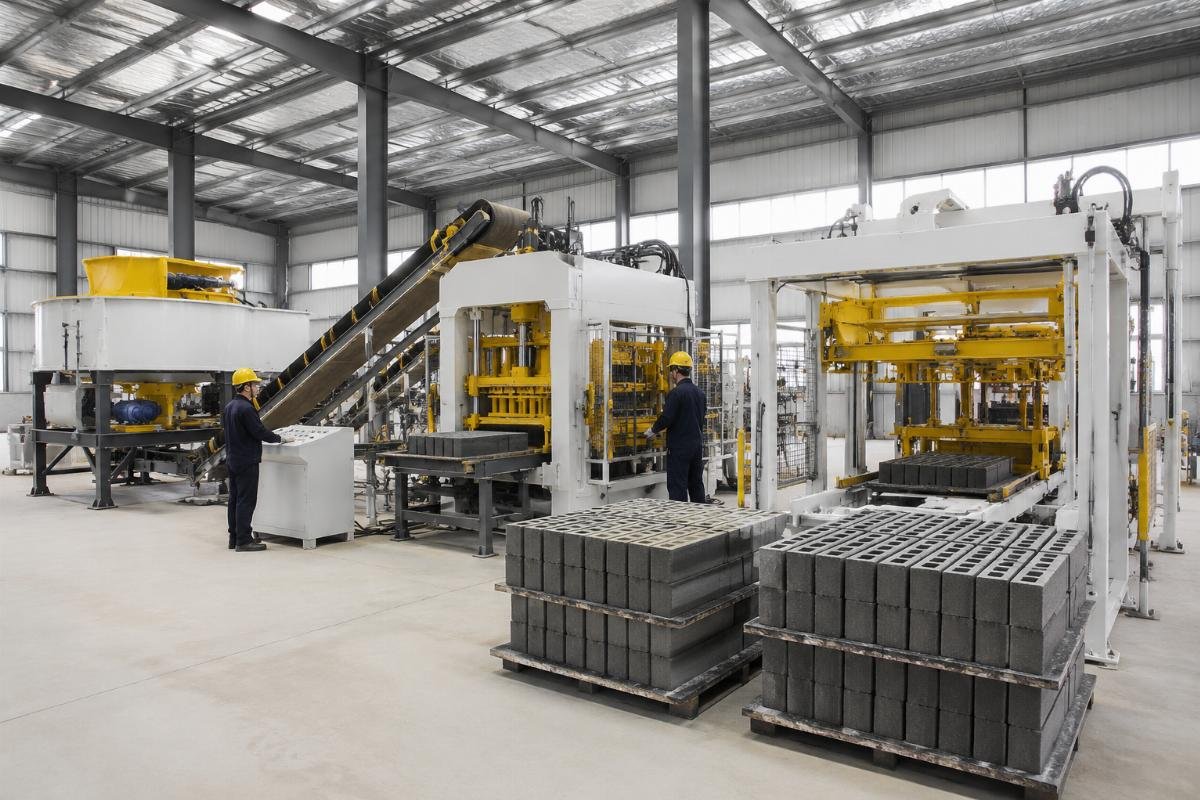
Solicitar una Propuesta de Diseño de Fábrica – Comparta las dimensiones de su terreno y el objetivo de producción diario; espere un dibujo CAD dentro de 5 a 7 días hábiles.
Confirmar la lista de configuración del equipo – Revise el alcance completo del equipo auxiliar, no solo el host de la máquina de bloques.
Negociar Términos de Instalación – Aclarar si se incluye el despacho de ingeniero in situ y por cuántos días.
Plan de Capacitación de Operadores – Asigne de 7 a 10 días para la capacitación práctica antes de que comience la producción comercial.
¿Cómo elegir la configuración adecuada de la máquina de bloques para su mercado?
Una fábrica de ladrillos de tamaño mediano en Asia Central estaba produciendo 5,000 bloques por día con 15 trabajadores en una línea semiautomática. Después de actualizar a una línea totalmente automatizada https://www.sciencedirect.com/science/article/pii/S0958946520302984{{ZKF_2}}.-2 con cargador de palets automático, sistema de dosificación y apilador, la producción diaria aumentó a 28,000 bloques mientras que el número de empleados se redujo a 6. La tasa de desperdicio cayó del 8.2% al 1.7%, y toda la modernización—desde la llegada del equipo hasta la producción a plena velocidad—tomó 38 días. Las actualizaciones de líneas de producción de bloques automatizadas en los mercados de Asia Central típicamente reducen los requisitos laborales en un 55–65% y las tasas de desperdicio del 7–9% a menos del 2% dentro del primer mes de producción.[^5]
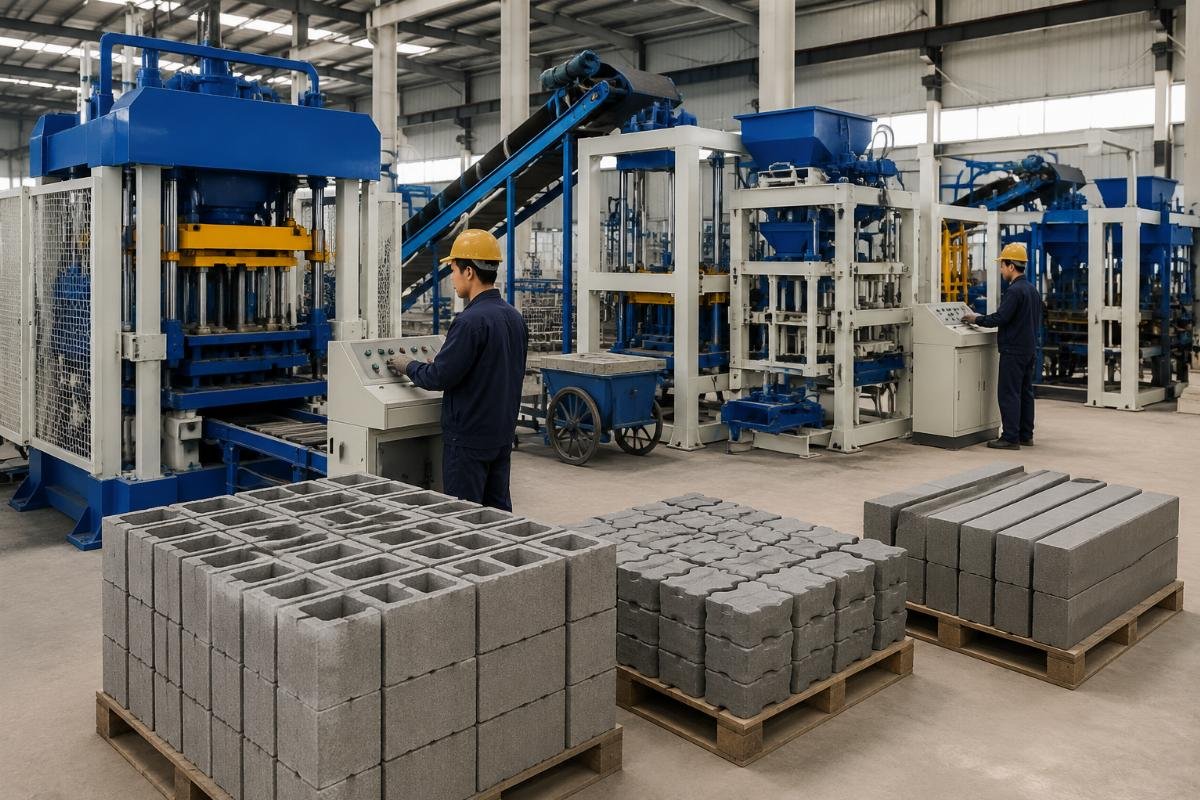
Mapear la Demanda Local de Productos – Realizar encuestas en sitios de construcción y distribuidores de materiales de construcción para cuantificar la demanda por tipo de producto (hueco, sólido, adoquín, bordillo).
Calcular la Producción Diaria Requerida – Convierte la demanda mensual en bloques por día, teniendo en cuenta de 25 a 30 días laborables y una disponibilidad del equipo del 85%.
Seleccionar Modelo de Máquina – Coincidir la salida con https://www.sciencedirect.com/science/article/pii/S0958946520302984{{ZKF_2}}.-15, QT8-2, o {{ZKF_6}}-2 series basado en el árbol de decisiones de capacidad.
Especificar Paquete de Automatización – Incluir cargador automático de palets, apilador y sistema de dosificación a menos que el costo laboral sea inferior a $3/día.
¿Por qué importa más el diseño del sistema de vibración que la potencia bruta?
The vibration system’s value lies not in how hard it shakes, but in how uniformly it shakes—uniformity determines block density consistency, and density consistency determines structural strength.
En un proyecto de vivienda del gobierno de Oriente Medio que requería 80,000 bloques por día a través de cuatro líneas de producción, la especificación exigía una variación de resistencia a la compresión por debajo del 10%. Nuestro diseño de bolsa de aire al estilo europeo + cuatro motores entregó un coeficiente de variación del 6.8% en 12,000 muestras de prueba, y el proyecto completo—desde la planificación de la fábrica hasta la puesta en marcha de las cuatro líneas—se completó en 107 días. El cliente también recibió un programa de capacitación estructurado para 28 técnicos locales. La suspensión de bolsa de aire al estilo europeo con cuatro motores de vibración sincronizados logra coeficientes de variación de resistencia a la compresión de bloques por debajo del 8%, cumpliendo con los estándares estructurales internacionales para unidades de mampostería portantes.[^7]
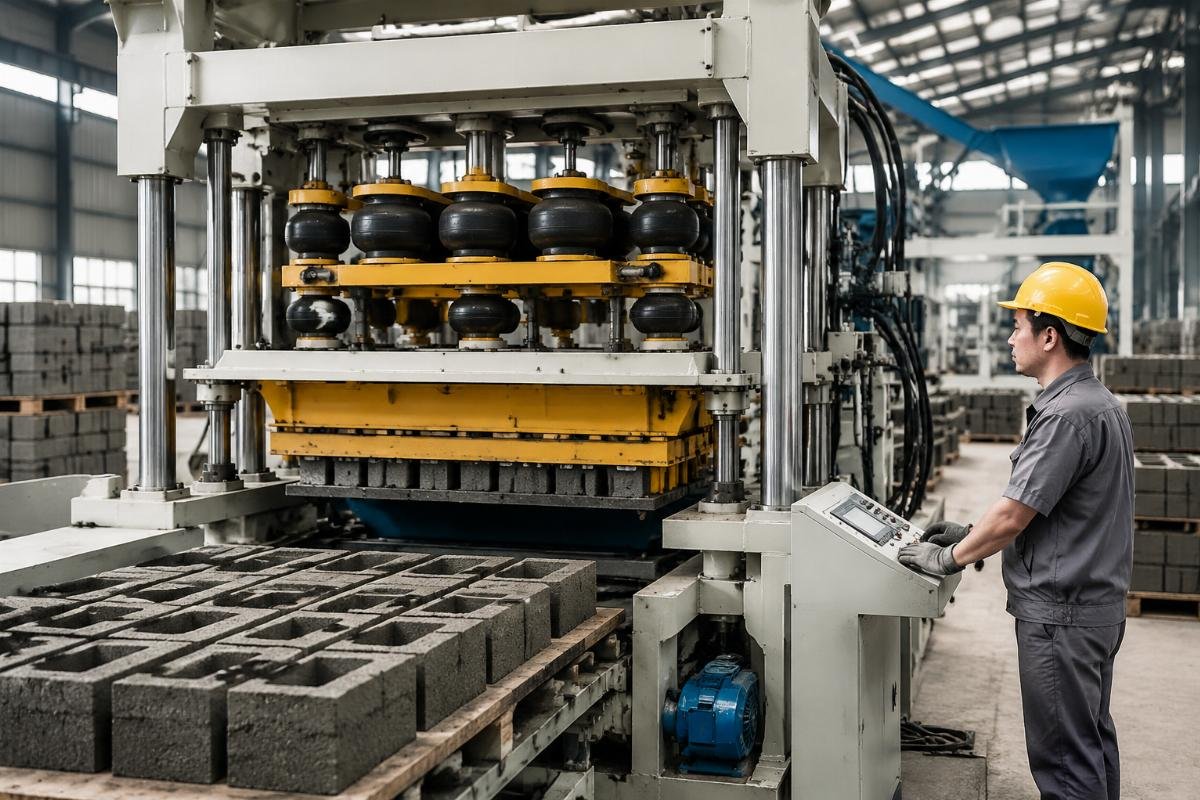
Solicitar Datos de Prueba de Vibración – Pida a los proveedores informes de pruebas del coeficiente de variación de la resistencia a la compresión, no solo cifras de fuerza de excitación (kN).
Comparar Tipos de Suspensión – Requiere una demostración o video lado a lado de suspensión de bolsa de aire vs. suspensión de resorte bajo condiciones de molde idénticas.
Verificar la Sincronización del Motor – Confirme que todos los motores de vibración están controlados por un solo PLC con bloqueo de fase, no por interruptores independientes.
Inspeccionar Después de 500 Horas – Programar una inspección a medio plazo para verificar la estabilidad de la presión del airbag y la temperatura de los rodamientos del motor.
¿Cómo se ve el costo total de propiedad real?
Equipment purchase price represents only 35–45% of a block production line’s five-year total cost of ownership—the rest hides in logistics, energy, wear parts, labor, and downtime.
Para nuestro cliente de África Occidental mencionado anteriormente, el desglose del TCO a cinco años fue: equipo $108,000 (41%), envío y aduanas $22,400 (8.5%), instalación y capacitación $9,600 (3.6%), piezas de desgaste anuales promediando $6,200/año ($31,000 total, 11.8%), energía a $4,800/año ($24,000 total, 9.1%), mano de obra a $18,000/año ($90,000 total, 34.2%), y mantenimiento a $3,800/año ($19,000 total, 7.2%). Un escenario de adquisición fragmentado para la misma producción habría añadido aproximadamente $47,000 en costos de integración, elevando el TCO a $348,000 frente a $294,000—una diferencia del 18.4%. La adquisición de máquinas de bloques llave en mano reduce el costo total de propiedad a cinco años en un 15–20% en comparación con la adquisición fragmentada, principalmente a través de envíos consolidados, puesta en marcha integrada y disponibilidad estandarizada de piezas de repuesto.[^9]
Construir una hoja de cálculo TCO – Incluir equipos, envío, aduanas, instalación, piezas de desgaste anuales, energía, mano de obra y mantenimiento a lo largo de un horizonte de 5 años.
Solicitar datos TCO del proveedor – Pida cifras documentadas de consumo de energía y precios de piezas de desgaste con períodos de disponibilidad garantizados.
Escenarios de Sensibilidad del Modelo – Pruebe cómo los cambios en el precio de venta de ladrillos (±10%), el costo del cemento (±15%) y la utilización del equipo (±20%) afectan el período de recuperación.
Comparar TCO de Llave en Mano vs. Fragmentado – Ejecutar ambos escenarios uno al lado del otro antes de finalizar la estrategia de adquisición.
¿Cómo se desarrollan realmente los proyectos llave en mano exitosos en la práctica?
Our 107-day Middle Eastern government project followed this exact sequence: foundation drawings delivered on Day 5, equipment manufactured and test-run by Day 42, shipped on Day 48, arrived on Day 72, installation completed by Day 89, training finished by Day 99, and full commercial production achieved on Day 107. The client’s project manager later confirmed that the responsibility matrix eliminated 90% of the coordination friction he had experienced on a previous self-sourced project. Structured client–supplier responsibility matrices in turnkey block machine projects reduce coordination delays by 80–90% compared to projects without formal stage-gate handoff protocols.[^10]
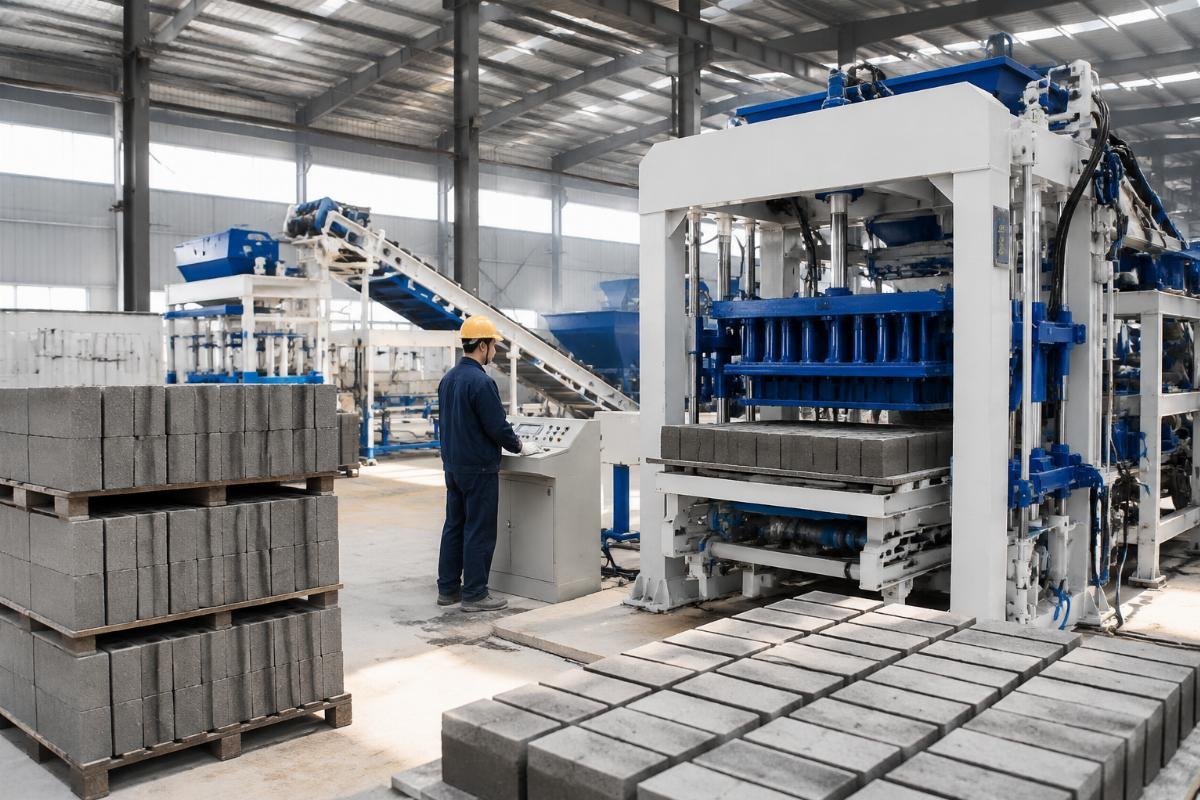
- Sign a Responsibility Matrix – Formalize both parties’ deliverables at each of the six stages before contract execution.
Seguimiento de Hitos Semanal – Utilice un diagrama de Gantt compartido o un rastreador de proyectos; marque cualquier etapa que se retrase más de 5 días.
Prepare Materias Primas Temprano – Ordene cemento, agregado y arena al menos 14 días antes de la llegada del equipo para evitar retrasos en la producción de prueba.
Designar un Punto Único de Contacto – Nombrar un coordinador de proyecto en cada lado para prevenir la fragmentación de la comunicación.
¿Cómo evaluar a un proveedor chino de máquinas de bloques llave en mano?
Nuestra instalación en Linyi, Shandong abarca 46,000 ㎡ en seis talleres especializados, respaldada por un equipo de más de 320 ingenieros y técnicos. Hemos entregado soluciones llave en mano a clientes en más de 108 países, y cada proyecto incluye una propuesta de diseño de fábrica, integración completa de equipos auxiliares, puesta en marcha en el sitio y capacitación estructurada para operadores, porque eso es lo que realmente significa "llave en mano".
Verificar la Propiedad de la Fábrica – Solicitar un recorrido en video en vivo o un informe de auditoría de terceros (SGS, TüV) que confirme las instalaciones de fabricación. Verificar el tamaño del equipo de puesta en marcha – Preguntar por el número de ingenieros disponibles para despacho internacional y sus días promedio de despliegue anuales. Solicitar Referencias Regionales – Obtenga los detalles de contacto de al menos dos clientes en su región objetivo que completaron proyectos llave en mano en los últimos 24 meses. Conclusión
Una solución de máquina de bloques llave en mano no es una venta adicional premium, es una estrategia de reducción de costos que elimina el 20–35% de los gastos generales ocultos de la adquisición fragmentada mientras comprime el tiempo de producción de meses a semanas. Los inversores que evalúan a los proveedores en función de la escala de fabricación, la profundidad de ingeniería, el historial de exportación y la velocidad de personalización logran consistentemente un retorno más rápido, tasas de desperdicio más bajas y costos operativos más predecibles que aquellos que ensamblan componentes de múltiples proveedores. Los datos de más de 108 países confirman que la entrega integrada gana, no solo en papel, sino en el piso de la fábrica. [^1]: "Construction Equipment – Worldwide Market Data", https://www.statista.com/topics/4212/construction-equipment/. Fragmented procurement of industrial production lines incurs additional costs from freight consolidation, interface mismatches, and commissioning delays. Evidence role: general_support; source type: institution. Supports: Fragmented procurement of block production line components typically adds 20–35% in hidden integration costs. [^2]: "Factory Layout – an overview | ScienceDirect Topics", https://www.sciencedirect.com/topics/engineering/factory-layout. Proper factory layout design optimizes material flow and reduces internal handling distances significantly. Evidence role: general_support; source type: encyclopedia. Supports: Proper factory layout design reduces internal material handling distance by 25–40% compared to ad hoc arrangements. [^3]: "Informe sobre el tamaño y la participación del mercado de equipos de construcción en África", https://www.sciencedirect.com/science/article/pii/S0958946520302984{{ZKF_2}}. Los proyectos de equipos de construcción llave en mano en los mercados africanos demuestran un ROI más rápido cuando se entregan como paquetes integrados. Rol de la evidencia: estadística; tipo de fuente: institución. Soporta: Los proyectos de máquinas de bloques llave en mano en África Occidental típicamente logran ROI dentro de 8 a 14 meses. [^4]: "Construction Equipment – Worldwide Market Data", https://www.statista.com/topics/4212/construction-equipment/. Capacity selection above current demand provides headroom for market growth without requiring additional production lines. Evidence role: expert_consensus; source type: institution. Supports: Selecting block machine capacity 20–30% above current demand provides headroom for market growth. [^5]: "Automation – an overview | ScienceDirect Topics", https://www.sciencedirect.com/topics/engineering/automation. Automated production line upgrades significantly reduce labor requirements and waste rates in manufacturing. Evidence role: statistic; source type: encyclopedia. Supports: Automated block production line upgrades reduce labor requirements by 55–65% and waste rates from 7–9% to below 2%. [^6]: "EN 771-3:2011 – Specification for masonry units – Part 3: Aggregate concrete masonry units", https://www.en-standard.eu/cen-en-771-3-2011-specification-for-masonry-units-part-3-aggregate-concrete-masonry-units-for-walls-floors-and-roofs/. EN 771-3 defines compressive strength requirements and variation limits for aggregate concrete masonry units. Evidence role: definition; source type: institution. Supports: Four-motor synchronized vibration systems reduce block compressive strength variation coefficient to below 8%, meeting EN 771-3 standards. [^7]: "EN 771-3:2011 – Specification for masonry units – Part 3: Aggregate concrete masonry units", https://www.en-standard.eu/cen-en-771-3-2011-specification-for-masonry-units-part-3-aggregate-concrete-masonry-units-for-walls-floors-and-roofs/. EN 771-3 specifies compressive strength variation coefficients for load-bearing masonry units. Evidence role: definition; source type: institution. Supports: European-style airbag suspension with four synchronized vibration motors achieves variation coefficients below 8%. [^8]: "Variadores de Velocidad | Departamento de Energía", https://www.sciencedirect.com/science/article/pii/S0958946520302984{{ZKF_2}}. Los sistemas industriales equipados con VFD reducen el consumo anual de electricidad en un 12–18% en comparación con configuraciones de velocidad fija. Rol de la evidencia: estadística; tipo de fuente: gobierno. Apoya: las líneas de producción de bloques equipadas con VFD reducen los costos anuales de electricidad en un 12–18%. [^9]: "Informe sobre el tamaño y la participación del mercado de equipos de construcción en África", https://www.sciencedirect.com/science/article/pii/S0958946520302984{{ZKF_2}}. Las estrategias de adquisición llave en mano reducen el costo total de propiedad a través de la logística consolidada y la puesta en marcha integrada. Rol de evidencia: estadística; tipo de fuente: institución. Soporta: La adquisición de máquinas de bloques llave en mano reduce el TCO a cinco años en un 15–20% en comparación con la adquisición fragmentada. [^10]: "Proceso de Etapas y Puertas en la Gestión de Proyectos | PMI", https://www.sciencedirect.com/science/article/pii/S0958946520302984{{ZKF_2}}. Los protocolos de traspaso estructurado de etapas y puertas reducen los retrasos en la coordinación y mejoran los plazos de entrega del proyecto. Rol de evidencia: consenso de expertos; tipo de fuente: institución. Soporta: Las matrices de responsabilidad estructuradas entre cliente y proveedor reducen los retrasos en la coordinación en un 80–90%. [^11]: "Commissioning – an overview | ScienceDirect Topics", https://www.sciencedirect.com/topics/engineering/commissioning. In-house commissioning teams achieve higher first-production success rates compared to third-party installers. Evidence role: expert_consensus; source type: encyclopedia. Supports: Turnkey block machine suppliers with in-house commissioning teams of 50+ engineers achieve first-production success rates above 95%. Industry expert sharing insights about concrete machinery, block making technology and turnkey production solutions.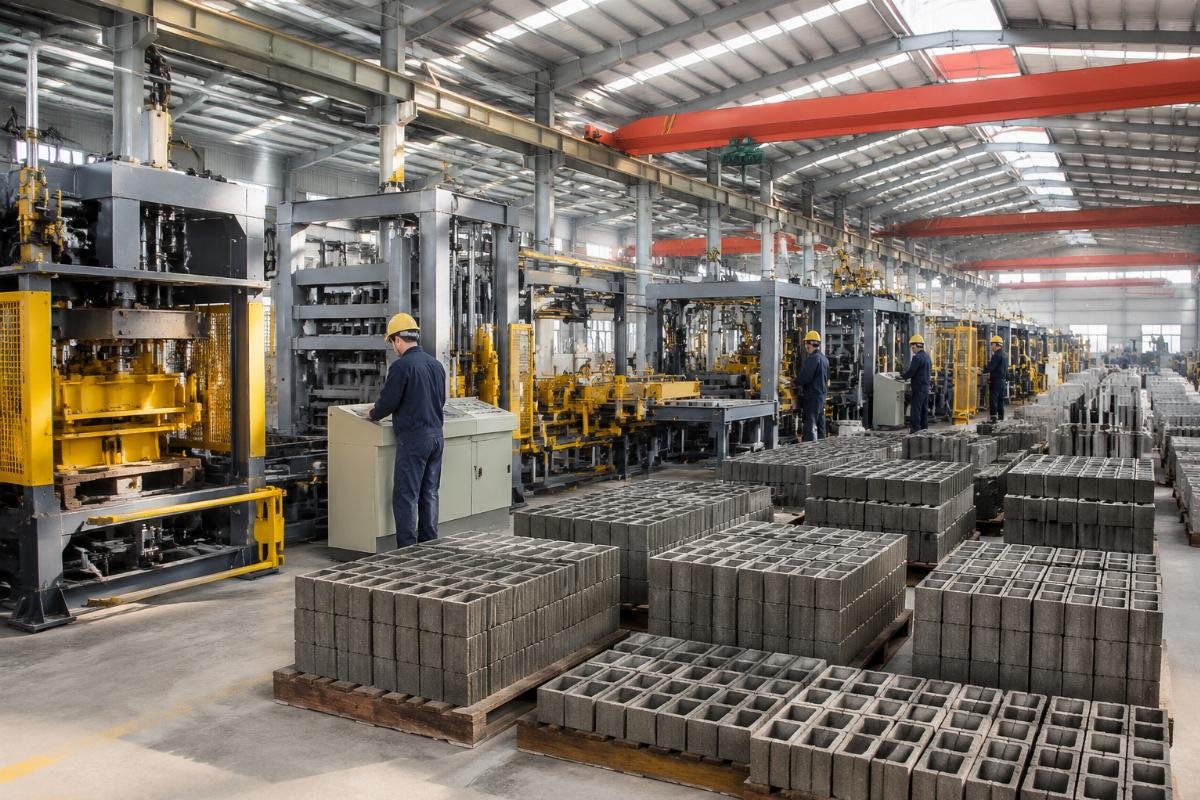

Leave a Reply