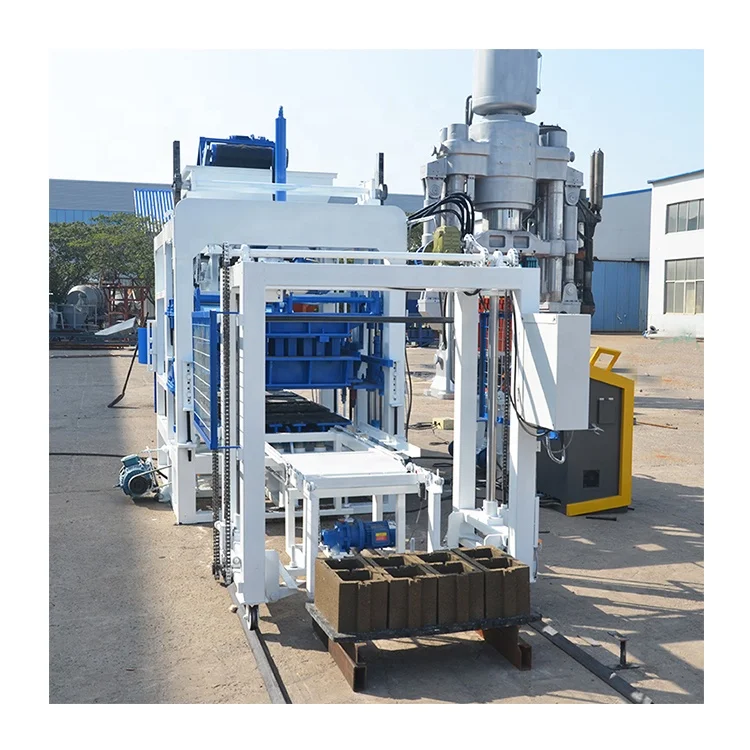
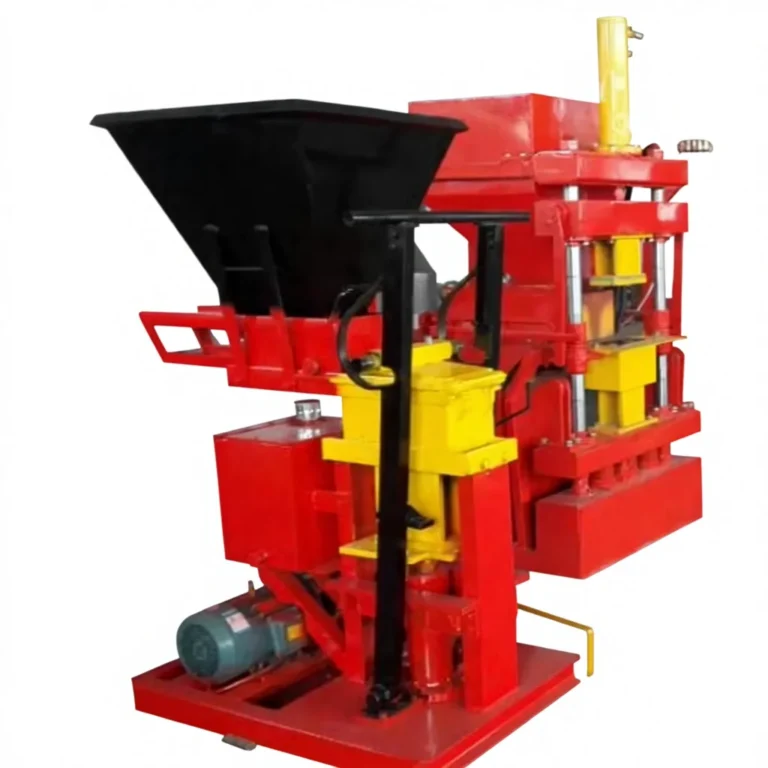
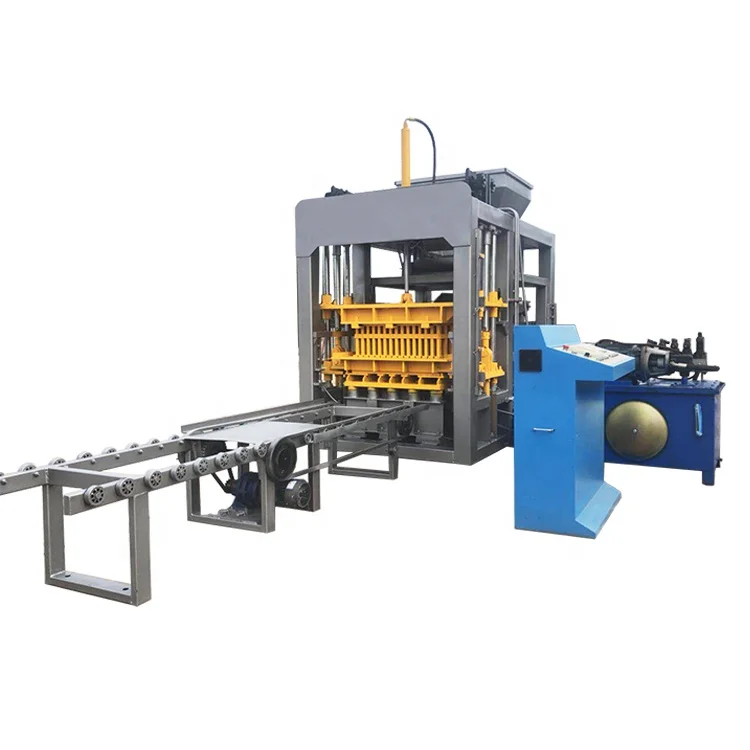
Configurable output tiers — the QTF3-20 sits within a broader stationary block machine range, allowing buyers to match automation level and daily output to their actual site footprint and capital.
Technical Specifications
| Parameter |
Value |
| Model |
QTF3-20 |
| Product Type |
Stationary Block Making Machine |
| Overall Dimensions (L×W×H) |
4000×3500×2300 mm |
| Net Weight |
2870 kg |
| Vibration Form |
Platform Vibration |
| Total Power |
17.5 kW |
| Control Style |
Semi-Automatic |
| Output Capacity |
4320 pcs/day (basis not stated in source — confirm block format / material / thickness) |
| Hydraulic System |
Applied to drive |
| Proximity Switch |
No-contact proximity switch for monitoring |
| Layer Capability |
Double layer (raw material and color surface material) |
| Electrical Components |
Imported from Germany or Chinese famous brand |
| Line Configuration |
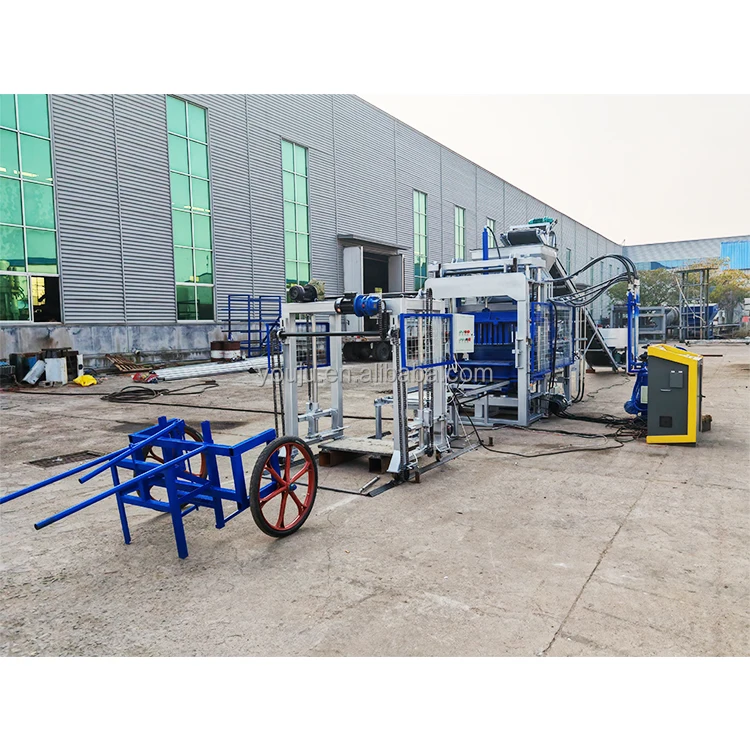
Host machine, material feeding machine, color material machine, pallet feeder, block conveyor, hydraulic station, electricity box |
| Companion Equipment |
JQ350 mixer and 8-meter conveyor belt |
Application Suitability
| Application |
Material or Output |
| Hollow block production |
Cement, sand, coarse aggregate, slag |
| Color paving block and interlock brick |
Double-layer feed with color surface material |
| Park grass brick and porous brick |
Lightweight aggregate and cement blends |
| Standard solid brick and slope protection brick |
Fly ash, sand, and cement mixes |
| Environmental brick formats |
Recycled aggregate and industrial by-products |
What "4,320 Pieces per Day" Actually Means for Your Plant
Capacity figures without a stated block format are meaningless for planning your curing area and pallet cycle.
I once watched a buyer in West Africa receive a stationary block machine and celebrate the quoted daily output — until the first week of production showed the real number was barely half. The problem was not the machine. The capacity figure assumed a small solid brick, but the buyer’s market demanded 200mm hollow blocks, which take longer to form and consume more pallet space per piece. When you are surveying the full stationary block machine manufacturer range, always ask which format the capacity number assumes before you compare models [NEED_CITE: block format impact on cycle time and pallet turnover].

Where the QTF3-20 Fits in the Stationary Range
The QTF3-20 occupies the semi-automatic entry tier of the stationary block machine lineup. Its compact 4×3.5 meter footprint suits entrepreneurs setting up a first plant or contractors who need on-site production for a specific housing project. The semi-automatic control style keeps the initial investment accessible while the no-contact proximity switch reduces operator intervention during the pressing cycle.
Planning the Line Around the Press
A stationary block machine manufacturer worth working with will specify the entire line, not just the press. The QTF3-20 configuration includes a material feeding machine, color material machine, pallet feeder, block conveyor, and hydraulic station as matched components. Pairing it with a JQ350 mixer and an 8-meter conveyor belt forms a simple but complete production loop. The critical point is that cycle times at each station must align — if the mixer cannot feed fast enough, the press sits idle and your real output drops below the calculation [NEED_CITE: line balancing in block production plants].
Reading the Specs That Matter on Site
Platform vibration combined with hydraulic drive determines how densely the mix is compacted into the mould, which directly governs block strength and surface finish. The 17.5 kW total power must be matched against your site’s available voltage and dedicated circuit capacity before the machine ships. Double-layer feeding capability means you can produce color-face pavers in a single pressing cycle, but it also requires a second material hopper and a color batching setup that the line configuration accounts for. The 2870 kg net weight and overall dimensions define your foundation slab requirements — a level reinforced concrete pad with adequate drainage is essential to keep the platform vibration consistent across the full pallet area.
The Hidden Cost of Skipping Configuration Checks
Buyers who select a machine from a catalogue without confirming pallet size often discover that their existing curing racks and forklifts do not match the pallets the machine produces. Pallets then pile up on the floor, blocks cure unevenly, and the output you planned for never materializes. Similarly, ordering without confirming voltage and frequency can leave a machine sitting in a container at the port while transformers are sourced locally [NEED_CITE: voltage and frequency standards by export market]. These are not machine defects — they are configuration gaps that a thorough pre-order process prevents.
Why Source This Range Here
Block machinery is the single focus of this operation, so the QTF3-20 and every model above it are specified as matched systems — press, mould, pallet, and handling — rather than assembled from unrelated suppliers. Machine configuration is set against your actual mix design and local aggregate, not pulled from a default catalogue page. Mould design covers the formats your market actually sells, including custom drawings when standard options fall short. The semi-automatic starting point means you can begin with the QTF3-20 and move to higher automation tiers within the same stationary range as your volume grows, without replacing the entire line.
Documentation & Verification
- Line layout and capacity calculation stating the block format assumed for your target output
- Machine specification sheet confirming vibration force, hydraulic pressure, and pallet size for your mix
- Voltage, frequency, and PLC display language confirmation document before production begins
- Factory test record and packing photographs provided before container loading
- Operation and maintenance manual with wear parts and mould list included
Installation, Commissioning & Support
- Reinforced concrete foundation sized to the 4000×3500 mm footprint with level tolerance for platform vibration
- Dedicated electrical circuit matching confirmed voltage and the 17.5 kW total power draw
- Host machine, hydraulic station, and electricity box arrive dismantled for standard container loading
- On-site commissioning includes first-run parameter setting against your local aggregate and mix design
- Operator training covers mould change procedure and no-contact proximity switch monitoring
- Wear parts list and mould replacement schedule provided at handover
Before You Request a Quote
Tell us which block format your market sells most — hollow, solid, paving, or interlocking — along with the target daily output and the raw materials available locally. Confirm your site’s voltage, frequency, and the language your operators need on the control panel. If you have an existing mixer, conveyor, or curing area, share those dimensions so the line configuration fits around what you already have rather than replacing it.
Frequently Asked Questions
Q: What block format is the 4,320 pcs/day capacity based on, and what is the realistic output for my target brick size?
A: The 4,320 pcs/day figure is quoted without a stated block format assumption, so it must be recalculated against your specific product. A 200mm hollow block takes a longer cycle and more pallet space than a small solid brick. We provide a capacity calculation sheet that names the exact format, cycle time, and pallet turnover rate so your daily plan matches reality.
Q: How does the QTF3-20 compare to the next tier up in the stationary range?
A: The QTF3-20 is the semi-automatic entry point with a compact footprint and double-layer color capability. Higher tiers add automatic stacking, larger pallet sizes, and faster cycle times. The right choice depends on your daily volume target, available curing area, and whether you want to keep manual pallet handling or move to full automation.
Q: What voltage and frequency options are available, and can the control panel language match my operators?
A: Voltage and frequency are confirmed before production to match your local grid standard. The electrical components can be sourced from German or established Chinese brands. Control panel language is specified at the order stage so your operators can read the display and alarms from the first day of commissioning without translation delays.
Q: Can I start with the semi-automatic QTF3-20 and upgrade to automatic stacking and cubing later?
A: Yes. The QTF3-20 line configuration is modular — the host machine, pallet feeder, and conveyor are designed to accept automatic stacking and cubing modules as a future addition. This lets you begin production at a lower investment level and expand automation as your output volume justifies the additional equipment.
Q: What plant footprint and foundation does the QTF3-20 line require, including mixer and conveyor?
A: The host machine occupies a 4000×3500 mm area, and the full simple line with JQ350 mixer and 8-meter conveyor belt extends the total length. A level reinforced concrete slab with drainage is needed for consistent platform vibration. We provide a line layout drawing showing station positions, material flow direction, and curing rack placement before you pour the foundation.

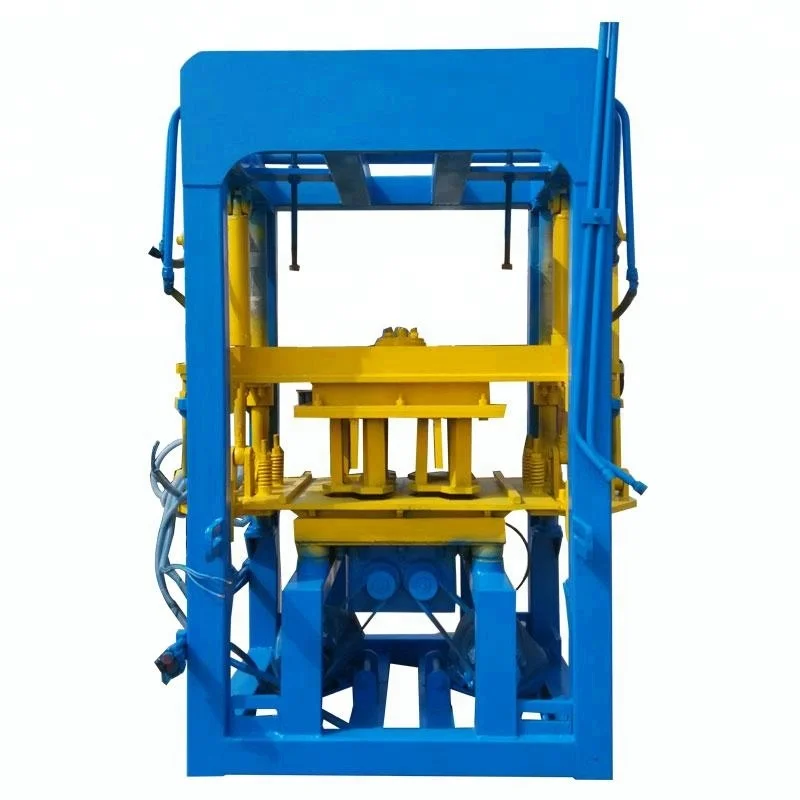
 Stationary block machine