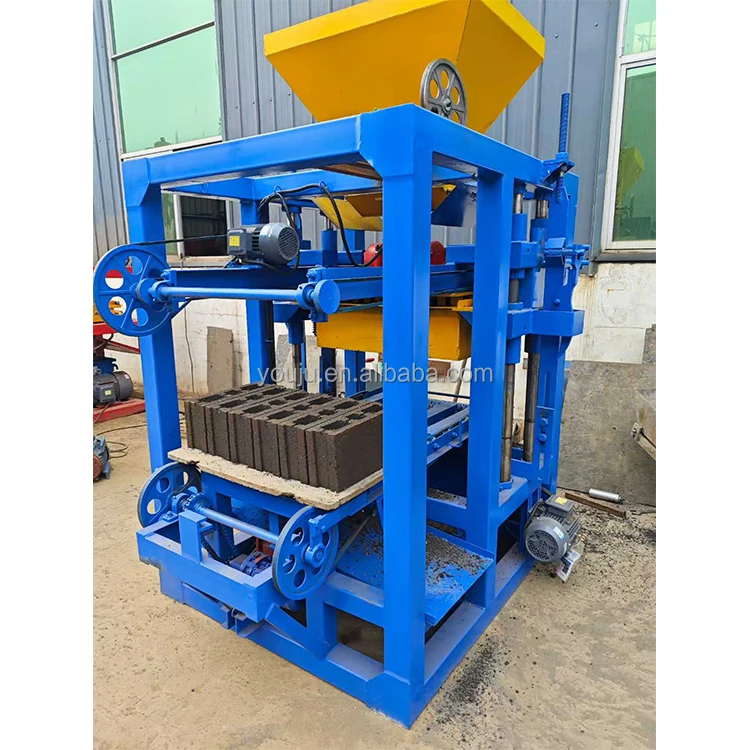
Single-Focus Machinery Engineering — every specification of the QT4-18 is matched to your block format and local aggregate, not pulled from a generic catalogue.
Technical Specifications
| Parameter |
Value |
| Model |
QT4-18 |
| Product Type |
Full Automatic Concrete Block Making Machine |
| Machine Power |
27.5 kW |
| Molding Cycle |
15-25 seconds |
| Hydraulic Pressure |
20 MPa |
| Machine Weight |
5800 kg |
| Overall Dimensions (L×W×H) |
7100 × 1600 × 2610 mm |
| Main Vibration Form |
Platform Vibration |
| Control System |
Full automatic |
| Theoretical Productivity – Hollow Block (400×200×200 mm) |
4 pcs/mould, 15-20 s cycle, 5760-7680 pcs/day (basis not stated in source) |
| Theoretical Productivity – Porous Block (240×115×90 mm) |
14 pcs/mould, 15-20 s cycle, 25200-33600 pcs/day (basis not stated in source) |
| Theoretical Productivity – Standard Block (240×115×53 mm) |
28 pcs/mould, 15-17 s cycle, 59300-67200 pcs/day (basis not stated in source) |
| Machine Frame |
Welded by special thick steel rectangle welding techniques |
| Mould Treatment |
Precise line cutting and carburizing treatment; heat treatment |
| Automation Level |
Full automatic |
| Voltage |
According to local voltage (basis to be confirmed) |
Application Suitability
| Application |
Material or Output |
| Hollow block production plants |
Crushed stone, sand, and cement mixes for 400×200×200 mm structural blocks |
| Paving and kerbstone manufacturing |
High-density aggregate blends for interlocking pavers and road curb bricks |
| Porous and permeable brick facilities |
Specialized porous mixes for 240×115×90 mm drainage and landscaping bricks |
| Standard brick and color-face brick lines |
Fine sand and cement for 240×115×53 mm bricks, including layered color-face feeding |
What "Thousands of Blocks per Day" Leaves Out
Cycle time only matters if it reflects the format you actually produce.
Many buyers of a full automatic block making machine manufacturer’s equipment receive a single output figure based on a small solid brick, only to find their primary product—a 400 mm hollow block—yields significantly less volume per shift. I have seen projects stall because the daily quota was calculated on a 15-second cycle for standard bricks, while the local market demanded hollow blocks that require longer vibration and compaction times. When selecting a machine in this class, the capacity calculation must be stated per format, matched to the specific mould, and verified against the raw material available on site [NEED_CITE: block format assumptions in capacity calculations].

Placing the QT4-18 Within the Machine Range
The QT4-18 occupies the mid-tier of the full automatic block making machine manufacturer’s stationary lineup. It is positioned for buyers moving past semi-automatic output limits but not yet requiring the footprint and power draw of a high-capacity automatic line. The machine handles a broad spectrum of block formats, from standard bricks to interlocking pavers, through a single press platform with interchangeable moulds.
Automation Level and Line Integration
This machine operates as a full automatic press, but the surrounding line determines whether that automation delivers consistent throughput. Pallet feeding, raw material batching, and wet-product stacking must be synchronized so the press is never left waiting. The QT4-18 supports layered material feeding for color-face brick production, which adds a second feed stage to the cycle and must be accounted for in line timing [NEED_CITE: automation synchronization in block production lines].
Reading the Specifications Against Your Mix Design
Hydraulic pressure at 20 MPa combined with platform vibration determines how densely the local aggregate is compacted into each mould cavity. A mix with high volcanic ash or fine sand content responds differently to this pressure-vibration combination than a coarse crushed-stone mix, affecting both block strength and cycle time. The 27.5 kW motor rating must be evaluated against the available site power supply, particularly where three-phase voltage stability is a concern. The welded thick-steel rectangle frame is designed to resist the sustained vibration forces generated across thousands of daily cycles, maintaining alignment between the mould box and the press head.
The Hidden Cost of Misconfigured Pallet and Voltage Specs
When pallet size is selected without reference to the buyer’s existing curing racks and forklift, blocks end up being restacked by hand before they enter the curing area, erasing the output gain the machine was purchased to achieve. Similarly, voltage and frequency confirmed only after arrival can delay commissioning by weeks while transformers or control components are sourced locally [NEED_CITE: voltage and frequency standards by export market]. These are not minor oversights—they are the reasons projects lose their first month of production revenue.
Why Source the QT4-18 Through This Configuration Process
Block machinery is the single focus here, so the QT4-18 is specified as part of a matched system that includes the mould, pallet, and handling equipment—not assembled from unrelated suppliers. The configuration is set against your actual mix design and target block format, ensuring the vibration force and hydraulic pressure are appropriate for your local aggregate. Mould design covers the formats your market sells, with custom drawings available for non-standard shapes. Automation is selectable, allowing a buyer to begin with the QT4-18 and expand pallet handling or stacking equipment as production scales. Installation and commissioning include operator training so the crew understands cycle adjustment and mould change procedures from day one.
Documentation & Verification
- Line layout and capacity calculation stating the block format assumed for each QT4-18 output figure
- Machine specification sheet confirming voltage, frequency, and PLC display language before shipment
- Mould drawing and format list showing all compatible block types and pallet specifications
- Factory test record provided before dispatch to verify cycle time against agreed parameters
Installation, Commissioning & Support
- Foundation plan based on the QT4-18 overall dimensions of 7100 × 1600 × 2610 mm and 5800 kg operating weight
- Dedicated power circuit sized for the 27.5 kW machine power at the confirmed local voltage and frequency
- Machine dismantling for container loading with reassembly guidance at the destination site
- On-site commissioning with parameter adjustment for the buyer’s specific raw material and block format
- Operator training covering mould change procedure, PLC navigation, and daily maintenance checkpoints
- Wear parts and mould list provided for planning the first replacement cycle
Inquiry Guidance for the QT4-18
Provide the specific block formats you intend to produce, including dimensions and target daily output per format. Share the composition of your local raw material—aggregate type, sand source, and cement grade—so the machine can be configured to match. Confirm your site voltage, frequency, and any preferred PLC display language to avoid delays during commissioning.
Frequently Asked Questions
Q: How is the QT4-18 daily output calculated, and which block format is each figure based on?
A: Output figures are tied to specific block dimensions and mould cavity counts. For instance, hollow block capacity assumes a 400×200×200 mm format at 4 pieces per mould, while standard brick figures assume a 240×115×53 mm format at 28 pieces per mould. Cycle times vary by format, so the daily total must be recalculated for whichever product dominates your production schedule.
Q: Where does the QT4-18 sit in the full machine range compared to semi-automatic and higher-tier models?
A: The QT4-18 is a mid-tier full automatic stationary machine. It offers higher throughput and consistency than semi-automatic models while requiring a smaller footprint and lower power supply than high-capacity automatic lines, making it suitable for buyers scaling up from manual operations or starting a dedicated block plant.
Q: What voltage, frequency, and PLC language options are confirmed before shipment?
A: Voltage and frequency are configured to match the buyer’s local power supply and must be confirmed before production begins. The PLC display language is also specified at the order stage to ensure operators can navigate the control interface without delay upon commissioning.
Q: Can I start with the QT4-18 and upgrade automation or add pallet handling equipment later?
A: Yes. The automation level is selectable, and the machine can be integrated with additional pallet feeding, stacking, or cubing equipment as production volume grows. The configuration process accounts for this upgrade path so the base machine remains compatible with future line expansion.
Q: What plant footprint and curing area does the QT4-18 require for its stated output tiers?
A: The machine itself occupies a footprint based on its 7100 × 1600 mm base dimensions plus clearance for material feeding and pallet circulation. The curing area must be sized to hold the daily output volume in pallets, which depends on the pallet dimensions selected and the block format being produced.

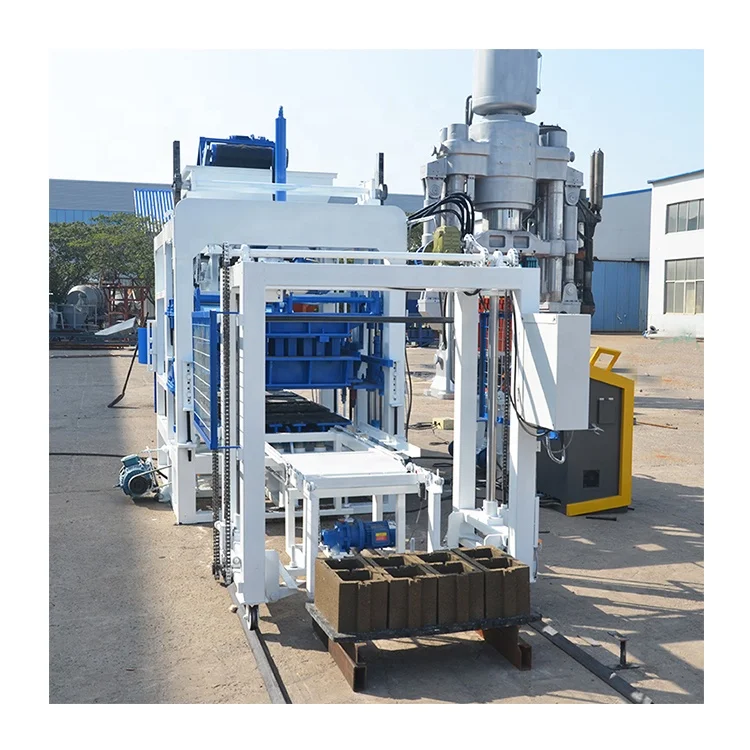
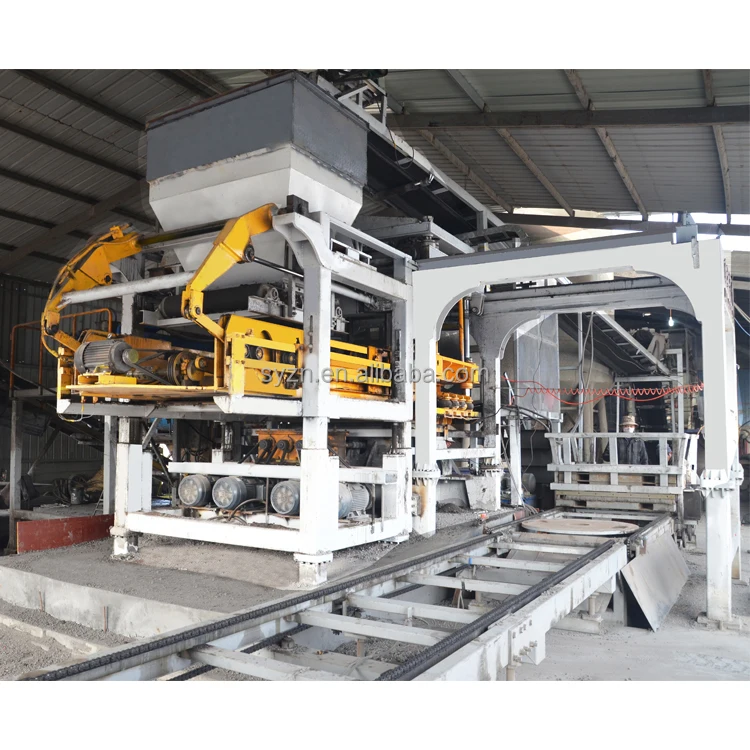 Stationary block machine
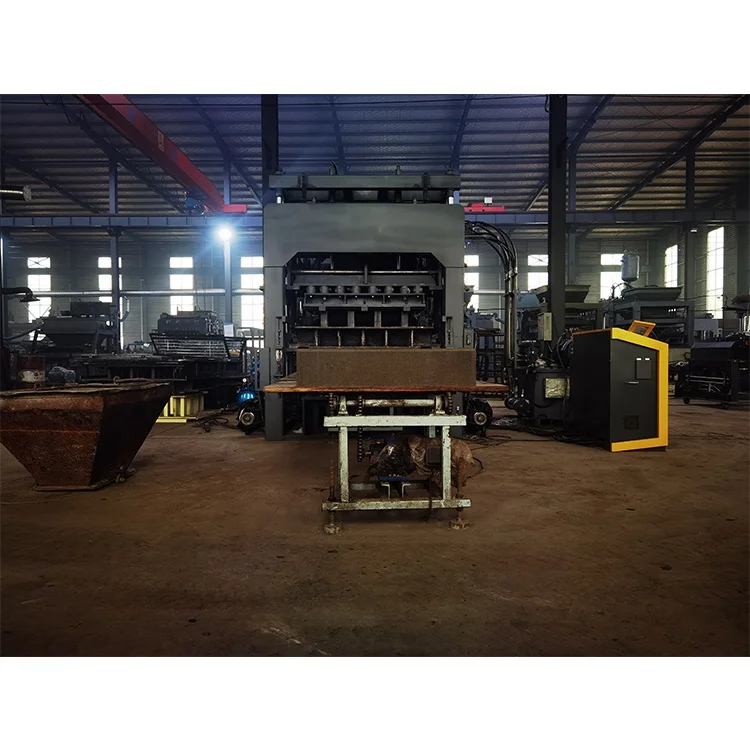
![QT6-15 Fully Automatic Hydraulic Block Making Machine | Manufacturer8 + 0 + 4 + 1 + 2 = 15 15 mod 6 = 3 → 句式3: [应用或物料] [品类词] – [站点修饰词] 15 mod 3 = 0 → Manufacturer Hollow Porous Paver Block Making Machine QT6-15 – Manufacturer 字符数: 10+1+6+1+5+1+7+1+6+1+2+1+1+1+12 = 63 Hollow Porous Paver Block Making Machine QT6-15 – Manufacturer](https://shiyueblockmachine.com/wp-content/uploads/2026/04/H7b8b2257a82d480e82424635d649a403l.webp)