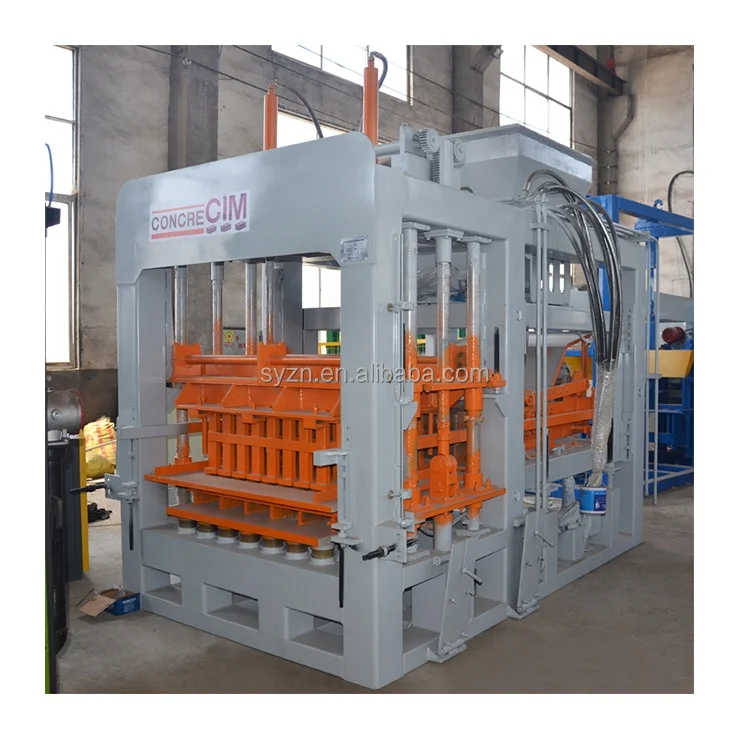
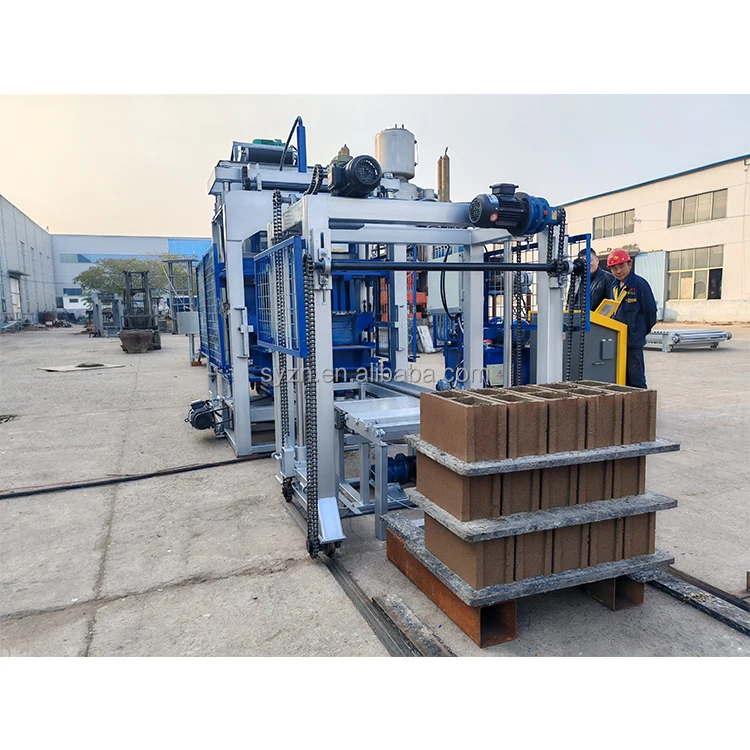
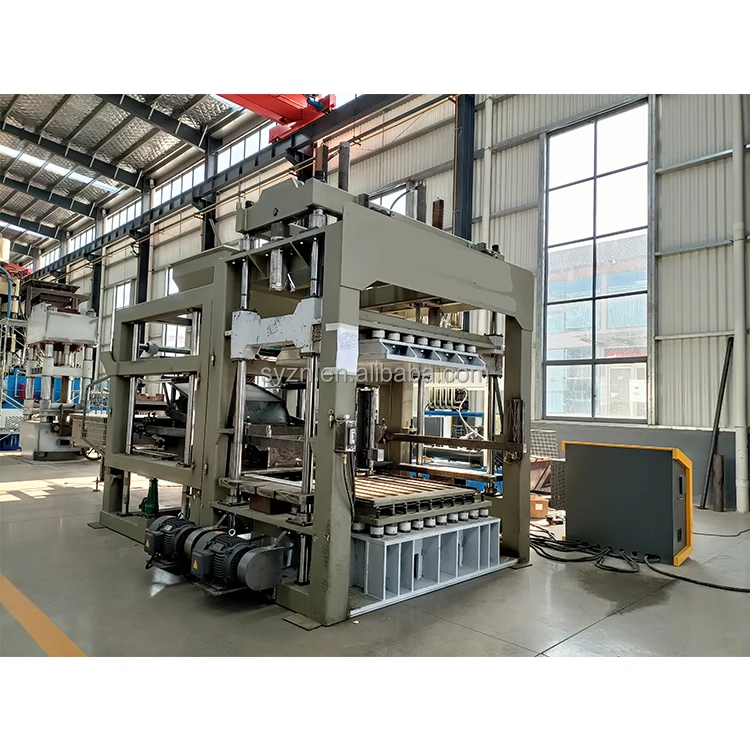
Semi-automatic balance — the QTJ4-26 places first-time plant buyers and on-site contractors in the entry-to-mid tier of the Shiyue block machine range, giving format flexibility without the investment of a fully automatic line.
Technical Specifications
| Parameter |
Value |
| Model |
QTJ4-26 |
| Product Type |
Concrete Block Making Machine |
| Overall Dimensions (L×W×H) |
2060×1730×2580 mm |
| Molding Cycle |
26 s |
| Vibration Frequency |
4200 r/min |
| Exciting Force (Vibration Force) |
35.5 kN |
| Rated Power |
14.25 kW |
| Mixer Model |
JQ350 |
| Pallet Size |
850×450×20 mm |
| Net Weight |
1800 kg |
| Automation Level |
Semi-automatic (four guide pillars, automatic mould movement, manual pallet handling) |
| Applied Products |
Concrete hollow blocks (8 inch, 6 inch), solid bricks, interlocking bricks |
| Raw Materials |
Crushed stone, sand, cement, fly ash, dust |
| Output — Hollow Block 390×190×190 mm |
480 pcs/h, 3800 pcs/8 hr (4 pcs per mould, 26 s cycle) |
| Output — Hollow Block 400×150×200 mm |
600 pcs/h, 4800 pcs/8 hr (5 pcs per mould, 26 s cycle) |
| Output — Solid Brick 240×115×53 mm |
2100 pcs/h, 17000 pcs/8 hr (18 pcs per mould, 26 s cycle) |
| Hydraulic Pressure |
(basis to be confirmed) |
| Mould Change Time |
(basis to be confirmed) |
| Voltage & Frequency |
(basis to be confirmed) |
| Control System |
(basis to be confirmed) |
| Standards |
CE (implied by supplier documentation; verify specific unit) |
Application Suitability
| Application |
Material or Output |
| Hollow block production for housing projects |
Crushed stone, sand, cement; 8-inch and 6-inch formats |
| Solid brick manufacturing for masonry walls |
Sand, fly ash, cement; standard 240×115×53 mm bricks |
| Interlocking brick production for paving and landscaping |
Crushed stone, sand, cement; interlocking formats |
| On-site block production by construction contractors |
Local aggregate and cement mixed with JQ350 mixer |
| First block plant for entrepreneurs entering the market |
Semi-automatic operation with manual pallet handling |
What "480 Pieces per Hour" Actually Means for the QTJ4-26 Concrete Block Making Machine Manufacturer
Capacity figures only hold water when the block format and cycle assumptions are spelled out beside them.
I once watched a buyer in West Africa receive a machine quoted at a single hourly number, then discover on the first production day that the figure assumed a small solid brick while his market demanded 8-inch hollow blocks. His daily output dropped to less than half the promised volume, and the curing yard sat half empty. When sourcing a QTJ4-26 concrete block making machine manufacturer, the conversation must start with the exact format you intend to sell [NEED_CITE: block format assumptions in capacity quotations]. The QTJ4-26 produces 480 pcs/h only when running 390×190×190 mm hollow blocks at four pieces per mould with a 26-second cycle. Switch to 400×150×200 mm hollow blocks and the rate rises to 600 pcs/h because the mould holds five pieces. Solid bricks at 240×115×53 mm reach 2100 pcs/h with eighteen pieces per mould. Every figure ties back to the same 26-second cycle, so the buyer can plan curing space, pallet circulation, and labour around a known rhythm rather than a marketing headline.

Where the QTJ4-26 Sits in the Full Machine Range
The Shiyue line spans mobile egg-laying units at the bottom, semi-automatic presses like the QTJ4-26 in the middle, and fully automatic lines with stackers and cubing at the top. A buyer surveying options for a first or replacement machine can use the QTJ4-26 concrete block making machine manufacturer as the reference point where automatic mould movement arrives but pallet handling stays manual. This keeps the initial capital outlay moderate while still removing the heaviest physical task from the operator. If daily volume later outgrows the semi-automatic tier, the same pallet size and mould interface allow a step up to a higher-automation press without rebuilding the curing yard from scratch.
Matching the Press to the Rest of the Line
A block press never works alone; the mixer, pallet supply, and curing area must keep pace or the press sits idle. The JQ350 mixer paired with the QTJ4-26 delivers batch volumes sized to the 26-second cycle, preventing the hopper from running dry mid-shift. Pallets at 850×450×20 mm are light enough for one operator to carry yet rigid enough to survive repeated curing cycles [NEED_CITE: pallet rigidity requirements for vibration block machines]. Because pallet handling is manual at this tier, the buyer must confirm that the curing yard distance and forklift capacity match the pallet dimensions before the machine ships, avoiding a bottleneck that no amount of press speed can fix.
Reading the Specs That Shape Daily Output
Vibration force and hydraulic pressure together decide whether a block leaves the mould dense enough to survive stacking. The QTJ4-26 delivers 35.5 kN of exciting force at 4200 r/min through vertical vibration under the mould table, compacting the mix from below so hollow blocks maintain wall thickness without collapsing. The 26-second molding cycle sets the pace for every downstream station; shorten it and the block may crack during pallet transfer, lengthen it and daily output falls below the figures in the capacity table. Rated power of 14.25 kW covers both the vibration motor and the hydraulic pump, meaning a single dedicated circuit at the correct voltage can run the press without a separate panel. Net weight of 1800 kg and overall dimensions of 2060×1730×2580 mm keep the machine inside a standard 20-foot container, reducing ocean freight to a single slot and simplifying the unloading plan at the destination port.
The Hidden Cost of Skipping the Format Conversation
When a buyer focuses only on the headline hourly number and neglects to confirm which block format that number assumes, the consequences surface on day one of production. Pallets ordered to the wrong size sit unused in a corner while operators improvise with local timber that warps after a week of curing. Moulds for the format the local market actually buys were never included in the quotation, so the first replacement order triggers a multi-week wait and a line standstill [NEED_CITE: mould lead times for non-standard block formats]. Voltage and control language left unconfirmed until the machine arrives can delay commissioning while an electrician rewires the panel and the operator struggles with an unfamiliar display. Every one of these issues traces back to a quotation that listed capacity without stating the format, pallet, or electrical assumptions behind it.
Why Source This Tier from Shiyue
Block machinery is the single focus here, so the QTJ4-26 is specified as one matched system — press, mould, pallet, and mixer — rather than assembled from separate suppliers who shift blame when cycle times clash. Configuration is set against the buyer’s actual mix design and local aggregate, not a catalogue default, which means the vibration frequency and exciting force are checked against the material you can actually source. Mould design covers every format the QTJ4-26 concrete block making machine manufacturer lists, and custom drawings are accepted when your market sells a size outside the standard range. Automation level is selectable within the range; a buyer can start with the semi-automatic QTJ4-26 and move to a higher tier later without discarding the pallets and curing racks already on site. Installation support includes operator training so the crew understands why the 26-second cycle must not be overridden to chase a faster number that the mix cannot sustain.
Documentation & Verification
- Line layout showing QTJ4-26 footprint with pallet circulation path and curing area dimensions
- Capacity calculation sheet stating 480 pcs/h for 390×190×190 mm hollow block at 4 pcs per mould
- Mould drawing and format list covering hollow, solid, and interlocking bricks for this model
- Pallet specification confirming 850×450×20 mm dimensions and material grade
- Voltage and control language confirmation form signed before production begins
- Factory test record on the buyer’s target block format before dispatch
Installation, Commissioning & Support
- Foundation pad leveled to 2060×1730 mm footprint with anchor bolt template supplied for the 1800 kg frame
- Dedicated 14.25 kW circuit at confirmed voltage and frequency to avoid motor overheating during continuous vibration
- Machine shipped assembled; four guide pillars and mould box checked for alignment on site before first run
- JQ350 mixer positioned within reach of the hopper to keep the 26-second cycle fed without manual shoveling
- Operator training covers mould change procedure and pallet handling rhythm to match semi-automatic output
- Wear parts list identifies vibration springs and guide pillar bushes with reorder part numbers
Preparing Your Inquiry
Tell us the block formats your local market buys most, the daily volume you need for each, and the raw materials you can source within a practical transport radius. Share your workshop dimensions, existing curing yard layout, and the forklift capacity you already operate so the 850×450×20 mm pallet can be verified against your handling equipment. Confirm the site voltage, frequency, and the language your operators read on a control display so the QTJ4-26 concrete block making machine manufacturer can wire the panel and program the interface before the machine leaves the factory.
Frequently Asked Questions
Q: How is the QTJ4-26 capacity calculated for each block format?
A: Every output figure in the table ties to a specific mould cavity count and the fixed 26-second cycle. For 390×190×190 mm hollow blocks the mould holds four pieces, giving 480 pcs/h. For 400×150×200 mm it holds five, yielding 600 pcs/h. Solid bricks at 240×115×53 mm use an eighteen-cavity mould for 2100 pcs/h. The cycle time stays constant; only the cavity count changes the hourly rate.
Q: Where does the QTJ4-26 sit compared to fully automatic tiers?
A: The QTJ4-26 occupies the semi-automatic tier, offering automatic mould movement via four guide pillars while pallet feeding and stacking remain manual. Fully automatic lines add pallet feeders, stackers, and cubing systems that raise output and cut labour but also increase capital cost and plant footprint. Buyers can start here and upgrade later without replacing pallets or curing racks.
Q: What plant footprint and curing area does the QTJ4-26 need?
A: The press itself occupies roughly 2060×1730 mm, but the curing yard must hold enough pallets to cover the full drying period. At 480 hollow blocks per hour the machine fills approximately 120 pallets every hour, so a three-day curing cycle requires space for several hundred pallets in rotation. Plan pallet quantity and yard area before the machine ships.
Q: How does the 850×450×20 mm pallet relate to my existing forklift?
A: The pallet width and length determine the fork spacing and the load capacity needed per lift. A standard side-shift fork can handle two pallets side by side if the tines are long enough. Confirm your forklift’s rated load and fork dimensions so the pallet specification matches your handling equipment without requiring a new forklift purchase.
Q: Can I start with the QTJ4-26 and add automation later?
A: Yes. The semi-automatic configuration keeps initial investment moderate while the pallet size and mould interface remain compatible with higher-automation presses in the Shiyue range. When daily volume outgrows manual pallet handling, you can move to a press with automatic pallet feeding and stacking while keeping the same curing yard and mould inventory.

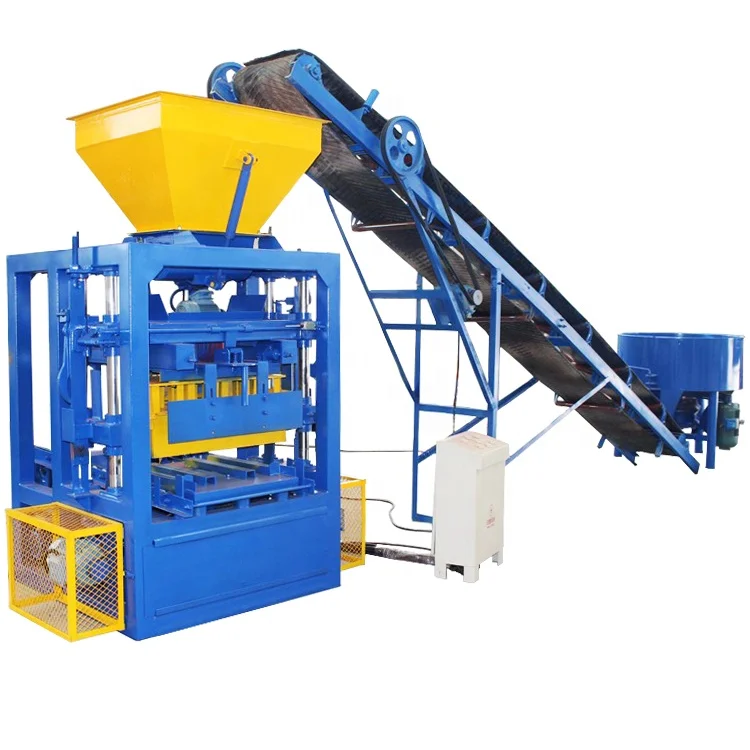
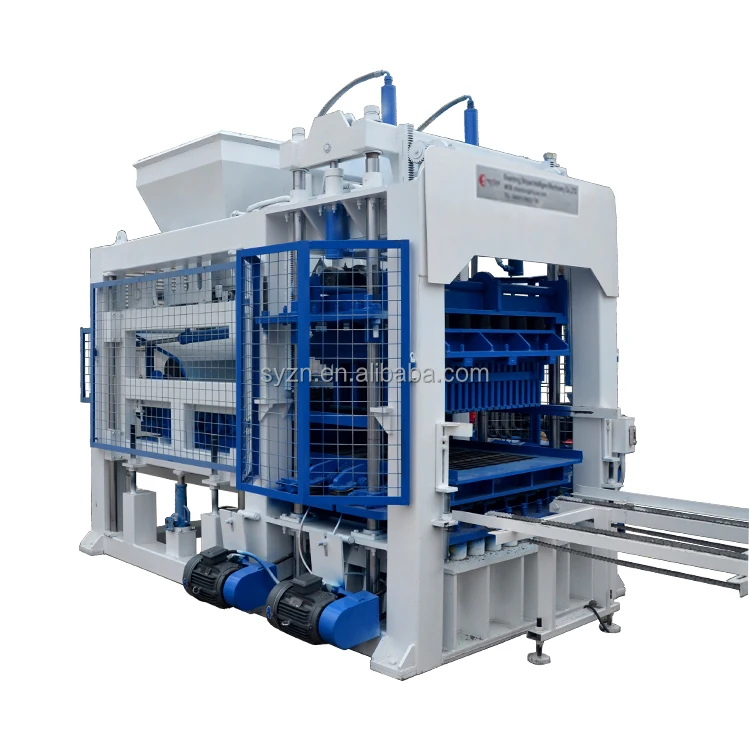 High quality block machine