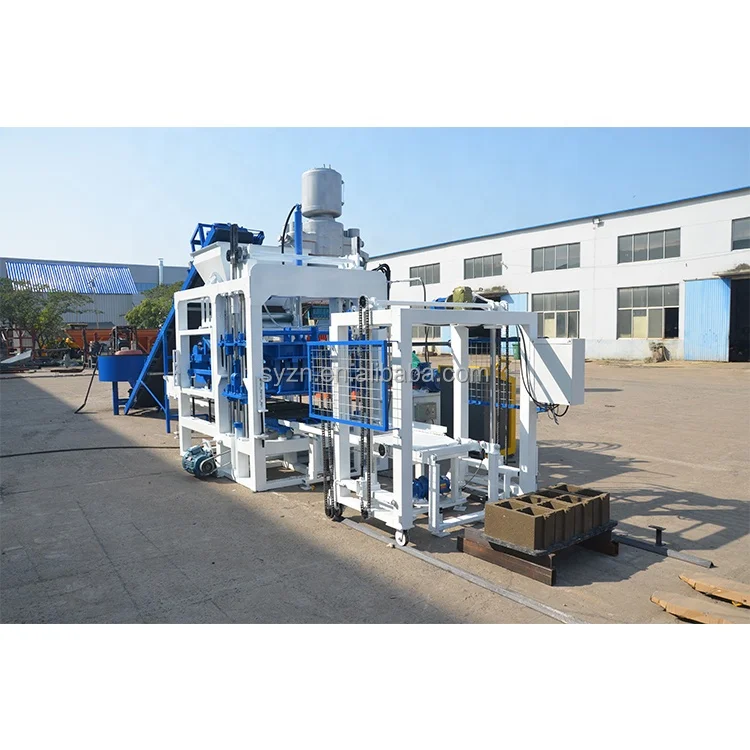
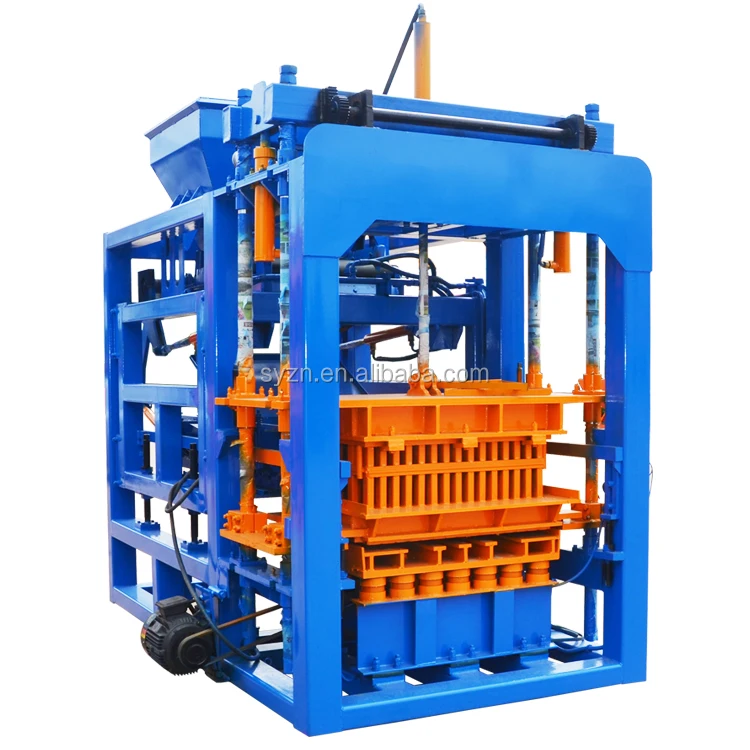
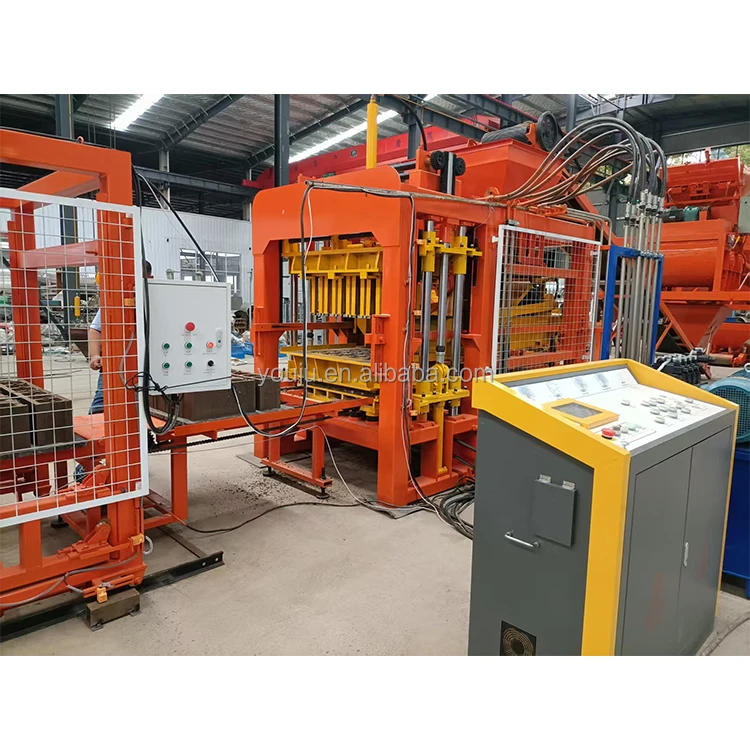
Matched System Design — machine, mould, pallet and mixer specified together so every output figure reflects your actual block format, not a catalogue default.
Technical Specifications
| Parameter |
Value |
| Model |
QTJ4-25 |
| Product Type |
Concrete Block Making Machine |
| Category |
Stationary block machine |
| Automation Level |
Semi-automatic |
| Molding Cycle |
25 s |
| Vibration Frequency |
2800 r/min |
| Exciting Force |
60 kN |
| Rated Power |
17.9 kW |
| Overall Dimensions |
6400×1500×2700 mm |
| Total Mass |
2500 kg |
| Pallet Size |
850×550×20 mm |
| Output Capacity |
960 pcs/h, 7680 pcs/day (based on 400×200×200 mm hollow block, 4 pcs/mould) |
| Mould Format |
Hollow, solid, paver, curbstone (8", 6", 5", 4" sizes) |
| Configuration |
Host machine 1 set, block mould 1 set, JQ350 mixer |
| Control System |
Motor-based with hydraulic station (basis not stated in source) |
| Stacking Method |
Manual pallet handling |
| Voltage & Frequency |
To be confirmed before order |
Application Suitability
| Application |
Material or Output |
| Hollow block production |
Crushed stone, sand, cement, water (8", 6", 5", 4" formats) |
| Solid block production |
Dense aggregate mix for load-bearing walls |
| Paving block production |
Fine aggregate surface layer with base mix |
| Kerbstone production |
High-density concrete mix for roadside and pathway edging |
| On-site contractor block making |
Locally sourced aggregate for project-specific hollow and solid formats |
Why "960 Pieces per Hour" Means Nothing Without the Block Format
Output capacity only becomes real when tied to a specific block dimension, mould cavity count, and cycle time.
Many quotations list a single headline figure for a concrete block making machine for sale without stating which format was used to calculate it. A buyer expecting 960 pieces per hour of 6-inch solid blocks will see a very different daily tally because the mould cavity count and pressing cycle change with every format swap. I spent two weeks on a site in West Africa adjusting hydraulic pressure and vibration frequency because the local aggregate had a high clay content that the initial configuration did not account for. The machine was capable, but the specification conversation had skipped the material variable entirely [NEED_CITE:].

Where the QTJ4-25 Sits in the Complete Range
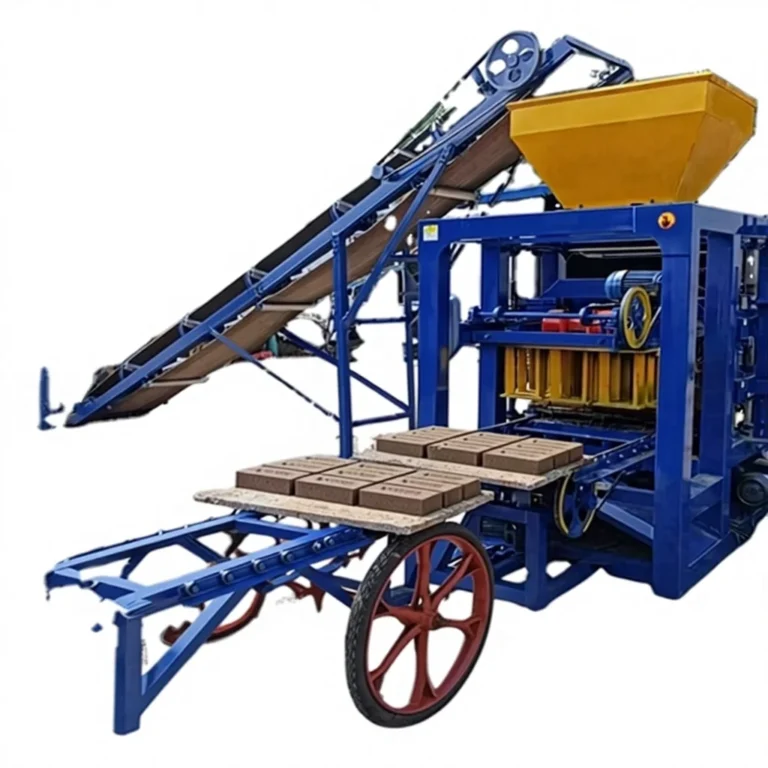
Shiyue organizes its stationary block machine lineup into output tiers, and the QTJ4-25 occupies the mid-range semi-automatic position. Buyers comparing their first plant investment can see this model as the entry point into a matched system — the host machine, JQ350 mixer, mould set, and pallets are quoted together rather than sourced separately. This matters because a mixer that cannot keep pace with the press cycle leaves the operator waiting, and a pallet size mismatched to the curing area creates a bottleneck downstream.
Comparing Tiers Before You Commit
Stepping up from the QTJ4-25 to a fully automatic tier adds automatic pallet feeding, stacking, and cubing — functions that here are handled manually with a trolley. The question is whether your labour cost and daily volume justify that step now or later. Some buyers start semi-automatic, learn their local market’s format demand, and then add automation modules as orders grow. Others need high-volume hollow block output from day one and should look at the upper tiers in the range. The concrete block making machine for sale at this tier suits producers who want format flexibility without the footprint of a fully automatic line [NEED_CITE:].
What the Vibration and Pressure Numbers Actually Mean
The 60 kN exciting force at 2800 r/min drives vertical vibration through the bed mould while the upper mould applies compression vibration simultaneously. This dual action compacts the concrete mix from both directions, producing more uniform density across the block height. For hollow blocks, uniform wall density prevents weak points that show up as breakage during curing and transport. The 25-second molding cycle gives the vibration enough time to consolidate standard aggregate mixes, but if your local sand carries high fines or clay, the cycle may need adjustment during commissioning. The 850×550 mm pallet size determines how many blocks sit on each board — match this to the forklift tine spacing and curing rack dimensions you already have on site, or plan the curing area around the pallet footprint.
The Hidden Cost of Skipping the Configuration Conversation
When voltage, frequency, and control language are left unconfirmed until the machine arrives, commissioning stalls while transformers are sourced or panels are rewired. I have seen a pallet size chosen without checking the buyer’s existing forklift, meaning every loaded pallet had to be moved by hand for the first month. Mould change time is another variable that erases the format flexibility you paid for — if switching from hollow to paver takes most of a shift, you end up running one format and losing the revenue from the others [NEED_CITE:].
Why Source This Tier from Shiyue
Block machinery is our single focus, so the QTJ4-25 arrives as a matched system — machine, mould, pallet, and JQ350 mixer specified against your target format and local aggregate. Configuration is set against your actual mix design, not a catalogue default, which means the vibration frequency and hydraulic pressure are adjusted before the machine leaves the factory. Mould design covers the formats your market sells, and custom drawings are available when standard sizes do not match local building codes. The semi-automatic tier gives you a clear upgrade path within the same system, so today’s manual pallet handling can become automatic stacking when your volume demands it.
Documentation & Verification
- Line layout and capacity calculation stating the block format assumed for each output figure
- Machine specification sheet with hydraulic and electrical schematic for the QTJ4-25
- Mould drawing and format list covering hollow, solid, paver, and kerbstone options
- Voltage, frequency, and control language confirmation documented before production
- Factory test record and packing photographs provided before container loading
Installation, Commissioning & Support
- Foundation pad leveled to suit the 6400×1500 mm footprint and 2500 kg total mass
- Dedicated power circuit sized for the 17.9 kW rated load at confirmed voltage and frequency
- Host machine and JQ350 mixer assembled on-site with belt and hydraulic line connections checked
- First production run supervised with cycle time, pressure, and vibration adjusted to your aggregate
- Operator training covering mould change procedure across all supplied block formats
- Wear parts and mould replacement list supplied with recommended reorder intervals
What to Prepare Before Requesting a Quote
To size the right tier within the Shiyue range, send your target block formats with dimensions, expected daily output, and the local aggregate type you plan to use. Include your site’s available voltage and frequency, the curing area dimensions you have or plan to build, and whether you currently operate any material handling equipment like forklifts or trolleys.
Frequently Asked Questions
Q: Where does the QTJ4-25 sit in the full Shiyue block machine range, and when should I step up?
A: The QTJ4-25 is a mid-range semi-automatic option where pallets are moved by hand and trolley. If your daily volume requires continuous production with minimal manual handling, the next tier adds automatic pallet feeding, stacking, and cubing. Many buyers start here, confirm their market formats, and upgrade automation modules later within the same system.
Q: How is the 960 pieces per hour output calculated?
A: That figure assumes a 400×200×200 mm hollow block with 4 cavities per mould and a 25-second cycle. Switching to a smaller solid block or paver changes the cavity count and may adjust the cycle, so actual hourly output varies by format. Request a capacity table listing each mould you plan to run.
Q: What plant footprint and supporting equipment does this semi-automatic tier require?
A: The host machine occupies roughly 6400×1500 mm, plus space for the JQ350 mixer, raw material storage, and a curing area sized for the 850×550 mm pallets. Unlike fully automatic lines, no stacking or cubing station is needed, but you will need manual trolleys and a flat drying yard or rack system.
Q: Can I start with the QTJ4-25 and upgrade automation later?
A: Yes. The semi-automatic configuration is designed within the same Shiyue system architecture, so automatic pallet feeding and stacking modules can be added as your production volume grows. Discuss the upgrade path during the initial inquiry so the machine base is prepared for future integration.
Q: What voltage, frequency, and control language options are available?
A: These are confirmed per order based on your target market’s electrical standards. Voltage, frequency, and any PLC display language must be documented in writing before production begins to avoid commissioning delays on arrival. Provide your local supply specifications when requesting a quotation.

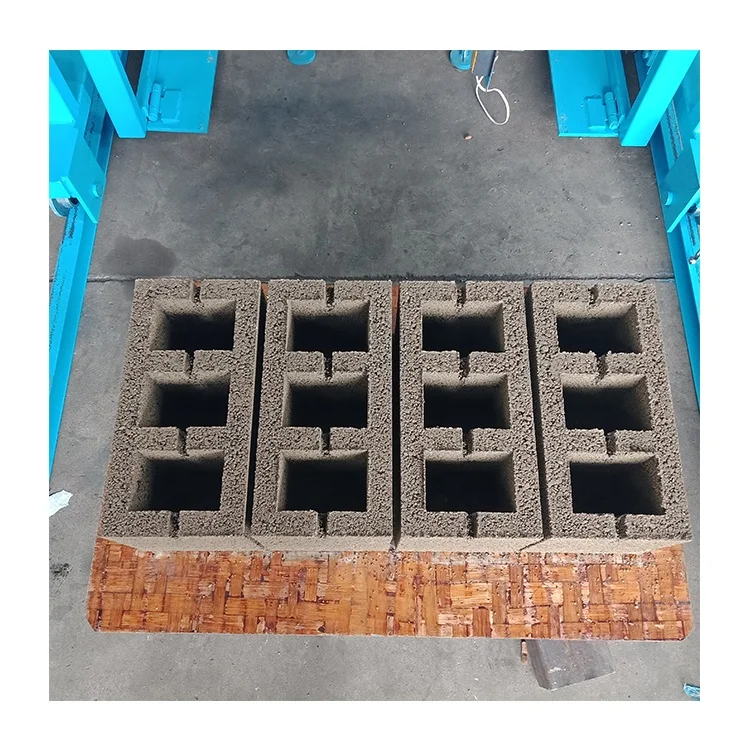
 Stationary block machine