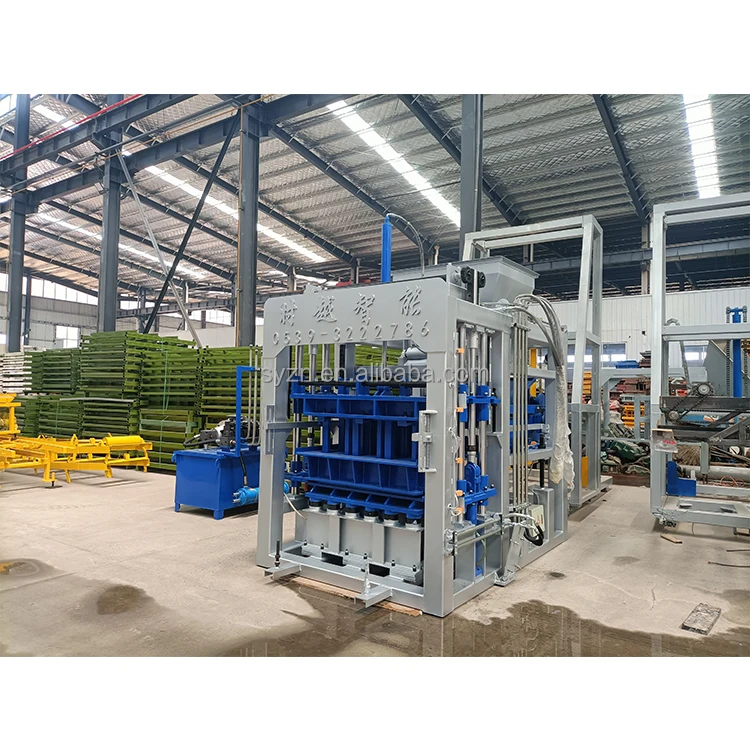
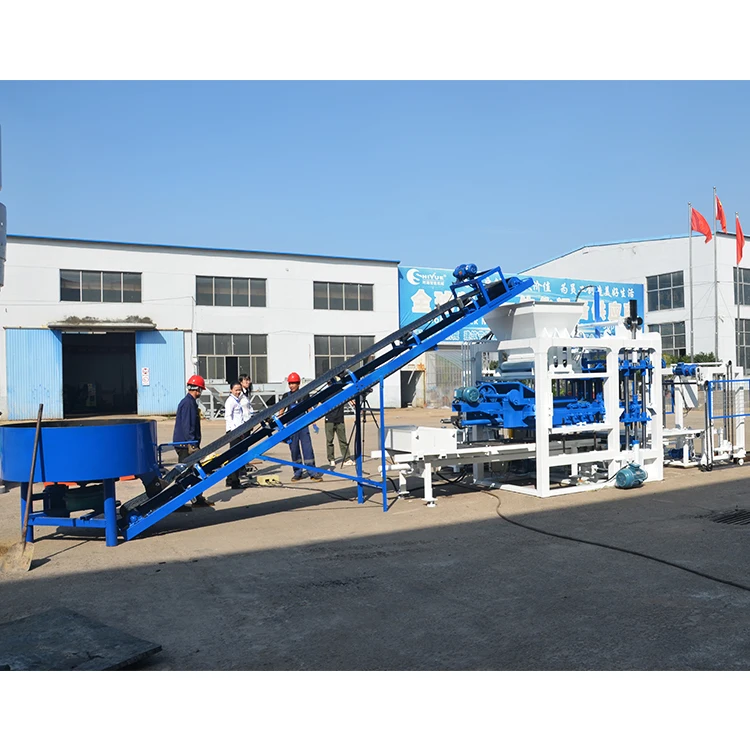
Single-Focus Machinery Engineering — the QT6-15 block machine and its supporting equipment are specified as one matched system rather than assembled from separate suppliers.
Technical Specifications
| Parameter |
Value |
| Model |
QT6-15 |
| Product Type |
Automatic Hydraulic Concrete Block Making Machine |
| Overall Dimensions (L×W×H) |
7100×1500×3000 mm |
| Weight of Machine |
8700 kg |
| Rated Pressure |
21 MPa |
| Main Vibration Form |
Platform vibration |
| Vibration Frequency |
4500–5100 r/min |
| Pallet Size |
880×850 mm |
| Moulding Cycle |
15–25 s |
| Overall Power |
31.25 kW |
| Drive Type |
Hydraulic drive |
| Control System |
PLC intelligence control (human-machine dialogue) |
| Automation Level |
Fully automatic |
| Voltage & Frequency |
Configurable to target market standard (basis to be confirmed) |
| Mould Change System |
Replaceable moulds for different brick sizes |
| Certification |
CE declaration where applicable |
Application Suitability
| Application |
Material or Output |
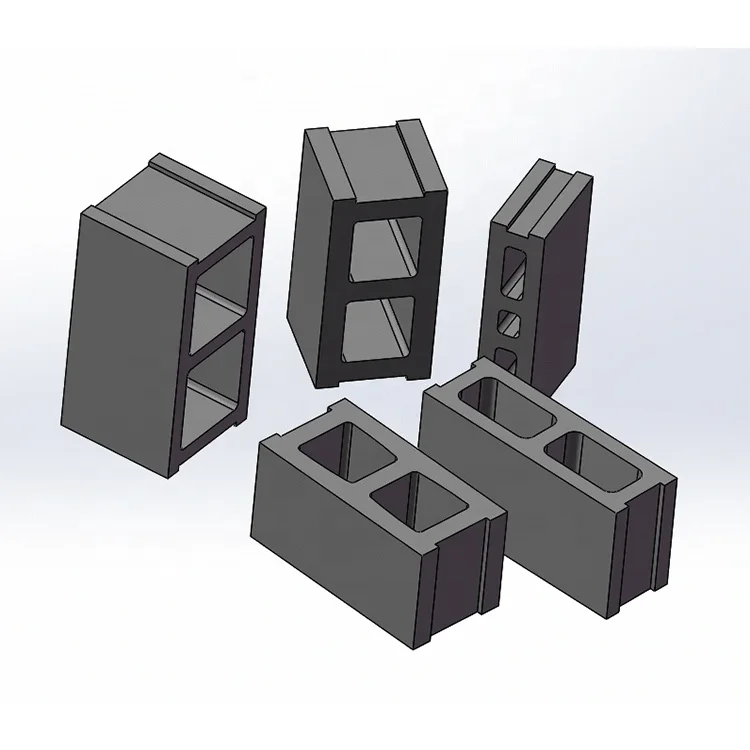
| Hollow block production for residential and commercial wall systems |
Cement 8–10%, sand 30–40%, stone aggregate 50–60% |
| Solid brick manufacturing for load-bearing structures |
Standard concrete mix with locally sourced crushed stone |
| On-site block production for housing development projects |
Crusher dust, river sand, and Portland cement blends |
| Format expansion for existing concrete product manufacturers |
Multiple brick sizes through replaceable mould system |
Why the Voltage Question Must Come Before the Purchase Order
A QT6-15 automatic block machine manufacturer should confirm your site voltage before quoting a lead time, not after the machine arrives.
I spent years troubleshooting on Southeast Asian job sites before moving into commissioning, and the pattern repeats itself: a buyer approves a quotation, the container ships, and then the local electrician discovers the distribution board only handles 110V single-phase. The entire block line sits idle while transformers are sourced, and uncured green blocks left on pallets crack in the tropical sun. Voltage and frequency confirmation is the first item on our checklist when we receive an inquiry for the QT6-15, because a mismatch at this stage is the most expensive delay a plant owner can face [NEED_CITE: voltage and frequency standards by export market].

Placing the QT6-15 Within the Full Stationary Range
The QT6-15 occupies the mid-to-high output tier among stationary block machines, positioned above semi-automatic models that rely on manual pallet handling and below high-capacity lines designed for continuous three-shift operation. Buyers evaluating where they sit on the range often discover that the step from semi-automatic to fully automatic is less about speed and more about labour consistency — the PLC-controlled human-machine dialogue removes the operator from cycle timing decisions. For a first block plant, the QT6-15 offers a configuration that can start with basic pallet circulation and accept automation upgrades later, keeping initial investment proportional to actual market demand.
Matching the Press to the Complete Block Line
A stationary block press does not produce blocks in isolation; raw material feeding, mixing, pallet circulation, and stacking must all arrive at the press on schedule or the press waits. The QT6-15 automatic block machine manufacturer approach treats the 31.25 kW press, the 880×850 mm pallet format, and the handling equipment as one engineered system. When pallet feeding lags behind the 15–25 second moulding cycle, the press idles and daily output drops regardless of its rated speed. Line layout planning therefore starts with the cycle time of the target block format and works backward through every station to ensure no bottleneck forms upstream or downstream [NEED_CITE: block production line synchronization principles].
Reading the Specifications That Actually Shape Output
The 21 MPa rated hydraulic pressure paired with platform vibration at 4500–5100 r/min determines the compaction density of every block that leaves the mould. Higher vibration frequency alone cannot compensate for insufficient hydraulic clamp force; both values must be matched to the buyer’s mix design and local aggregate gradation. The 880×850 mm pallet size is not arbitrary — it governs how many blocks fit on a standard curing rack, how many racks a forklift can move per trip, and ultimately how much curing floor area the plant requires. Moulding cycle times of 15–25 seconds reflect the range across different block formats; a thin-wall hollow block cycles faster than a dense solid brick, and any capacity discussion must state which format is assumed.
The Hidden Cost of Configuring for the Wrong Mix
When a block machine is set up for a raw material ratio the buyer cannot source locally, the consequences compound quickly. Operators adjust water content to compensate, green blocks arrive at the curing rack too wet or too dry, and breakage rates climb during handling. The cost is not just wasted cement — it is the pallet space occupied by unsaleable product and the labour hours spent clearing rejected blocks from the stacking station. Confirming that the 8–10% cement, 30–40% sand, and 50–60% stone ratio aligns with locally available aggregates before the machine ships prevents this cascade of losses [NEED_CITE: local aggregate suitability for concrete block production].
What Sets This Procurement Path Apart
Block machinery is the single focus of our engineering work, so the QT6-15 is never quoted as a standalone press disconnected from its mould, pallet, and handling ecosystem. Every configuration is set against the buyer’s actual mix design and target block format rather than a catalogue default, and mould designs cover the formats the buyer’s local market actually purchases. Automation level is selectable — a buyer can commission the QT6-15 in a semi-automatic arrangement and add automatic stacking or cubing modules as production volume justifies the investment. Installation support includes operator training on the PLC interface, and mould and wear parts supply continues well beyond the first replacement cycle.
Documentation & Verification
- Line layout and capacity calculation stating the block format assumed for each QT6-15 output figure
- Machine specification sheet with hydraulic and electrical schematic specific to your voltage requirement
- Mould drawing and format list showing every block type producible on the 880×850 mm pallet
- Factory test record and packing photographs taken before container loading
- Voltage, frequency, and PLC display language confirmation document signed before production begins
Installation, Commissioning & Support
- Foundation plan based on the 8700 kg machine weight and 7100×1500 mm footprint
- Dedicated power circuit sized for 31.25 kW overall draw at confirmed site voltage
- Machine arrives partially dismantled for container loading; reassembly supervised on site
- First-run parameter setting covers hydraulic pressure calibration and vibration frequency tuning
- Operator training on the PLC human-machine dialogue interface in the confirmed control language
- Wear parts list and mould maintenance schedule provided at commissioning handover
Before You Request a Quote
To size the QT6-15 accurately within our stationary range, share your target block formats with dimensions, the daily output you need per format, and the raw materials available within hauling distance of your plant. Confirm your site voltage and frequency, the PLC display language your operators require, and whether your existing curing area and forklift are already set up for a specific pallet size.
Frequently Asked Questions
Q: What block formats does the QT6-15 produce and what is the realistic daily output per format?
A: The QT6-15 produces hollow blocks, solid bricks, and other concrete masonry units through replaceable moulds on an 880×850 mm pallet. Realistic daily output depends on the specific block format, moulding cycle position within the 15–25 second range, and line configuration. We provide a capacity calculation document that states the assumed format for every output figure in the proposal.
Q: How does the QT6-15 compare to semi-automatic and higher-tier automatic machines in the range?
A: The QT6-15 sits in the mid-to-high output tier with full PLC control, above semi-automatic models that require manual pallet handling and below high-capacity lines built for continuous multi-shift operation. It offers an upgrade path where buyers can start with basic automation and add stacking or cubing modules as volume grows.
Q: What voltage, frequency, and PLC display language options are available for my market?
A: Voltage and frequency are configurable to the target market standard, and the PLC display language is confirmed before production begins. We request your site electrical specifications at the inquiry stage to avoid commissioning delays after the machine arrives.
Q: Which pallet size does the QT6-15 use and does it match my existing curing setup?
A: The QT6-15 runs on 880×850 mm pallets. This format is chosen to align with standard curing rack dimensions and forklift capacities. If your existing curing area uses a different pallet size, we discuss compatibility during the line layout phase before finalizing the quotation.
Q: What mould and wear parts support is available after commissioning?
A: Mould drawings, format lists, and a wear parts catalogue are supplied with every QT6-15 delivery. Replacement moulds and hydraulic wear components remain available for reorder, and custom mould designs can be produced to buyer drawings for formats not covered in the standard range.

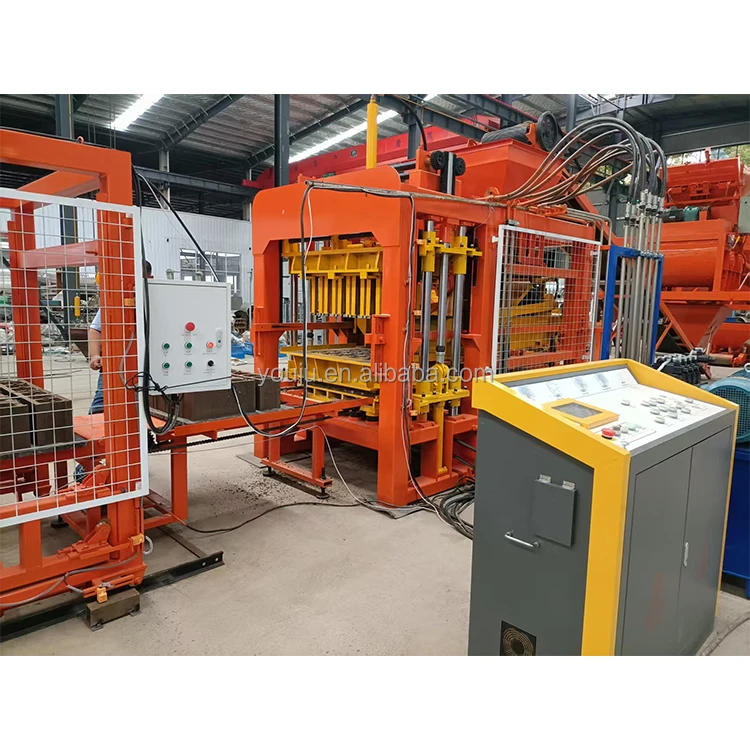
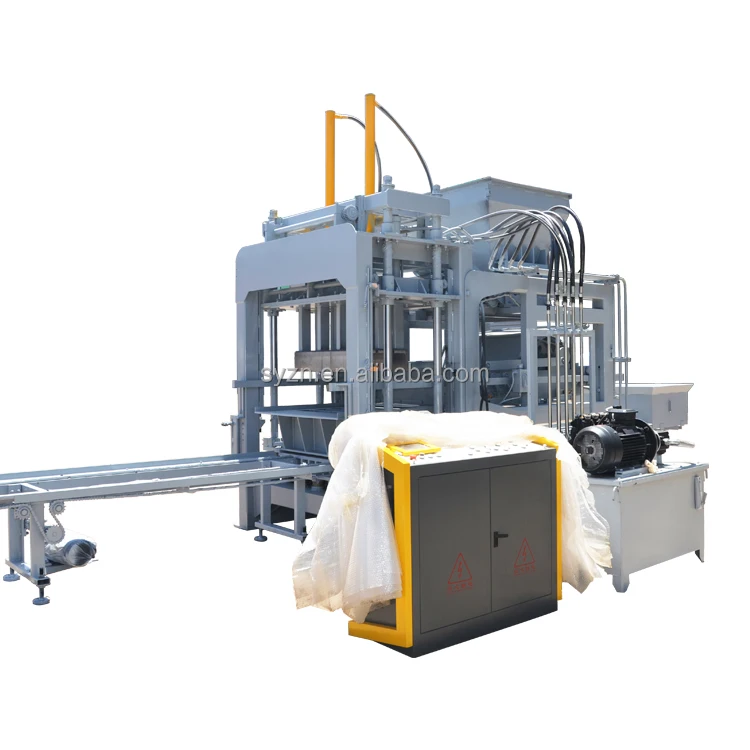 Stationary block machine